
Earlier I thought differently, many thanks for the information.
__________
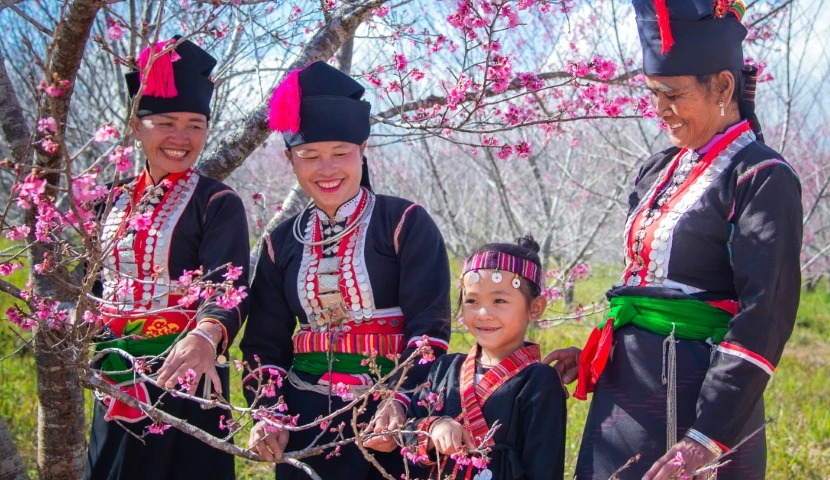
Among the most remarkable expressions of Vietnamese heritages, the traditional costumes of Vietnam's ethnic minorities occupy a very special place. Far more than simple garments, they reflect the identity, beliefs, way of life and history of each community. To explore traditional Vietnamese clothing is to embark on a journey into the extraordinary depth of the country's ethnic minorities — and to understand the diversity that makes Vietnam so singular.
The traditional costumes of Vietnam's ethnic groups are far more than clothing. They are a powerful symbol of cultural identity, allowing each community to assert its heritage and preserve its traditions. Colours, patterns and ornamentation can reveal a person's ethnic origin, age, social status or marital situation.
Beyond their function as dress, these garments play an essential role during festivals, religious ceremonies, weddings and other community events. Passed down from generation to generation, they embody an ancestral craft tradition and contribute to preserving Vietnam's rich cultural heritage in an ever-changing world.
The making of traditional ethnic costumes is a painstaking process demanding patience, skill and expertise. In many ethnic communities, every stage is completed by hand, using techniques passed down over centuries.
The process often begins with the cultivation of cotton or hemp, whose fibres are spun into thread before being woven on traditional looms. The fabrics are then dyed using natural ingredients, most notably indigo, which is widely used by the Hmong, Dao and Tay peoples to achieve their characteristic deep-blue tones.
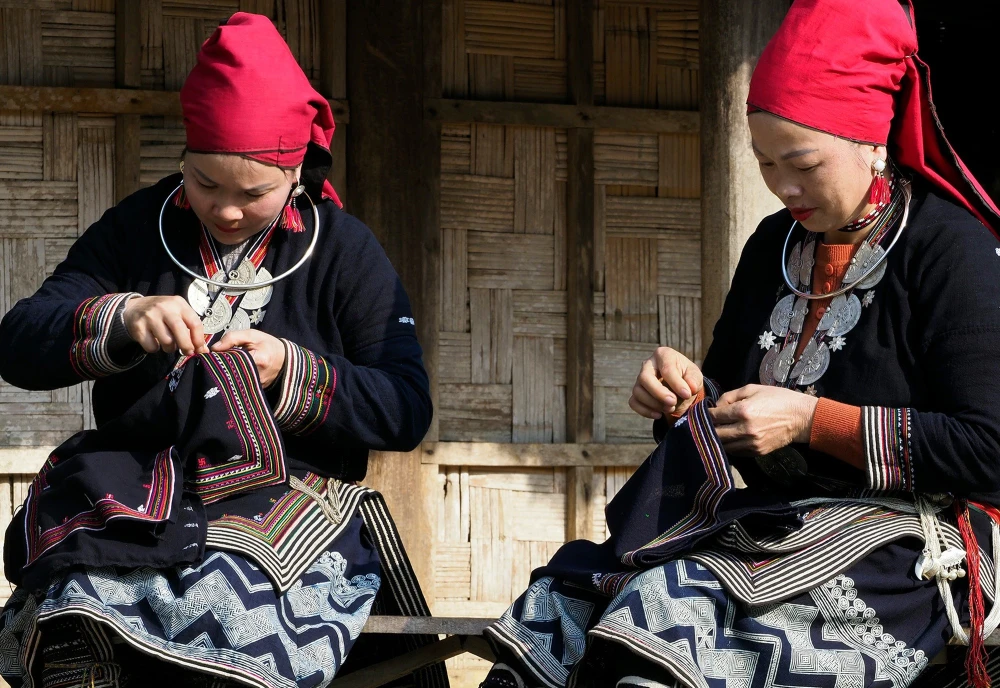
The most delicate stage follows: hand embroidery. The motifs typically represent elements of nature, spiritual beliefs or the community's history. Certain ethnic groups also employ beeswax batik, textile appliqué or ornamentation with silver pieces, making each garment a genuine work of artisanal art.
To this day, these costumes bear witness to the richness of Vietnamese textile craftsmanship and the remarkable skill of the country's ethnic minorities.
Among the most iconic ethnic costumes in Vietnam, those of the Hmong people stand out for their artistic richness and ancestral craft techniques. Rooted in a long history of migration from the mountainous regions of Asia, these garments are far more than mere clothing — they reflect the identity, beliefs and way of life of the community.
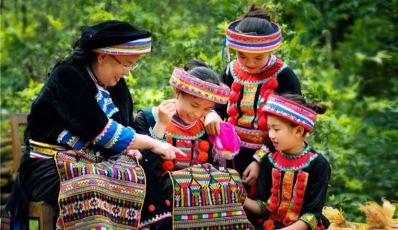
Traditionally made from hand-grown and hand-woven linen, Hmong costumes are dyed with indigo and adorned with intricate embroidery. Some communities also use the beeswax batik technique, which creates delicate geometric patterns before the fabric is dyed.
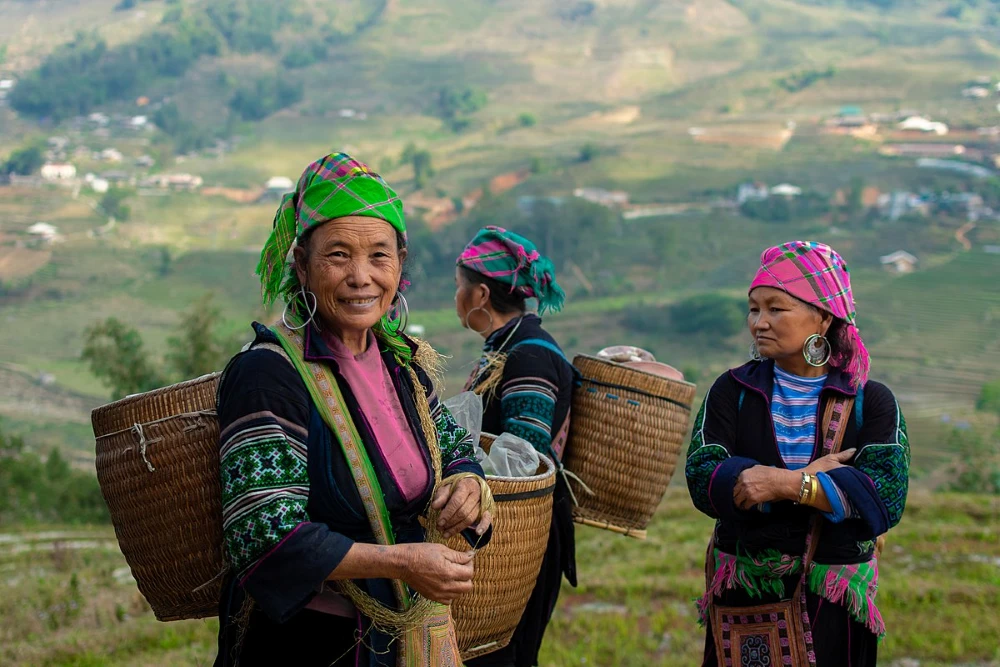
Clothing varies across the different Hmong sub-groups — the Black Hmong, White Hmong and Flower Hmong, among others. Whilst the Black Hmong favour deep indigo tones, the Flower Hmong are celebrated for their vibrant, multicoloured costumes. Often completed with magnificent silver jewellery, these garments attest to a craft tradition passed down through generations and remain a powerful symbol of Hmong cultural identity.
For the Dao people, a traditional costume is far more than a garment: it is the result of hundreds of hours of labour and a craft tradition inherited over generations. Made entirely by hand, some pieces require up to two years to complete. Every stitch speaks to the patience, skill and pride of Dao women, who are the guardians of this cultural legacy.
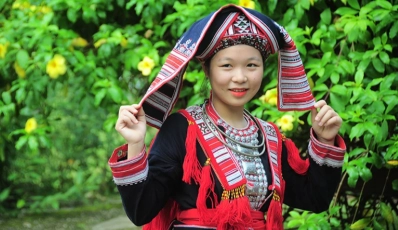
Dao traditional costumes are distinguished by the richness of their embroidery, their vivid colours and the diversity found across sub-groups. Among the best known are the Red Dao, recognisable by their imposing red headdress; the Dao Tien, whose garments are adorned with small silver coins; and the Dao Quan Chet, renowned for their more understated yet elegantly decorated dress.
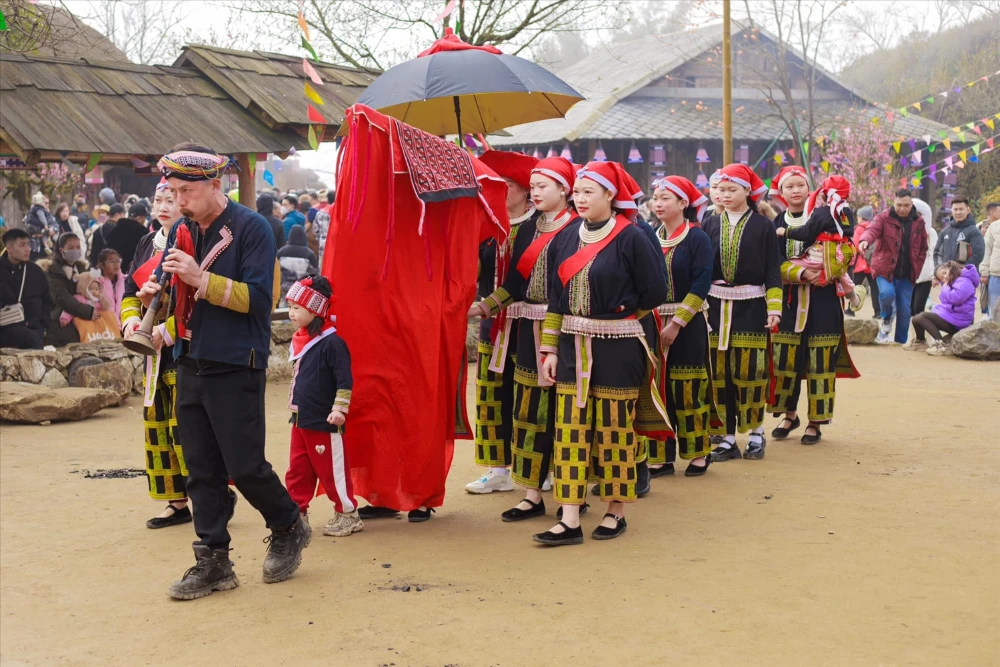
The traditional clothing of Dao men is relatively simple, comprising trousers, a tunic, and a beret or scarf to cover the head. The scarf closely resembles that worn by women and is finely embroidered in vivid colours including red, light blue, yellow and white. The tunic follows the áo tứ thân style — assembled from four panels of narrow fabric. It is long, falling below the waist, with pockets on the chest and both sides of the front panels, and is generally decorated with relatively simple embroidered motifs. The trousers are long, indigo-coloured, loose and straight, and are worn with flat shoes or sandals.
Beyond embroidery, some Dao communities also use a traditional technique of applying beeswax to fabric before dyeing it with indigo. Once the fabric is dyed, the patterns emerge in contrast, creating decoration of remarkable finesse that makes each garment unique. The motifs often represent elements of nature, ancestors or protective symbols connected to Dao spiritual beliefs. Garments can also indicate the wearer's age, social standing or marital status.
To this day, these costumes hold an essential place at weddings, religious ceremonies and traditional festivals, where they continue to embody the cultural identity and rich heritage of Dao communities.
Tay traditional costumes captivate with their quiet elegance and their celebrated indigo colour, which has become over time a true symbol of this community's identity. Far from a purely aesthetic choice, this distinctive hue is the result of an artisanal tradition passed down through generations.
The fabrics are generally made from natural cotton, then dyed using indigo extracted from local plants. The process is particularly demanding: the fabric is immersed in the dye bath, dried, then dyed again repeatedly over several days — sometimes even weeks. This technique produces a deep, durable blue-black colour that is naturally elegant.
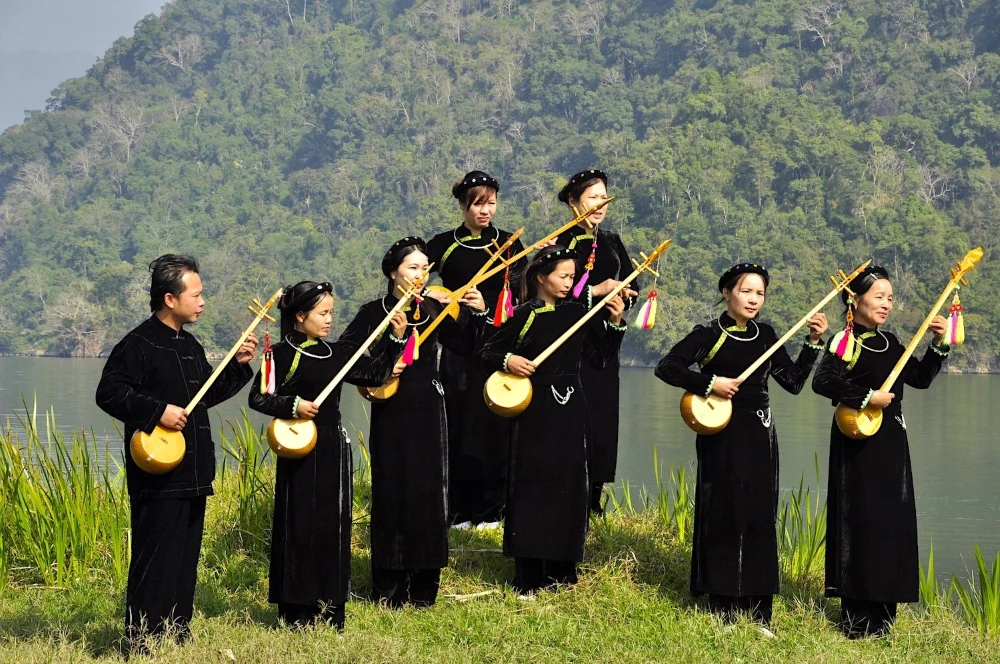
Although Tay clothing is often characterised by its simplicity, it may also be embellished with nature-inspired motifs such as lotus flowers, rice ears or auspicious symbols. Women traditionally complete their outfit with a scarf worn on the head, which adds a note of grace and refinement.
Today, Tay costumes are still worn at festivals, ceremonies and community events. They embody not only the cultural identity of the Tay people, but also a remarkable example of sustainable craftsmanship, deeply rooted in nature and local traditions.
The traditional costumes of the Thai ethnic group rank among the most elegant in Vietnam. Designed to highlight the feminine silhouette with grace and restraint, they reflect the refinement and aesthetic sensibility of this community, which is established in the valleys of the country's north.
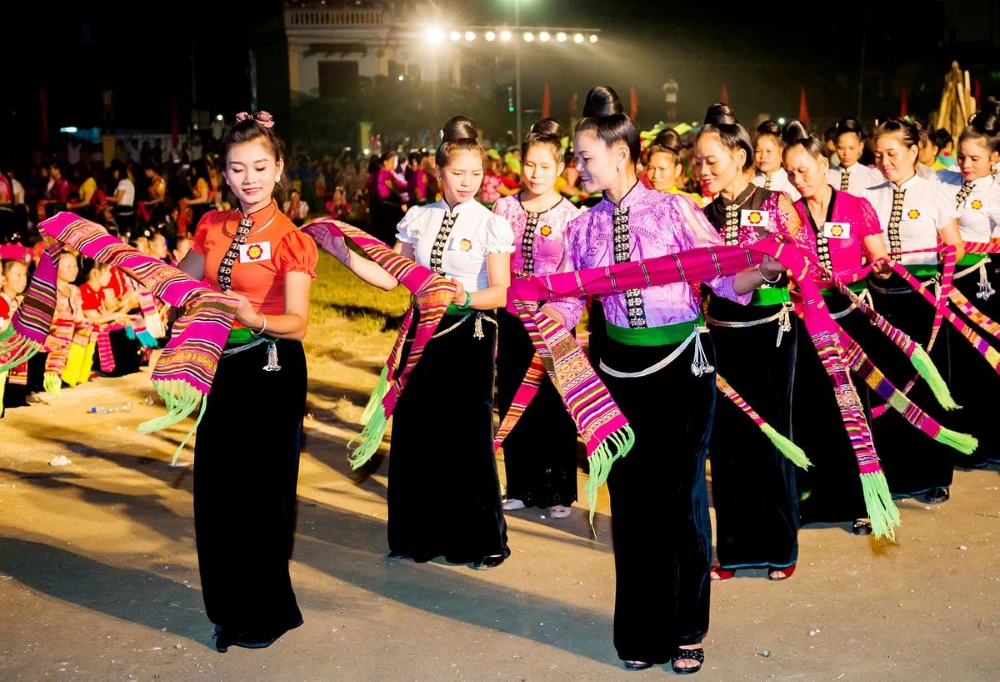
The most iconic element is the áo cóm, a fitted tunic worn with a long black skirt. In Black Thai communities, the ensemble is generally made in dark tones, whilst White Thai communities favour light-coloured tops paired with colourful sashes. Rows of silver or butterfly-shaped buttons are also a distinctive feature of these costumes. Beyond their decorative function, they carry symbolic meaning: young unmarried women traditionally wear an odd number of buttons — usually eleven or thirteen — whilst married women wear an even number.
Thai men's clothing generally consists of a short or long shirt, worn according to the occasion. These shirts are primarily made from indigo fabric, with a round neckline and a vertical opening at the front. Buttons may be metal — often copper — or fashioned from strips of fabric tied into distinctive shapes. Men's trousers are typically long, straight and made from indigo fabric. Thai men's dress prioritises practicality and comfort whilst preserving its traditional values and adaptability to contemporary life.
Women traditionally complete their outfit with the khăn piêu, a richly hand-embroidered scarf that has become one of the most iconic symbols of Thai culture. Creating a khăn piêu requires not only technical mastery but also precision, perseverance and aesthetic judgement — it is also considered a reflection of the skill, dexterity and character of the woman who made it. In tradition, this scarf forms part of the gifts prepared by the bride for her husband's family, expressing her thoughtfulness, delicacy and respect for custom.
Another remarkable tradition among the Black Thai is the tằng cẩu — the hairstyle worn by married women. After the wedding, hair is gathered into a bun on top of the head, a symbol of maturity, fidelity and commitment to the family.
Among the most spectacular ethnic costumes in Vietnam, those of the Lolo people hold a category of their own. Found primarily in the mountainous provinces of Ha Giang and Cao Bang, the Lolo have preserved a textile heritage of exceptional richness. Each garment is the product of long hours of handwork and constitutes a genuine marker of cultural identity.
Lolo costumes are particularly celebrated for their technique of assembling small hand-sewn coloured fabric pieces into complex geometric compositions. Making a complete outfit can take several months, or even more than a year.
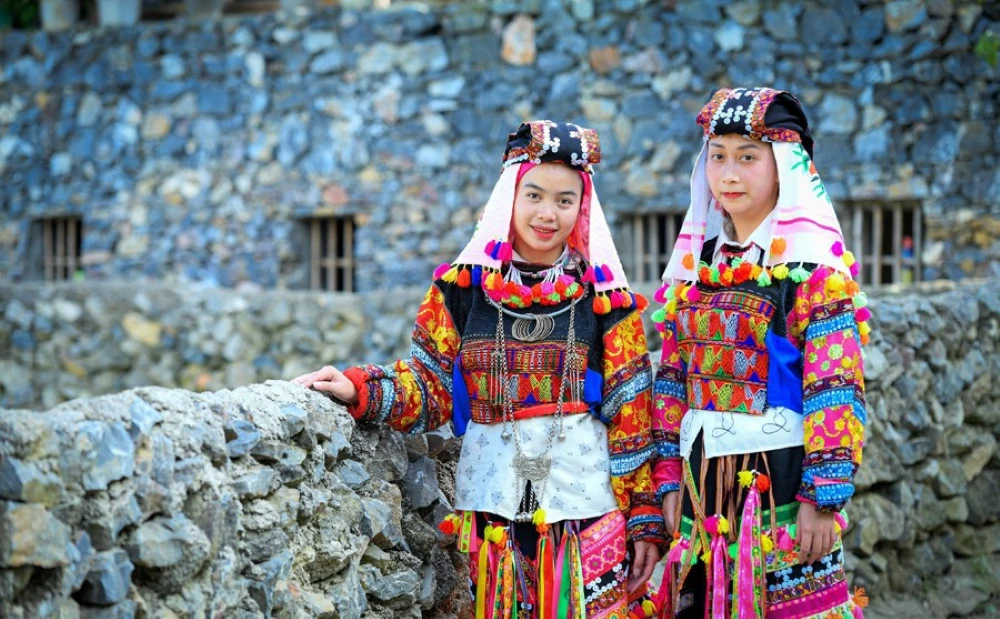
The Black Lolo favour costumes in dark tones dominated by black and indigo. Women wear a short jacket richly decorated with embroidery and coloured fabric pieces that contrast elegantly against the dark background of the garment.
The Flower Lolo are renowned for wearing the most colourful dress within the group. Their garments are composed of hundreds of small, vibrantly coloured fabric pieces meticulously assembled by hand. This technique creates a particularly striking mosaic effect, making each costume a genuine work of textile art. The ensemble is often completed with an elaborate headdress and numerous ornaments that further enhance the visual richness of the whole. At local markets and traditional festivals, these costumes represent one of the finest examples of ethnic minority textile craftsmanship in Vietnam.
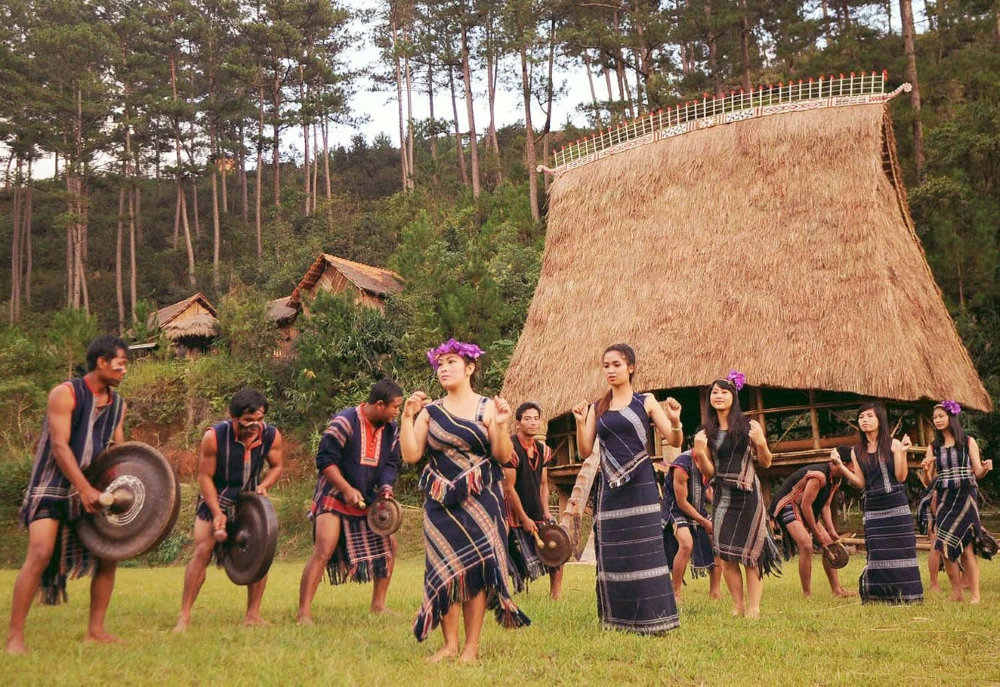
Other regions of the country are also home to communities with fascinating cultural identities. In the Central Highlands, travellers can discover the colourful costumes of the Ede, Ba Na, Jarai and M'nong peoples. Often adorned with hand-woven geometric patterns, these garments equally reflect the cultural identity, beliefs and way of life of their communities, bearing witness to the extraordinary ethnic diversity of Vietnam.
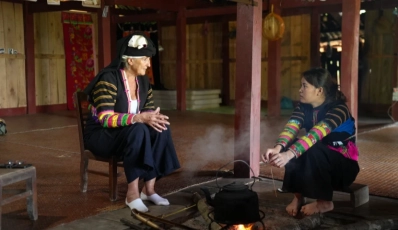
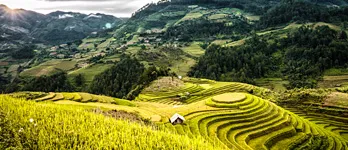
Traditional costumes take on their full meaning when encountered within the communities that still wear them today. In the mountainous regions of northern Vietnam, many villages continue to preserve their traditions, their textile crafts and their ancestral festivals.
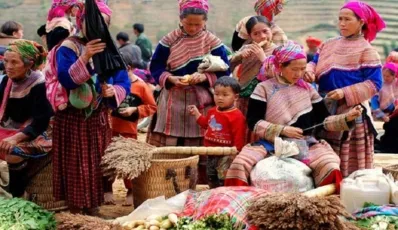
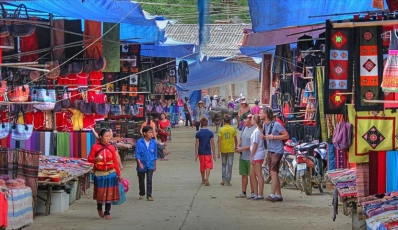
Travellers can meet the Hmong and Dao in Sapa, the Flower Hmong in Bac Ha, the Dao in Hoang Su Phi, the Bo Y in Dong Van, the Lolo in Bao Lac, and the Thai and Muong in Mai Chau and Pu Luong. The weekly ethnic minority markets are also an excellent opportunity to observe traditional costumes worn in everyday life and during exchanges between communities.
Beyond their visual beauty, these encounters offer a deeper understanding of the history, beliefs and way of life of Vietnam's ethnic minorities.
>> See also: Where to Meet Ethnic Minorities in Vietnam?
To experience an authentic encounter whilst respecting local communities, here are a few recommendations:
By taking this respectful approach, discovering traditional costumes becomes far more than a simple visit — it offers a genuine immersion into the cultural richness of Vietnam.
The traditional costumes of Vietnam's ethnic groups are not merely beautiful garments. They embody centuries of history, tradition and craft skill passed down through generations. Behind each outfit lie family stories, beliefs and a unique cultural identity. For travellers in search of authenticity, they offer a privileged gateway into the human and cultural richness that makes Vietnam such a fascinating destination.
>> Read more:




 TRAVELERS' CHOICE 2026