




The proof: Every 10 minutes pays a jackpot. Try now! Spin to Win Here -> psee.io/8qtsv7
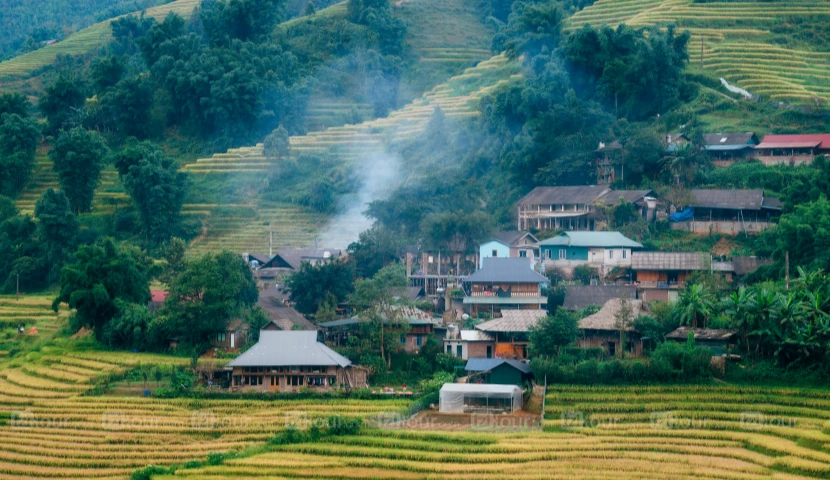
Sa Pa is not merely a mist-shrouded tourist destination blessed with majestic mountain landscapes; it is also likened to a vibrant tapestry, intricately weaving together the resilience of its people, rich indigenous traditions, and practical agricultural skills. To truly connect with the soul of this land, visitors cannot miss the opportunity to explore the ethnic villages surrounding the town. In this article, we will explore a curated list of ethnic villages near Sa Pa worth visiting—destinations that truly deserve your attention, ranging from bustling handicraft hubs to tranquil valleys where time seems to have stood still.
Sa Pa’s diverse hillsides are home to vibrant communities that have preserved their unique customs and heritage intact for centuries, remaining deeply rooted despite the advance of modernisation. This raw authenticity is what sets these valleys apart from urban tourist hubs.
By venturing into these cultural sanctuaries, visitors can:
Experience an authentic local homestay and share traditional meals with the hosts.
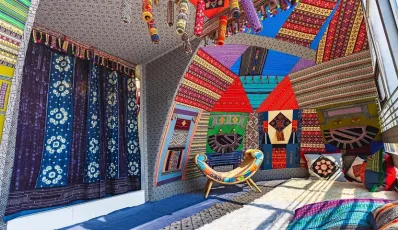
Learn traditional crafts, including weaving, indigo dyeing, and intricate embroidery.
Witness cultural ceremonies and immerse themselves in a lifestyle that exists in perfect harmony with nature.
Furthermore, choosing to visit Sa Pa villages carries significant economic benefits, directly supporting local communities through sustainable ecoturism and the fair-trade commerce of hand-made crafts.
Situated just 3 km from Sa Pa town, Cat Cat Village is home to the Black Hmong people and stands as the most popular tourist spot in the region.
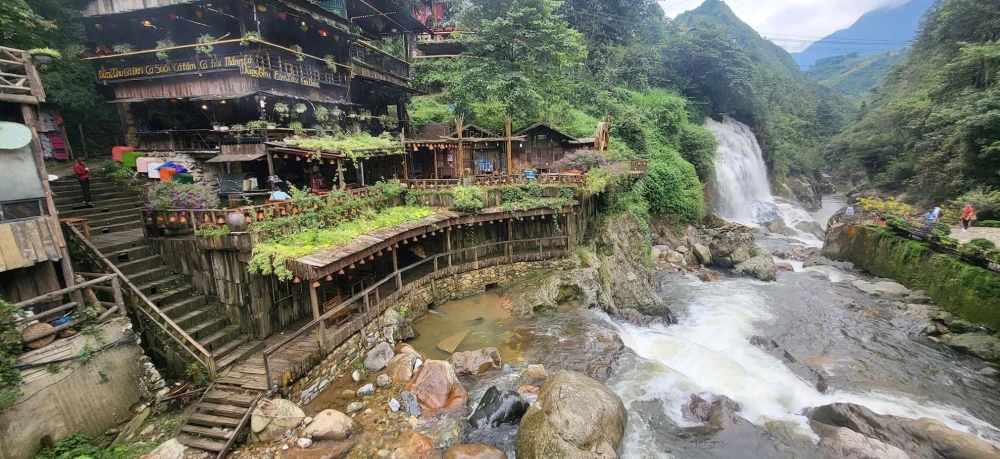
Cat Cat boasts a dreamlike beauty, with scenic rice terraces flanking the placid Muong Hoa stream. To boost tourism, the village has benefited from substantial infrastructural investments, featuring a network of paved paths winding through the settlement and dedicated exhibition areas showcasing local artefacts and cultural products.
In the heart of the village, the remnants of a historic hydroelectric power station built by the French along the Muong Hoa stream are still visible. Today, this site regularly hosts daily cultural and artistic performances for tourists.
However, in recent years, Cat Cat has gradually transformed into a highly commercialised tourist attraction. While it remains an engaging stop for a first-time visit to Sa Pa, those seeking to explore a more authentic lifestyle and truly connect with the local community might also want to consider less frequented villages, where traditions and daily life are preserved in a more natural way.
Located around 4 to 5 km from Sa Pa town, Sin Chai Village is a Black Hmong settlement that retains its pristine natural beauty and remains far less commercialised than its neighbour, Cat Cat.
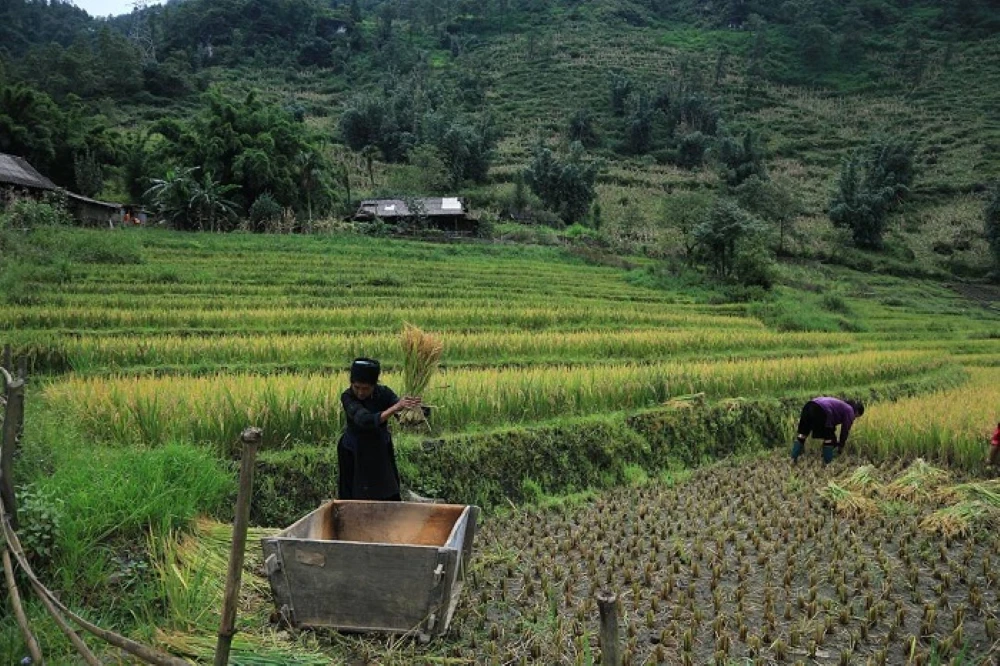
Thanks to its position at the foot of the majestic Fansipan mountain range, Sin Chai offers an oasis of tranquillity, far removed from the hectic tourist pace of central Sa Pa. The air here is crisp and refreshing all year round, and the narrow, winding trails weaving through mountains and valleys are absolutely perfect for enthusiasts of trekking in Sa Pa.
Local life in Sin Chai follows traditional rhythms. Visitors can admire rustic wooden homes or simple rammed-earth houses scattered across the hillsides, interspersed with cornfields, paddy fields, and traditional threshing yards.
Unlike other rapidly developing tourist destinations, Sin Chai preserves the genuine character of the Hmong people's daily routine. It is an ideal place to delve deeper into traditional customs and crafts within a relaxed atmosphere, far from the crowds and heavy commercialisation.
Situated about 14 km from Sa Pa in the direction of Lao Cai, Ta Phin Village nestled in a wide valley surrounded by mountains and terraced fields, offering a peaceful setting that is much less crowded than other spots in the area.
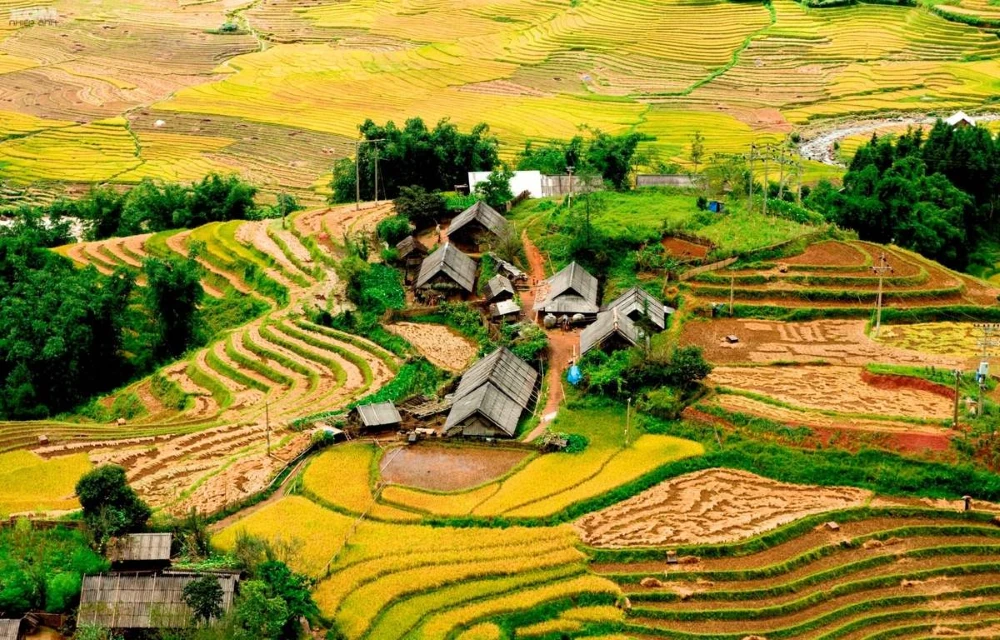
Ta Phin is the homeland of the Red Dao people, one of the most fascinating ethnic minorities in Northern Vietnam, easily recognisable by their distinctive red headwear and rich traditions handed down through generations.
The village is particularly famous for the traditional Red Dao herbal bath, an ancient wellness ritual prepared using over 20 varieties of wild herbs gathered from the surrounding forests. This practice, used for centuries by the local community, helps relax muscles, relieve fatigue, and rejuvenate the body after a long day of hiking.
The inhabitants of Ta Phin are also renowned for their extraordinary embroidery skills. With patience and precision, they create brightly coloured brocade fabrics decorated with motifs representing nature, fertility, prosperity, and the spiritual beliefs of the community. Visitors can participate in small handicraft workshops to learn traditional techniques and understand the symbolic meaning behind every detail.
Unlike more commercialised spots, Ta Phin still retains an authentic atmosphere and a simple pace of life. Strolling past the houses, it is common to see residents working diligently in the fields, dyeing fabrics with natural ingredients, or going about their daily chores.
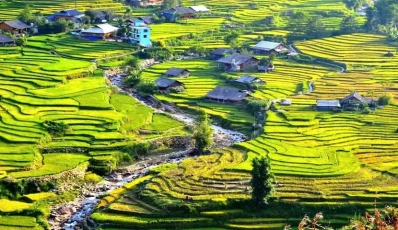
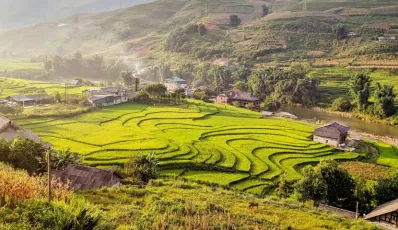
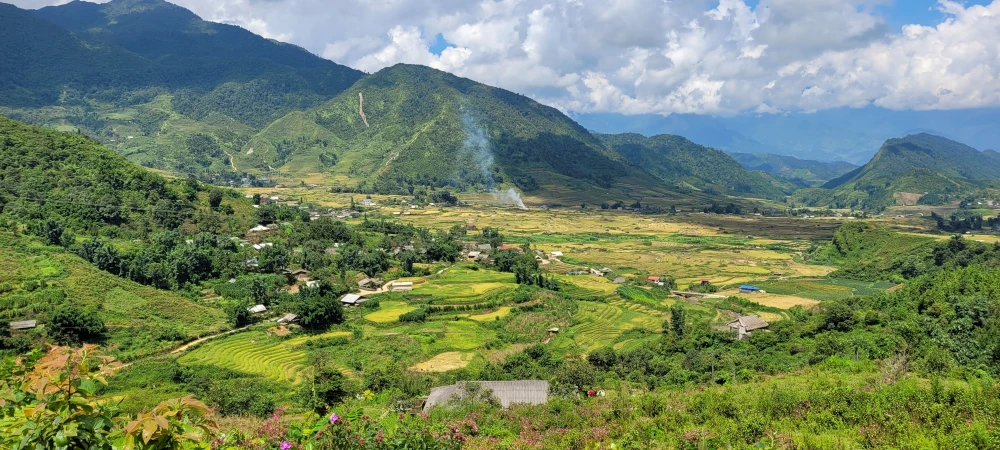
Located about 7 km from the town centre, Lao Chai Village is home to the Black Hmong people and is celebrated for its spectacular terraced fields, widely considered some of the most beautiful in Vietnam.
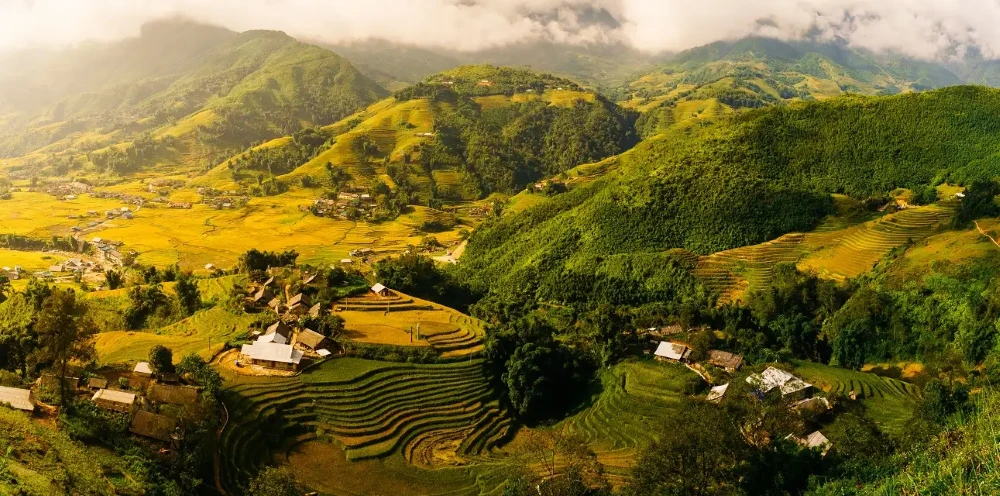
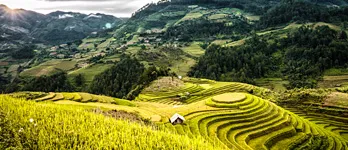
I had the opportunity to visit Lao Chai in August and was completely spellbound by the lush "sea of rice," where the terraces stretch endlessly to the horizon - a truly breathtaking sight. However, if you visit between September and early October, this beauty becomes even more spectacular. During this time, the entire Lao Chai valley transforms, blanketed in a golden hue of ripe rice, creating picturesque scenery from every single angle.
To fully appreciate this location, you can enjoy a scenic trek along the trails starting from Sa Pa or Ta Van, crossing terraced fields and small mountain streams. Along the way, you will easily encounter hospitable Hmong women selling exquisite handmade crafts, who are often delighted to guide tourists through the traditional art of indigo dyeing—an integral part of their daily life.
For me, walking amidst the rustling rice fields and exploring the rich heritage of the Hmong women means truly connecting with the very soul of the Northwest mountains.
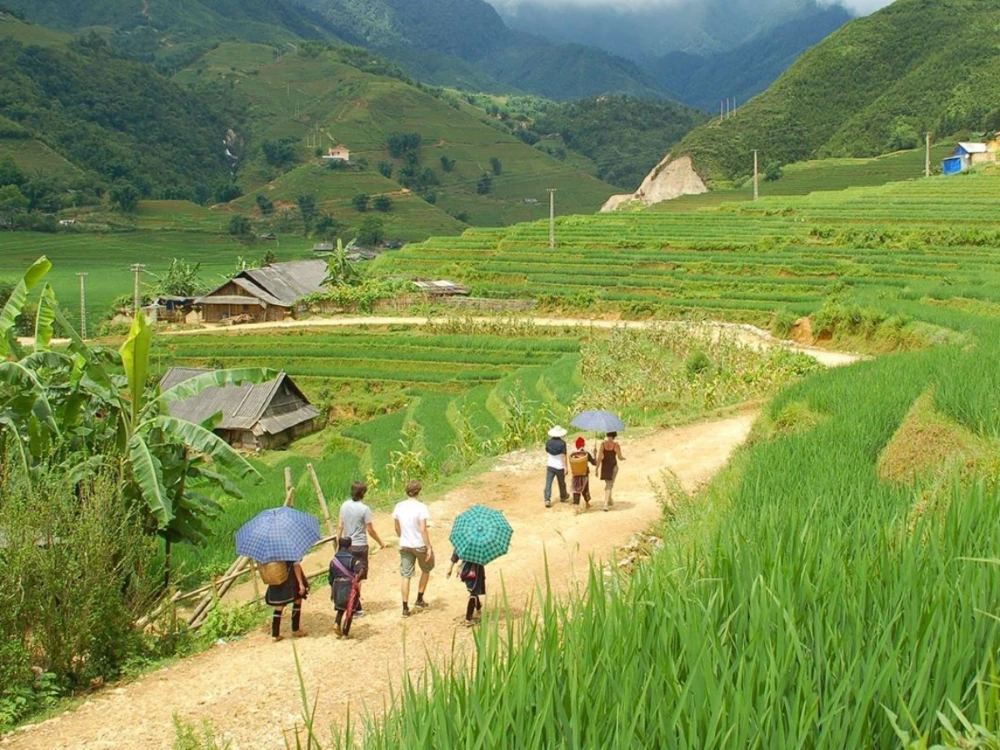
Tucked between Cat Cat and Lao Chai, Y Linh Ho Village retains its tranquillity and sees far less tourist impact. The landscape is defined by steep hills, simple wooden homes, and the winding Muong Hoa River. The trails here are narrower and entirely natural, leading visitors through small family farms, bamboo forests, and fields of corn and rice.
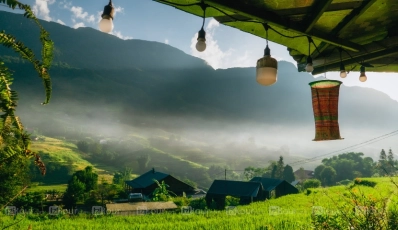
It is the ultimate location for photographers searching for the perfect combination of natural light, mountain mist, and picturesque rice terraces.
Just past Lao Chai, about 8 km from Sa Pa, lies Ta Van Village, nestled deep within the verdant Muong Hoa valley. Here, the landscape unfolds into a mosaic of terraced fields, narrow paths, and traditional wooden dwellings. This is the territory of the Giay ethnic group, recognisable primarily by the characteristic stilt houses that dot the village in perfect harmony with the surroundings.
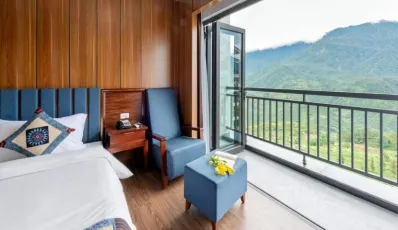
Over the years, Ta Van has become one of the most sought-after destinations for those wishing to experience a local homestay amidst the rice paddies. Sleeping here means sharing daily life with local families, embracing a simple and authentic rhythm dictated by farm work and communal moments. Dinners are a true culinary journey into mountain flavours: stir-fried wild vegetables, aromatic herb soups, and homemade rice wine, all served in a warm family atmosphere that invites genuine exchange.
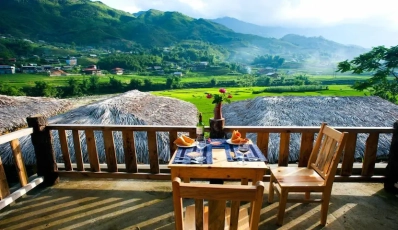
Alongside this authentic dimension, Ta Van is also developing a more contemplative side, thanks to its panoramic cafés. Small coffee shops with terraces overlooking the valley provide the perfect spot to pause and observe the landscape, sipping a hot drink whilst the clouds lazily drift between the mountain peaks.
Located approximately 30 km from Sa Pa, Ban Ho Village is a settlement of the Tay ethnic minority, nestled in the lower reaches of the Muong Hoa stream valley, within a deeply rural and authentic setting.
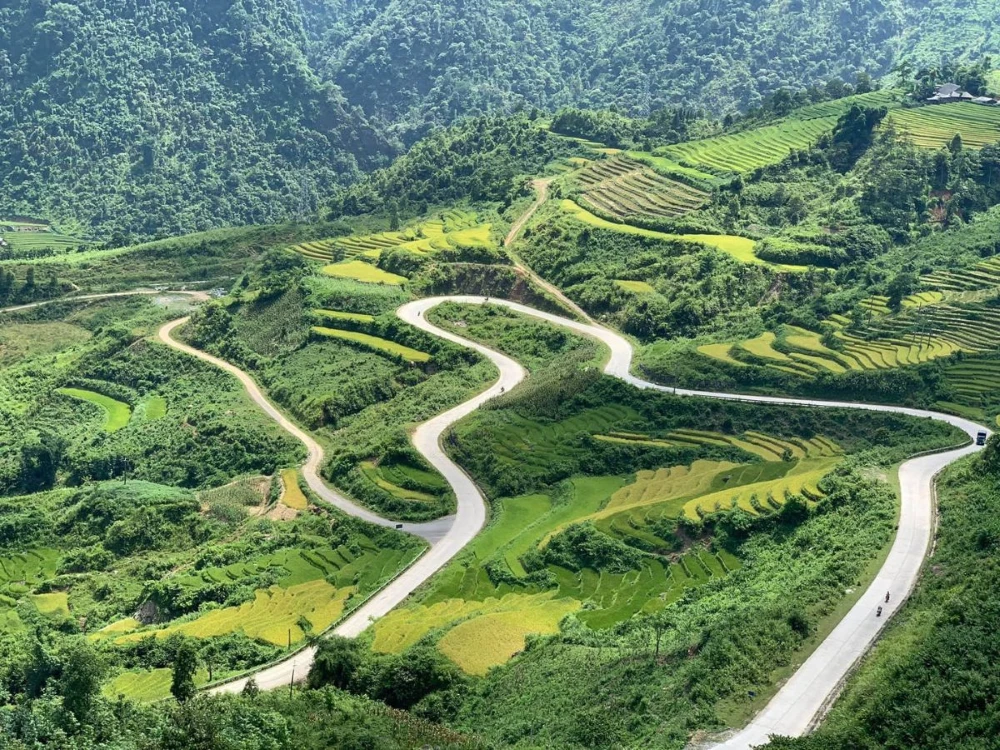
To reach the village from the main road, visitors must navigate winding routes that snake through mountains, hamlets, and rice terraces. Compared to other tourist-heavy areas, the journey here is more adventurous and requires a moderate level of physical fitness, featuring a few challenging stretches that reward travellers with untouched natural scenery.
Ban Ho is highly favoured by those seeking a more genuine connection with local life. The village preserves a simple daily routine, revolving around field cultivation, the upkeep of traditional stilt houses, and the close-knit community life of Tay families. Staying here means immersing yourself in a genuine atmosphere, far from the crowds, where local hospitality is expressed through gentle daily gestures and home-cooked traditional cuisine.
For trekking enthusiasts, Ban Ho represents an ideal stop: the trails connecting the village to surrounding areas pass through dense forests, small bridges, and isolated hamlets, offering a distinctly wilder experience compared to Ta Van or Lao Chai. It is a route that rewards those who love walking and discovering a region slowly, far off the beaten track, where every step reveals a different facet of rural life in Northern Vietnam.
Situated about 18 km north of central Sa Pa (in the Ngu Chi Son commune), Ban Khoang Village is a relatively untouched area, inhabited primarily by the Red Dao and Hmong ethnic groups. In stark contrast to busier tourist spots, Ban Khoang offers a sense of absolute isolation, feeling like a hidden world tucked away deep within the mountains and forests of Northwest Vietnam.
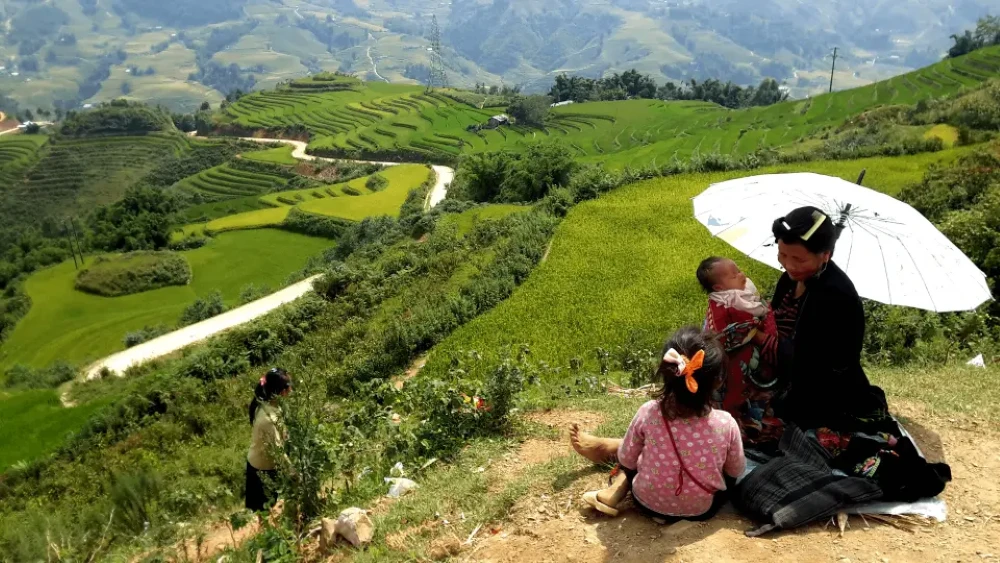
From a scenic perspective, Ban Khoang captivates with its wild, majestic beauty, featuring crystal-clear streams winding through valleys, lush primordial forests, and terraced rice fields that curve along the mountain slopes. The terrain is quite steep, creating characteristic layered terraces that shift colour with the seasons, from a brilliant green to a golden yellow during the Sa Pa harvest season.
One of the most unique features of Ban Khoang is its cold-water fish farming. Thanks to the crisp, natural spring water flowing from high mountain streams, locals have successfully developed sturgeon and salmon farms, producing fish with firm, fresh, and highly flavourful meat. This is not only an important livelihood for the community but also a unique culinary experience for visiting tourists.
Furthermore, Ban Khoang beautifully preserves its simple, authentic way of life. Tourists can visit the traditional stilt houses of the Red Dao people, learn about their hillside farming methods, or simply sit back in the surrounding quietude to savour a rare, undisturbed peace.
Choosing the right season will heavily influence the quality of your experience in the villages of Sa Pa:
September – October (Harvest season): This is considered the best time to visit Sa Pa. The terraced fields turn a vibrant, glowing yellow, and the weather is delightfully pleasant (15–25°C), making it ideal for trekking and sightseeing.
May: The falling water season, marking the start of the planting cycle.
June – August: Lush, emerald-green fields under clear blue skies—absolutely ideal for landscape photography.
December – January: Despite the cold climate (5–15°C) and thick mist, this period hosts major cultural festivals, such as the traditional New Year celebrations of the Hmong and Dao communities.
To ensure a fulfilling travel experience that is deeply respectful of the local culture, please keep the following points in mind:
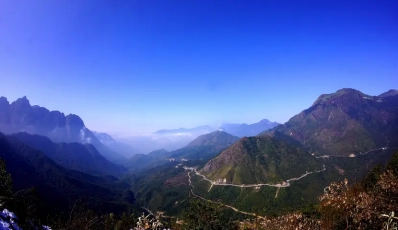
Exploring the ethnic villages around Sa Pa is a journey that seamlessly blends natural grandeur with profound cultural depth. By connecting the cultural heart of the valleys with the panoramic views from the summit of Mount Fansipan, travellers can craft the ultimate travel story.
Visitors will have the chance to fully appreciate the dramatic landscapes from above, before immersing themselves in the warm hospitality of the locals in the valleys below. Pack your bags, plan your itinerary with care, and get ready for a journey that will not only awaken your senses but touch your soul.
Read more:





 TRAVELERS' CHOICE 2026