

Earlier I thought differently, many thanks for the information.
__________
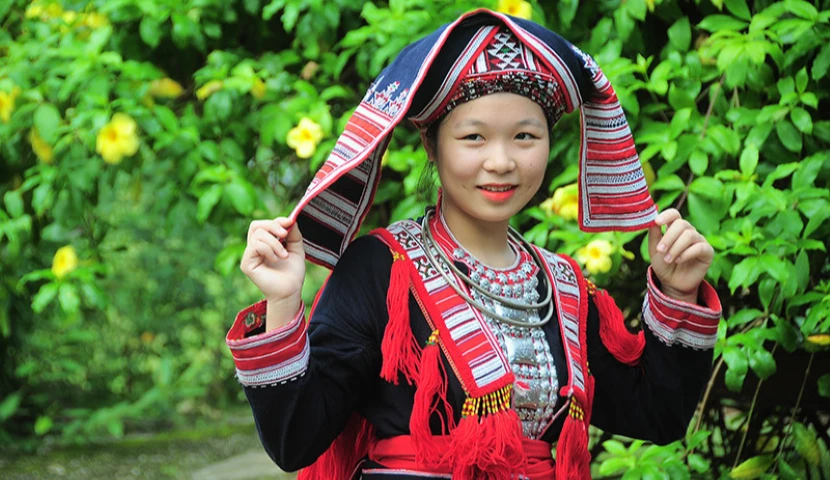
In the mountains of northern Vietnam, several ethnic communities have preserved traditions that remain part of everyday life. Among them, the Red Dao people stand out for their strong cultural identity, richly embroidered clothing and skills passed down from generation to generation. Meeting the Red Dao people means discovering far more than their easily recognisable red clothing: it is an opportunity to enter a living culture that reveals another side of Vietnam, far from the major cities and most frequently visited tourist sites.
The Red Dao, known as Dao Đỏ in Vietnamese, belong to the Dao people, one of the many ethnic communities officially recognised in Vietnam. The term “Red Dao” mainly refers to a Dao cultural group that can be recognised, in particular, by the prominent use of red in women’s traditional clothing and accessories.
Originating from mountainous regions of Asia, Dao communities settled over the centuries in different parts of northern Vietnam. The Red Dao account for around 0.9% of Vietnam’s population and nearly 50–60% of the entire Dao population. Their language belongs to the Hmong-Mien language family, also known as Hmong-Dao. Today, the Red Dao live mainly in the mountainous northern provinces, particularly Lao Cai, Ha Giang, Tuyen Quang, Yen Bai and Lai Chau, depending on the communities and areas concerned.
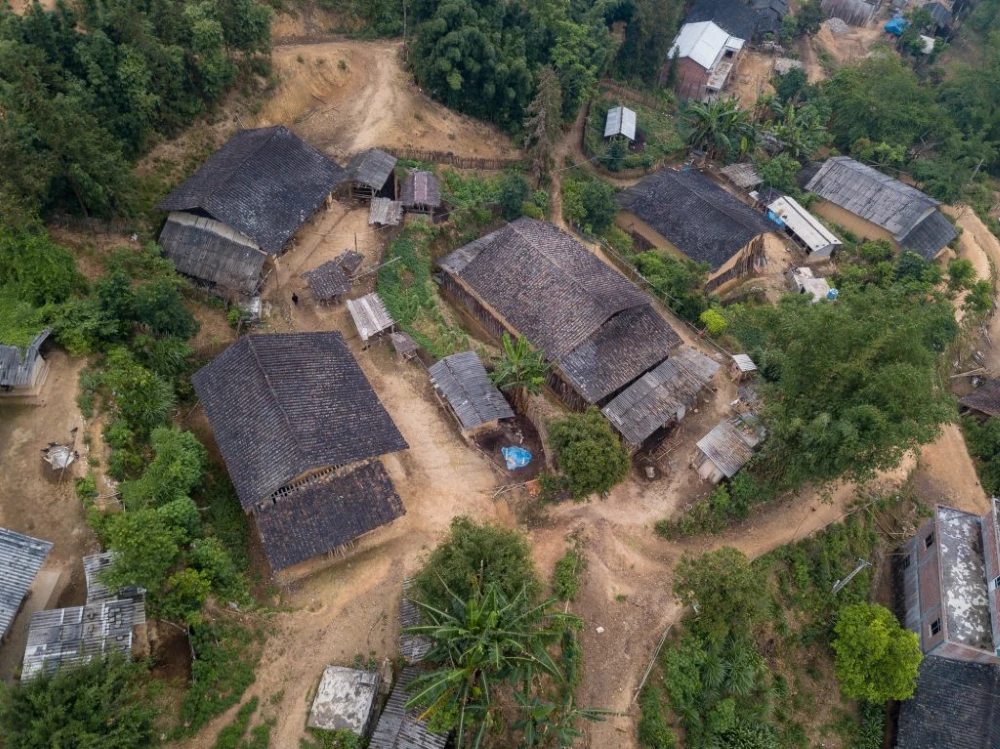
Their villages are often set amid mountains, valleys and terraced rice fields. This geographical setting has profoundly influenced their way of life: agriculture, livestock farming, gathering plants and handicrafts have traditionally played an important role in the household economy.
However, Red Dao culture cannot be reduced simply to origins or geographical location. It is based on a body of practices and knowledge passed down within families: textile techniques, embroidery, ancestral beliefs, ceremonies, traditional medicine and rules governing community life. Some of these traditions are evolving today as a result of economic and social changes, but many families continue to pass them on to younger generations.
Traditional houses: At the heart of family life
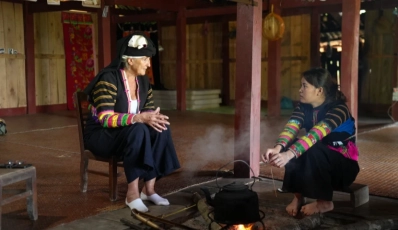
Among the Red Dao, the traditional house, known as a “pà nù” in the Dao language, is particularly common in certain areas such as Na Hang, Tuyen Quang. It is generally a house built at ground level, with fitted wooden walls, a sturdy structure and an interior arrangement that reflects family life. The central room traditionally houses the ancestor altar, while the spaces on either side are reserved for parents and children. The central area is also where the family gathers to eat and receive guests.
Building a house, however, is not simply an ordinary stage of daily life. Among the Dao, this event is also connected with ancestral beliefs and the spiritual world. The choice of materials and land, the construction itself and moving into the new house may therefore be accompanied by various rituals intended to ensure the protection and harmony of the household.
Agriculture and daily activities
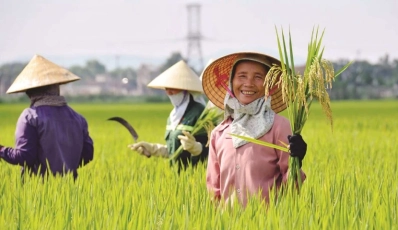
In Red Dao villages in the mountains of northern Vietnam, daily life remains closely connected to nature and agricultural activities. Depending on the region, families grow rice, maize and various local plants, while also raising livestock and carrying out other activities that help meet the household’s needs.
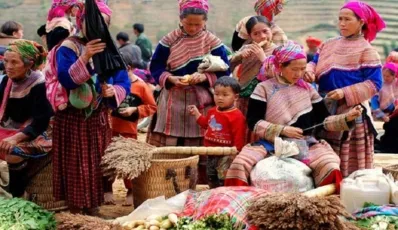
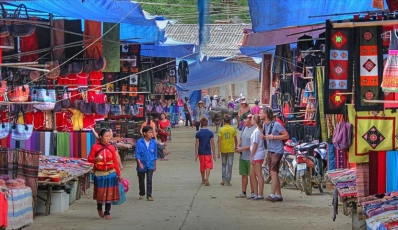
These agricultural activities also shape the rhythm of community life. Residents come together during traditional festivals, ceremonies and local markets, all of which provide opportunities to interact and maintain connections between families. In some areas, mountain markets are not simply places for buying and selling goods; they are also important social gathering places.
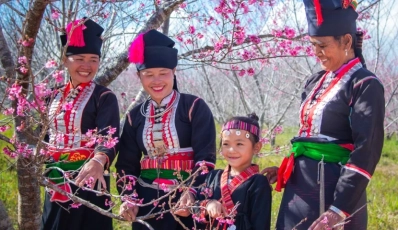
Among the Red Dao, the colour red holds a special place in traditional culture. It is associated with happiness, luck, prosperity and positive energies. It is therefore unsurprising that red features prominently in clothing and ornaments, particularly in traditional Red Dao women’s clothing.
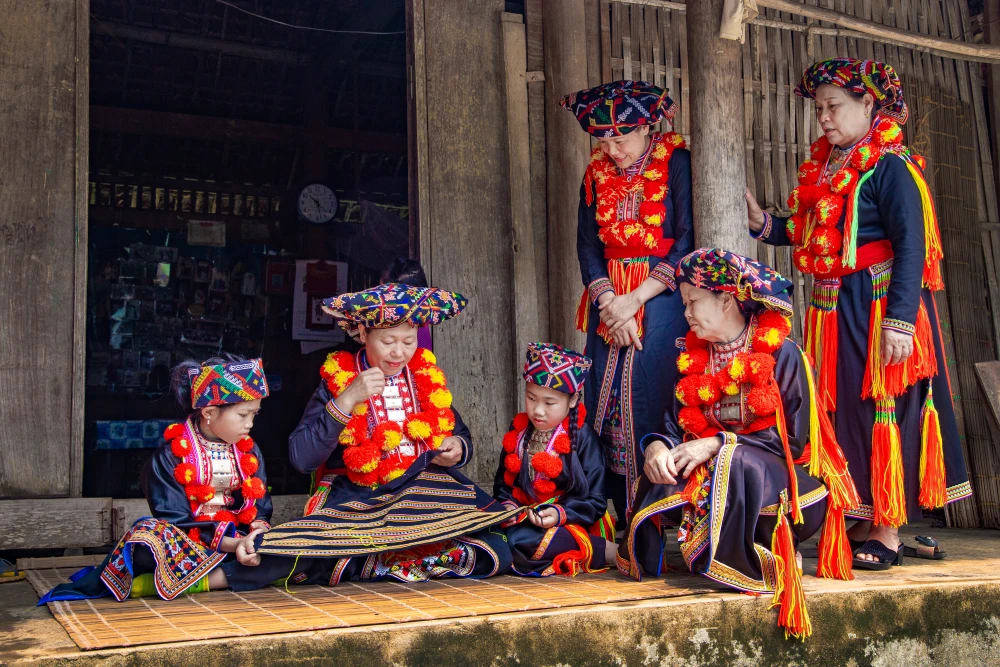
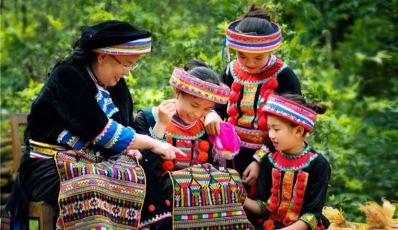
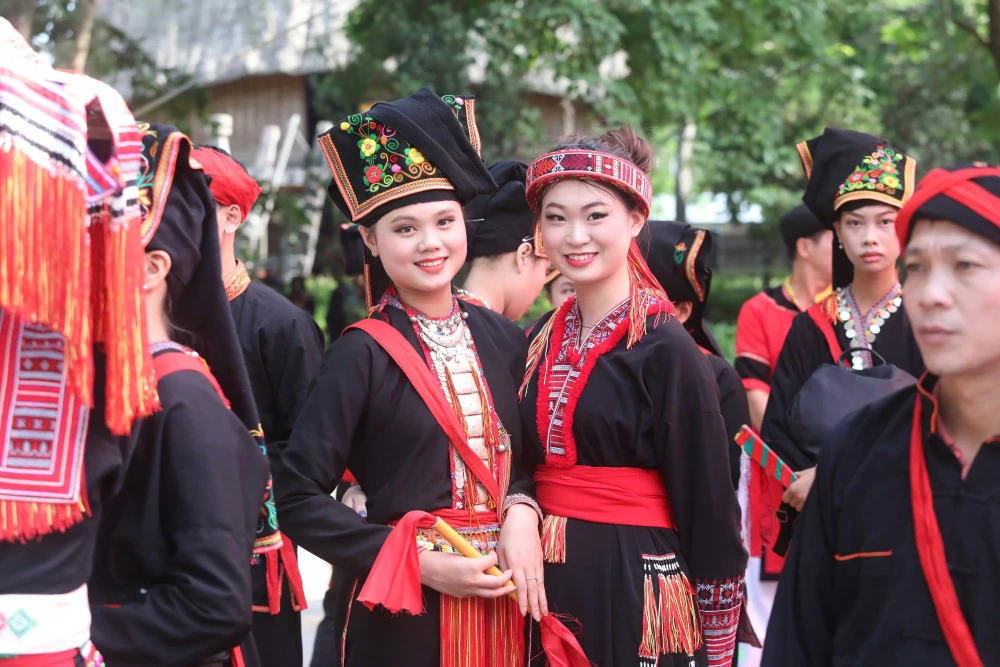
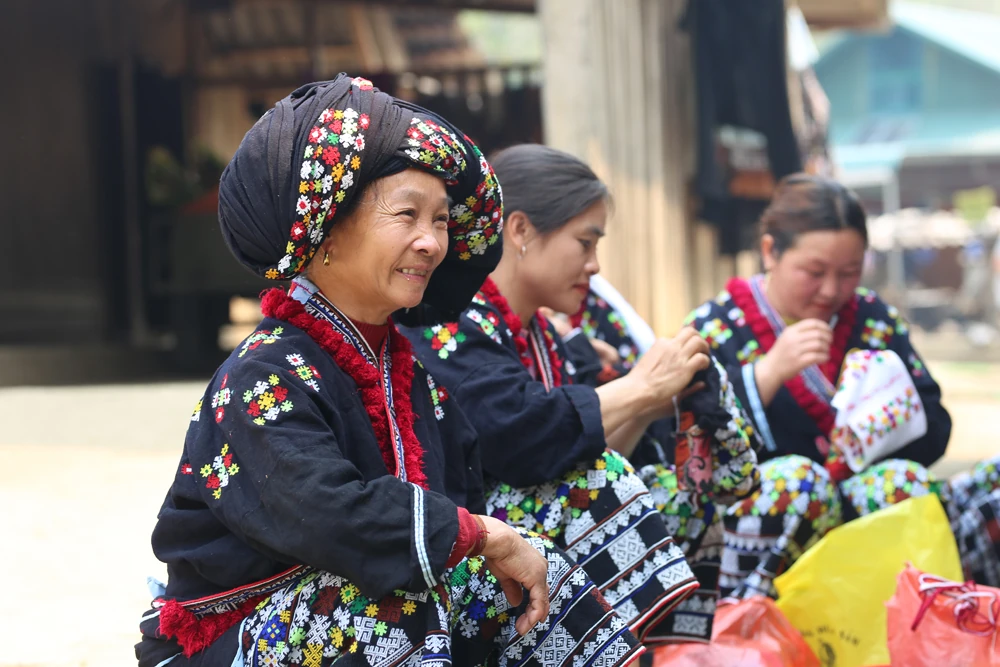
The everyday clothing of Red Dao women generally consists of a long, dark tunic, often black or indigo, richly decorated with red embroidery. The patterns depict familiar elements from their surroundings, such as flowers, plants, animals and mountain landscapes. Red, white and indigo generally dominate the designs, creating a particularly recognisable contrast.
The trousers are usually plain and black, although the lower sections may be decorated with geometric embroidery or patterns inspired by nature. The traditional headdress is another important part of the clothing. Made from dark fabrics embellished with red and sometimes white, it may be decorated with long fringes of wool or red thread. When worn by a young woman, the patterns and ornaments of the headdress become particularly visible.
During important ceremonies, the clothing becomes even more elaborate. Festive attire may include a richly decorated headdress or head covering, a long embroidered tunic, a belt and various ornaments. At a traditional Red Dao wedding, the bride’s outfit is particularly distinguished by its imposing headdress, numerous colourful fringes and intricate embroidery.
>> See also: The Diversity of Traditional Costumes of Vietnam’s Ethnic Groups
Men’s clothing is generally more understated than women’s. It typically includes a short tunic and dark-coloured trousers, along with a traditional headdress. Some garments are decorated with colourful embroidery and small silver or metal buttons.
A particularly symbolic feature appears on the back of certain tunics: a rectangular motif embroidered between the shoulder blades, traditionally associated with the “seal of King Ban” (Bàn Vương), a major ancestral figure in Dao culture and beliefs.
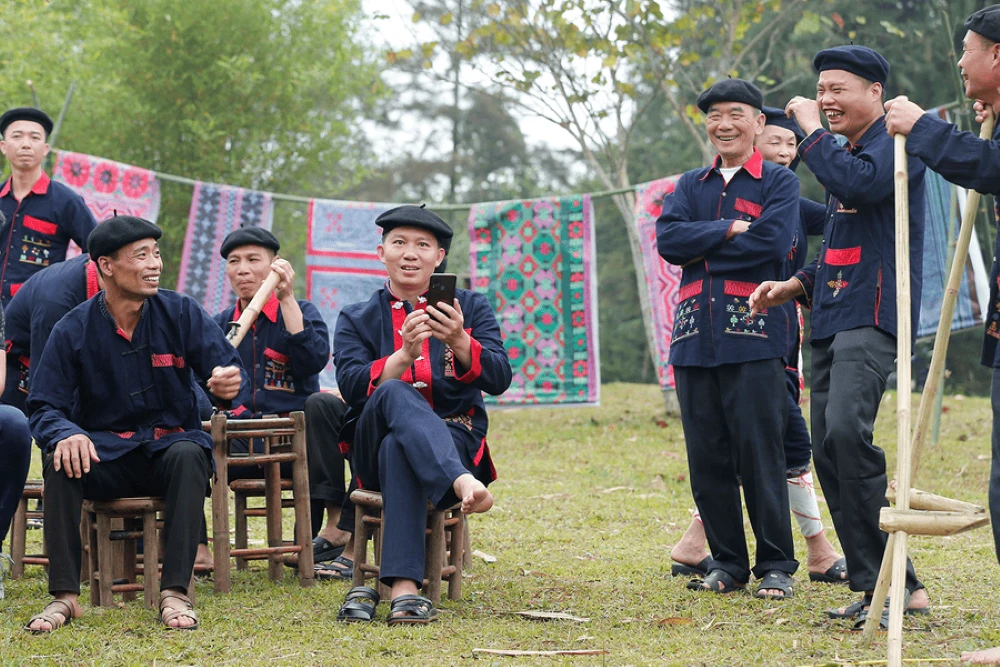
However, Red Dao traditional clothing is not identical across all communities. Depending on the region, the size of the headdress, the number of folds, the colours used and the richness of the embroidery can vary considerably. These regional differences show that traditional clothing is not a fixed model. On the contrary, it reflects the diversity of Red Dao communities and serves as a genuine marker of cultural identity.
Red Dao traditions are not limited to ancient customs: they remain deeply connected to the social, family and spiritual life of the communities. Throughout the year, different ceremonies accompany major stages of life, honour ancestors or bring residents together for important occasions. Each ritual has its own symbols and meanings, passed down from generation to generation. Here are some of the most representative traditions of Red Dao culture.
The Cap Sac ceremony holds a particularly important place in the lives of Red Dao men living in the mountain villages of northern Vietnam. It marks their recognition as adults, both socially and spiritually, and is therefore an event deeply respected by the community.
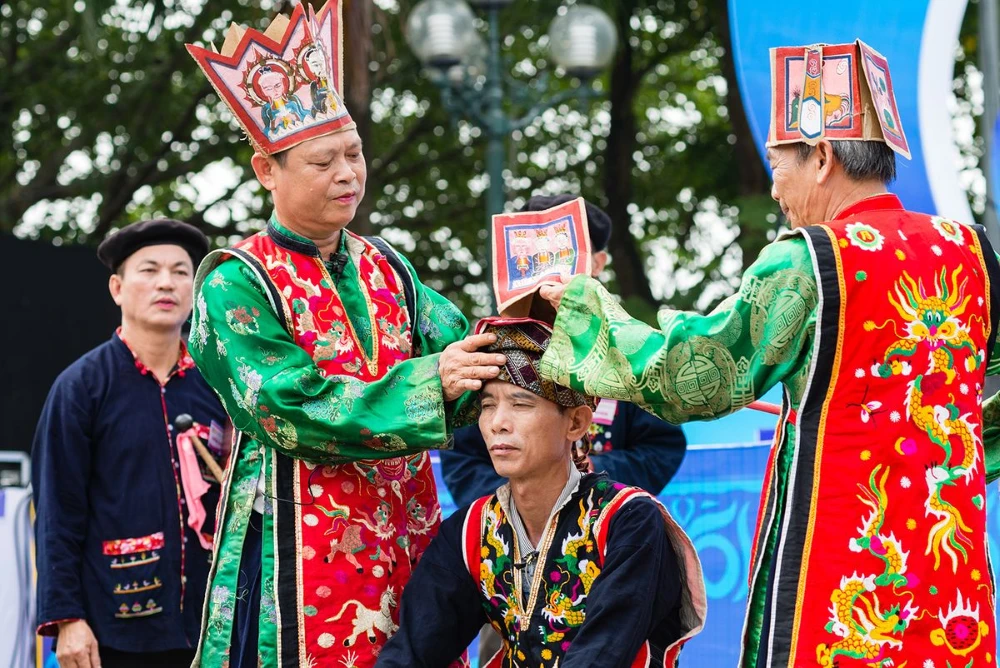
According to Red Dao tradition, the ceremony may be organised for boys from the age of 10, generally during periods when agricultural work is less demanding. Preparing for it requires considerable organisation: the family must, in particular, raise pigs, set aside rice and other food, and prepare the offerings and ritual objects required for the ceremony, as well as the meal for relatives and members of the community.
During the Cap Sac ritual, the young man is symbolically recognised by the deities and spiritual forces as a full member of the community. After receiving the ritual, some may also begin learning traditional religious practices and, if they continue this training, eventually become ceremony masters themselves.
In 2016, the Dao Cap Sac ritual was inscribed on Vietnam’s list of national intangible cultural heritage, reflecting its importance in preserving Dao traditions and cultural identity.
The fire-dancing festival (Lễ Nhảy Lửa) is one of the most important traditional rituals of the year among the Red Dao people. It is generally held between the beginning of the Lunar New Year and the fifteenth day of the first lunar month. The ceremony provides a special occasion to express gratitude to heaven and the ancestors, while offering wishes for abundant harvests, prosperity and happiness for the community.
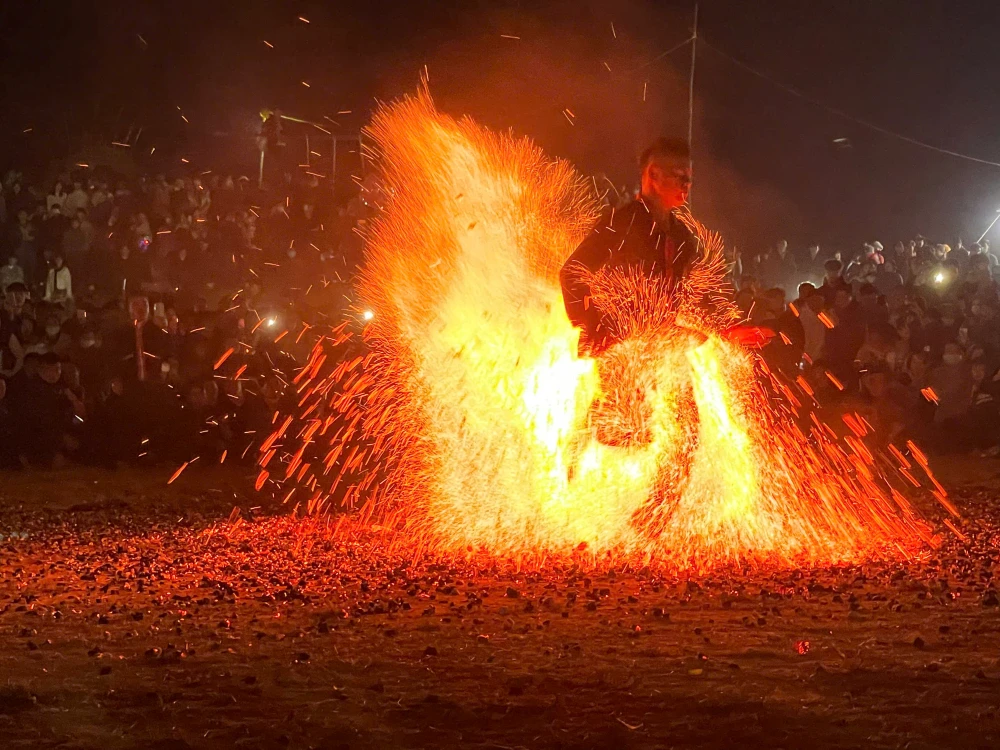
The ceremony takes place in an open area at the heart of the village. Several traditional offerings are arranged on a long wooden table: rice, rice wine, boiled chicken, spring water, undyed white cloth, incense, votive paper, lamps or candles. In the centre of the space, the young men of the village prepare a large pile of wood, which gradually turns into an impressive bed of glowing embers.
When the fire is glowing intensely, the ceremony master begins the rituals intended to bring protection and good fortune to the villagers. According to tradition, only men may take part in the fire dance, and they must purify themselves before the ritual. In particular, they bathe before participating, which is why the ceremony generally takes place in the evening, after the meal and ritual preparations.
Beyond its spectacular appearance, the Red Dao fire dance is above all a spiritual and community ceremony, deeply connected to the ancestral beliefs of the Red Dao people.
The wedding customs of the Red Dao people are another particularly rich aspect of their cultural heritage. Traditionally, a wedding could involve as many as fourteen ritual stages and last from one to three days, depending on the families and communities.
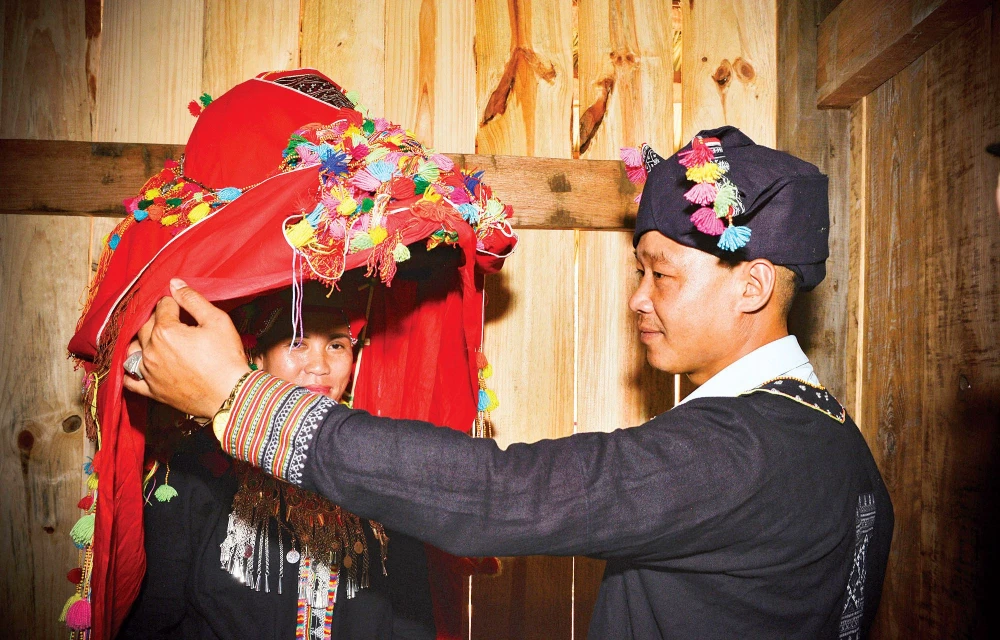
One of the most distinctive aspects is the bridal procession. Traditionally, the bride is escorted towards the home of her future husband late in the day. According to belief, leaving when the sun is no longer visible prevents the bride from “losing her soul” during the journey. The following morning, generally between 4am and 9am, the procession arrives at a location around 300 metres from the groom’s home, where his family comes to welcome the young woman. According to custom, the groom’s family therefore does not collect the bride directly from her parents’ home.
The celebrations then continue at the groom’s home with a large meal bringing together relatives and guests from both families. Traditional music plays an important role in the festivities: wind instruments accompany the meal with a variety of melodies, sometimes soft and melodious, at other times more rhythmic and joyful, creating a particularly warm atmosphere.
These different stages show that, among the Red Dao, marriage represents more than simply the union of two people. It is also a time for family and community to come together, when rituals, music, beliefs and traditions strengthen the bonds between generations.
The traditional skills of the Red Dao people extend beyond embroidery and the making of traditional clothing. In mountain villages, families have also developed knowledge related to plants, handicrafts and the natural resources of their surroundings over generations. These practices form part of a living cultural heritage, passed down primarily within families.
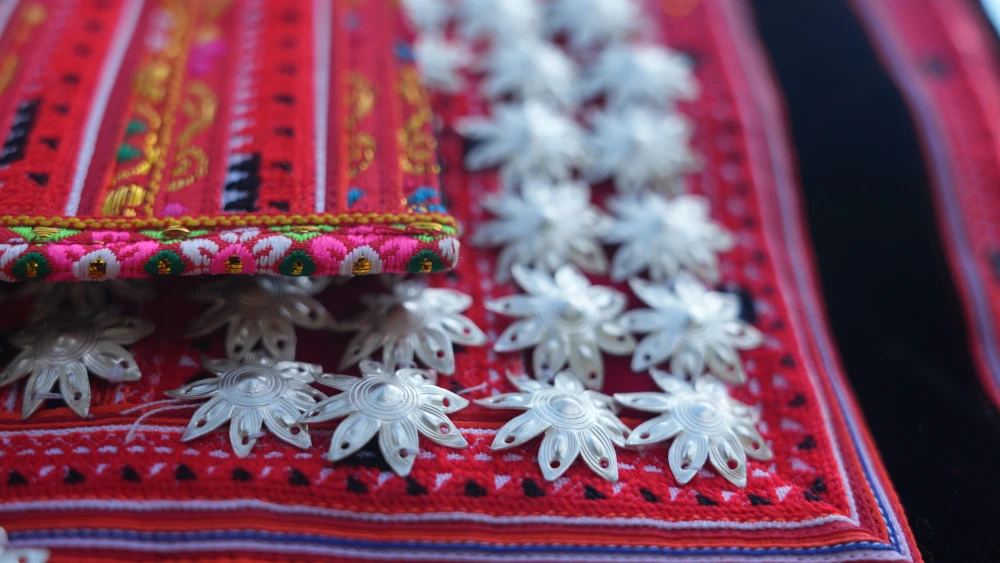
Embroidery holds an important place in Red Dao culture. Women gradually learn to recognise traditional patterns, choose colours and master the different embroidery techniques needed to make clothing. This skill requires considerable patience and precision. The patterns are generally created by hand and may depict elements of nature, geometric forms or symbols associated with Dao culture. For some women, learning to embroider begins in childhood by watching their mothers or grandmothers at work.
Therefore, when a woman wears a traditional outfit that she has helped to make, she is wearing more than a piece of clothing: she is also carrying part of the history and craftsmanship passed down through her family.
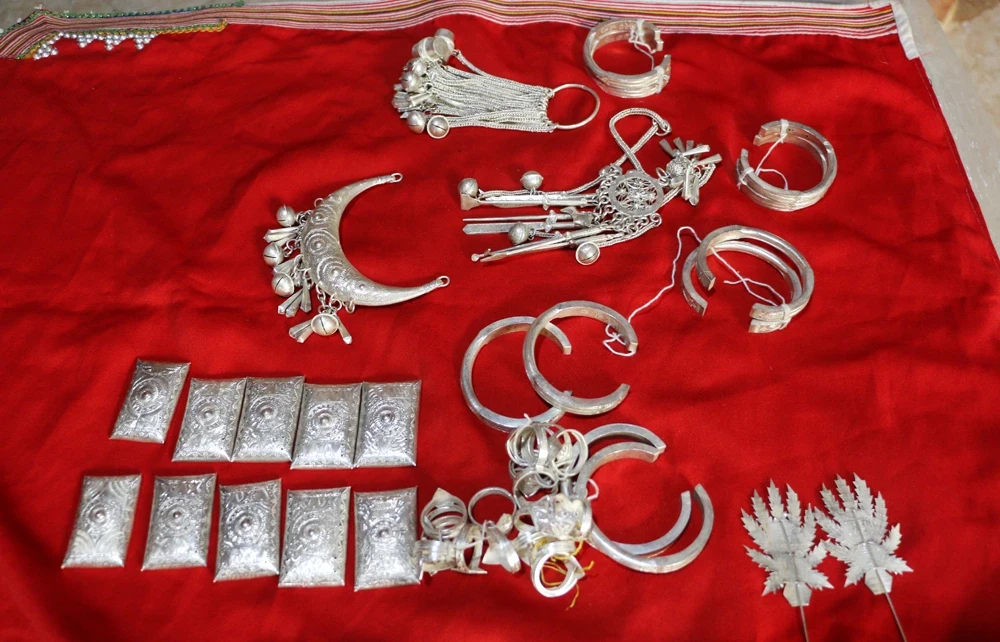
Silverwork is another traditional skill found in some Red Dao communities. Craftspeople make various pieces of jewellery and ornaments by hand, particularly those worn with traditional clothing during festivals, ceremonies and important occasions.
Making these pieces requires precision and a good knowledge of metalworking techniques. The jewellery is valued not only for its aesthetic appearance: it can also contribute to the cultural and sartorial identity of the Red Dao people. For women in particular, silver ornaments complement the embroidery and colours of traditional clothing, creating a particularly recognisable ensemble.
In Yen Lac, Cao Bang, some Red Dao families continue to practise traditional papermaking, a craft closely connected to the cultural and spiritual life of the community. The paper, generally pale yellow in colour, is valued for its durability and its ability to absorb ink without the characters fading easily. It may be used during ceremonies, traditional festivals and occasions intended to seek protection and good fortune, as well as to make votive paper or write traditional Chinese characters.
The process begins with young bamboo stems and requires particularly meticulous work. The different preparation and production stages can take between three and six months, generally during periods when agricultural work is less demanding. Papermaking therefore becomes much more than a simple craft: it represents a traditional skill combining the natural resources of the mountains, manual craftsmanship and cultural transmission within the community.
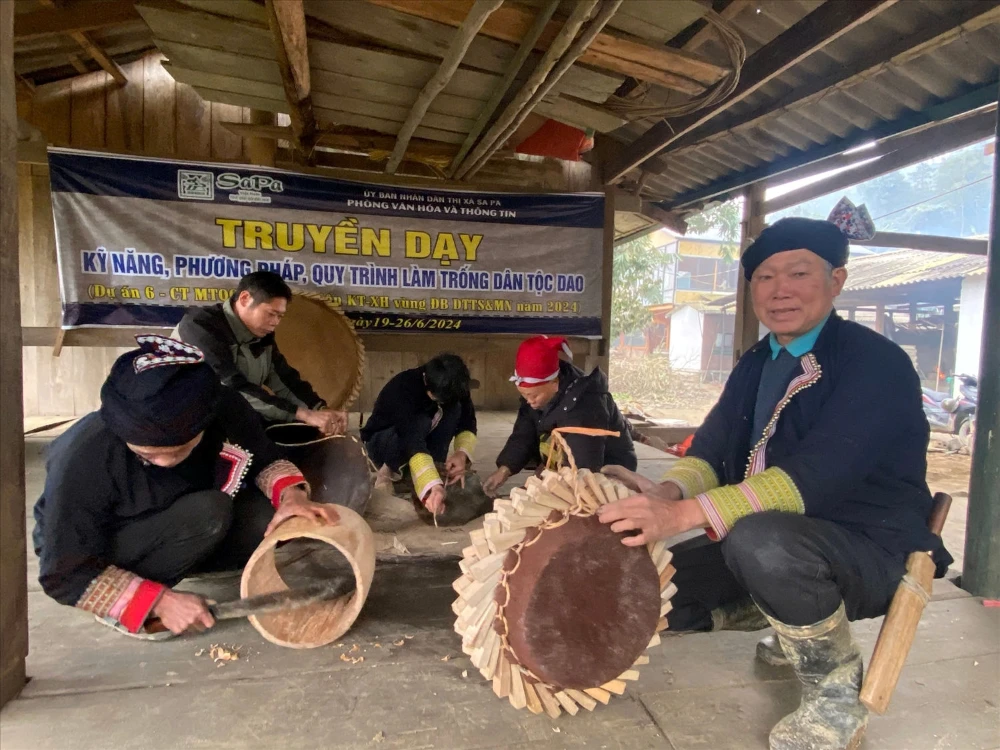
In Ta Phin, near Sapa, traditional drum making is an important craft within Red Dao culture. The drum accompanies certain ceremonies and ritual practices, giving it a cultural significance that goes beyond its purely musical function. Making a drum requires a good command of materials and traditional techniques passed down within families and communities. Every part of the drum is carefully prepared, from working the wood to fitting the skin that forms the striking surface. This craftsmanship therefore reflects the close relationship between traditional crafts, music and beliefs.
In 2020, the traditional Red Dao drum-making craft was recognised as national intangible cultural heritage by Vietnam’s Ministry of Culture, Sports and Tourism, highlighting its value in preserving the community’s cultural identity.
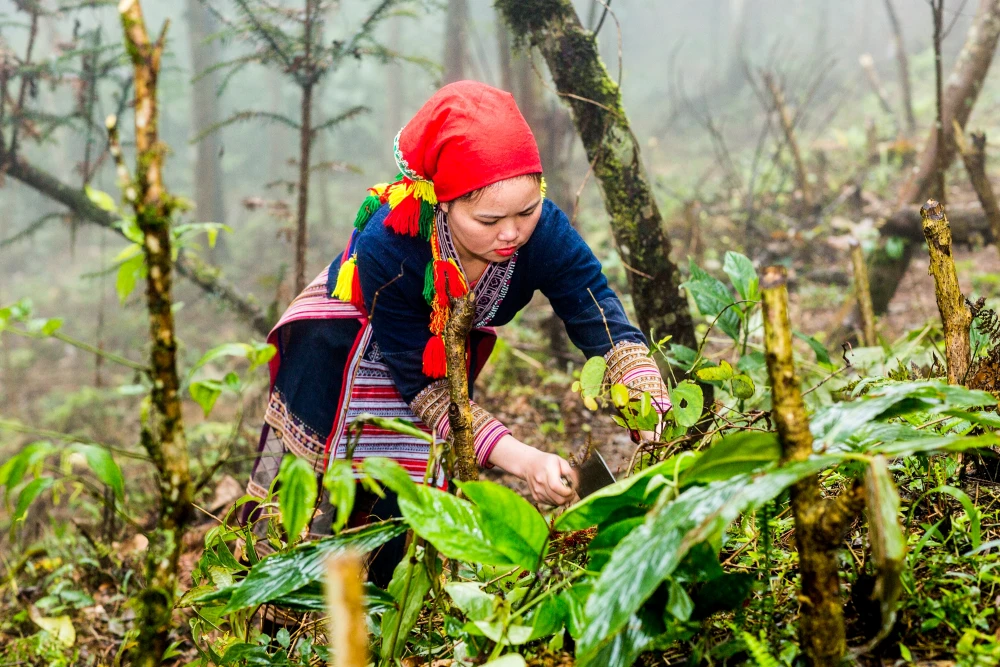
Among the best-known traditional practices of the Red Dao people is the medicinal herbal bath. In some communities, families have long been familiar with different wild plants used to prepare these baths, with recipes and preparation methods passed down within families.
The plants are generally gathered from the surrounding forests and mountains, then prepared before being placed in a large tub of hot water. The bath forms part of traditional practices associated with well-being and everyday life among the Red Dao, particularly after agricultural work or long days spent in the mountains.
Today, this practice is also offered in some villages as a cultural experience for travellers. For us, it is one of the traditions that best illustrates the close relationship between the Red Dao people and their natural environment: mountain plants are not simply resources, but form part of the knowledge passed down between generations.
During an immersive stay in a Red Dao village, taking a medicinal herbal bath offers an opportunity to discover a local practice in a family setting, while talking with residents about the plants and traditions surrounding it.
The Red Dao people live mainly in the mountainous regions of northern Vietnam. For travellers wishing to discover Red Dao culture alongside local residents, several destinations offer opportunities to meet communities in their everyday environment, particularly in Lao Cai, Ha Giang, Cao Bang and Tuyen Quang.
Lao Cai
Around 15 kilometres from Sapa, Ta Phin is one of the best-known villages for discovering Red Dao culture. A visit to the village can combine hiking through mountain landscapes, meeting local residents, discovering traditional handicrafts and taking a medicinal herbal bath. Some families also offer homestays, providing opportunities to share a meal, talk with residents and discover their way of life at a more relaxed pace.
Ha Giang
In the Ha Giang region, Red Dao communities live in several mountain villages, particularly around Hoang Su Phi, Yen Minh and Quan Ba. These areas are particularly suitable for travellers wishing to combine trekking, terraced rice fields and cultural immersion. Some experiences include visiting Red Dao homes, sharing a meal with a family or discovering local traditions and skills in a more rural setting.
Tuyen Quang
Tuyen Quang is also home to various Dao communities, particularly in its mountainous areas. For travellers wishing to venture beyond the more conventional routes through northern Vietnam, the region offers opportunities to discover lesser-visited villages and observe a traditional way of life that remains closely connected to agriculture, family traditions and local skills.
For a genuinely immersive experience, spending a night in a local homestay can be particularly rewarding. In the evening, once day visitors have left, the atmosphere of the village changes: this is often the time to share a meal, talk with the family and gain a more intimate insight into the daily life of a Red Dao community.
Discovering a Red Dao community requires above all curiosity, attentiveness and respect. Travellers are encouraged to observe traditions without treating them simply as tourist attractions.
Always ask permission before taking a photograph, particularly when photographing a person, ceremony or family space.
Respect rituals and sacred objects: avoid touching or moving objects associated with beliefs unless you are invited to do so.
Adapt your clothing and behaviour when entering a home or taking part in a ceremony.
Listen to local residents rather than focusing solely on photographing their traditional clothing. A conversation with a family can often provide a much deeper understanding of their culture.
Choose handicrafts purchased directly from artisans or local families. This helps recognise the value of the work and skills passed down within the community.
If you stay in a homestay, accept that the level of comfort may be simpler than in a city. The value of the experience lies precisely in the opportunity to share, for a short time, the rhythm of a local family’s daily life.
For travellers, an immersion in Red Dao culture can therefore take very simple forms: sharing a meal, discovering embroidery, listening to a family’s stories or simply taking the time to talk with local residents. At IZITOUR, we favour these small-scale encounters, prioritising interaction with local families and experiences that allow travellers to discover their culture with respect and authenticity.
If you would like to include an encounter with the Red Dao people in your journey through northern Vietnam, our team can help you choose the region, village and experiences best suited to your itinerary and interests.
Explore Vietnam’s cultural diversity
>> Find out more:




 TRAVELERS' CHOICE 2026