

Earlier I thought differently, many thanks for the information.
__________
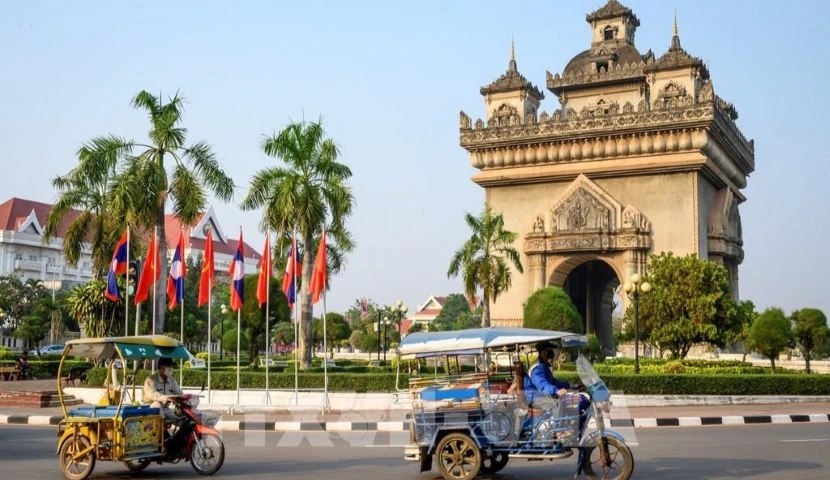
As the capital of Laos perched on the tranquil banks of the Mekong, Vientiane charms visitors with its gentle atmosphere and relaxed pace. Between golden Buddhist temples, colonial heritage, and vibrant sunset markets, the city offers a harmonious blend of spirituality and local life. If you are planning your travel and wondering what to do in Vientiane, here is our guide to the essentials to make the most of the Laotian capital.
The best time to visit Vientiane depends on the climate in Laos and your travel style. The peak tourist season runs from December to April, during the dry season. The weather is sunny, pleasant, and ideal for exploring temples or strolling along the Mekong. It is advisable to book your flights two to three months in advance to secure the best rates.
From June to September, the rainy season brings more attractive prices, though showers may disrupt some activities. Finally, the period from March to May remains particularly interesting for discovering the capital, especially in mid-April during the water festival (Boun Pi Mai), the Lao New Year—a highlight for experiencing local culture.
See more: When to visit Laos? Laos Travel Guide
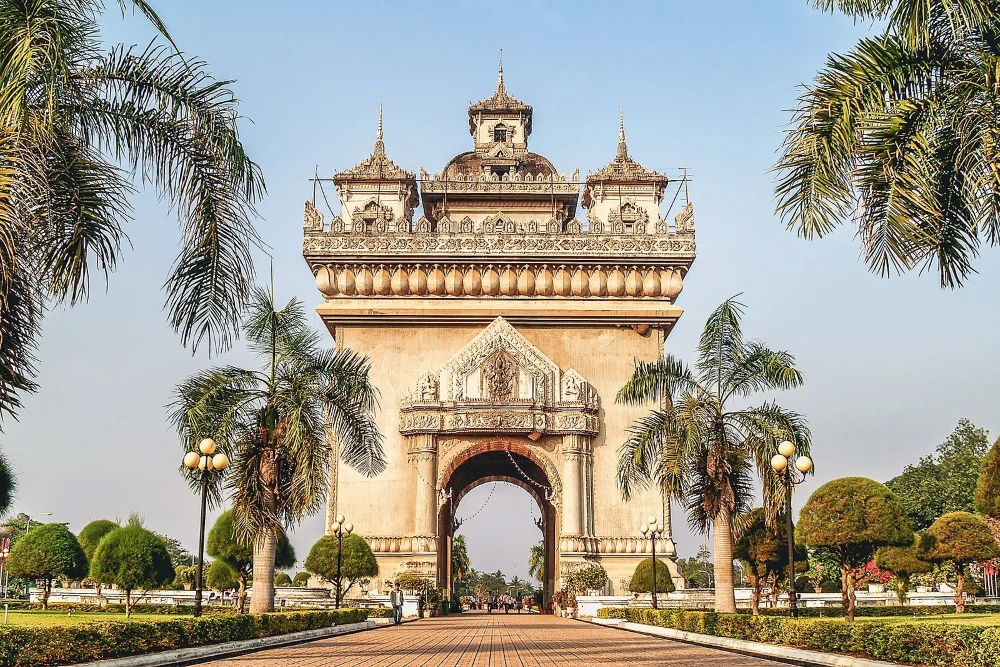
Located at the end of Lan Xang Avenue, Vientiane’s most elegant thoroughfare, Patuxai is one of the most iconic monuments to visit in Vientiane. Built between 1957 and 1968, this "Laotian Arc de Triomphe" honours the heroes who sacrificed their lives for Laos' independence. It embodies the country's collective memory and national identity.
Its architecture harmoniously blends Western influences with typically Laotian decorative elements, including floral motifs and mythological depictions. The five towers crowning it symbolise the principles of peaceful coexistence between nations according to the Laotian vision. Inside, a small gallery traces the major stages of contemporary Laos history. By climbing the stairs to the panoramic terrace, visitors enjoy breathtaking views over Vientiane and its wide boulevards. Patuxai remains an essential stop to understand the soul of the Laotian capital.
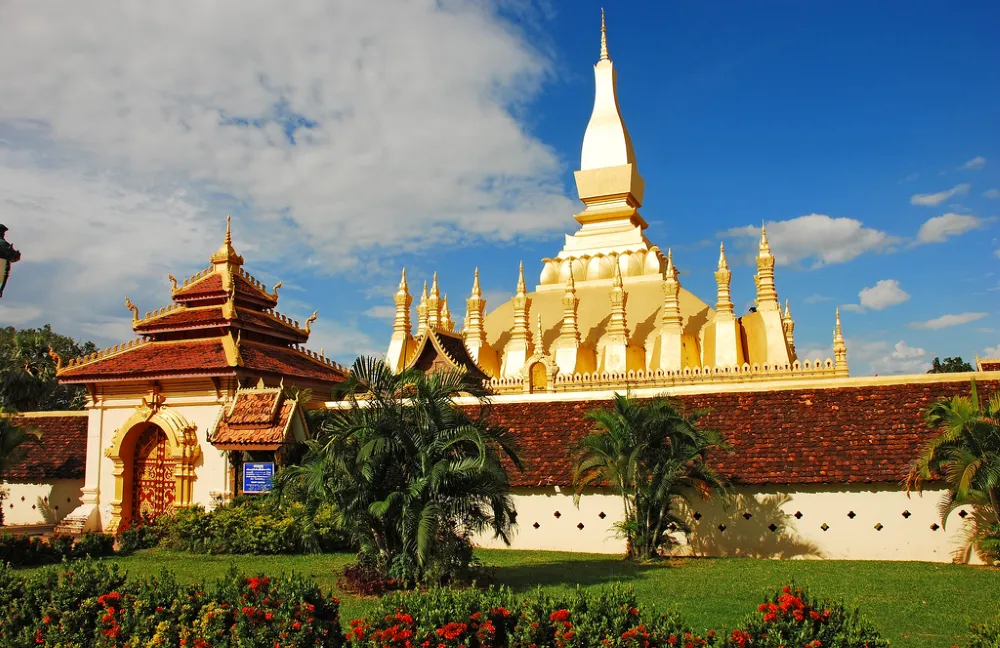
It is impossible to visit Vientiane without discovering Pha That Luang, the most important religious monument in Laos. This great golden stupa, considered the national symbol, represents both the Buddhist faith and Laotian cultural identity.
Erected in the 16th century during the reign of King Setthathirath, this Buddhist temple was reportedly built over an ancient sanctuary housing a sacred relic of the Buddha. Its majestic architecture, entirely covered in gold leaf, impresses with its slender pyramidal shape and its glow under the tropical sun.
Each year, the site hosts the That Luang Festival, one of the country's largest religious celebrations, bringing together devotees and travellers to witness traditional ceremonies and processions. As the true spiritual heart of the capital, Pha That Luang is a must-visit to understand the religious heritage and soul of Laos.
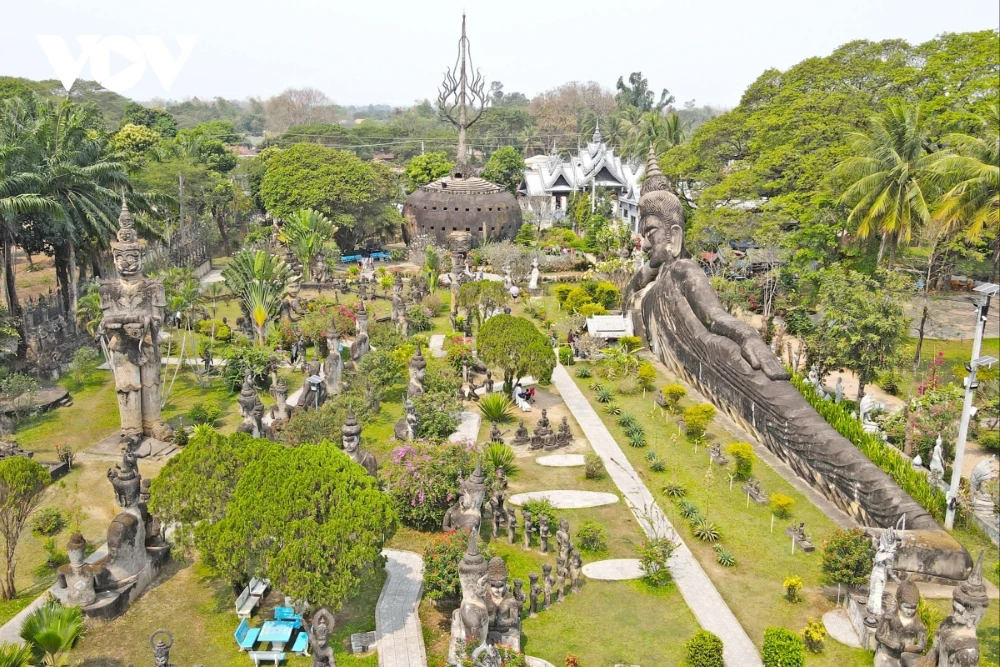
Located about 25 kilometres from central Vientiane, Buddha Park (also known as Xieng Khuan) is a unique site to visit in Laos. Created in 1958 by the mystic and artist Bunleua Sulilat, this open-air park brings together over 200 monumental statues inspired by Buddhism and Hinduism.
Visitors will find astonishing representations of Buddha, Hindu deities, and mythological creatures, some of which are giant and surreal. The immense pumpkin-shaped sculpture, symbolising hell, earth, and heaven, is a particular highlight. Between spirituality and artistic imagination, Buddha Park offers a unique experience for those wondering what to do in Vientiane off the beaten track.
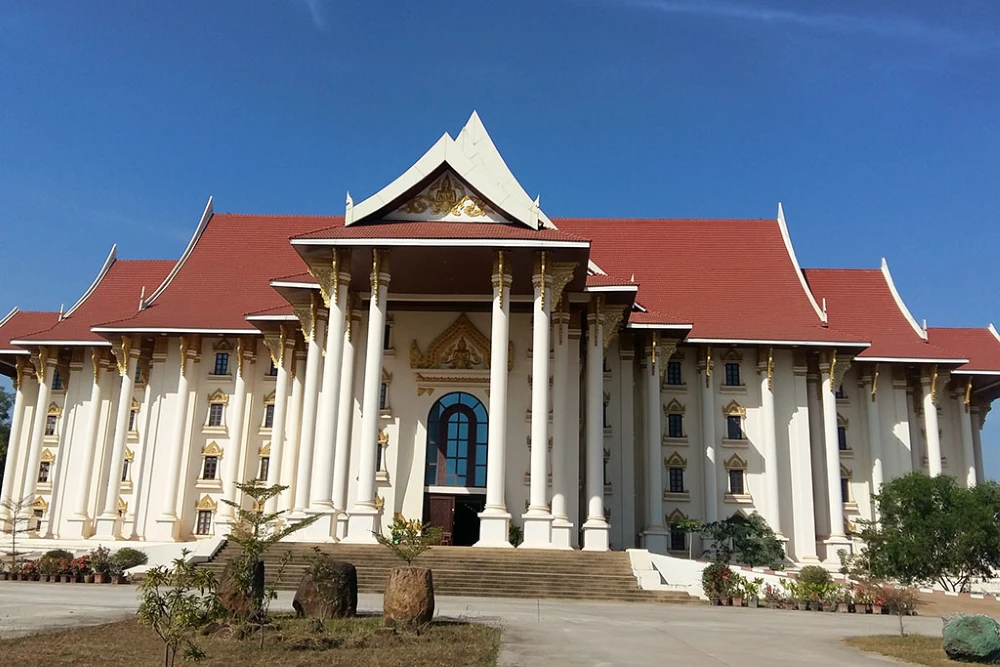
Located in the heart of Vientiane, the Lao National Museum is an essential stop for understanding the country's history and national identity. Housed in a former French colonial building, the museum traces the major historical periods of Laos, from ancient kingdoms to the contemporary era.
The collections feature archaeological artefacts, religious sculptures, historical photographs, and documents related to the colonial period and 20th-century conflicts. The visit provides a better grasp of the country's political and cultural evolution. For travellers interested in history and heritage, this museum is an ideal complement to the capital’s iconic temples.
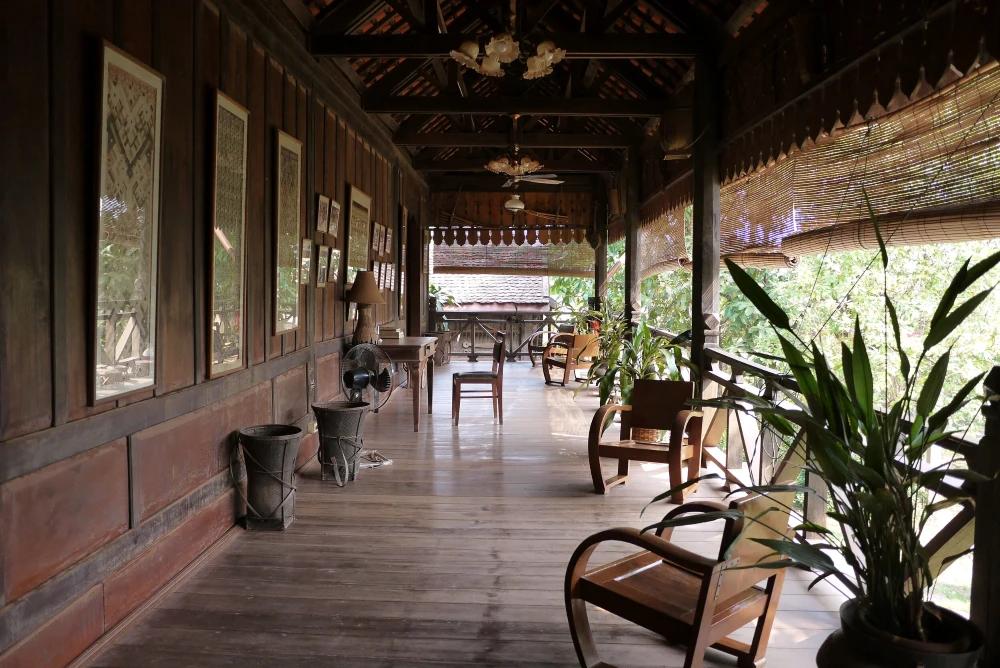
Situated a few kilometres from the centre, the Lao Textile Museum is a cultural gem dedicated to preserving and promoting Lao textile heritage. Set in a traditional house surrounded by gardens, the museum displays a rich collection of silks, ethnic costumes, and hand-woven pieces from various regions.
The visit offers insights into ancestral weaving techniques, the symbolism of patterns, and the role of textiles in Laotian society. More than just a museum, it is a living space where one discovers refined craftsmanship passed down through generations.
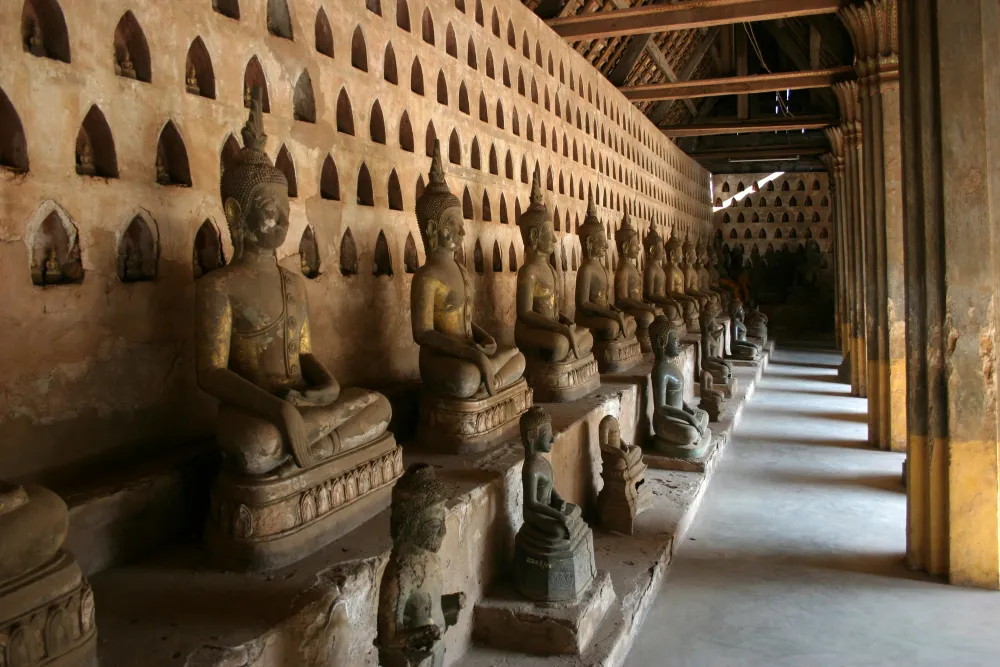
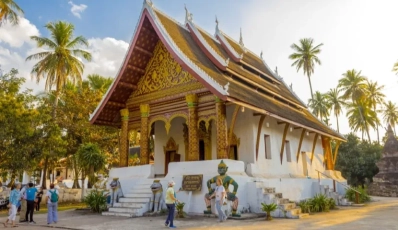
Among the Buddhist temples in Vientiane, Wat Sisaket is the oldest still intact in the capital. It was built in 1818 under King Anouvong, the ruler of the Kingdom of Vientiane and a major figure in Lao history. As the last great monarch to resist Siamese influence, he remains a symbol of courage and national identity today.
The temple miraculously survived the Siamese invasion of 1828, which destroyed much of the city. Its cloister houses over 2,000 Buddha statues made of wood, bronze, and ceramics, set into small wall niches. Wat Sisaket is a key site for discovering Lao religious heritage and spirituality in Laos.
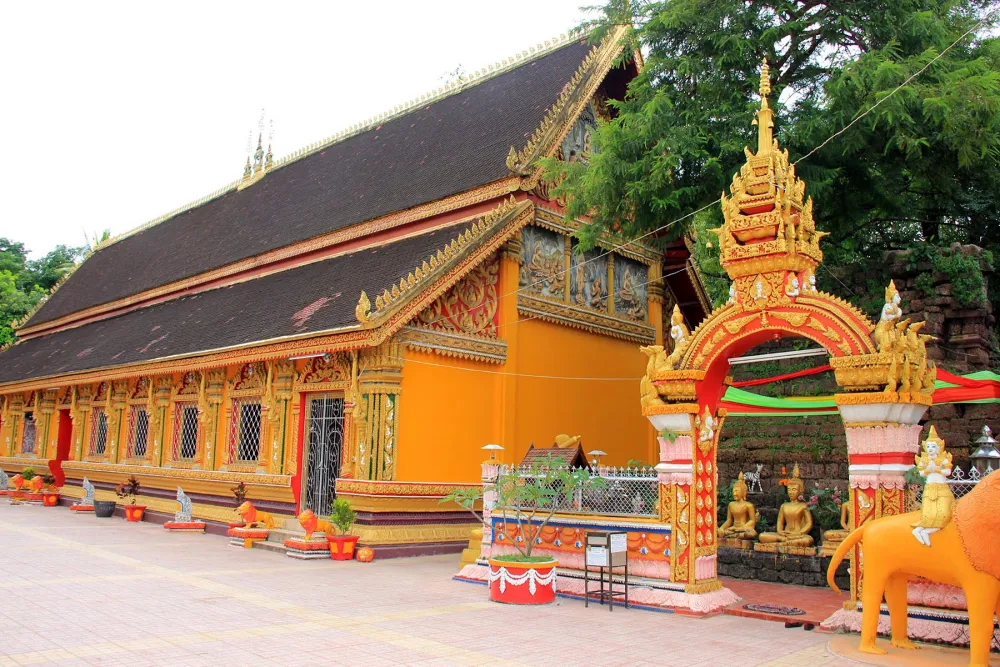
Wat Si Muang is one of the most revered temples in Vientiane. According to tradition, it was built in the 16th century on the remains of an ancient sacred city pillar. Even today, many locals come here to pray for luck, prosperity, and protection.
This temple is particularly bustling, offering an authentic and lively atmosphere. Devotees leave offerings and participate in traditional rituals. Wat Si Muang reflects the deeply spiritual dimension of Lao culture and allows travellers to observe the daily faith of the local population.
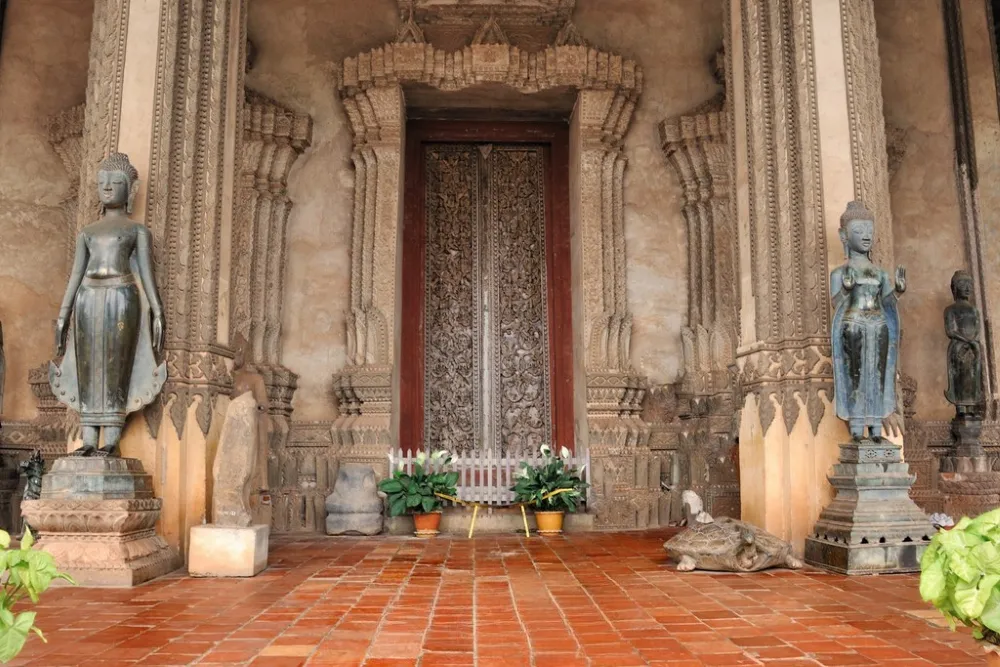
An ancient royal temple built in 1565 under King Setthathirath, Wat Phra Kaew was constructed to house the famous Emerald Buddha, the spiritual and political symbol of the Kingdom of Lan Xang. By moving the capital to Vientiane, the king sought to assert the religious power and independence of the kingdom.
Although the sacred statue was later taken to Bangkok, the temple retains strong symbolic value for the Lao people. Today transformed into a museum of religious art, it houses precious Buddha statues, stone sculptures, and ancient manuscripts. For art and history lovers, Wat Phra Kaew is a vital stop during a stay in Laos.
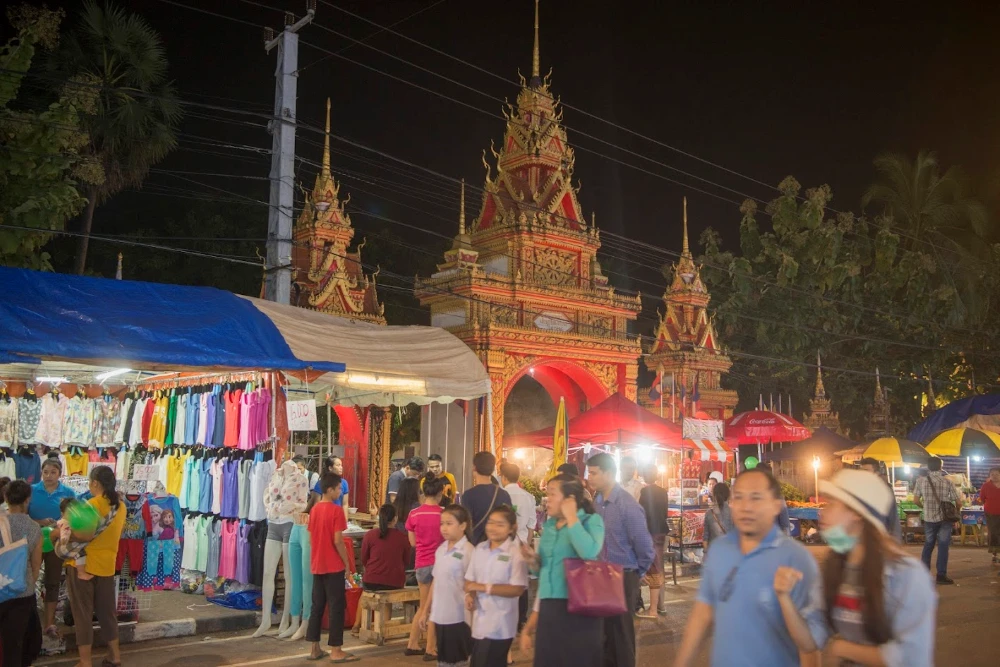
Located along the banks of the Mekong, the Vientiane Night Market is one of the capital's liveliest spots at sunset. Every evening, hundreds of stalls set up to offer local handicrafts, clothing, souvenirs, and Laotian street food specialties.
Strolling through this night market allows you to experience a friendly and authentic atmosphere, far from the hustle and bustle of larger metropolises. For travellers wondering what to do in Vientiane in the evening, this riverside promenade is a quintessential local experience.
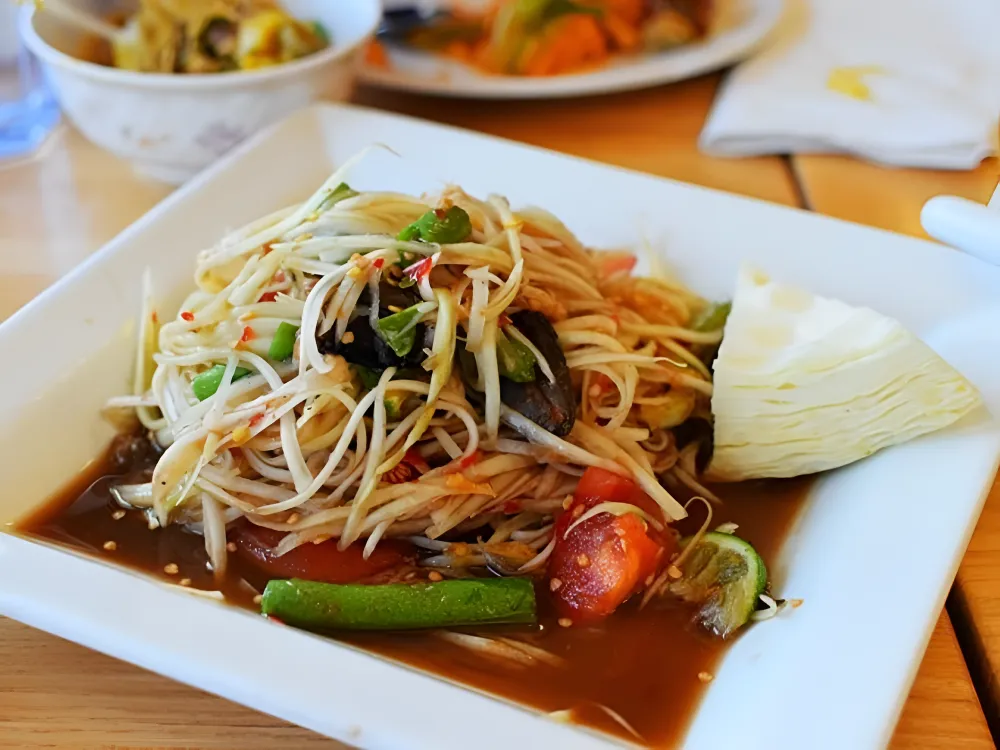
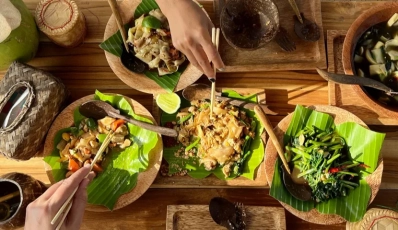
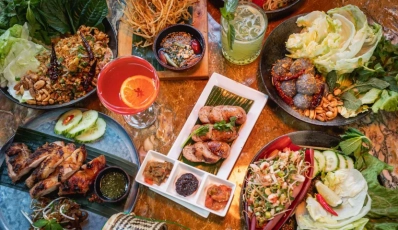
Discovering Vientiane also means tasting the richness of Laotian gastronomy. Among the iconic dishes of Laos, larb holds a central place: this minced meat salad seasoned with fresh herbs, lime, and chilli is considered the national dish. Another must-try is tam mak houng (green papaya salad), which delights with its balance of sour, salty, and spicy flavours. Finally, sticky rice (khao niao), the staple food in Laos, accompanies almost every meal and is traditionally shared with family. Tasting these local specialities is one of the essential experiences to have in Vientiane.
Vientiane is not just a place to visit; it is a place to feel. Behind its golden temples, quiet avenues, and Mekong sunsets, the Lao capital reveals an identity deeply attached to its traditions. Between religious heritage, contemporary culture, and local flavours, every experience tells a different story of Laos. Taking the time to explore Vientiane is to understand the country’s quiet soul—a discreet yet rich destination that leaves travellers with sincere and authentic memories.
See more:




 TRAVELERS' CHOICE 2026