




Le 11 et le 12 novembre soit de nuit merci de me faire des propositions
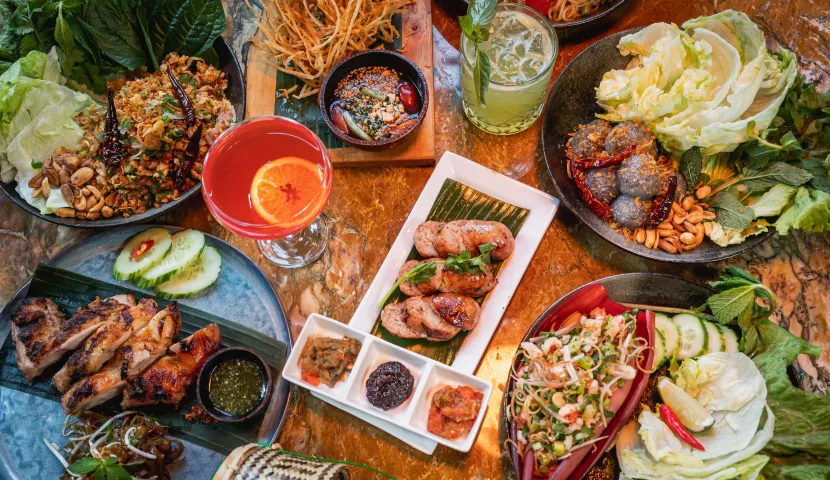
The cuisine of Laos captivates visitors with its rich tapestry of flavours, fresh ingredients, and traditional recipes passed down through generations. From spicy dishes to milder preparations, every meal reflects the history, culture, and regional diversity of Laos. Whether you are a fan of street food, authentic dishes at local markets, or fine dining restaurants, exploring Laotian gastronomy is an unmissable experience for any traveller. In this article, we present the must-try Laos specialities to tantalise your taste buds and immerse you in the country’s culinary culture.
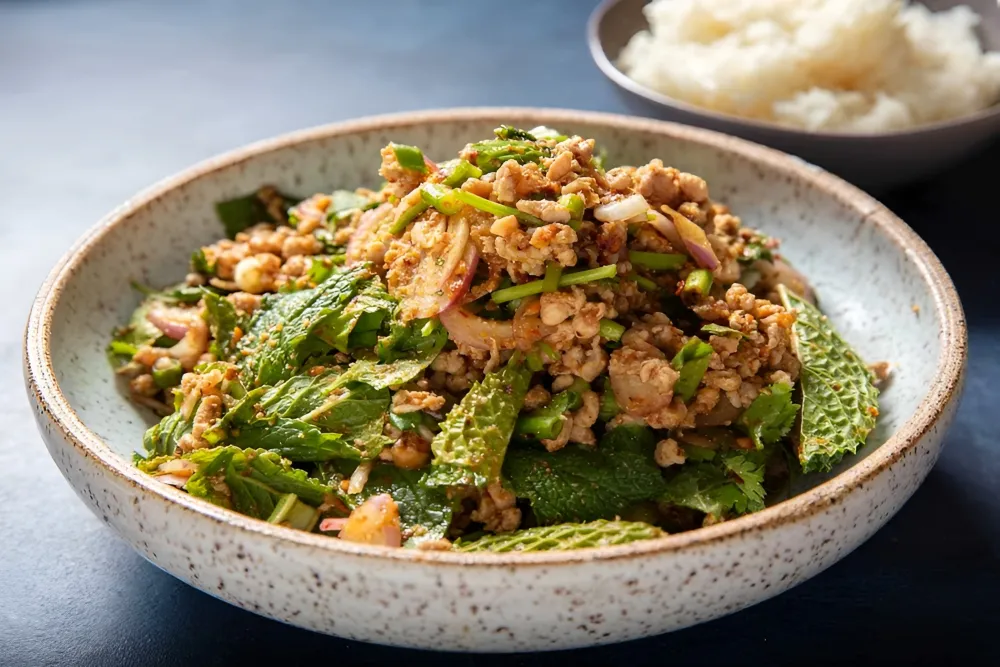
At the top of any Laotian culinary list is Larb, considered the national dish and the soul of Laos' cuisine. Larb is a minced meat salad—typically chicken, beef, pork, or fish—delicately mixed with fresh herbs, chilli, lime juice, and, crucially, finely ground toasted rice. Every bite offers a perfect balance of sour, spicy, salty, and a slight sweetness, creating a unique flavour found nowhere else. Larb is traditionally enjoyed with fragrant sticky rice (Khao Niew) and fresh vegetables, a harmonious combination that is both tasty and nourishing. Travellers can easily find this iconic dish in most local restaurants and night markets.
Simple yet deliciously authentic, Larb is also prepared for festivals, celebrations, or as a symbolic gift, as it is associated with good luck and prosperity. It is undoubtedly an essential gastronomic experience during any trip to Laos.

Tam Mak Hoong is a traditional Laotian salad, similar to Thai Som Tam. Green papaya is finely shredded and pounded in a stone mortar with palm sugar, garlic, chilli, peanuts, tomatoes, dried shrimp, and various spices. The dish is enhanced by the intense flavour of pa daek, the famous fermented Laotian fish sauce, before being garnished with fresh herbs and toasted peanuts. Its irresistible tangy and spicy taste pairs perfectly with grilled meats or Larb.
A true staple of Laotian cuisine, Tam Mak Hoong can be found everywhere in the Land of a Million Elephants: from street food stalls and traditional markets to more refined restaurants, always at very affordable prices.
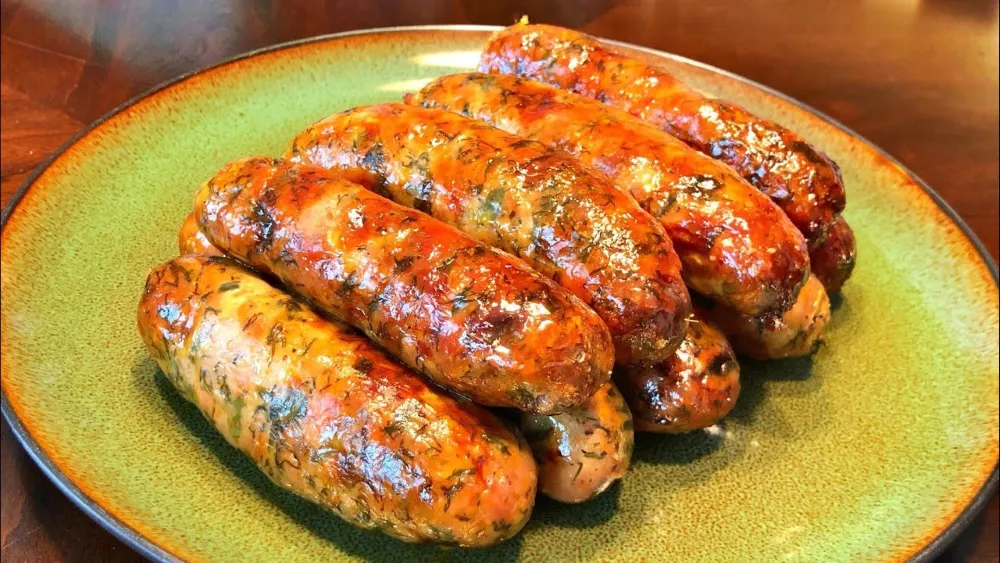
Sai Oua, the famous Lao sausage, is a popular snack or starter enjoyed by both locals and travellers. This sausage gets its unique taste from a mixture of minced pork, lemongrass, kaffir lime leaves, shallots, coriander, chilli, and fish sauce. Grilled or fried until lightly golden, Sai Oua gives off an irresistible aroma and offers a harmonious combination of savoury, slightly sweet, and delicately spicy flavours. With its crispy skin and juicy interior, it goes perfectly with a Lao beer or a basket of sticky rice. Enjoying it warm is ideal to appreciate all its flavours.
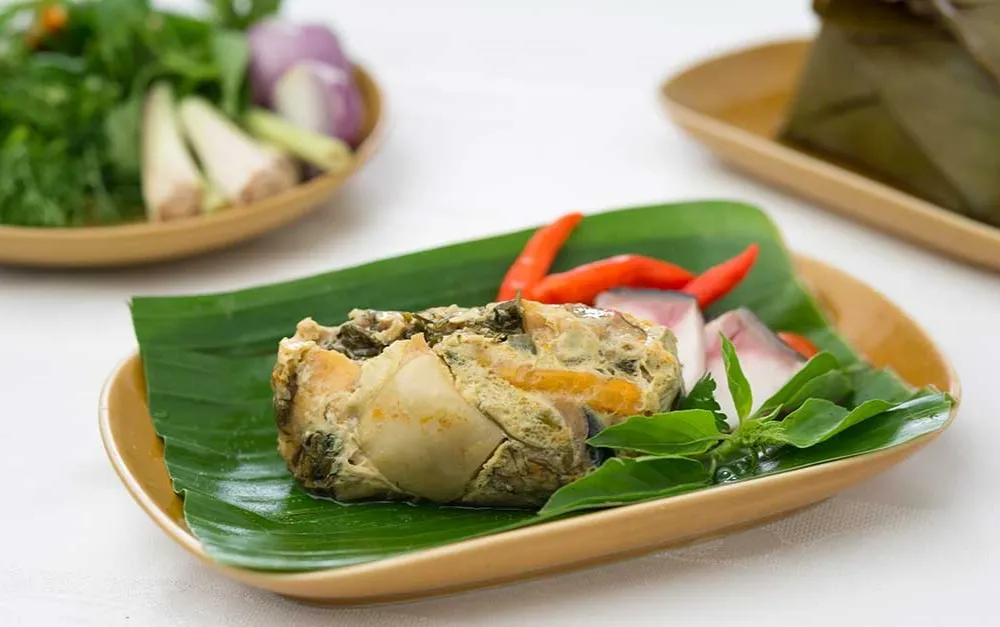
Mok Pa is a traditional Laotian dish renowned for its unique preparation method and rich, aromatic flavour. Fresh fish—usually carp or catfish—is filleted, cut into pieces, and mixed with aromatic herbs, garlic, onion, chilli, and makhaen, an emblematic spice in Laotian cooking. The mixture is then wrapped in banana leaves and steamed over charcoal embers. This technique keeps the marinated fish tender and gives Mok Pa a rustic yet particularly appetising appearance.
When tasting it, you perceive the sweetness of the fish mixed with the heat of the chilli and the woody aroma of makhaen, creating a typical and flavourful gastronomic experience. Mok Pa is often savoured with sticky rice, forming a balanced and delicious meal. Highly appreciated, this dish is readily available in local eateries and traditional restaurants in Laos.
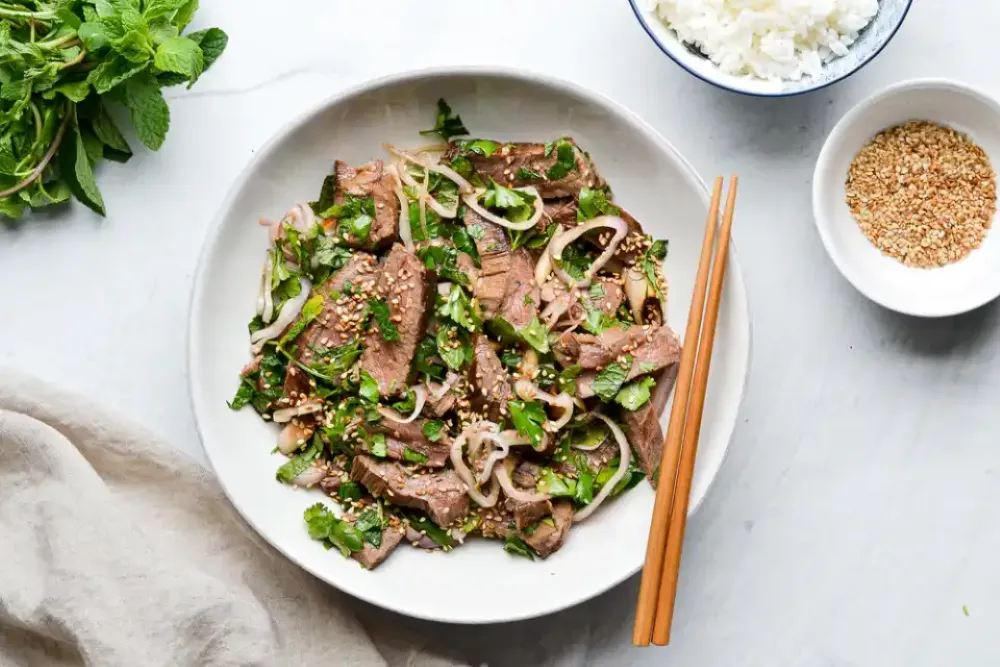
Laap Naam Tok is a Laotian speciality that is distinct from traditional Larb. While classic Larb is prepared with minced meat—chicken, pork, or beef—mixed with fresh herbs, lime juice, and ground toasted rice, Laap Naam Tok uses grilled or quickly pan-seared meat, bringing a slight caramelisation and a very characteristic smoky aroma.
The term "Naam Tok", meaning "waterfall", refers to the savoury juice of the grilled meat that flows and mixes with the tangy and spicy dressing. The dish is seasoned with fish sauce, lime juice, coriander, Thai basil, and shallots. More intense and fragrant than traditional Larb, Laap Naam Tok offers a more robust and deeply aromatic flavour.
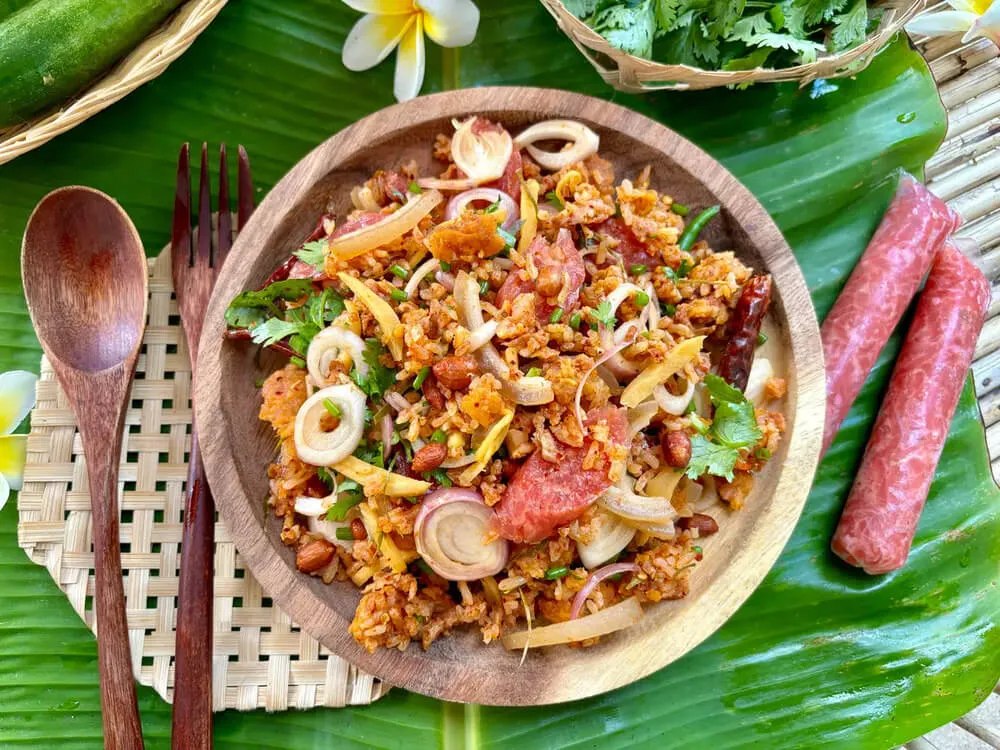
Naem Khao Tod is a unique Laotian salad. Its peculiarity lies in the rice balls, which are deep-fried until golden and crispy, then crumbled into small pieces. This crunchy rice harmoniously combines with the richness of grated coconut, the sweetness of peanuts, the savoury-sweet flavours of pork, and a blend of spices such as fish sauce and dried chilli. It is served with fresh lettuce leaves, offering a balance of textures and flavours that is typical, surprising, and deliciously addictive.
Today, Naem Khao Tod is increasingly appearing in Laotian restaurants abroad, particularly in Thailand. However, it is in Vientiane, its birthplace, that one can enjoy the most authentic and flavourful version.
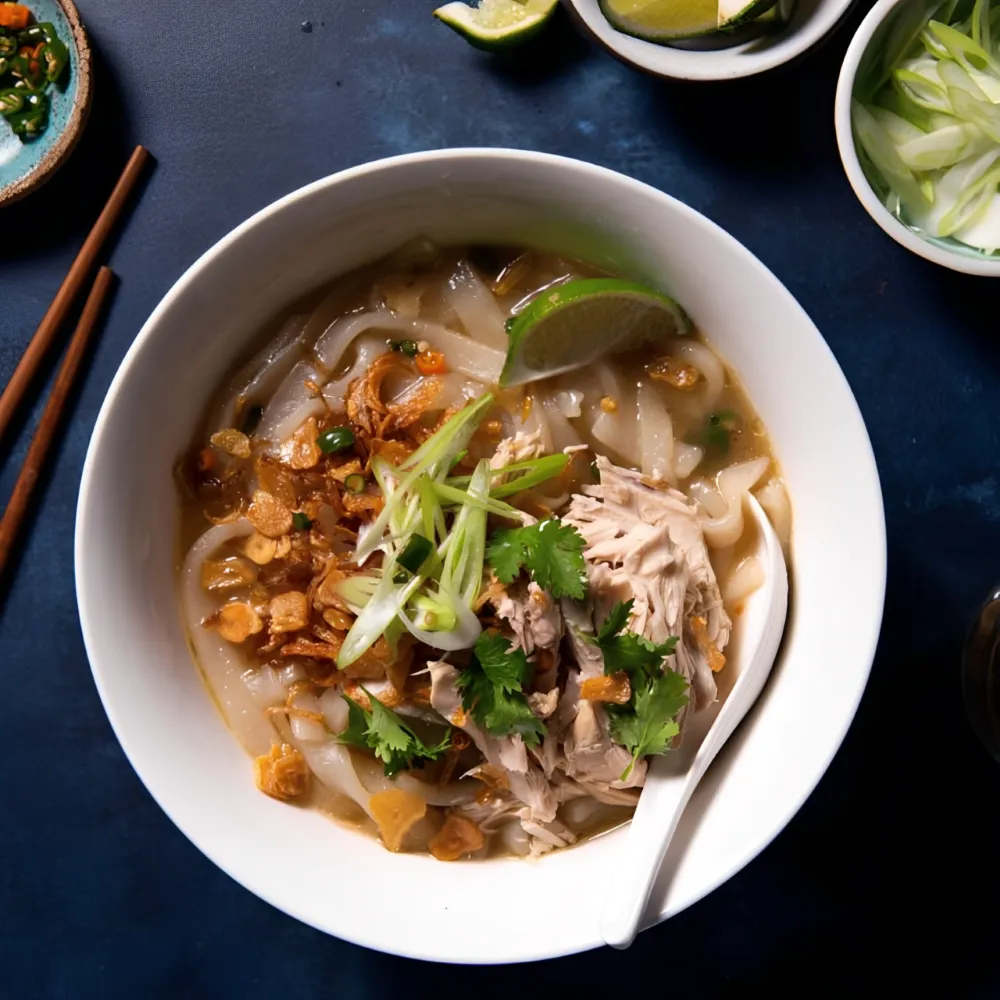
Khao Soi is an ancient, traditional Laotian dish deeply rooted in the culinary culture of the Land of a Million Elephants. Its soft and slightly springy noodles are served in a creamy broth prepared from chicken or beef bones, simmered with carrots and potatoes. The light yellow broth combines the natural sweetness of the vegetables, the richness of coconut milk, and the umami of the meat, creating an irresistibly comforting flavour. When tasted, you discover the perfect alliance between the elasticity of the noodles, the richness of the broth, the sweetness of the vegetables, and the depth of the meat. The dish is often enjoyed with fresh vegetables, spring onions, chilli, and a squeeze of lime to enhance the overall flavour.
Highly appreciated during traditional festivals, celebrations, and family meals, Khao Soi embodies the spirit of conviviality and sharing in Laos cuisine.
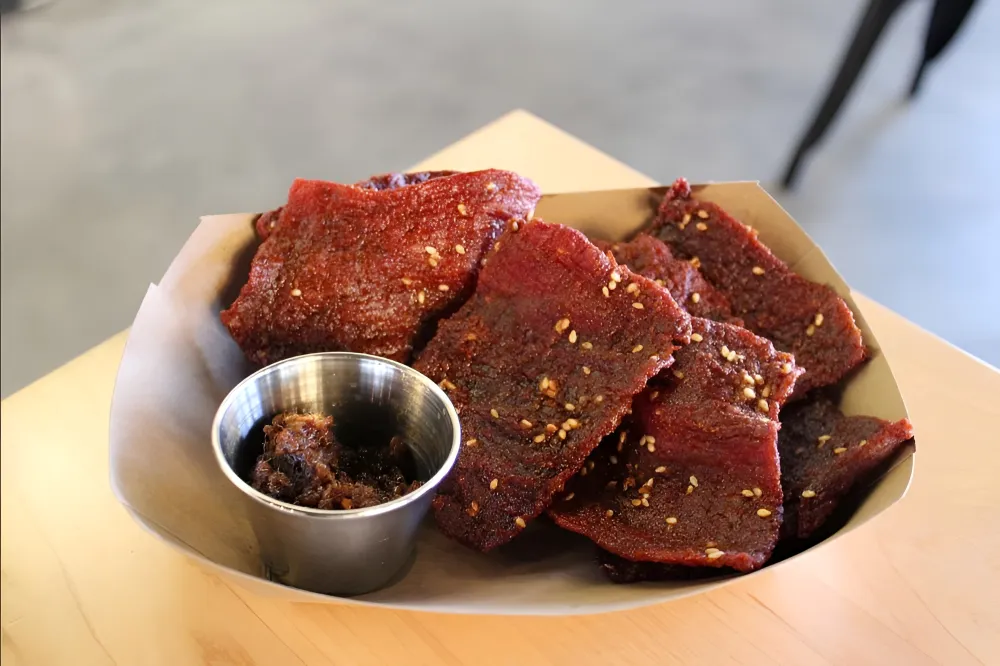
Sien Savanh, an emblematic speciality of the Savannakhet region, is a highly popular Laotian style of dried beef. The beef or buffalo meat is marinated in a mixture of fish sauce, garlic, ginger, sugar, sesame seeds, salt, and pepper, then sun-dried until firm before being grilled over charcoal to give it a distinctive smoky aroma. Sien Savanh is savoury, aromatic, and intensely fragrant. It is typically eaten with sticky rice or white rice, accompanied by jaew mak len sauce—made from tomato and chilli—and makes an excellent, shareable snack alongside a Lao beer.
This typical delicacy is also one of the most sought-after gastronomic souvenirs for travellers, who happily bring it back for family and friends.
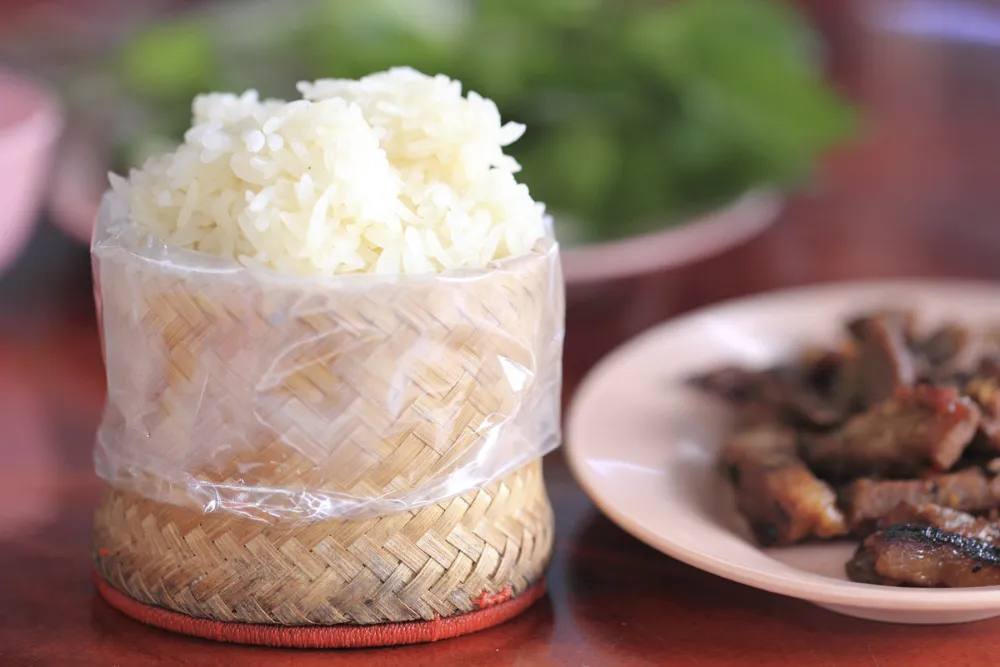
Khao Niew, or sticky rice, is the staple food and a must-have on the Laotian table. This sticky, fragrant rice is steamed in a bamboo basket, which gives it a characteristic aroma and a lovely pearly white hue. The traditional way to eat it is to form small balls with your fingers before dipping them into dishes such as Larb, Tam Mak Hoong, Ping Kai grilled chicken, or cheo boong, a widespread sauce in Laos.
Much more than just a side dish, Khao Niew is a true cultural symbol, embodying solidarity, sharing, and family cohesion. During celebrations, festivals, and communal meals, it is often prepared and served to strengthen the bonds between diners. Savouring Khao Niew is also about soaking up the very essence of the Laotian people's lifestyle and traditions.
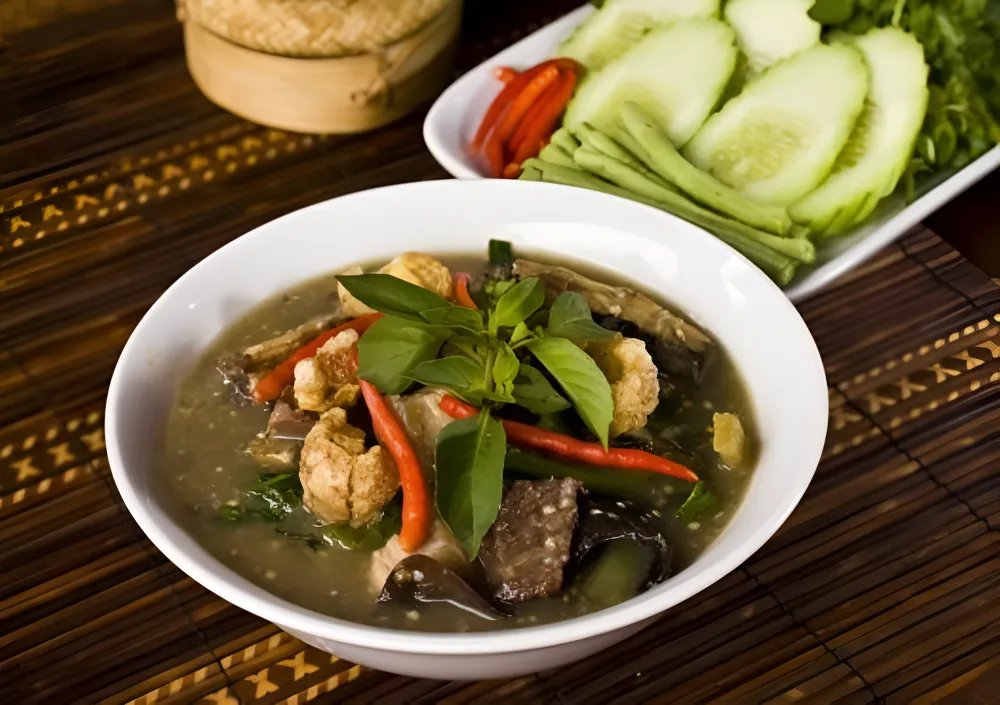
Or Lam, a spicy Laos stew, is an emblematic traditional dish, particularly popular in the Luang Prabang region. This dish brings together various seasonal vegetables, meat (often beef or buffalo), and especially a unique spice called mai sakhan, an aromatic woody vine that imparts a subtle warmth and a very characteristic fragrance.
Or Lam is simmered for a long time so that all the ingredients are perfectly infused with the flavours, resulting in a rich, deep, and slightly spicy dish. Despite the significant preparation time, this stew captivates with its mild, smoky, and zesty taste that awakens all the senses. Served hot with sticky rice, Or Lam is ideal for cool days, holidays, or family meals. It is an authentically Laotian dish, hard to find elsewhere.
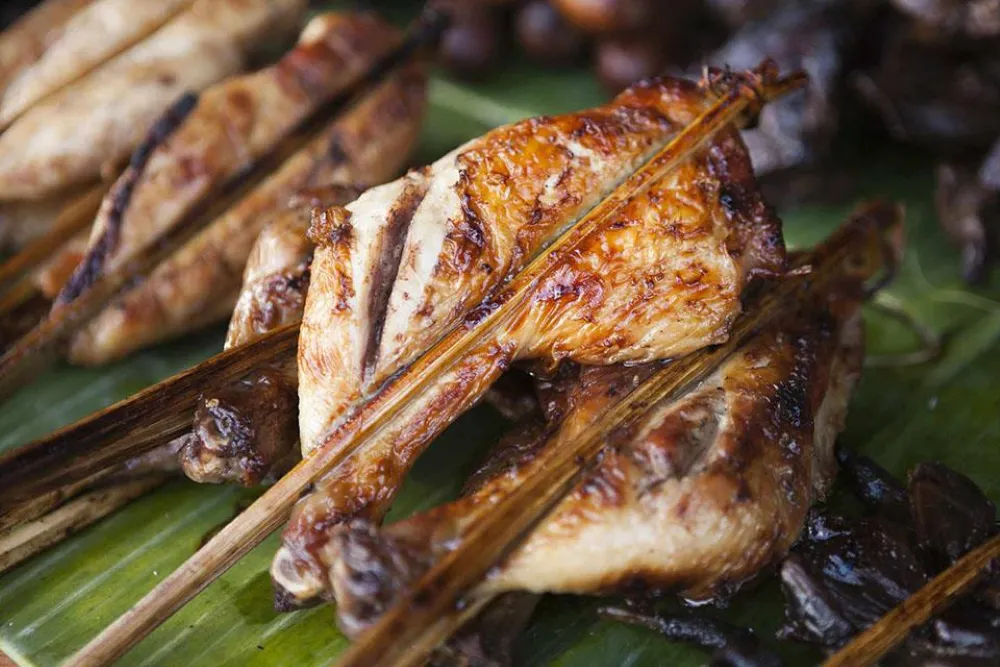
Ping Kai is one of the most famous dishes in Laotian cuisine. The chicken is marinated with a blend of spices and aromatic herbs, then wedged between two bamboo sticks before being grilled over embers until the skin is golden and crispy, while the meat remains tender and juicy. The aroma of the grilled chicken mixed with the charcoal smoke is irresistible and instantly whets the appetite. Ping Kai is usually eaten with sticky rice and an intensely flavoured local sauce.
It can be easily found at street stalls throughout the country, but it is particularly renowned in the Savannakhet province. Ping Kai is a true symbol of Laotian gastronomy: simple, communal, and delicious.
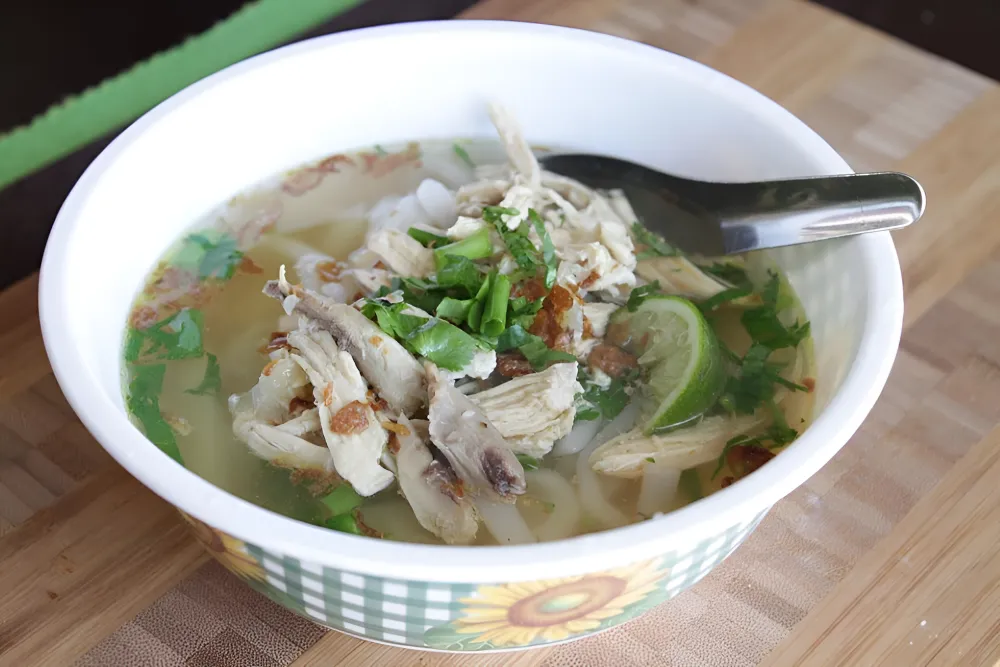
Khao Piak Sen is one of the most beloved traditional dishes in the Land of a Million Elephants. This dish appeals to foodies with its rich and savoury broth, simmered from bones and local spices, as well as its thick and chewy rice noodles, served with finely sliced chicken or pork, spring onions, coriander, and a squeeze of lime spiced up with a little chilli. On cool mornings in Luang Prabang, a steaming bowl of Khao Piak Sen is the ideal choice to start the day.
Khao Piak Sen is not only a popular breakfast dish but also a symbol of warmth and simplicity in Laotian cooking. With its deep and comforting flavour, it holds an important place in the daily meals of locals and charms many travellers. It is easily found in small street stalls or night markets.
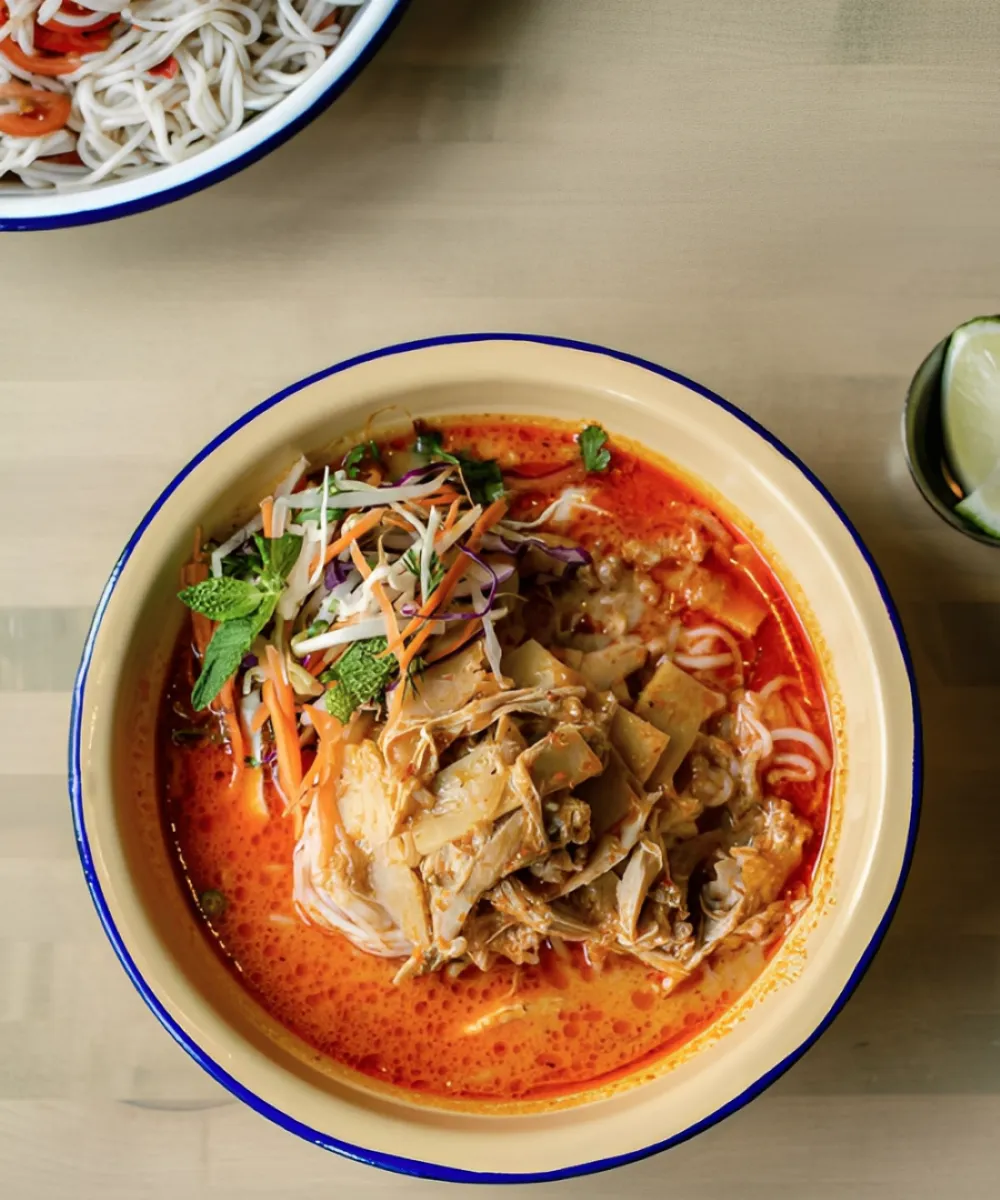
Khao Poun, also known as Laotian spicy vermicelli soup, is another highly popular breakfast dish among both locals and visitors. This soup captivates with its intense aroma, spicy warmth, and the subtle harmony of its ingredients, offering an unforgettable culinary experience.
This creamy dish is prepared with a coconut milk curry paste and meat—often pounded chicken, fish, or pork. Typical ingredients include fish sauce (nuoc-mâm), galangal, garlic, kaffir lime leaves, chilli, mint, and shallots. The use of coconut milk gives the soup a velvety texture and an irresistible fragrant note. For perfect tasting, fresh aromatic herbs and bamboo shoots are added, which enhance the freshness and richness of the dish.
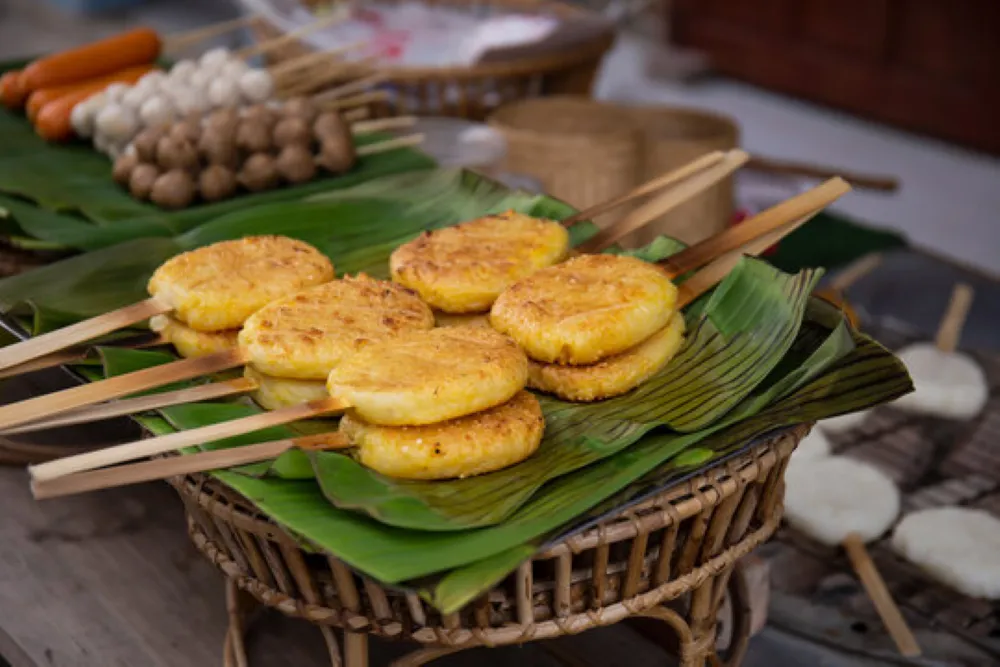
Khao Jee is one of the most popular Laotian street foods and was even named one of the world's best street food by CNN. This simple but irresistible snack is prepared by shaping sticky rice onto a skewer before grilling it over charcoal. A thin layer of beaten egg, fish sauce, and fresh chilli is then brushed over the top, giving the snack a golden colour and a fragrant flavour. Offered at a very affordable price, often for less than a pound, Khao Jee is a must-try for discovering authentic Laotian cuisine.
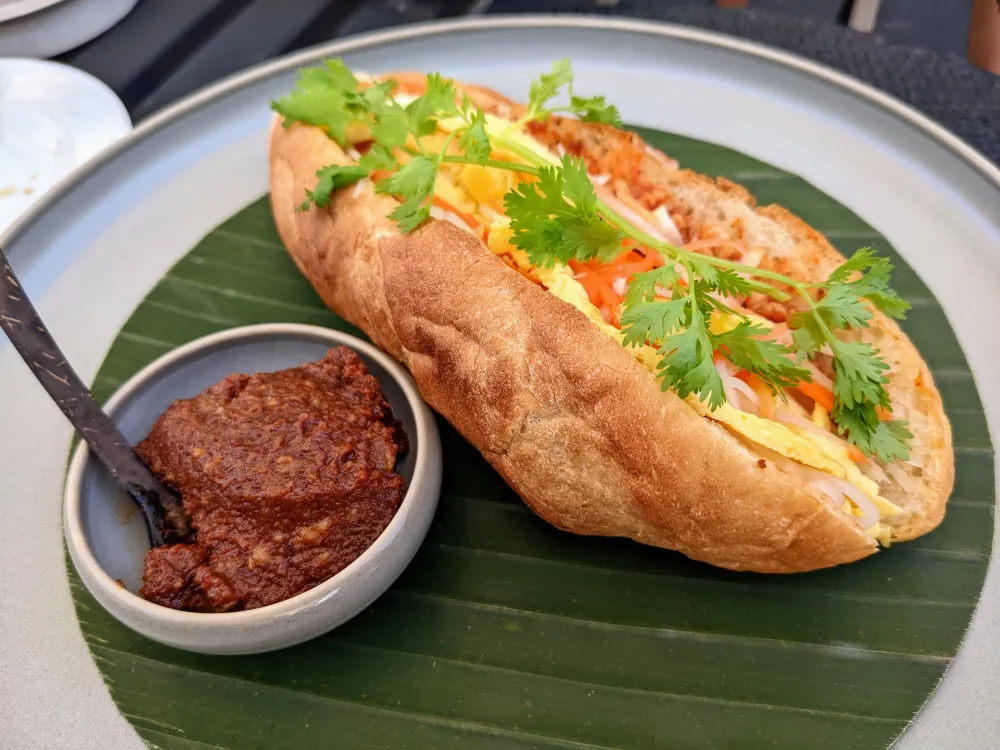
Khao Jee Pâté, often called the "Laotian banh mi," is a surprising yet delicious street food. A crispy baguette is split open and generously filled with fragrant pâté, grilled sausage, Laotian mortadella, cucumber, pickled carrots and daikon, fresh herbs, and a sweet and spicy sauce. Highly prized by locals and travellers alike, this iconic sandwich is particularly renowned at Khua Din Market in the heart of Vientiane.
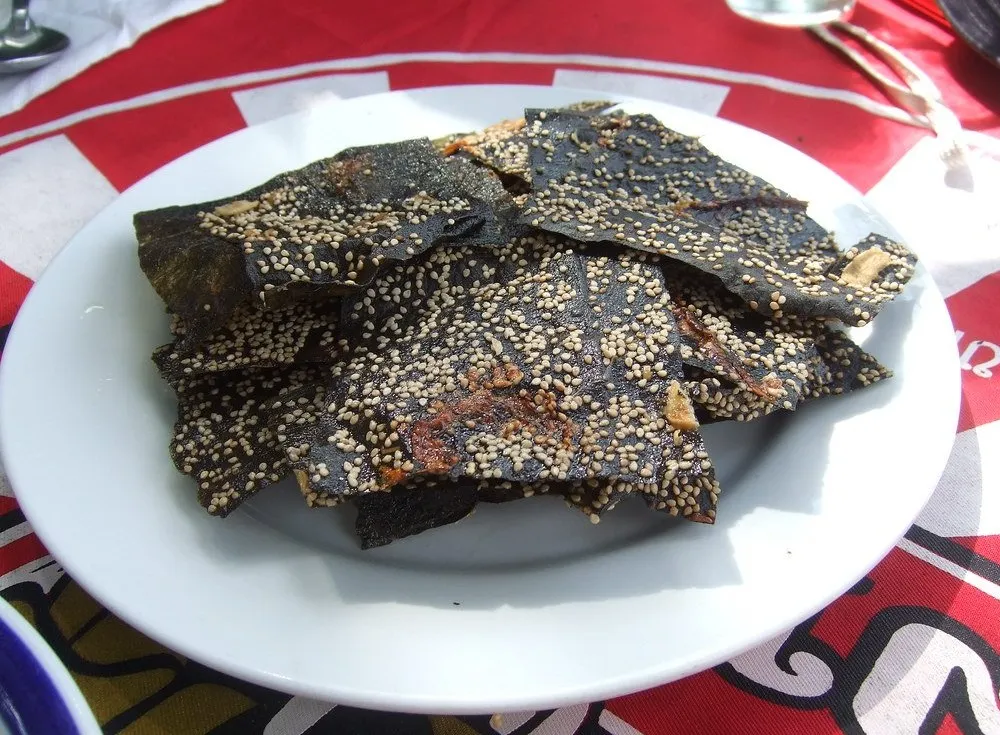
Kaipen is one of Laos' most popular snacks. Made from freshwater weeds from the Mekong River, carefully washed, dried, seasoned, and then fried until crispy, these golden sheets are often enjoyed with a sweet and sour sauce or a chilli sauce. Served both during family meals and social gatherings, Kaipen captivates with its light texture and unique taste, leaving visitors with a memorable souvenir of Laotian gastronomy.
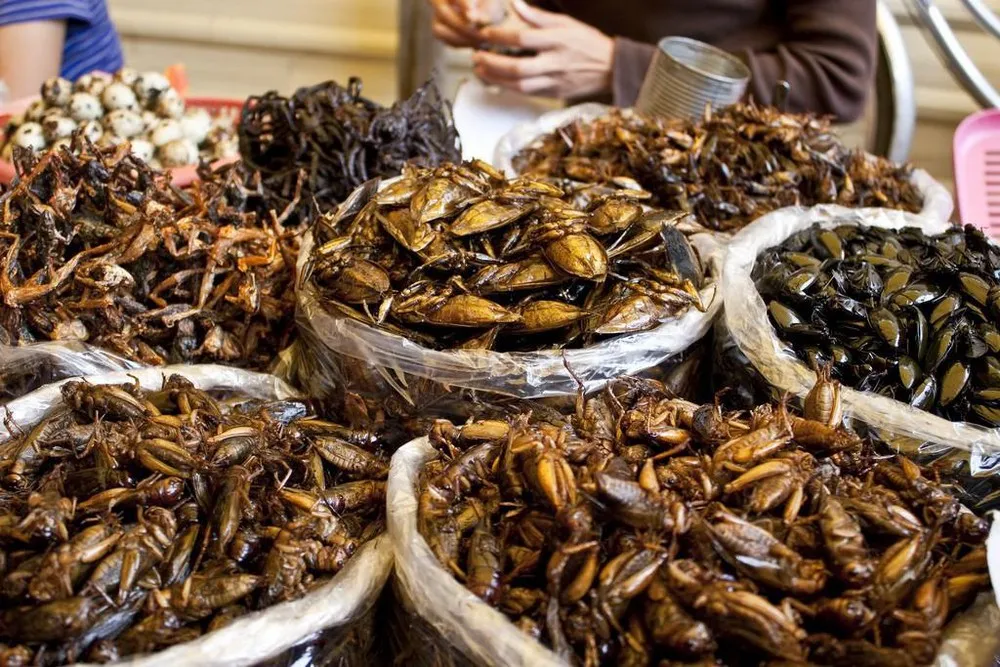
In Laos, insects are considered an integral component of daily meals and traditional festivals. For Laotians, they are not only appreciated for their unique flavours and stimulating textures but also for their high nutritional value. Insects are prepared in many delicious and varied forms, such as grilled worms, roasted larvae, or crispy crickets.
These unusual delicacies reflect the diversity and creativity of Laotian cuisine, forming a singular aspect that piques the curiosity of many travellers visiting the Land of a Million Elephants.

Sindad, often described as "grill on top, hot pot below," is an emblematic Laotian dish. This speciality harmoniously combines two techniques: grilling and simmering broth. A wide variety of ingredients are enjoyed: beef, pork, chicken, seafood, vegetables... The sweetness of the broth mixes with the aroma of the grilled meats, all accompanied by noodles, fresh vegetables, and typical Laotian sauces. More than just a meal, Sindad is a communal experience, ideal for family or friends getting together.
Laotian cuisine is not just a collection of tasty dishes: it is the living expression of a country where traditions, nature, and conviviality intertwine. By tasting its specialities, you discover the soul of a people dedicated to simplicity, sharing, and the bounty of the land. Whether you are travelling to Laos or simply want to explore new flavours, this authentic gastronomy invites you on a genuine culinary journey into the heart of Laotian identity.
See more:





 TRAVELERS' CHOICE 2026