
Le 11 et le 12 novembre soit de nuit merci de me faire des propositions
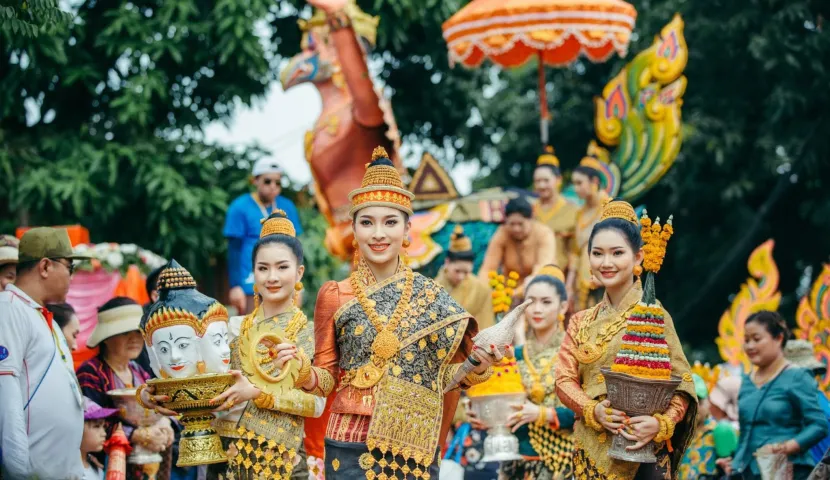
Among the most significant events of the year, the Lao New Year, also known as Boun Pi Mai or Pi Mai Lao, holds a central place. Held only in Laos, a peaceful country in Southeast Asia, this festival captivates international travellers with its slow pace of life and deeply rooted spirituality. As the nation prepares to welcome a new cycle, its well-preserved traditions offer a unique window into the soul of a culture that remains authentic and serene. Join us to find out this special celebration.
The Lao New Year, also referred to as Boun Pi Mai, Pi Mai Lao, or Boun Songkran, is one of the most important festivals in Laos. It takes place annually from 13th to 16th April, during the hottest time of the year. This symbolic period coincides with clear skies and abundant rivers—elements associated with purification, prosperity, and renewal according to Lao Buddhist beliefs.
The Boun Pi Mai festival traditionally spans three days:
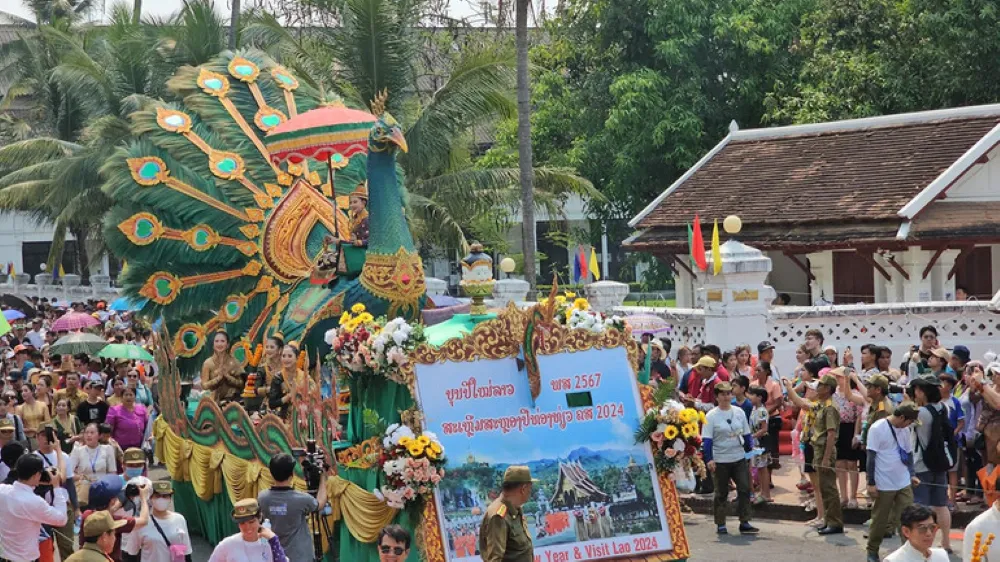
The procession of the Spring Queen
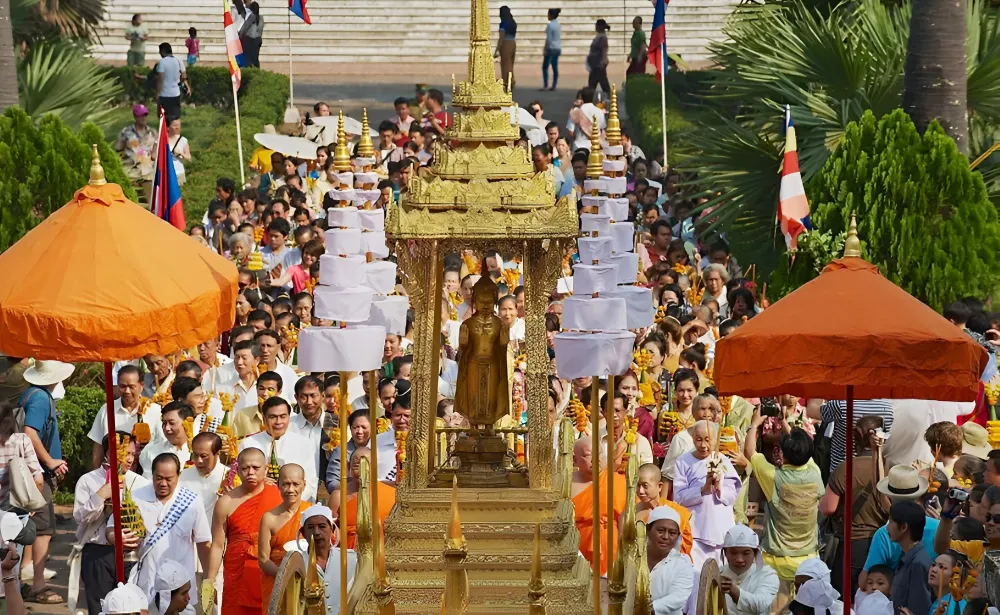
During this time, the streets seem to wear a "new suit", bathed in golden light and the vibrant colours of the Dokkhoun flower, the herald of the New Year in Laos. Temples are magnificently decorated with flags and flowers. Buddha statues are brought into the pagoda courtyards so that locals and visitors can perform the sacred bathing ritual, one of the most iconic Lao New Year traditions.
During the Lao New Year, the Buddha statue bathing ceremony is one of the most sacred rituals. Laotians believe this gesture brings freshness, prosperity, and purification to both nature and human life. During the ceremony, everyone respectfully sprinkles the statues with scented water made from clear water, turmeric, aromatic oils, and petals of the Dokkhoun flower - the iconic yellow blossom that blooms across Laos during Pi Mai Lao.
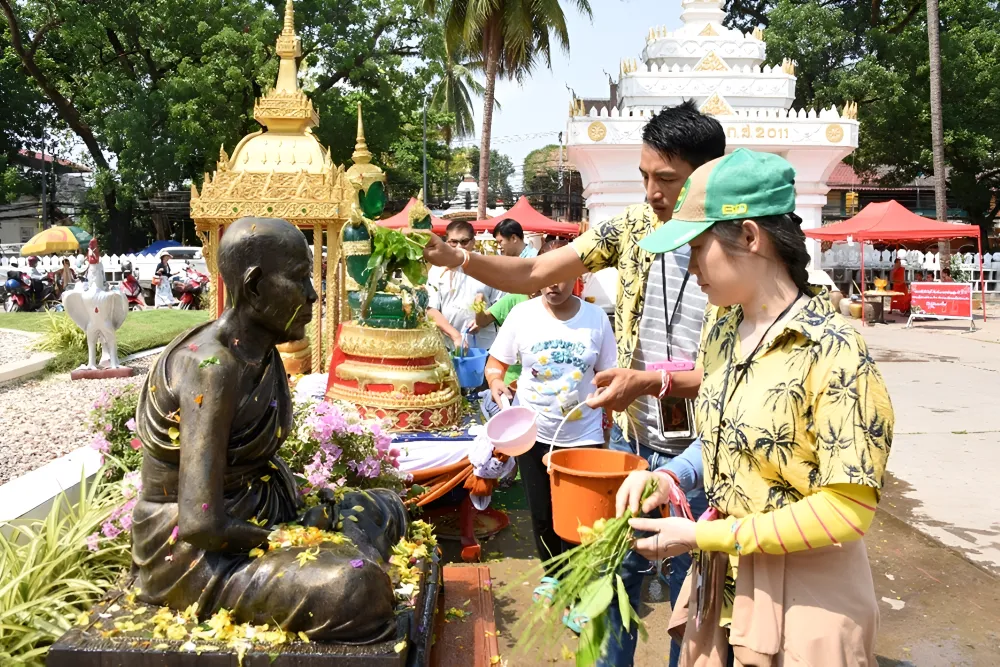
Local devotees performing the Buddha statue bathing ceremony
The water used in the ritual is later collected and taken home. Considered "holy water" carrying luck and spiritual merit, it is used to sprinkle family members, especially children, as well as household objects and domestic spaces, to attract happiness, peace, and prosperity for the coming year.
Among the most famous traditional Lao New Year customs, the water festival takes centre stage. This ritual symbolises purification, renewal, and the washing away of misfortunes, illnesses, and mistakes from the past year to welcome a new year filled with luck and serenity.
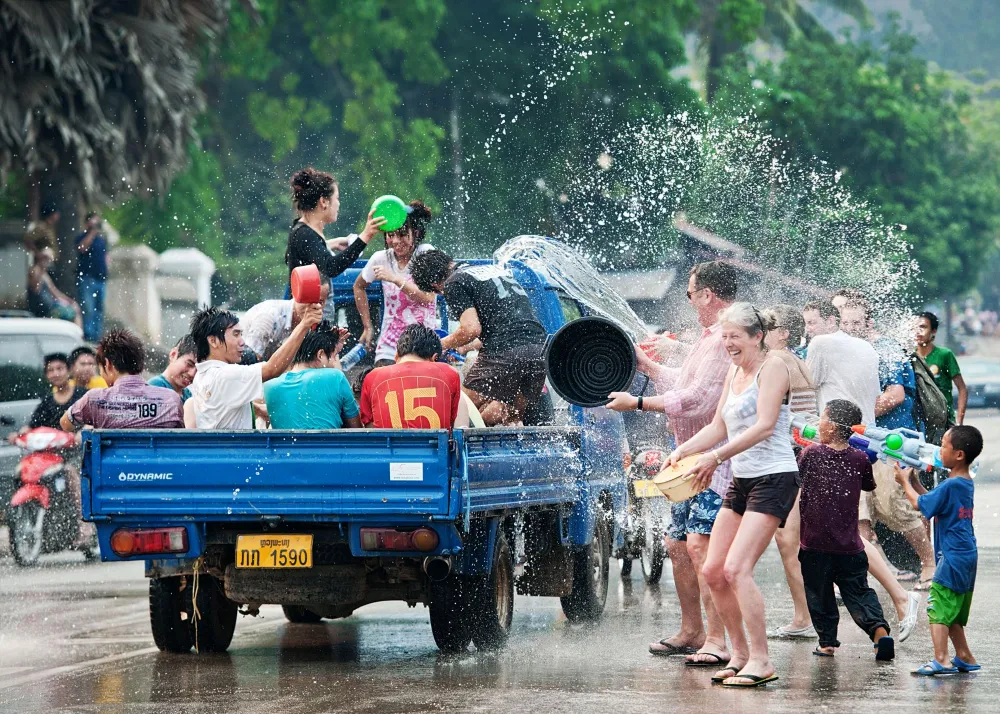
Cheerful crowds participating in the Boun Songkran
Out of respect, younger people gently sprinkle elders to wish them longevity and prosperity. In the streets, the atmosphere becomes festive: locals and visitors alike, whether friends or strangers, rich or poor, participate in this exchange of cool, benevolent water. According to popular belief, the more a person is splashed, the more luck and happiness they will receive—a testament to the affection and kindness of those around them.
Beyond the water play, the wrist-tying ceremony, known as Baci or Soukhouan, is essential to the spiritual life of Laotians. This ancestral ritual aims to bring peace, luck, and protection. Coloured cotton threads are delicately tied around the wrist, accompanied by wishes for happiness, health, and prosperity.
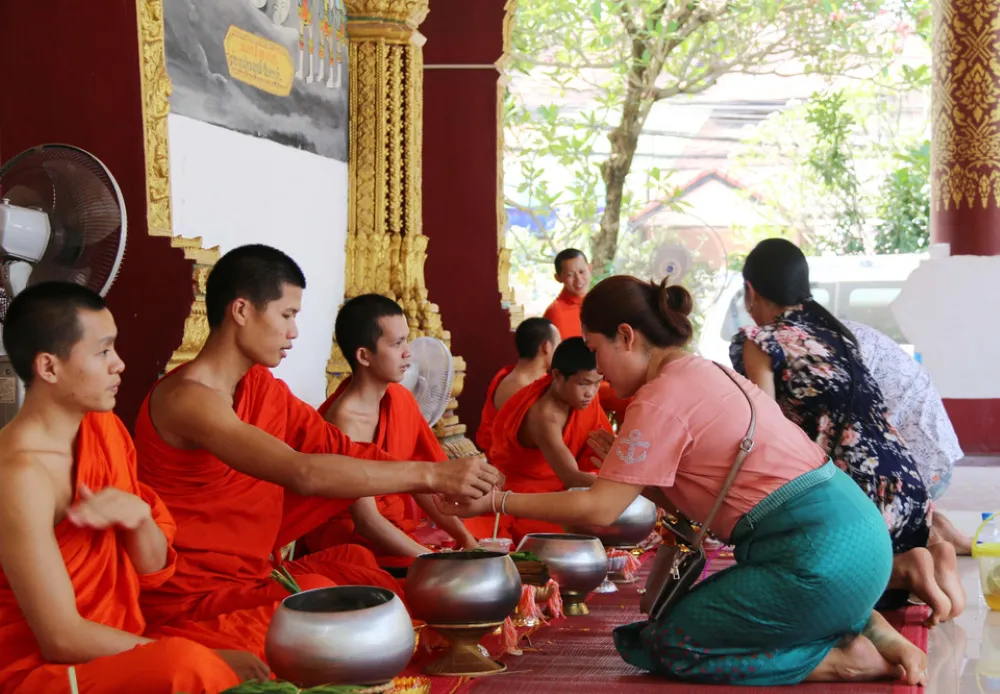
Traditional Baci ceremony in Laos
This tradition reflects the altruism of the Lao people: one never makes wishes for oneself, but only for others, convinced that the good offered will one day return to the giver. During the Lao Tết, the more threads one wears on their wrist, the luckier they are considered for the year ahead.
The Procession of the Spring Queen marks the opening of festivities in several regions. This ceremony features a young woman chosen to embody rebirth, fertility, and prosperity. Dressed in a richly decorated traditional costume, she parades through the streets accompanied by dances, traditional music, and ritual songs. The procession is seen as a tribute to nature and protective spirits, symbolising harmony between people, the land, and the cycle of time.
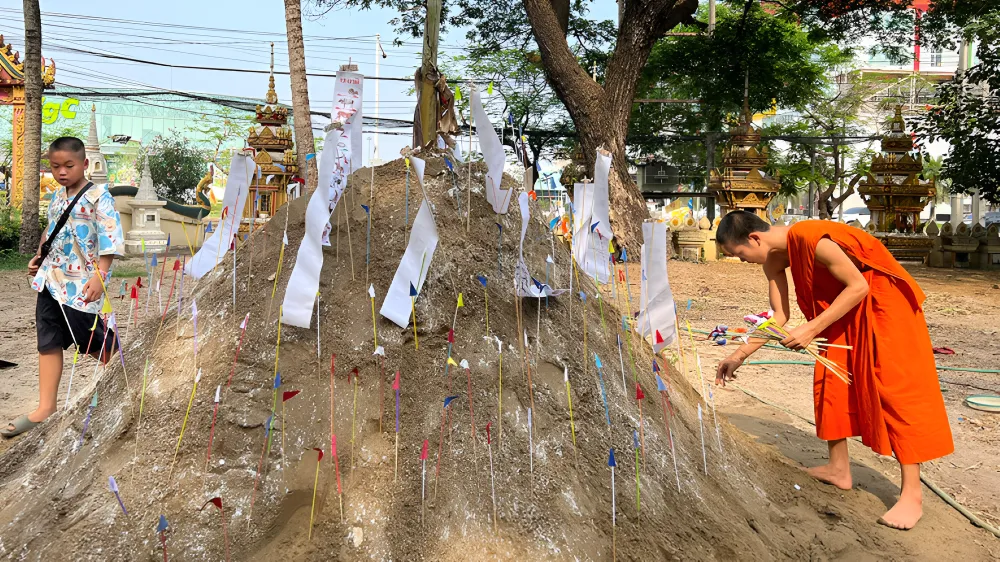
During Pi Mai Lao, building sand stupas is an important spiritual practice in temple grounds. Sand is shaped into small stupas before being offered to monks. They are decorated with flags, flowers, and white ribbons, symbolising Mount Phoukaokailat. This ritual expresses wishes for health and prosperity while strengthening the spiritual bond with Lao Buddhism.
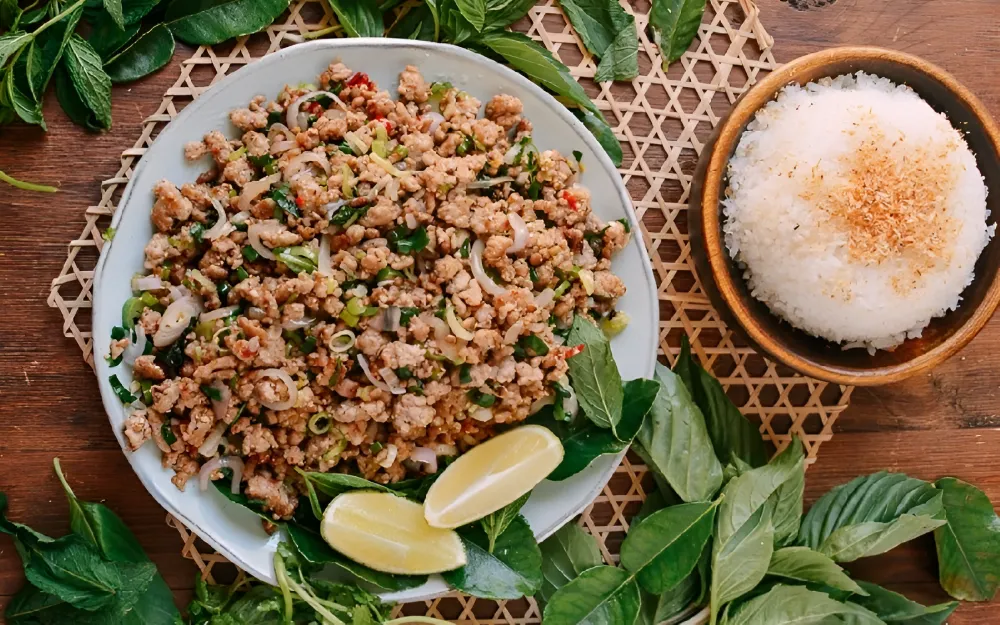
Sharing Laap, the flagship dish of Lao cuisine, is a must. A symbol of luck and abundance, the word laap means "luck" in the Lao language. This traditional dish is made of finely minced meat or fish, seasoned with fresh herbs, lime juice, and toasted rice. Families cook Laap to offer to guests, marking the start of a harmonious new year.
Alongside the main rituals, the Lao New Year is marked by many other traditions. The release of animals like fish, turtles, or birds allows for the accumulation of merit. Offering fabrics or scarves to the elderly expresses respect. Monks and locals pick fresh flowers for the temples, while some regions organise traditional boat races. The day is dedicated to prayers, and in the evening, pagodas come alive with the sound of Morlam music and Lamvong dances, symbols of joy and renewal.
Boun Pi Mai is a festival of renewal, purification, and solidarity. It marks the end of the old year and the welcoming of a new cycle of prosperity. Through religious rites and collective celebrations, Laotians express respect for the Buddha, ancestors, and elders. It is a time for sharing, reconciliation, and strengthening community bonds.
To fully experience Boun Pi Mai, two destinations stand out:
Boun Pi Mai is not only a New Year celebration but also a deeply spiritual and communal time for the Lao people. Through rituals, traditions, and popular festivities, this celebration reflects the values of sharing, respect, and renewal. Participating in the Lao New Year allows travellers to better understand the local culture and live an authentic experience, marked by kindness, serenity, and collective joy.
See more:




 TRAVELERS' CHOICE 2026