
The proof: Every 10 minutes pays a jackpot. Try now! Spin to Win Here -> psee.io/8qtsv7
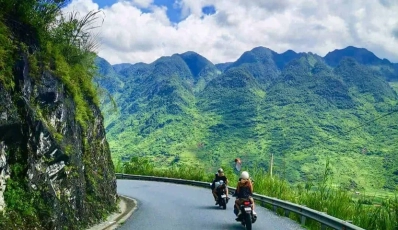
The Ha Giang Loop – a name that has become synonymous with adventure, challenge, and some of Vietnam's most majestic natural beauty. It’s no wonder this route has been lauded by international travel magazines as one of Southeast Asia's most spectacular scenic drives. Exploring the Ha Giang Loop in January offers a unique experience: a magical blend of the gentle winter chill, the profound stillness of the landscape, and the burst of vitality from the first signs of spring blossoms.
This article serves as your comprehensive Ha Giang travel guide, helping you navigate everything from the crisp climate and essential safety tips to the must-see landmarks and unmissable flower seasons for a fulfilling journey through Vietnam's northern frontier during this romantic transition season.
January in Ha Giang marks an extraordinary transition between the sharp chill of winter and the refreshing energy of early spring. This is not just a journey to conquer winding mountain roads; it's an immersive experience in the "land of flowers," where the grey Dong Van Stone Plateau is revitalised by the vibrant colours of the year’s first blooms.
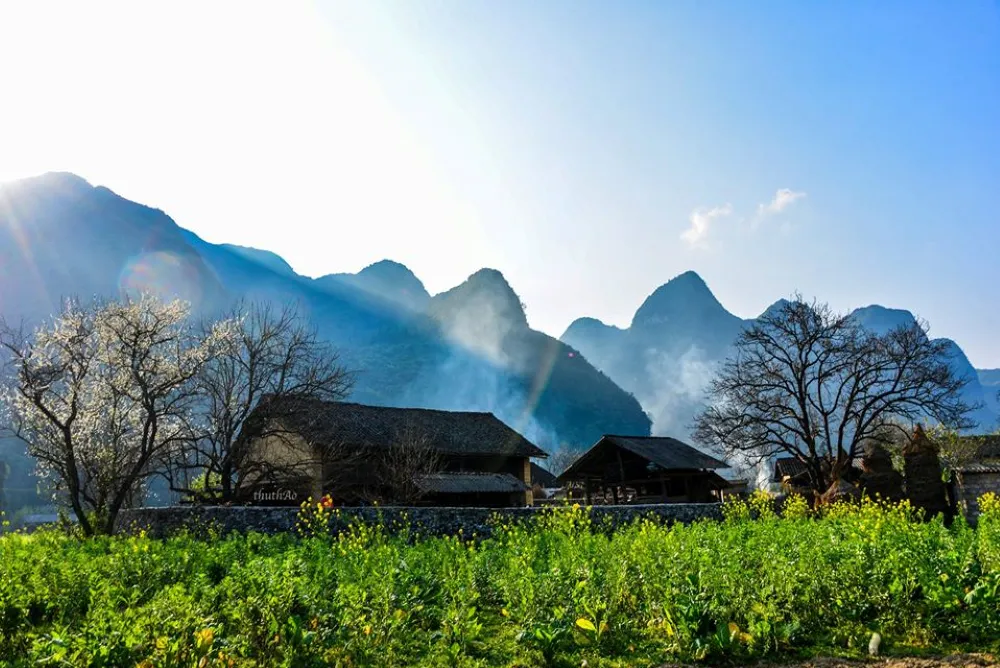
January is the peak of the cold season, bringing a truly distinct atmosphere to Ha Giang and northern mountain.
Average daytime temperatures in lower districts hover between 5ºC and 15ºC. However, in higher areas like Dong Van, Meo Vac, and Sung La, night and early morning temperatures can dip below 5ºC, with the possibility of frost or ice during severe cold spells, especially on passes and steep karst slopes.
The weather is often cloaked in dense fog, particularly in the mornings, evenings, and on high passes, accompanied by a fine drizzle and high humidity. This creates an ethereal and mysterious, yet challenging, landscape for travellers. Therefore, to ensure your Ha Giang trip goes smoothly, consider hiring local drivers who know every curve and terrain condition intimately.
Compared to the peak seasons, January offers a quiet beauty and an unusually peaceful atmosphere. International tourists can more clearly appreciate the cultural fusion and the unspoiled nature of this land.
Small note: Fog and drizzle make mountain passes damp and slippery. If travelling by motorbikes, it is crucial to equip yourself with waterproof gear (jackets, trousers, gloves) and maintain minimum speed. Most importantly, always keep your headlights on and avoid setting off too early before the fog begins to lift.
As spring knocks on the door, Ha Giang transforms into a land of flowers and colours, painting a fresh and vital picture.
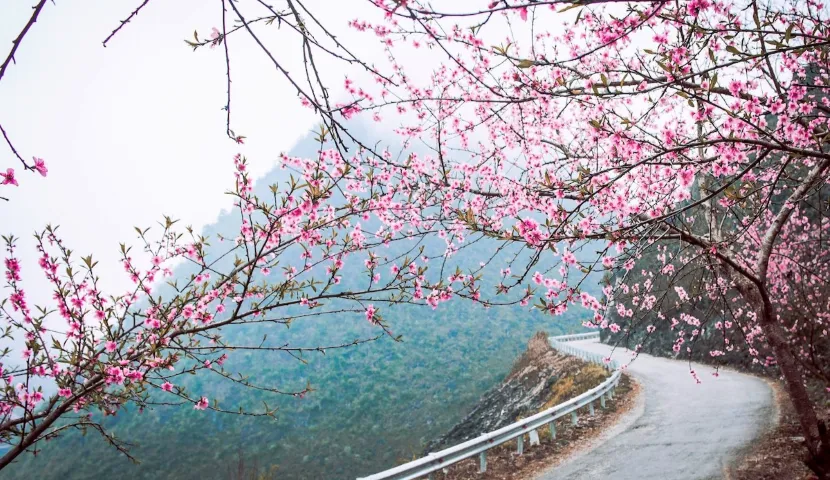
January is the time that heralds the return of spring, and the peach blossom is the strongest symbol of this vibrant energy.
The Ha Giang peach flower possesses a delicate, pure, and refined beauty, different from those in the lowlands. For locals, the peach blossom is not merely a flower but a symbol of luck, prosperity, and a sign for everyone to prepare for the spring travels.
Peach trees bloom along many stretches of the Ha Giang Loop, especially in villages around Yen Minh and Dong Van. The sight of pink petals standing out against ancient rammed earth houses creates a mysterious and irresistible charm, drawing both domestic and international visitors.
Peach blossoms generally begin from mid-January and last until the Lunar New Year (Tết), depending on the year's temperatures.
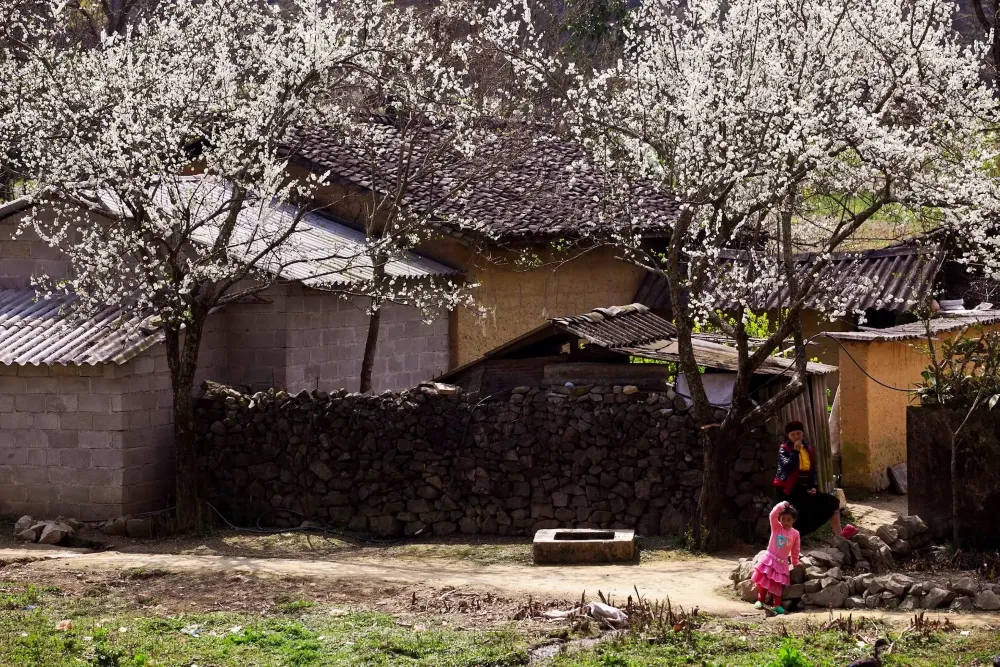
Alongside the warmth of the peach blossoms, plum flowers bring a candid and delicate beauty. Plum trees bloom in clusters, covering entire valleys, mountains, and hills in white, creating true "snow carpets" that shimmer against the grey, dark backdrop of the Dong Van Stone Plateau.
The rustle of the wind, the scent of moist earth, and the delicate fragrance of fragile petals convey a profound sense of tranquility. This is the season of pure emotions and sweet memories, where travel enthusiasts can temporarily forget the hustle of daily life.
The best areas include Quan Ba, Dong Van, Yen Minh, and Meo Vac. Peak blooming usually occurs between late January and early February.
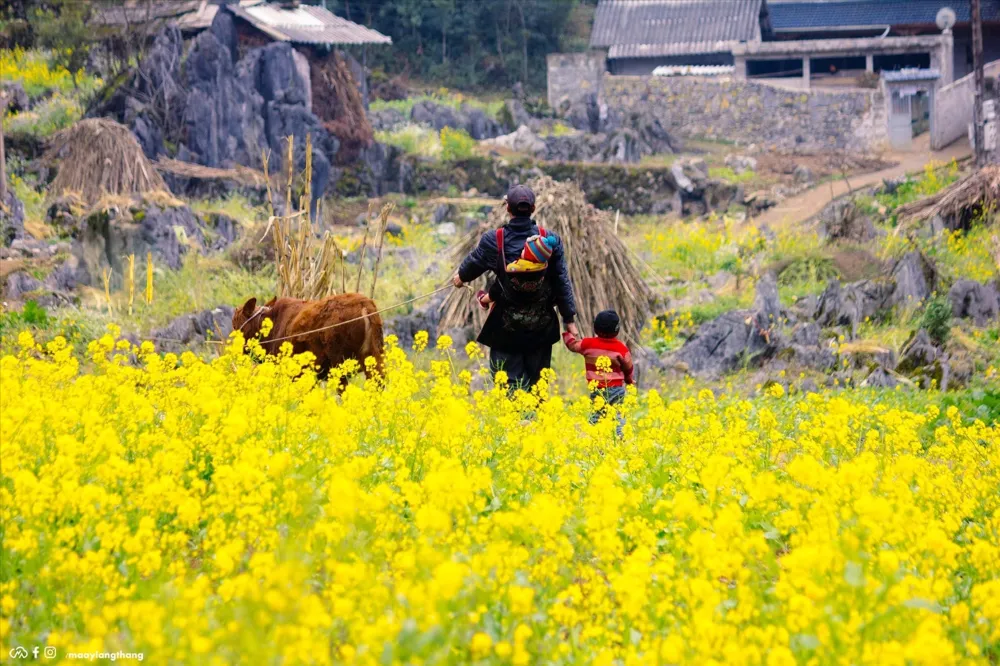
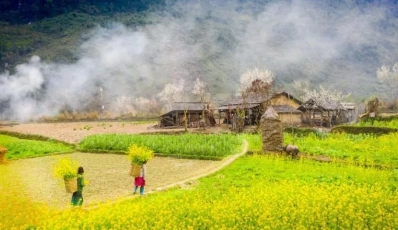
During this time, fields of rapeseed also begin to bloom silently, creating bright yellow expanses that contrast with the winter cold.
Travelling the Ha Giang Loop, adventurers may feel as if they are entering an enchanted world, where the yellow colour stretches endlessly. From the Quan Ba Heaven Gate to Dong Van town, paths adorned with rapeseed form a winter canvas where colours blend in great harmony.
Whether by the roadside, at the foot of the mountains, on the slopes, or in the courtyards of ancient earth houses, you can admire true carpets of rapeseed flowers. When the sun manages to filter through the clouds (albeit rare in January), it illuminates the fields, creating a magnificent and breathtaking spectacle, capable of awakening poetic and melancholic emotions.
The Ha Giang Loop is the route that gathers the region's most spectacular landscapes and points of interest, each with unique beauty, especially in January.
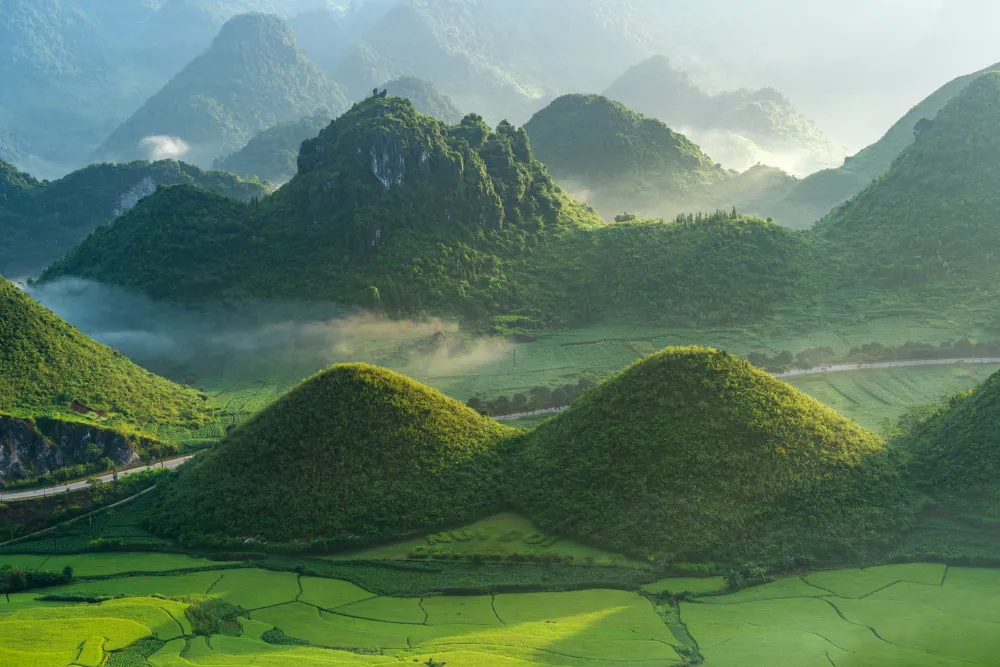
Located along National Highway 4C, in Tam Son town, Quan Ba district, about 40 km from Ha Giang City.
Formed millions of years ago, the two mountains, with their round and symmetrical shape, stand singularly among the North-West mountain ranges. January is the ideal time to admire the Twin Mountains in their "spring attire," with green grass, rice sprouts, and the vibrant colours of flowers filling the landscape with energy and vitality.
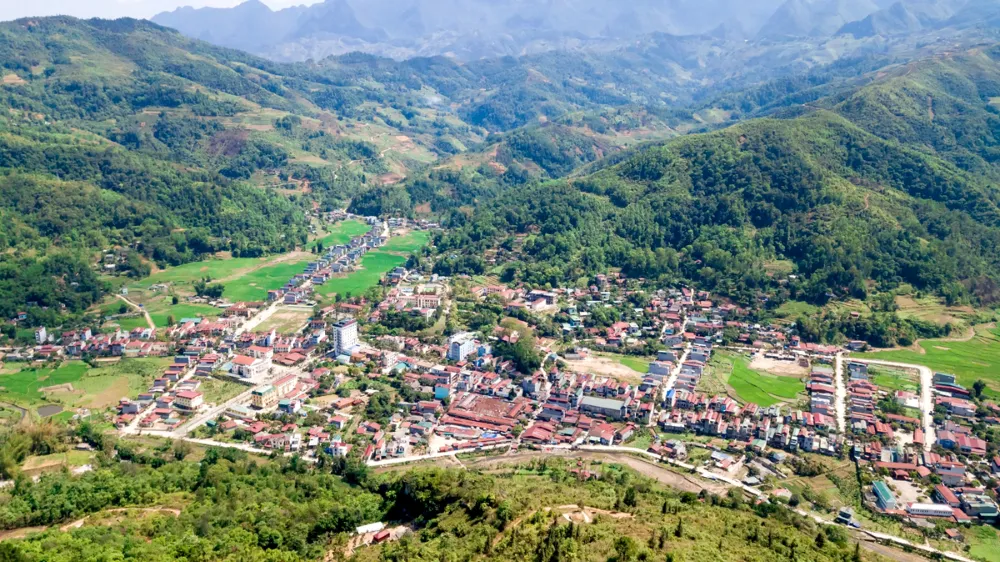
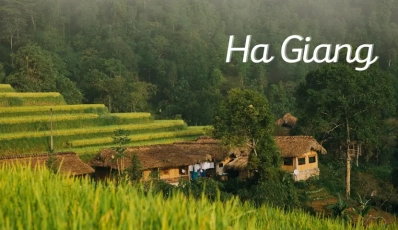
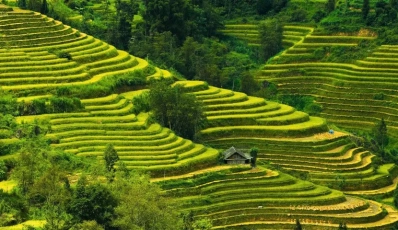
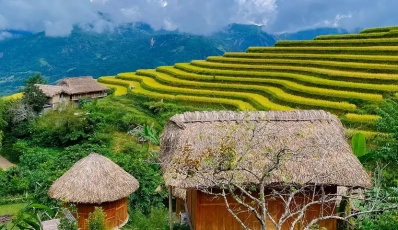
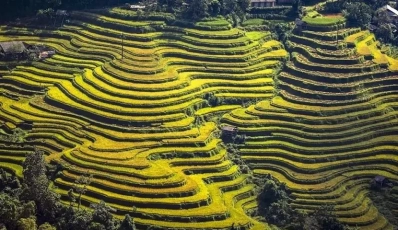
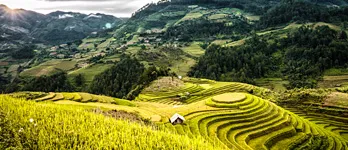
Situated in the territory of the Dong Van Stone Plateau, Yen Minh stands out for its fertile hills and the poetic beauty of its endlessly stretching pine forests. The rice terraces here, while not golden like in the September harvest season, in January show their seasonal stillness with the landscape of water or freshly worked earth, creating soft lines that follow the slopes and form an extremely suggestive natural picture.
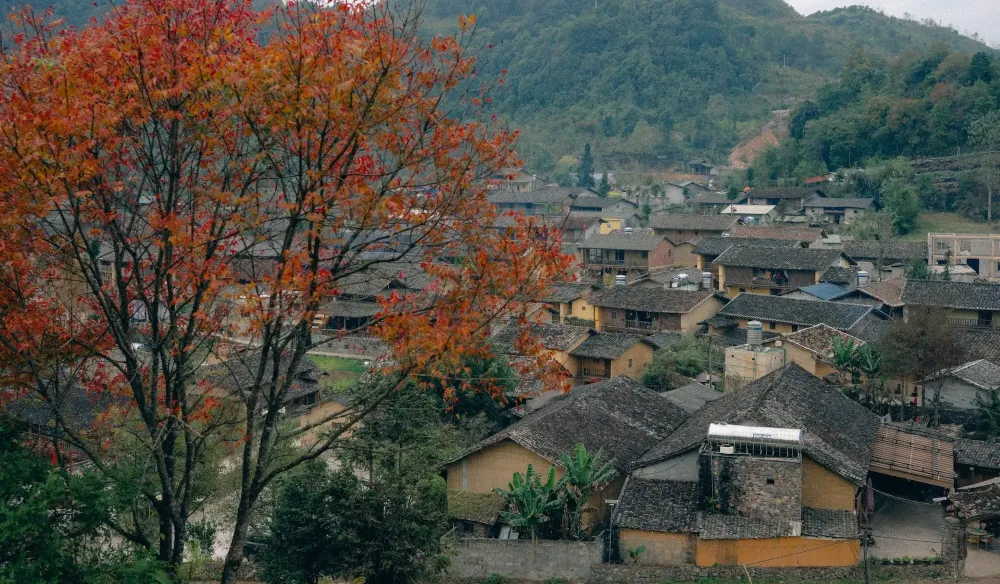
Nestled in a valley, Dong Van Old Quarter is surrounded by the curves of the Ha Giang Loop.
The Old Quarter, consisting of just 40 houses arranged beneath the limestone mountains, creates a unique architectural mosaic where the yellow of the sun (when it appears) and the grey of the old houses blend perfectly. Visiting in January, international tourists can clearly perceive the atmosphere of preparation for the Lunar New Year, with traditional markets rich in cultural identity.
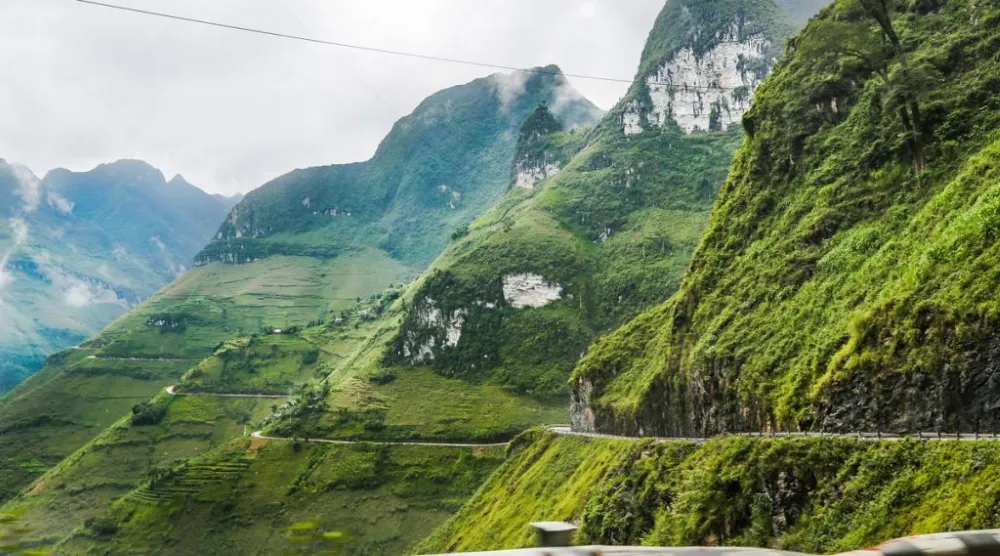
Located at 1,200 meters above sea level and approximately 20 km long, the Ma Pi Leng Pass winds around the mountains like a white serpent.
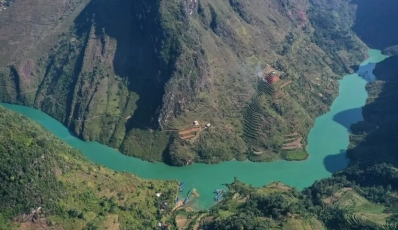
From the top of the pass, the spectacle is immediately breathtaking: imposing mountain ranges follow one another endlessly. The Nho Que River flows sinuously like a green silk ribbon between the valleys. Standing between heaven and earth, you will feel absolute freedom, completely immersed in the wild nature of the karst plateau.
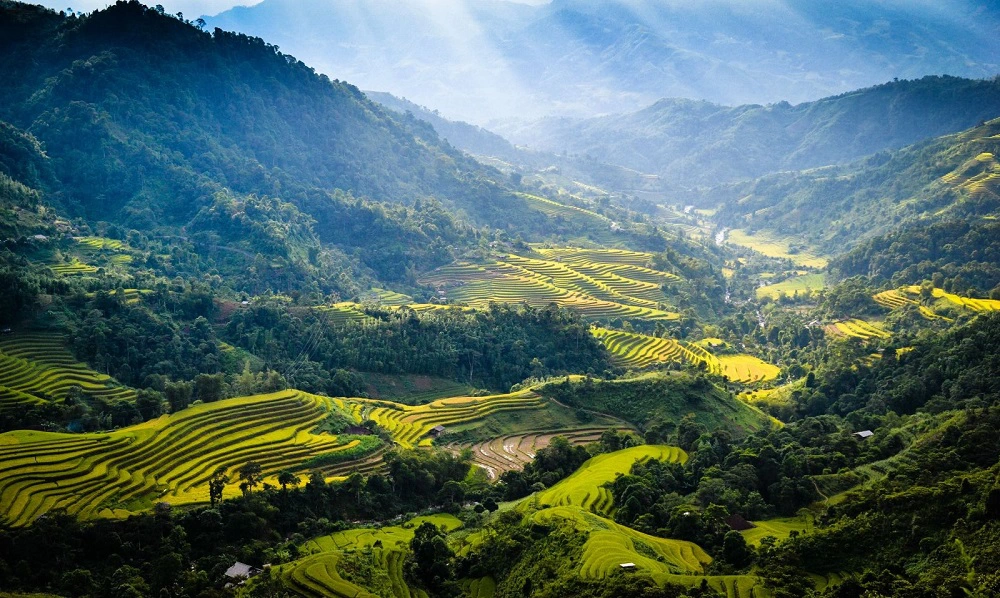
In the local language, Sung La means "oasis"; it is located along National Highway 4C, 20 km from the Dong Van district.
With the arrival of spring, this land fills with life thanks to the flower fields that colour the entire valley (especially off-season buckwheat flowers, rapeseed flowers, and peach blossoms), dispelling the cold and the harshness of the stone plateau.
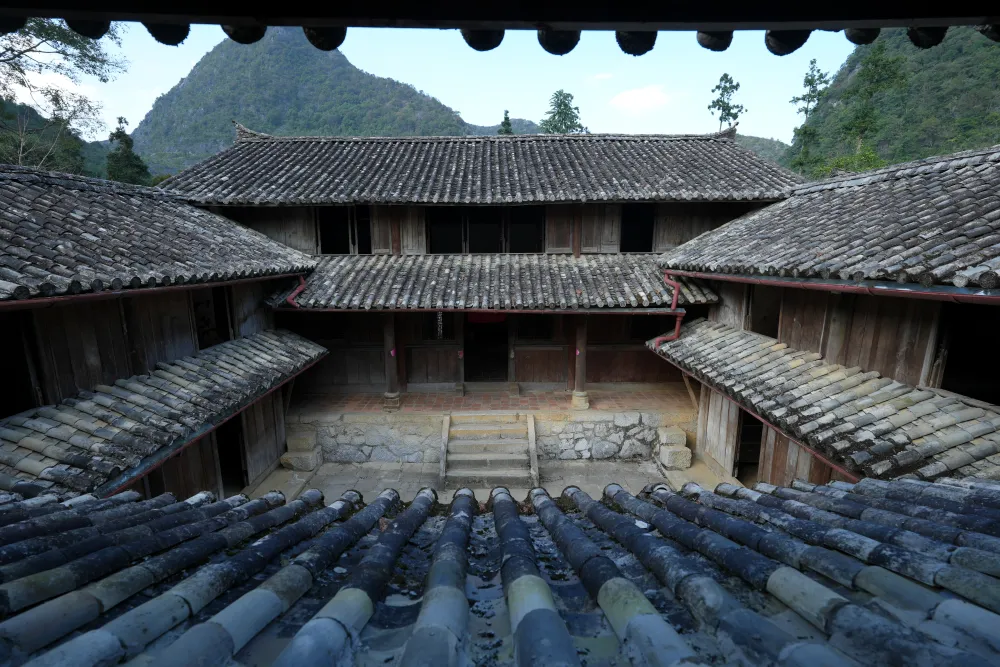
Located in Sa Phin valley, the Residence of the H'Mong King appears with an ancient charm and unique architecture that combines H'Mong, French, and Chinese elements.Built on an elevated relief and with an area of almost $3,000m2, surrounded by arch-shaped mountain ranges, this residence has over a century of history but still retains its ancient beauty. It is a must-see stop for those wishing to delve into local history and culture.
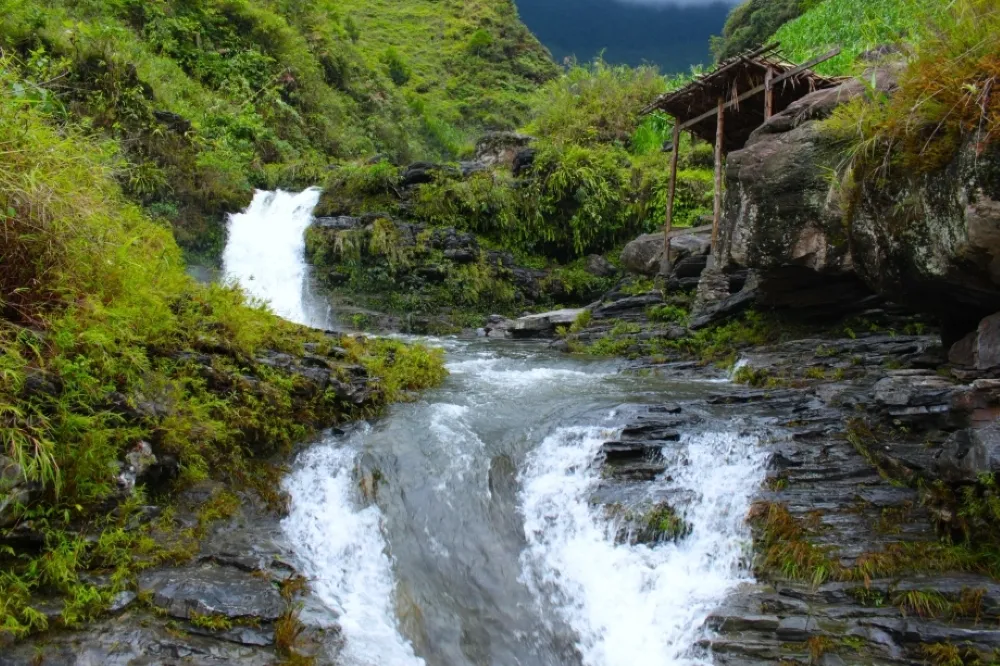
Hidden among the majestic mountains, Du Gia Waterfall is an enchanting natural masterpiece located in Tien village, Yen Minh district.
The waterfall is like a "sleeping maiden" among the forests, offering a peaceful and contemplative atmosphere. Water flows between the rocks and falls from a height of about 6 metres, creating a landscape that is both powerful and delicate – ideal for those seeking tranquility, rejuvenation, and memorable moments in the heart of the wild nature.
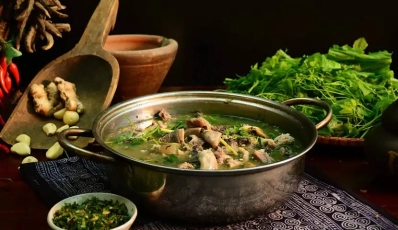
During the cold January days in the northernmost part of the country, Ha Giang's typical dishes are not only delicious but also a way to warm the body and discover the unique culinary culture of this region.
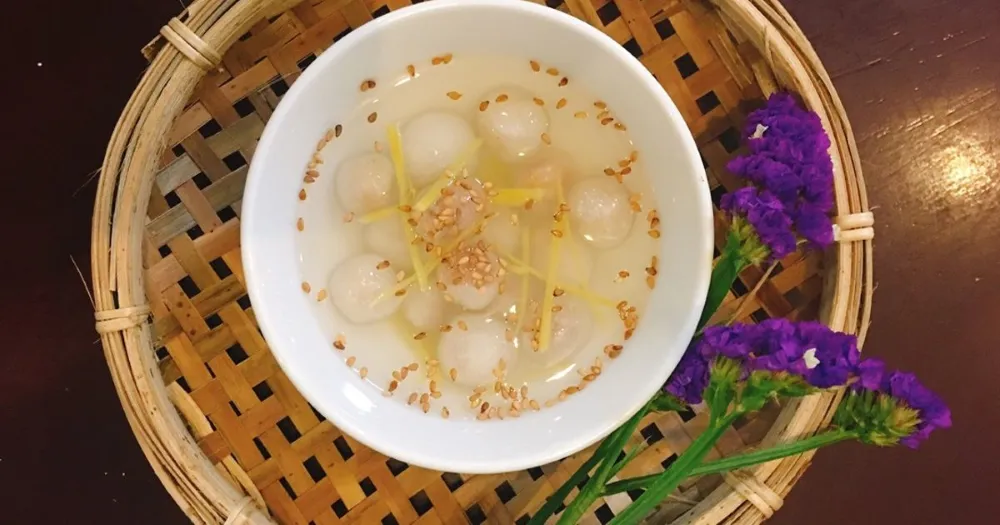
Thang Den: A typical Ha Giang snack, perfect for the cool climate. Thang Den is made with glutinous rice flour, with a bean filling or plain, shaped into a round form and eaten with sugar syrup, coconut milk, and spicy ginger. Its warm, sweet, and fragrant taste immediately dispels the cold.
Corn Wine with leaf yeast: On cold nights, nothing is better than a cup of the fragrant corn wine with leaf yeast from the Mong people. The wine is made from carefully selected golden corn kernels, fermented using a secret yeast based on dozens of forest leaves. For the highland inhabitants, corn wine is not just a drink but also an important part of their culture, present at weddings, festivals, or simply during cozy meals by the fire.
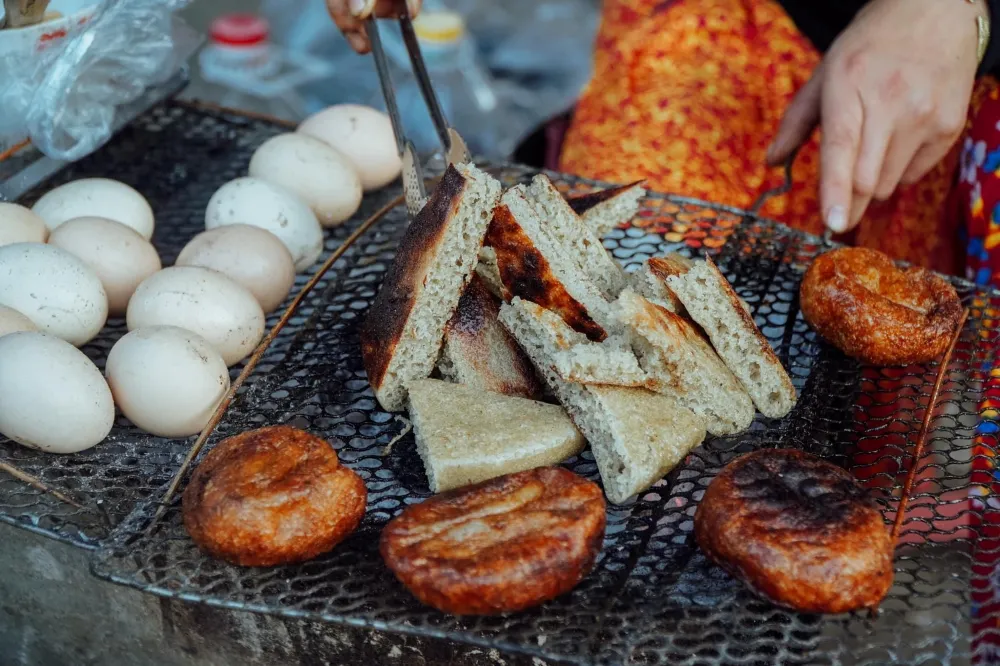
Buckwheat cake: Ha Giang is famous for its buckwheat fields. The cake is made from the seeds of this flower, has a characteristic purple colour, a sweet and fluffy taste, and is a meaningful souvenir.
Goi Ca Bong (Freshwater fish salad): The harmonious combination of the sweet and chewy texture of the bỗng fish (a characteristic freshwater fish) with the crunchy texture of young banana stems and the slight acidity of lemon creates a special, fresh, and unique flavour.
Explore Ha Giang Tour Packages
To ensure your journey to discover the Ha Giang Loop in January is complete and safe, you need to prepare more accurately compared to other seasons.

Warm clothing: This is the most important factor. You need to prepare plenty of heavy clothing, windproof gear, thermal underwear, heavy coats, scarves, wool hats, waterproof gloves, and rain gear (raincoat and trousers). The principle of layering helps to easily regulate body temperature.
Footwear: Wear waterproof shoes with good grip to move easily on slippery mountain roads or when visiting attractions.
Medication: Bring cold medicine, menthol oil, headache medication, and any personal prescription drugs.
Transport: Travellers can choose to take a coach/limousine bus from Hanoi to Ha Giang, then continue the journey by motorcycle (the most popular option) or hire a car with a local driver to explore the magnificent roads.
Safe driving in fog: Always maintain a safe distance, turn on your headlights, and avoid driving too fast. If the fog is too dense, stop to rest and wait for it to clear.
Cash: Travellers should bring cash to make purchases and pay for services in small villages where card or e-wallet payments are not accepted.
Communications: Mobile phone signal reception (3G/4G) in some remote areas like Lung Cu or Du Gia might be unstable.
Respect customs: Ha Giang is home to many ethnic minorities. Respect the customs, traditions, and attire of the local population when interacting with them and taking photographs.
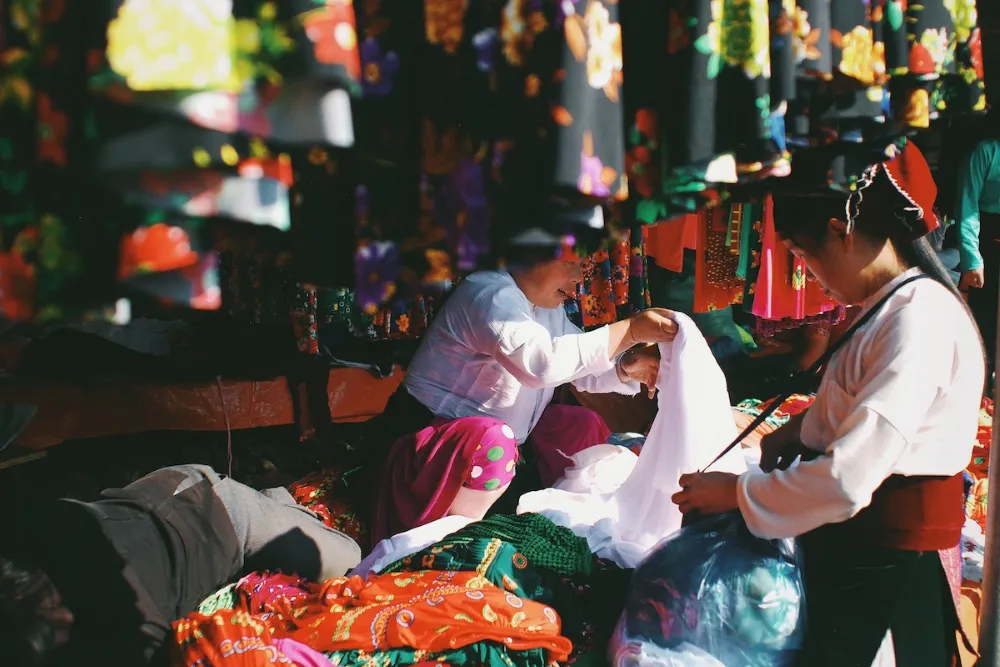
Shopping: Try visiting traditional markets (such as the Dong Van market or Meo Vac market on Sundays) to learn about the culture and purchase local handicrafts.
Conquering the Ha Giang Loop in January is a journey that goes beyond exploring beautiful landscapes, it is also an adventure into the depths of culture and one's own resilience. Every moment spent on the loop, whether you are amidst the majestic nature or seeking warmth next to a cup of corn wine, leaves unforgettable emotions.
See more:





 TRAVELERS' CHOICE 2026