
The proof: Every 10 minutes pays a jackpot. Try now! Spin to Win Here -> psee.io/8qtsv7
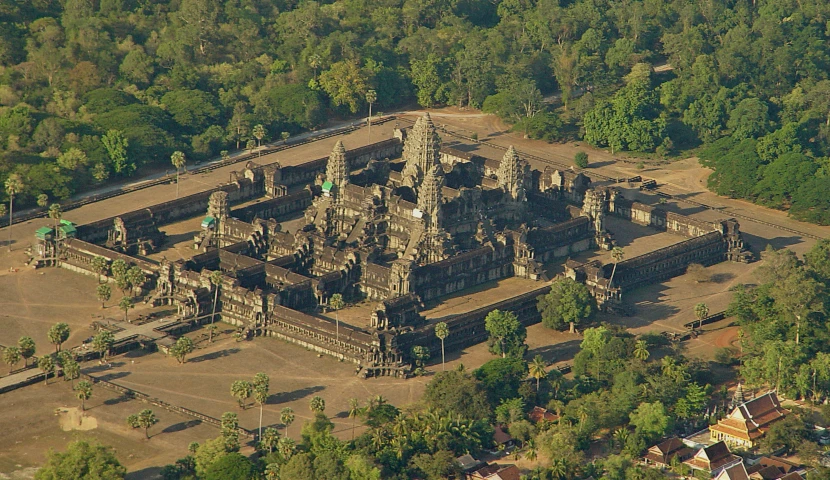
In the heart of sunny and breezy Southeast Asia stands a structure that makes visitors feel instantly humbled by the sheer scale of time and human creativity. This is the Angkor Wat complex - the ultimate pride of the Kingdom of Cambodia.
Built in the 12th century and surviving the many ebbs and flows of history - from the prosperity of Hinduism to the serenity of Buddhism - Angkor Wat stands firm as a testament to a brilliant civilisation that once ruled the region. This guide will not only lead you through exquisitely carved stone corridors but also provide the most practical travel information so you can confidently embark on a journey to find the legacy of the gods.
The Angkor Wat complex is not merely a religious work; it is the embodiment of the Khmer people's turbulent history. Located deep within the ancient forests of Siem Reap, approximately 317 km north of the capital, Phnom Penh, construction began in the first half of the 12th century under King Suryavarman II. This was the golden age of the Khmer Empire, a time when power and art reached their zenith. Unlike his predecessors who typically worshipped Shiva, King Suryavarman II dedicated this temple to Vishnu, the protector deity of Hinduism. The temple served as both a place of worship and a grand royal tomb, designed for the King’s soul to unite with the divine in eternity. In the Khmer language, "Angkor Wat" means "City of Temples," a name that perfectly reflects its massive scale.
Over the centuries, religious beliefs at Angkor Wat shifted with the political tides. Between the late 14th and early 15th centuries, under King Ang Chan, Buddhism began to replace Hinduism as the state religion. During this era, the temple underwent a spiritual "transformation" where Vishnu statues and Hindu reliefs were gradually joined or replaced by Buddha images. This natural transition turned Angkor Wat into the most significant Buddhist pilgrimage centre in Southeast Asia. However, as the Khmer Empire declined and the power centre shifted south toward Phnom Penh, the magnificent city was slowly reclaimed by the jungle.
For centuries, Angkor Wat remained largely forgotten by the outside world, though local monks continued to tend to the site. It wasn't until 1860 that French naturalist Henri Mouhot "rediscovered" the temple during a botanical expedition. His sketches of a giant stone wonder hidden in the wild shocked Europe. Following this, international experts and French archaeologists began the long process of temple restoration.
The most vital turning point in its modern history occurred in 1992, when UNESCO officially recognised it as a World Heritage Site. Today, Angkor Wat is a global icon, standing alongside the Great Wall of China and the Taj Mahal. It is the ultimate symbol of national pride, appearing on the Cambodian flag as a testament to the extraordinary vitality of Khmer culture.
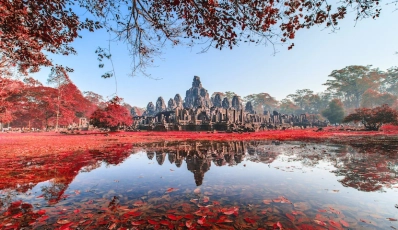
The Angkor Wat architecture is a symphony of stone, where every block tells a mythological tale. The entire complex is designed as a physical representation of Mount Meru—the sacred mountain at the centre of the universe in Hindu and Buddhist cosmology. The temple is surrounded by a vast moat nearly 200 metres wide, symbolising the cosmic ocean. Beyond its religious meaning, this moat serves a technical purpose: stabilising the groundwater levels to prevent the temple foundations from shifting during the tropical rainy season.
The Angkor Wat architecture is a symphony of stone, where every block tells a mythological tale. The entire complex is designed as a physical representation of Mount Meru—the sacred mountain at the centre of the universe in Hindu and Buddhist cosmology. The temple is surrounded by a vast moat nearly 200 metres wide, symbolising the cosmic ocean. Beyond its religious meaning, this moat serves a technical purpose: stabilising the groundwater levels to prevent the temple foundations from shifting during the tropical rainy season.
A unique feature that has intrigued researchers for decades is the temple's orientation. Unlike most Khmer temples that face East to welcome the sunrise (life), Angkor Wat faces West. This is the direction of the god Vishnu and the setting sun (the afterlife). This orientation makes the Angkor Wat sunrise incredibly mystical, as the sun rises directly behind the five towers, creating a breathtaking silhouette reflected in the water.
Inside, visitors find a three-tier structure connected by long galleries:
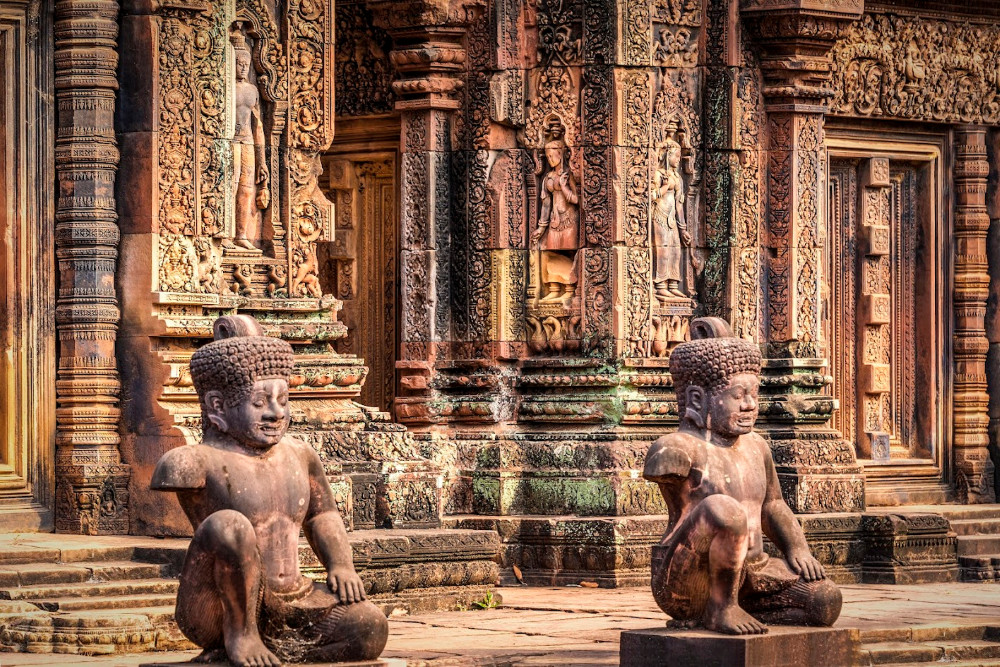
The "soul" of the monument lies in its Apsara carvings. Thousands of celestial dancers decorate the walls, each with unique facial expressions, hairstyles, and poses. It is estimated that millions of sandstone blocks were transported from the Kulen Mountains via canals to build this wonder. The joints are so precise that no mortar or cement was used—a true marvel of ancient engineering.
To ensure your trip to the "City of Temples" is seamless, it is essential to prepare with these practical travel tips.
Cambodia has a tropical monsoon climate. The best time to visit Angkor Wat is from November to March. This is the "golden season" when the weather is dry and cool, allowing you to explore the stone galleries without overheating.
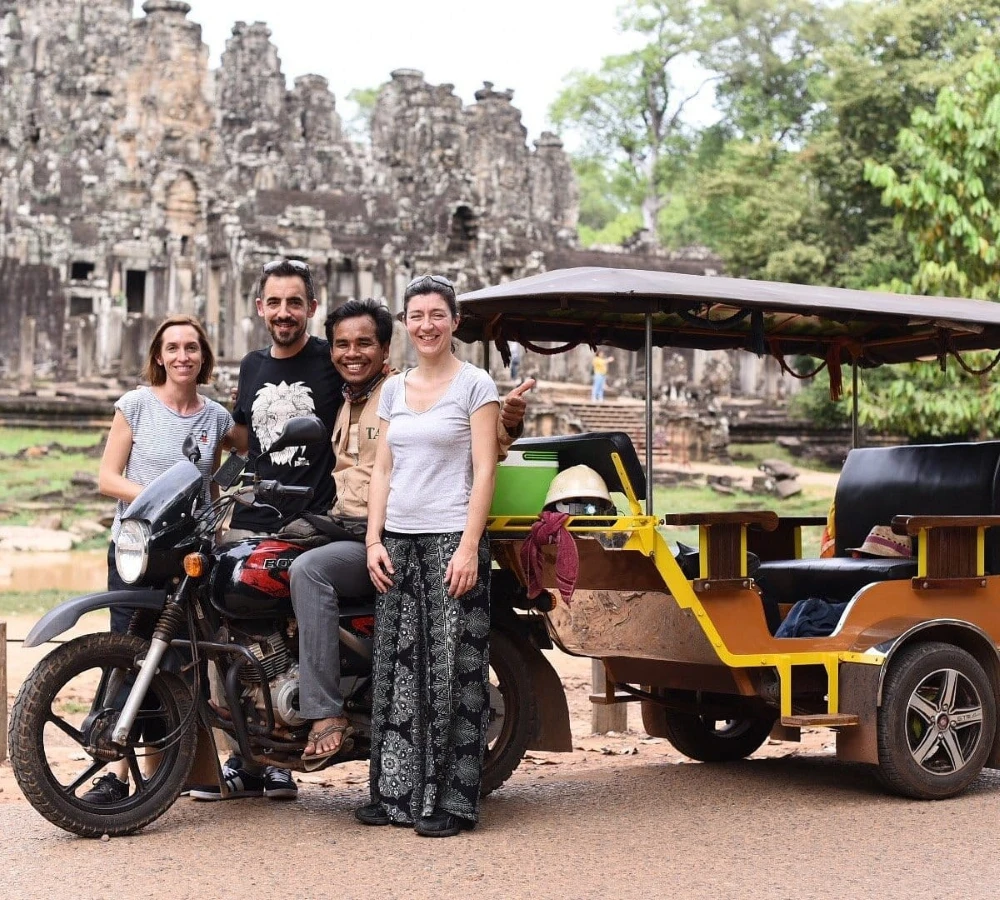
Siem Reap transport options are plentiful:
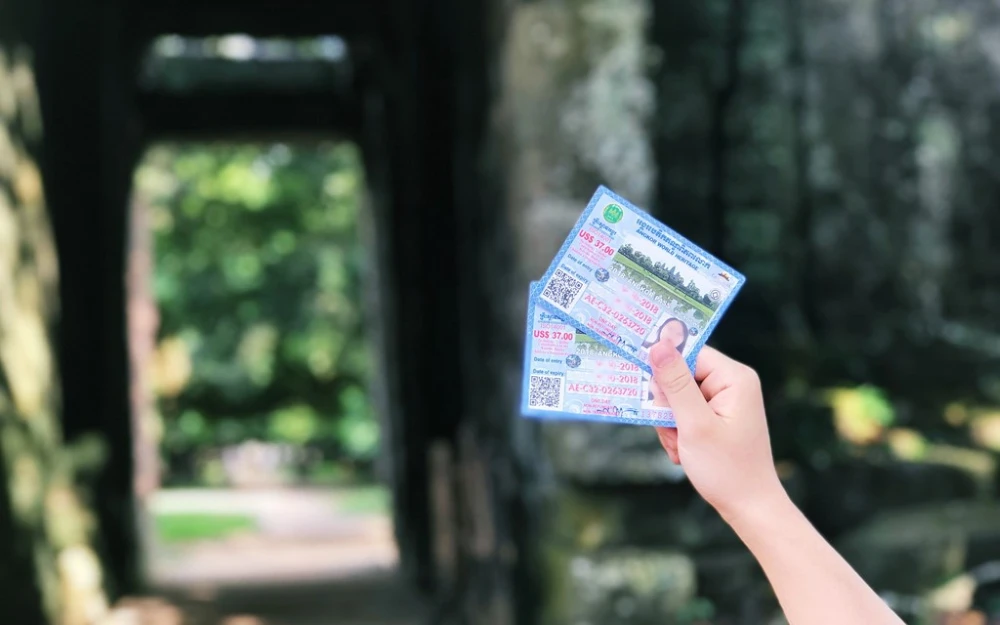
Foreign tourists must purchase an Angkor Pass through Angkor Enterprise. There are three main options:
Note: Cambodian citizens enter for free, and expats living in Cambodia for over two years can apply for a free annual pass.
In-person: Purchase at the Angkor Ticket Centre (opens at 4:30 AM for sunrise seekers). They will take your photo on the spot.
Online: The most convenient method is through the official Angkor Enterprise website. You can save the QR code on your phone to be scanned at temple entrances.
As you conclude your journey, what remains isn't just a photograph of the sunrise, but a profound admiration for the Khmer artisans. Angkor Wat is a place where every stone tells a story—a silent, solemn beauty that remains an inexhaustible source of inspiration for the world.
See more:





 TRAVELERS' CHOICE 2026