




Hmtvroxv PXQRizitour.comPXQR iualror ukgewycfk qkfd www.yahoo.com/tr1
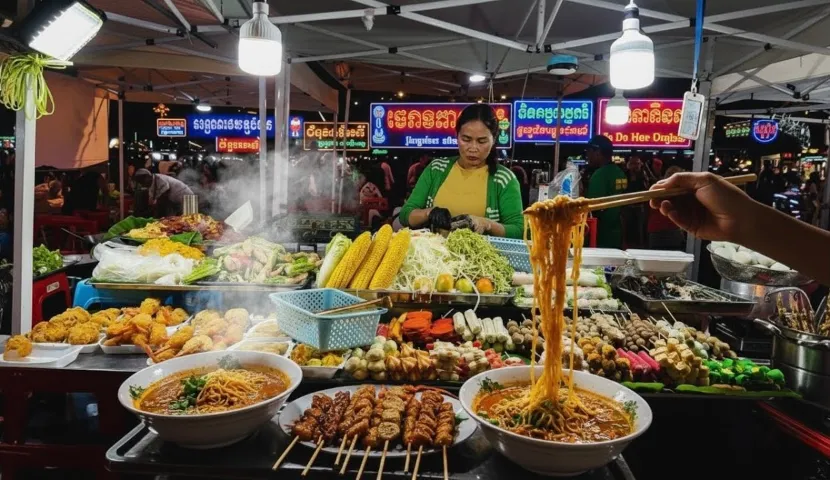
Cambodian street food is where you find the most authentic flavours, offering a direct, affordable, and incredibly tasty insight into the local Khmer culture. Influenced by regional neighbours, yet retaining a distinct identity built around fresh herbs and core ingredients, this food scene is easy to navigate and perfect for travellers. If you're looking for memorable meals, exploring the bustling night markets and humble corner stands is the best way to get stuck into the heart of Cambodian hospitality.
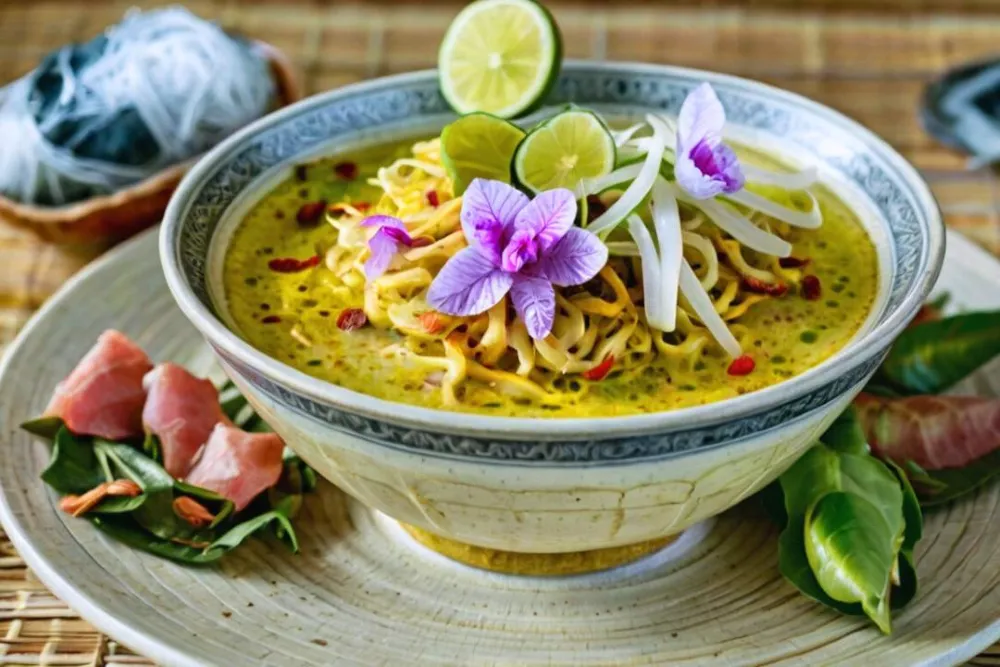
Known simply as “Khmer Noodles”, Nom Banh Chok is found throughout Cambodia's streets, often sold by roaming vendors. This national dish consists of fresh, thin rice noodles bathed in a green fish curry sauce, typically seasoned with lemongrass, ginger, turmeric, and garlic. It is topped with fresh cucumber, banana blossoms, long beans, edible flowers, and wild herbs. For an extra layer of flavour, the dish is often accompanied by tuk paem, a sweet dipping sauce made from palm sugar and peanuts.
The taste is a perfect balance between the freshness of the vegetables, the aromatic spices, and the subtle sweetness of the sauce, offering an explosion of flavour in every bite.
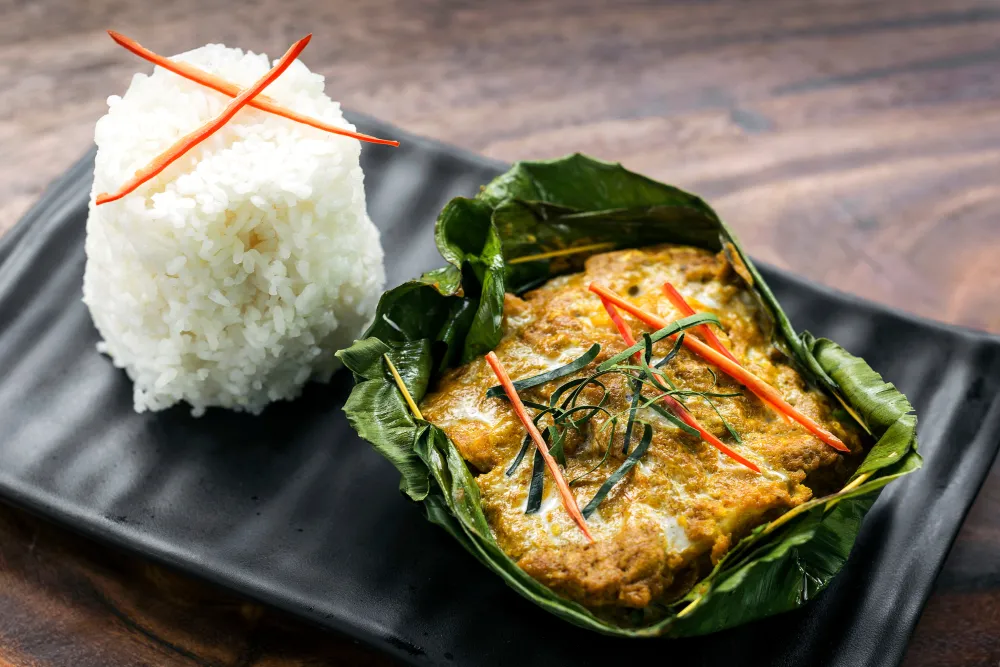
Often celebrated as Cambodia’s signature dish, Amok Trey is easily found on menus in tourist centres across the country. This special dish features boneless, minced freshwater fish (such as catfish or snakehead), marinated in kroeung, a Cambodian curry paste made with pounded spices and ingredients like turmeric, kaffir lime, lemongrass, and shallots. The fish mixture is then combined with coconut milk, egg, fish sauce, and palm sugar, and steamed in banana leaves, yielding a creamy, melt-in-your-mouth texture that is fragrant and deeply flavourful, usually served with white rice.
Amok Trey is distinctive for its use of Slok Ngor, a local herb that imparts a characteristic slight bitterness. Each mouthful delivers a subtle balance of the coconut milk's sweetness, the aroma of the spices, and the freshness of the herbs.
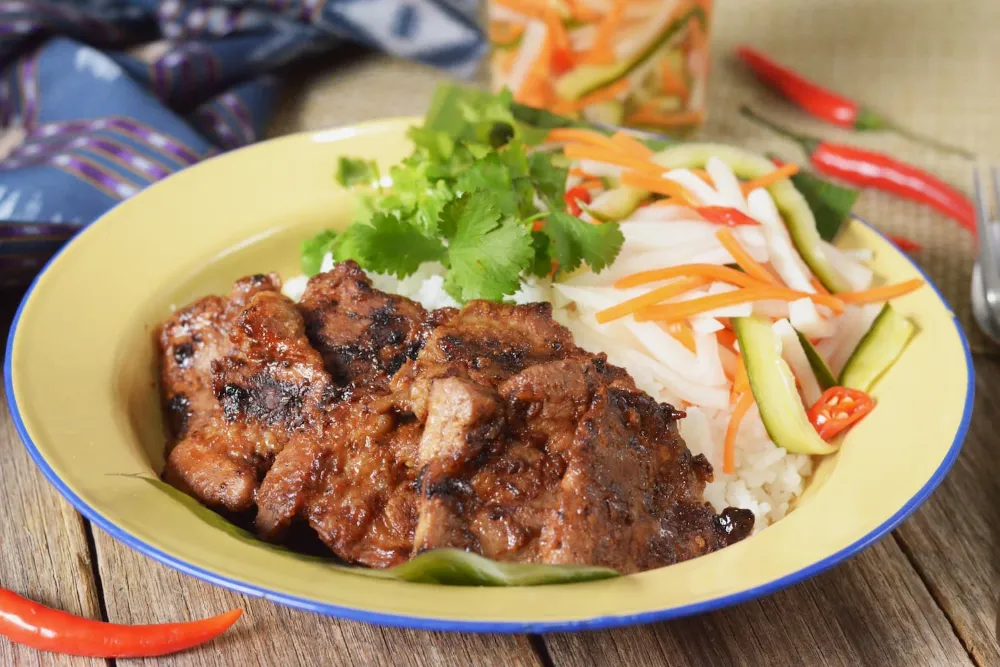
If you are looking for an easy and delicious dish to introduce you to Cambodian cuisine, look no further than Bai Sach Chrouk. This popular dish features a bowl of white rice accompanied by thin slices of grilled pork or chicken, and sometimes fish cakes. The meat is typically marinated in fish sauce, palm sugar, and coconut milk, then slowly cooked over charcoal. The coconut milk ensures the meat remains tender and succulent. It is best enjoyed with rice, cucumber, pickled radish, ginger, and a fragrant broth topped with fried onions—a dish guaranteed to seduce you from the very first bite.
Bai Sach Chrouk is ubiquitous on the streets and is a highly favoured Cambodian breakfast dish among travellers.
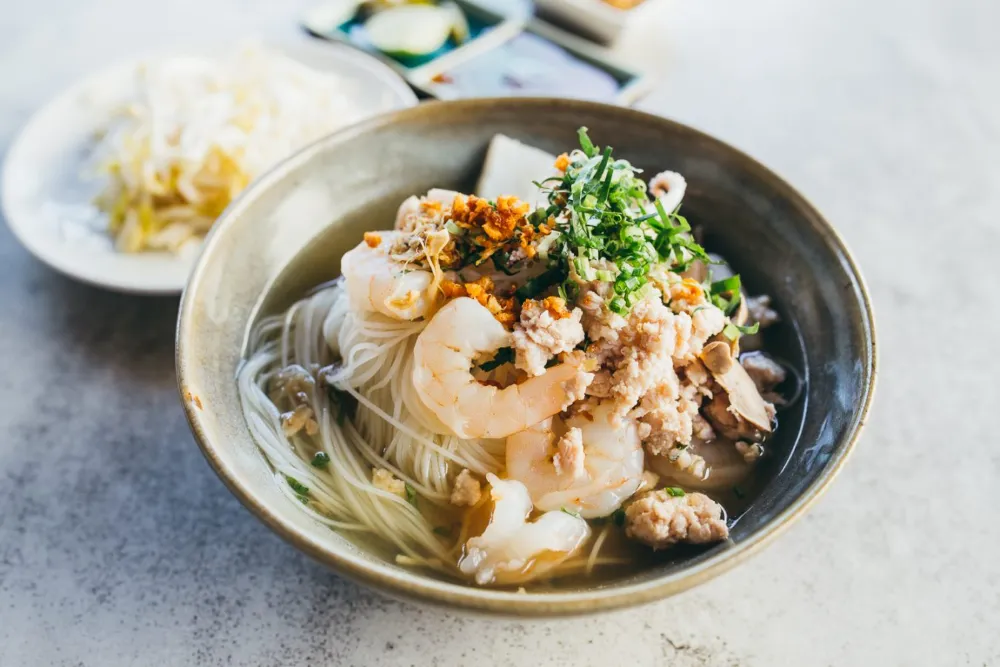
Another must-try Khmer staple is Kuy Teav, one of Cambodia's most popular noodle soups, which has Chinese origins. This dish combines rice noodles with beef or pork and a few accompanying vegetables. The broth, prepared from beef or pork bones, is seasoned with shallots, fried onions, bean sprouts, and garlic, creating an irresistible aroma that draws people to Kuy Teav stalls. Before serving, toppings such as slices of pork, beef, meatballs, or seafood are added, along with fresh herbs, lime, and chilli for an even more vibrant and flavourful taste.
Kuy Teav is the quintessential breakfast, perfect for starting your day ready to explore the Kingdom of Wonder.
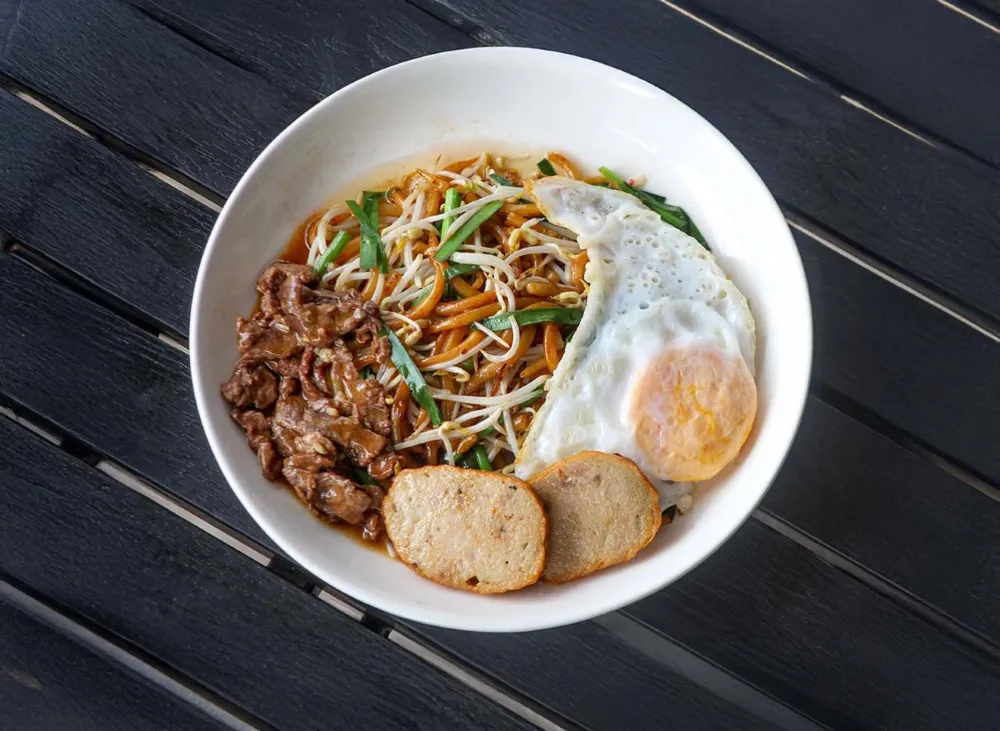
A much-loved street food, Lort Cha consists of short, slightly chewy rice noodles stir-fried with various vegetables (onions, broccoli, chives, bean sprouts, etc.), seasoned with palm sugar, fish sauce, and dark soy sauce. Chicken, beef, or shrimp are often added, and vegetarian versions are also available. The dish is typically served with a fried egg and a spicy sauce to enhance the flavours. Quick and tasty, Lort Cha is extremely popular as an afternoon snack or a late-night meal from street stalls.
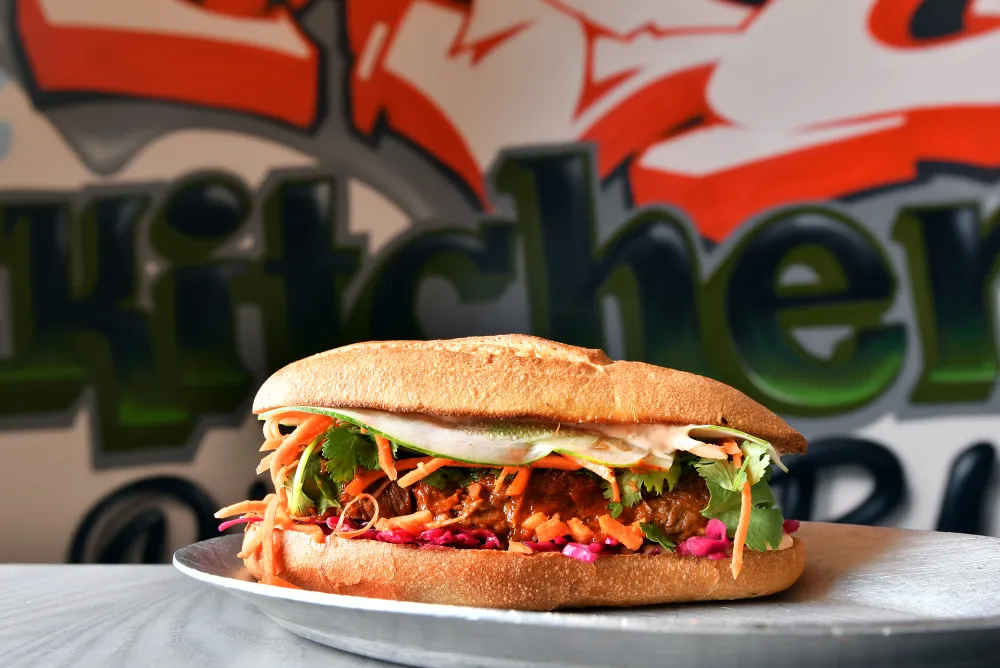
The Num Pang is a staple of Cambodian street food. Inspired by French cuisine, it has been adapted to local tastes. It features a crispy baguette filled with butter, pâté, mayonnaise, spicy Kampot chilli, papaya salad, and pork, accompanied by fish sauce and soy sauce. All ingredients are kept separate, and the vendor assembles the sandwich to order, guaranteeing optimal freshness and flavour.
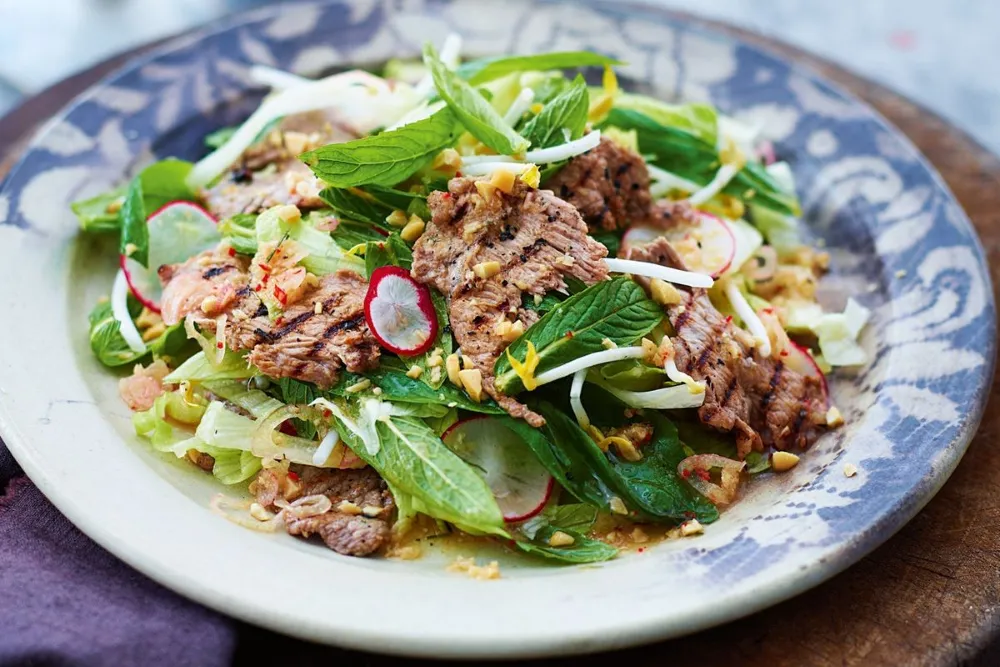
Lap Khmer, or Khmer Beef Salad, is made with thinly sliced beef, sometimes lightly seared, and primarily marinated in lime juice. This ceviche-style dish explodes with flavour thanks to lemongrass, shallots, fish sauce, basil, mint, garlic, bell pepper, and chilli. For those who love spicy food, Lap Khmer is a Cambodian essential, offering an intense kick from fresh red chillies. It is the perfect accompaniment for a beer and street food evening in Cambodia's lively cities.
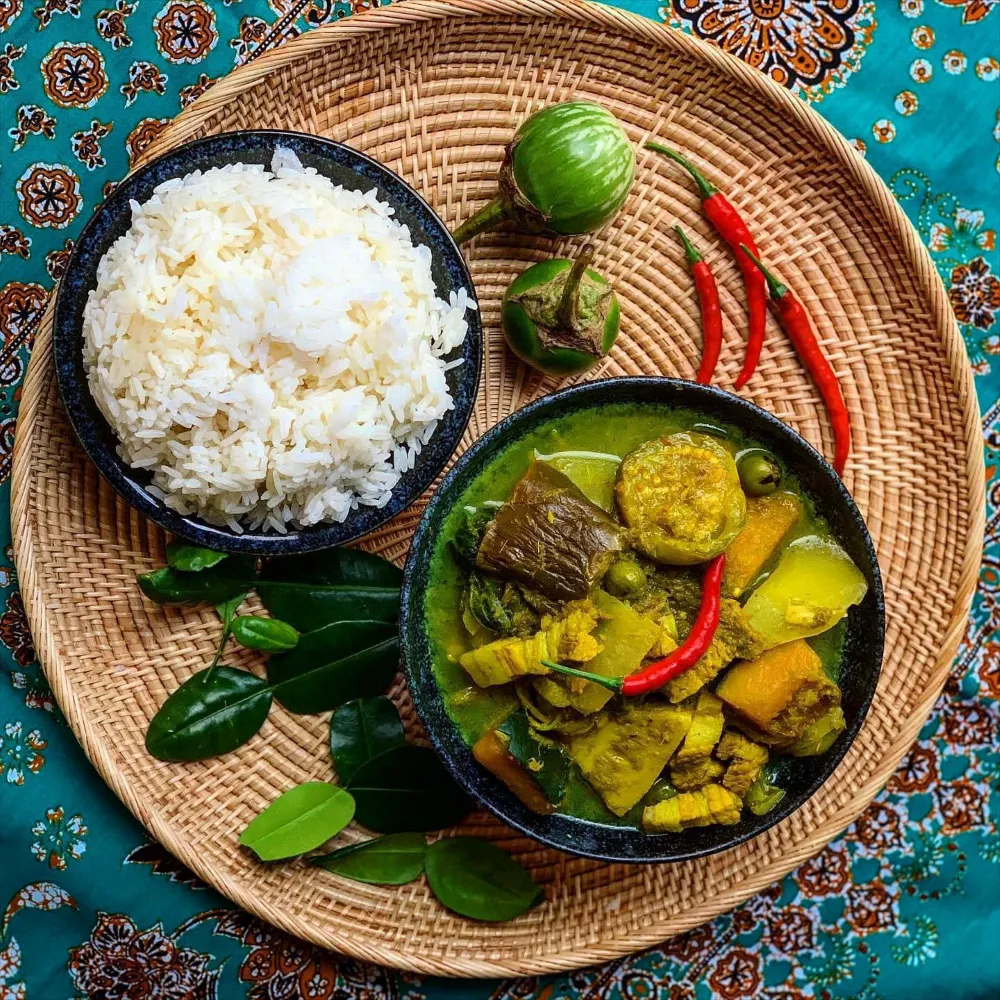
While Amok Trey is often considered the national dish by tourists, locals elect Samlar Kako as the true national favourite. This soup has been enjoyed for hundreds of years and is found in restaurants, street stalls, and Cambodian homes. Samlar Kako is made with kroeung (aromatic curry paste), toasted rice, catfish, pork, or chicken, local vegetables, fruits, and herbs. The meat and fish are mixed with prahok, considered the "soul" of Cambodian cuisine, then the vegetables are added to boiling water and cooked over medium heat. Key seasonings include lemongrass, ginger, turmeric, galangal, fish sauce, and prahok. Common vegetables are green beans, grated green papaya, and eggplant.
The resulting brown broth gives the dish a thick texture and a rich, comforting umami flavour.
Samlar Kari is a traditional Cambodian chicken curry, prepared with chicken pieces in creamy, fragrant coconut milk, seasoned with kroeung paste, shrimp paste, fish sauce, and palm sugar. It is usually served with a variety of vegetables like purple sweet potato, onion, bamboo, carrot, eggplant, green beans, or spinach. The combination of sweet coconut milk and aromatic spices results in a taste that is simultaneously rich, slightly sweet, and full of exotic flavours.
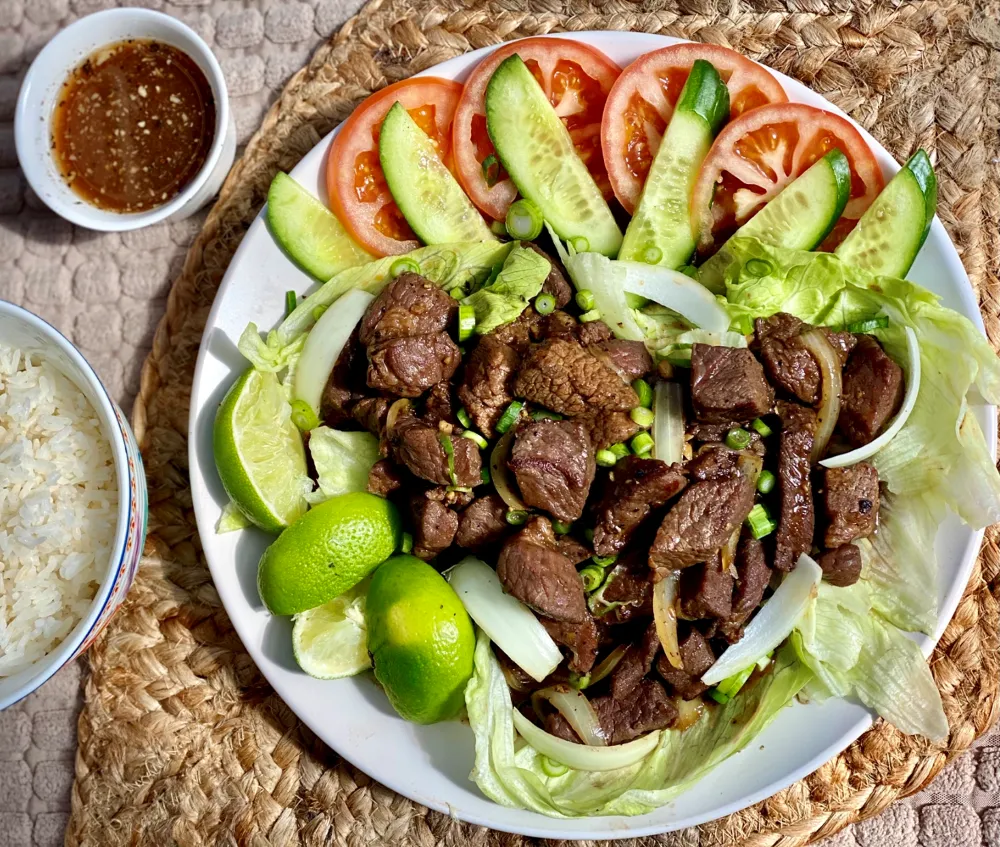
Lok Lak is a classic Khmer dish, found everywhere in local cafés and markets. For many Cambodians, it is a serious contender for the title of national dish. The beef is cut into small cubes, marinated in a mix of soy sauce, oyster sauce, and black pepper, then quickly stir-fried over high heat. Served with rice (sometimes accompanied by chips/fries), garnished with lettuce, tomato, and onion, and topped with a fried egg, Lok Lak is distinguished by its dipping sauce made from lime juice, chilli, and Kampot black pepper, offering a perfect balance of acidity, spice, and umami.
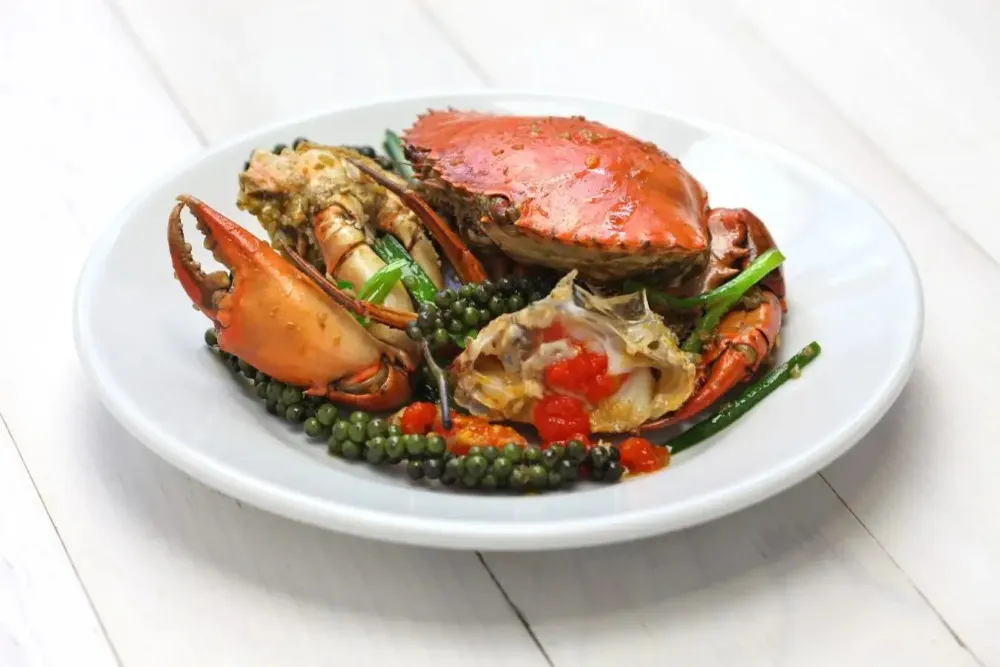
Are you a seafood lover? Then do not miss the Fried Crab with Kampot Green Pepper, an unmissable specialty of the coastal town of Kep, Cambodia. Kep is famous for its vibrant Crab Market, where freshly caught crabs are served daily, fried with garlic and generously seasoned with globally renowned Kampot Green Pepper. The sweet, succulent crab meat pairs perfectly with the pungent warmth and crunch of the pepper, creating a fragrant, unique, and quintessentially Cambodian dish.
You can also try Chaa Kdam Kroeung, crab fried in a curry sauce, an equally tasty variation of Kep cuisine.
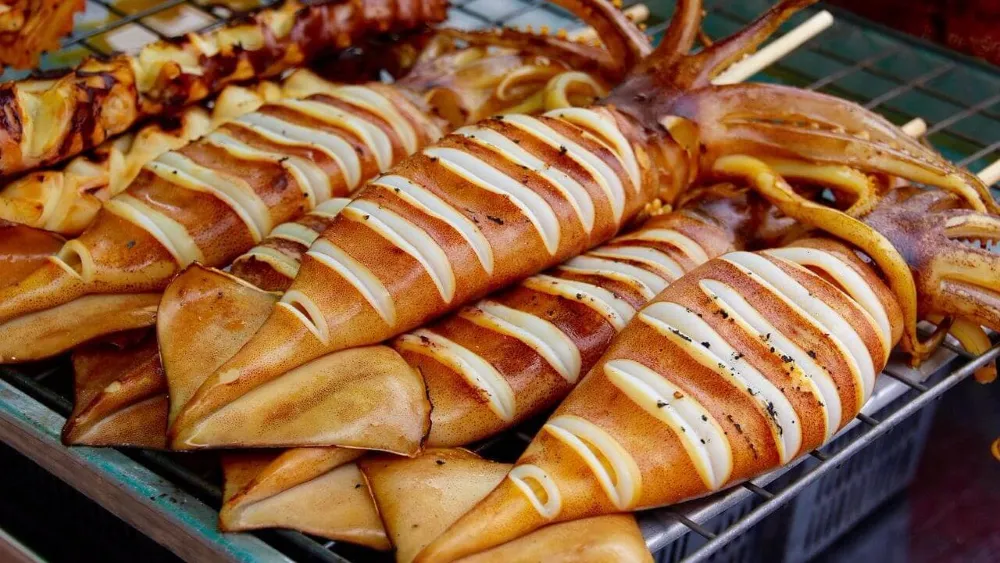
Besides crab, Cambodia is also famous for its squid dishes. Ang Dtray – Meuk, or Cambodian grilled squid, is a specialty of coastal cities like Sihanoukville or Kep. Squid, freshly caught at dawn, is cleaned, marinated in a mix of lime juice and fish sauce, skewered on bamboo sticks, and slowly grilled over charcoal. The dish is served with a typical Cambodian sauce: the spicy Koh Kong sauce, made with garlic, sugar, lime juice, fish sauce, and fresh chilli. You will often see vendors carrying small grills on their shoulders, cooking the squid right on the beach.
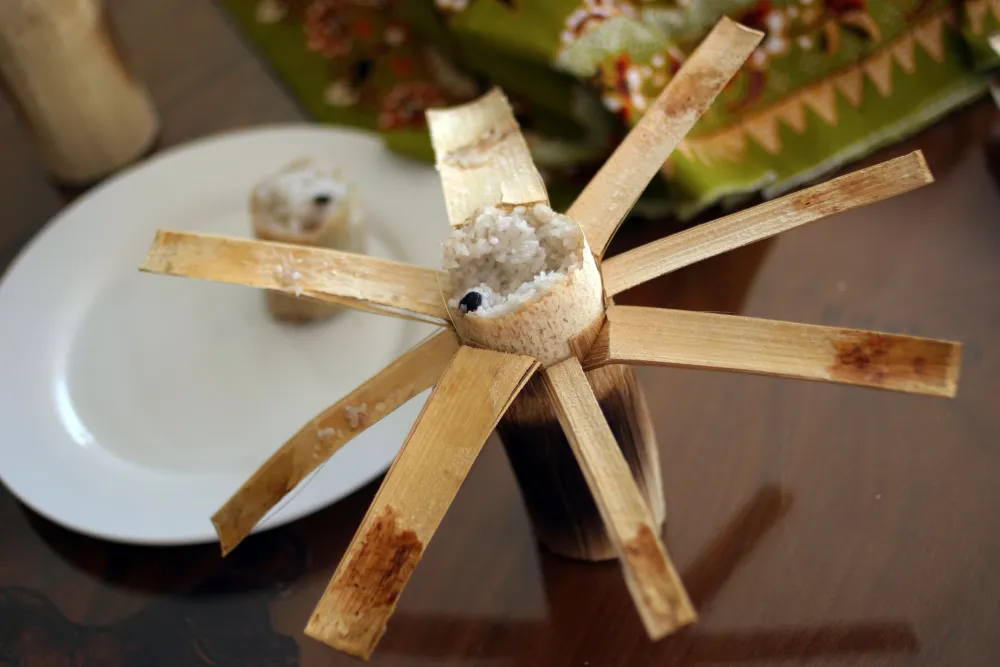
Here is a treat that will delight vegetarians: Kralan, or sticky rice cooked inside a bamboo tube. It is a very popular snack or dessert in Cambodia, traditionally eaten during the Khmer New Year. Sticky rice is mixed with shredded coconut, black beans, coconut milk, sugar, and a pinch of salt, then inserted into a bamboo tube before being grilled over embers. Once cooked, the bamboo is split open to reveal a tender, slightly smoky sticky rice with a delicate nutty and coconut flavour.
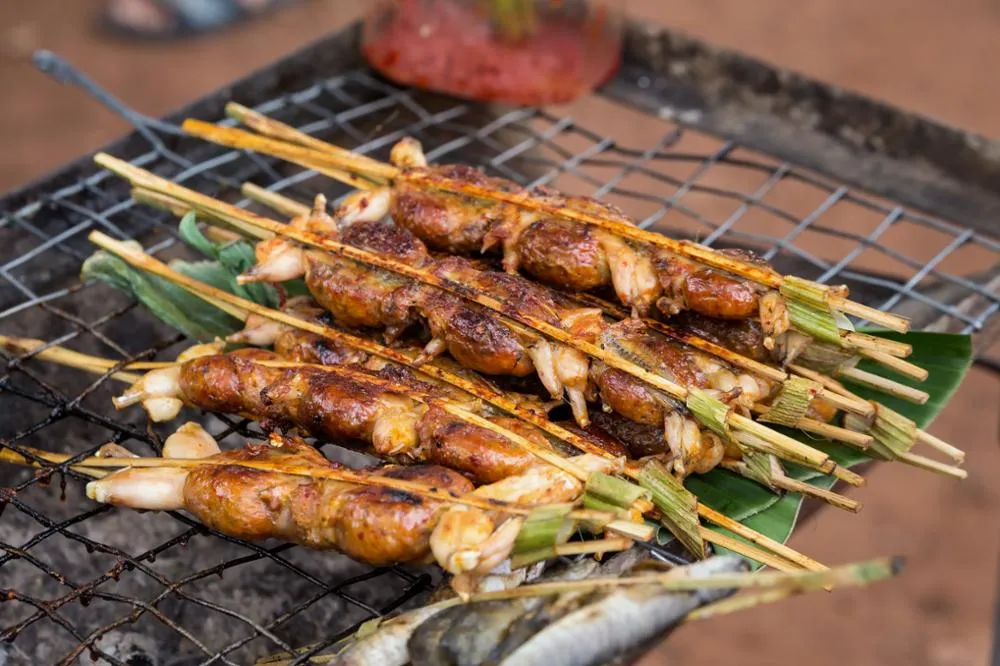
Kang Kep Baob is a very popular street food found in almost all of Cambodia's night markets. To prepare this dish, frogs are carefully cleaned before being stuffed with a mixture of lemongrass, turmeric, peanuts, coconut, minced pork, and other local spices, until their bellies become round like a small balloon. After a quick fifteen-minute sun-drying, the frogs are grilled in half-bamboo tubes over embers.
The result? A spicy dish where the warmth of the spices blends with the sweetness of the palm sugar. Many say the frog meat is firm and slightly sweet, reminiscent of chicken.
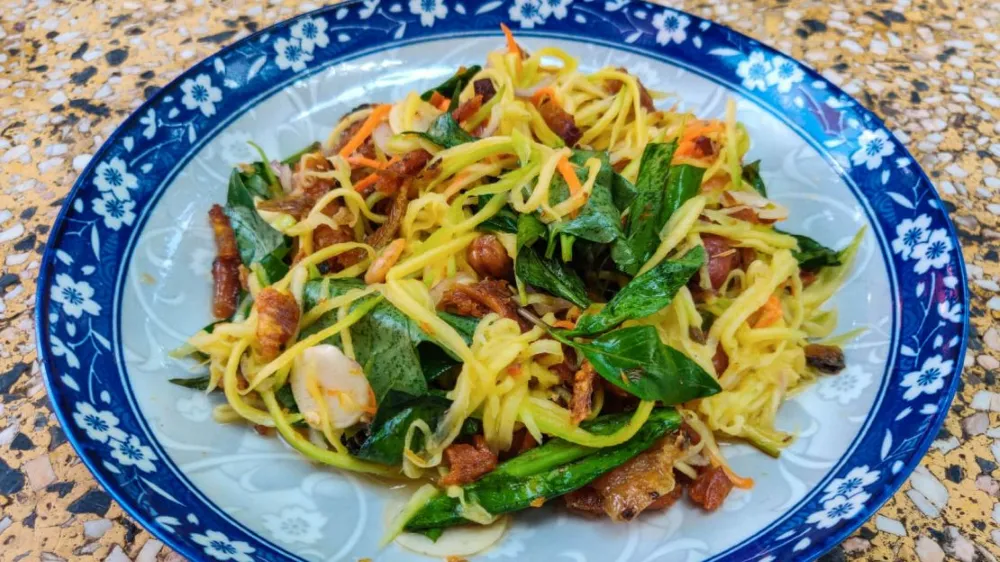
One cannot discuss Khmer cuisine without mentioning Nhoam Svay Kchai, also called Green Mango Salad, similar to somtum in Thailand and Laos.
The main ingredient is, of course, the mango, chosen while still green to retain its crunch. The salad is usually garnished with smoked fish, dried shrimp, and aromatic herbs such as basil, mint, Cambodian mint, and Thai basil, creating a harmony of flavours: the acidity of the green mango, the saltiness of the smoked fish, and the sweetness of the palm sugar. You can find it in street stalls and traditional restaurants across Cambodia—a must-try for anyone looking to discover local flavours.
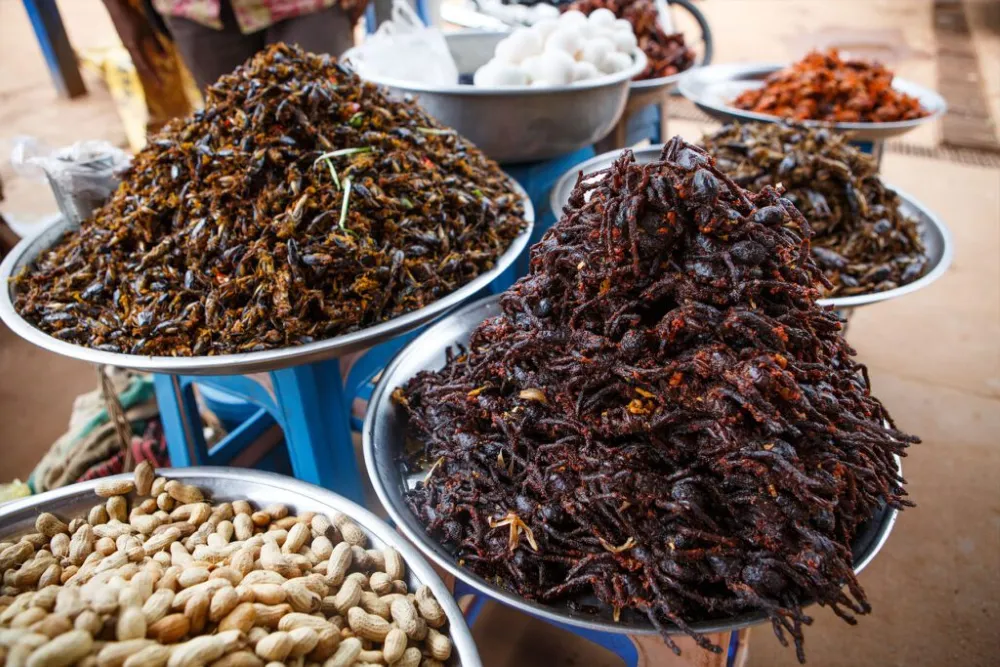
In Cambodia's public markets, it is not uncommon to see vendors offering a wide variety of fried insects: tarantulas, crickets, cockroaches, or grasshoppers. A sight that may make some travellers shiver but attracts the curious in search of new culinary sensations. These very inexpensive insects are typically marinated with classic Khmer spices, then fried with chilli and shallots for a crispy texture and a surprisingly aromatic taste.
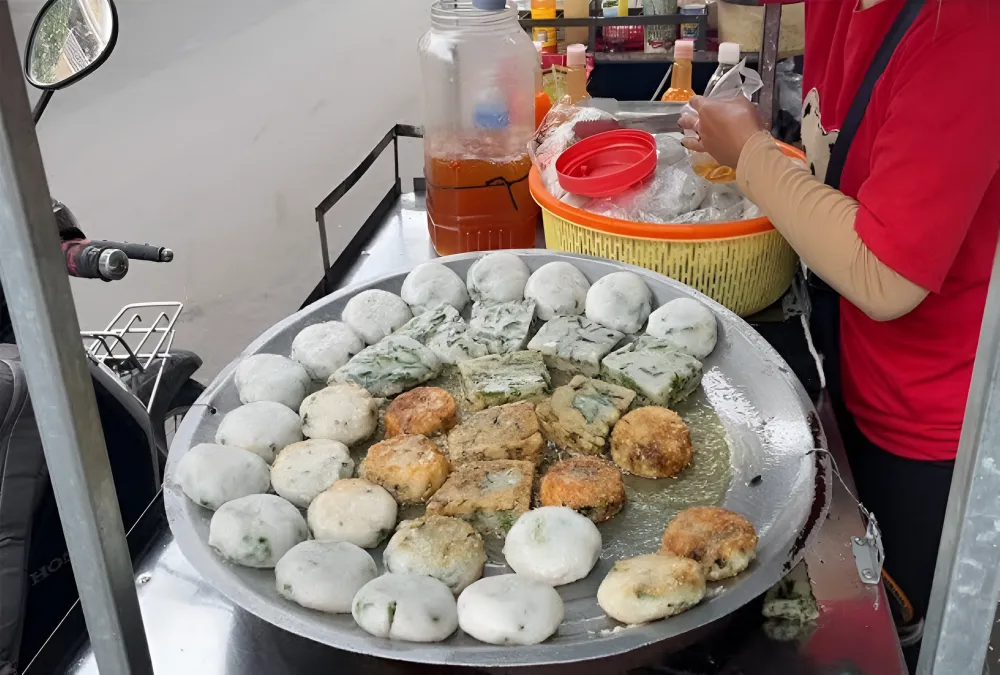
In the streets of Cambodia, it is common to see vendors transporting chive cakes on their bicycles. Nom Ka Chai, inspired by Chinese cuisine, is an emblematic Cambodian street food snack. These cakes are made from glutinous rice flour, starch, water, and finely chopped chives, then fried on a hot griddle. Some versions include a meat, fish, or vegetable filling. The inside remains soft and slightly chewy, while the outside is crispy. They are eaten with a sweet and spicy fish sauce, perfect as a snack at any time of day—a small indulgence highly appreciated by locals and travellers alike.
Nom Krok is one of Cambodia’s most iconic sweet treats. These small pancakes are made from a mixture of rice flour, coconut milk, and sugar, then cooked in cast-iron moulds that give them a crispy crust and a soft, fluffy centre. Once golden, they are topped with a few thin slices of spring onion, which adds a fragrant touch and subtly balances the richness of the coconut milk. A delightful interplay of textures and sweet-savoury flavours.
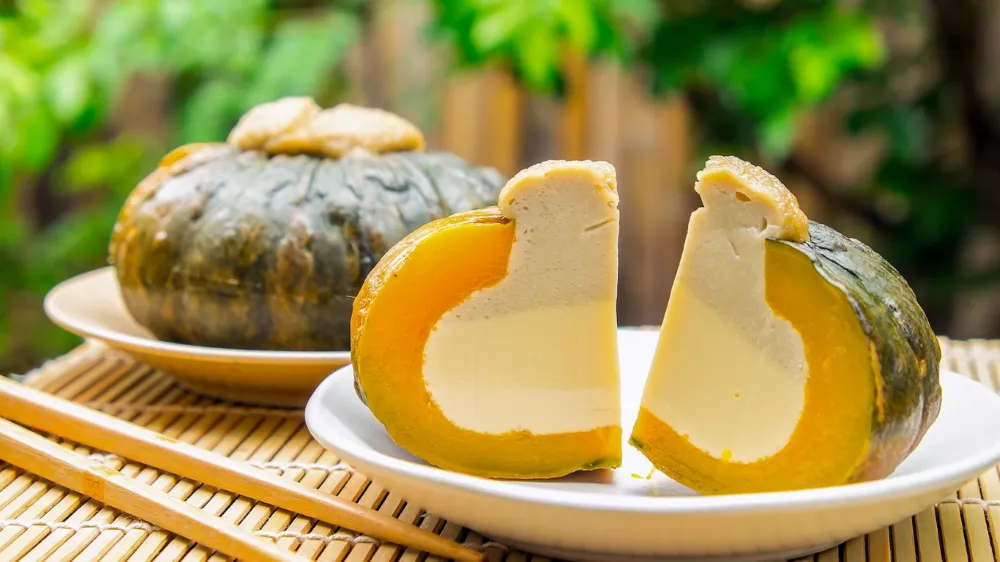
If you are looking for an unmissable Cambodian dessert, opt for Num Sang Khya L’peou, a sweet custard cooked directly inside a small pumpkin. After removing the seeds, the fruit is filled with a mixture of palm sugar, coconut milk, and eggs, before being steamed for about thirty minutes. Once sliced, the dessert reveals beautiful bright orange wedges with a sweet, light, and delicately creamy taste—a truly melt-in-your-mouth pleasure with every bite.

Noum Kong is a popular doughnut in Cambodian street food. It is made from glutinous rice flour, which gives it a crispy coating and a soft, almost chewy interior, reminiscent of mochi texture. The doughnuts are then dipped in a palm sugar syrup and sprinkled with toasted sesame seeds, offering a rich and typically Cambodian sweetness.
Chet Chien is a very popular delicacy in Cambodian street food. Slices of ripe banana are coated in a light batter—often made from rice flour and coconut milk—then fried until beautifully golden. The contrast between the crispy crust and the soft, sweet centre is irresistible. You will easily find this savoury snack in markets across the country.
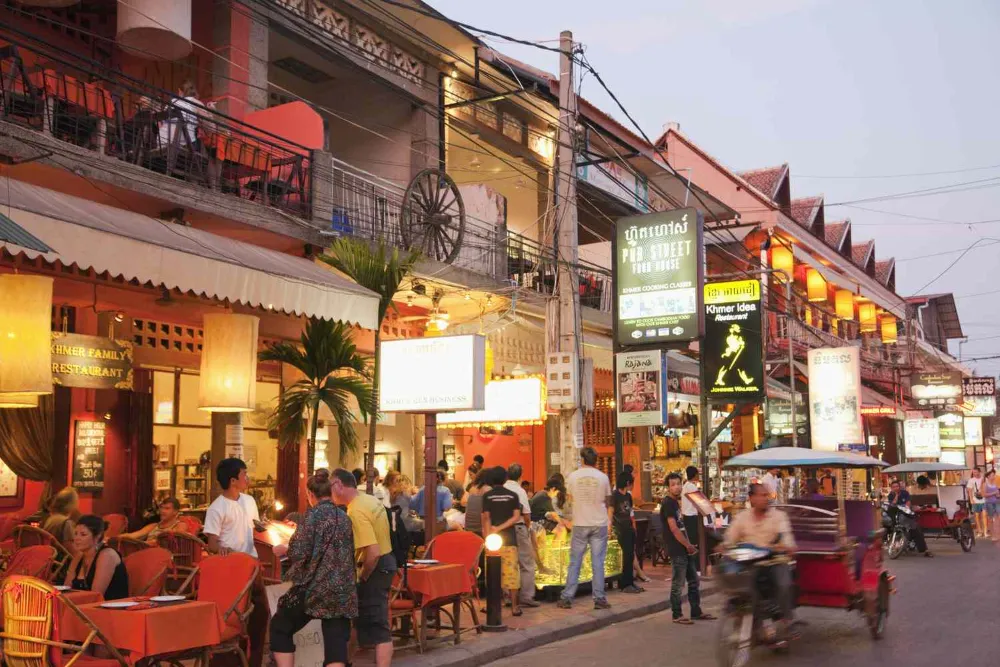
You can enjoy these emblematic Cambodian street food dishes in several locations across the country.
Whether you love bold flavours, are curious to discover new textures, or are simply seeking authenticity, Cambodian cuisine never ceases to surprise. From fragrant ancestral soups to irresistible street food and sweet coconut-based desserts, every bite tells a part of the country's history and soul. Travelling to Cambodia is also a journey through its dining table: a world of aromas, traditions, and gourmet discoveries waiting to be explored.
See more:





 TRAVELERS' CHOICE 2026