




Reel Cash Vault’s latest payout: 2.5M. Your turn is today! Start Spinning Here -> psee.io/8rh3d2
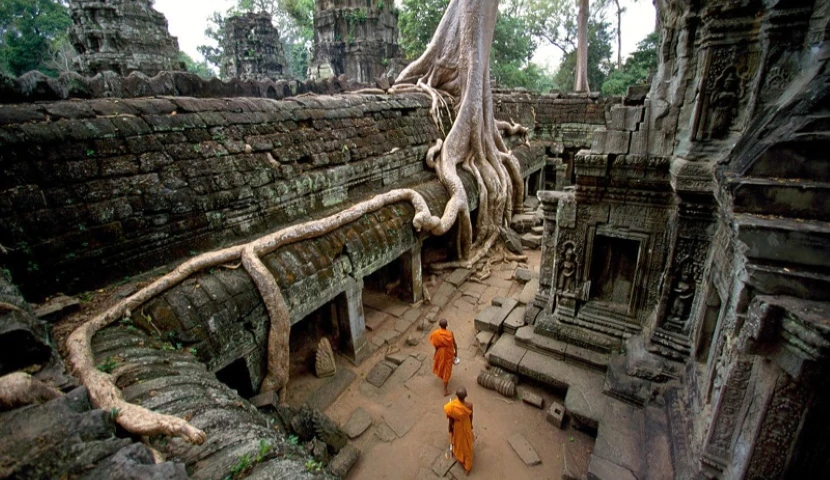
Located approximately 10 km northeast of central Siem Reap, Ta Prohm Temple is a crown jewel of the world-renowned Angkor Archaeological Park, home to the greatest architectural masterpieces of the ancient Khmer Empire. Famed for its crumbling ruins entwined with massive tree roots, Ta Prohm offers a mystical atmosphere where nature and stone seem to merge into one. To visit Ta Prohm Temple is to step into a timeless world and discover one of the most captivating Cambodia tourist attractions.
Built in the late 12th century during the reign of King Jayavarman VII, Ta Prohm is one of the most iconic monuments within the Angkor complex. It was originally established as a vast Buddhist monastery and a major religious hub, dedicated to the King’s mother. At its peak, the sanctuary—then known as Rajavihara—housed thousands of monks, priests, and high-ranking officials.
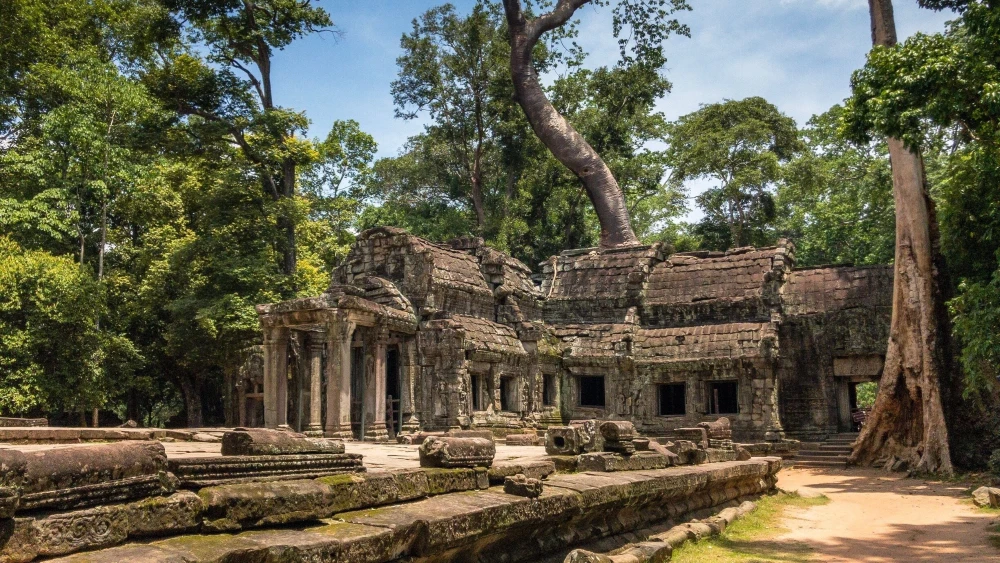
The temple was constructed in the Bayon style, characterised by sprawling galleries, symbolic towers, and intricate Buddhist iconography. Unlike many other Angkor temples that underwent extensive restoration, Ta Prohm was intentionally left in a state of "controlled neglect". Giant tropical trees, specifically silk-cotton trees and strangler figs, have draped their massive roots over the walls and roofs, creating a unique, poetic atmosphere. This spectacular fusion of ancient Khmer architecture and lush jungle has earned the site its global reputation.
The defining feature of Ta Prohm Temple is its architecture intimately reclaimed by nature. It retains a "wild" appearance, giving visitors the sensation of discovering a forgotten relic slowly being swallowed by the Cambodian jungle. This unique setting makes it the most famousjungle-enveloped temple in Southeast Asia.
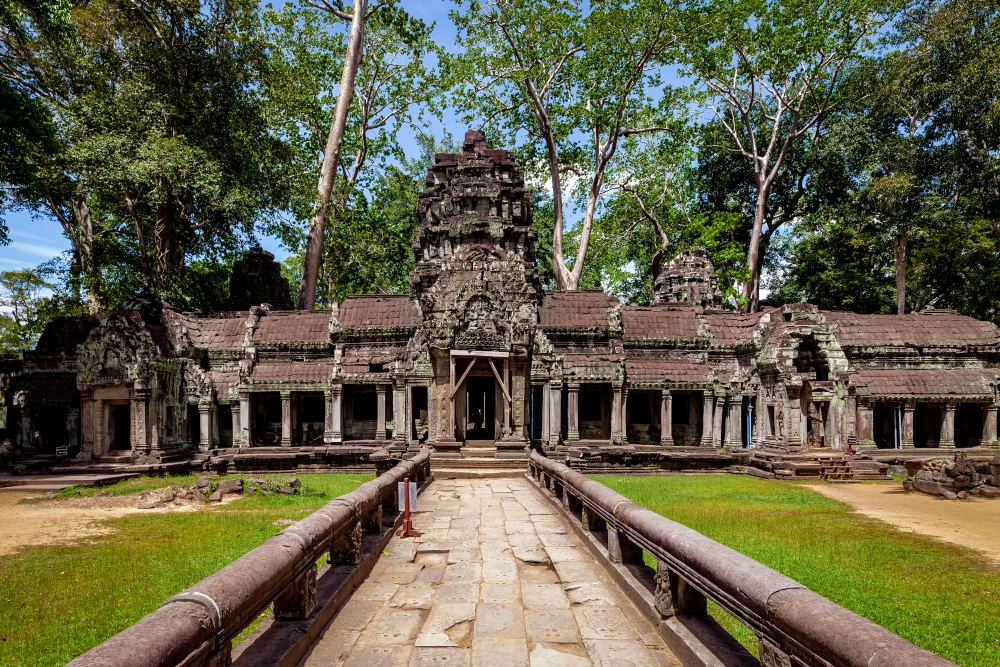
The monumental gates of Ta Prohm provide the first immersion into the sanctuary’s mystical world. Built from sandstone, they feature the carved faces and floral motifs typical of the Bayon style. Today, several entrances are partially blocked by giant tree roots, forming spectacular natural arches. This striking encounter between stone and vegetation symbolises the eternal dialogue between human creation and the power of time, making these gates a prime photography spot in Angkor.
Inside the complex, a dense network of galleries, narrow corridors, and courtyards unfolds like a labyrinth. Collapsed walls and displaced stone blocks offer a hauntingly beautiful testimony to centuries of abandonment.
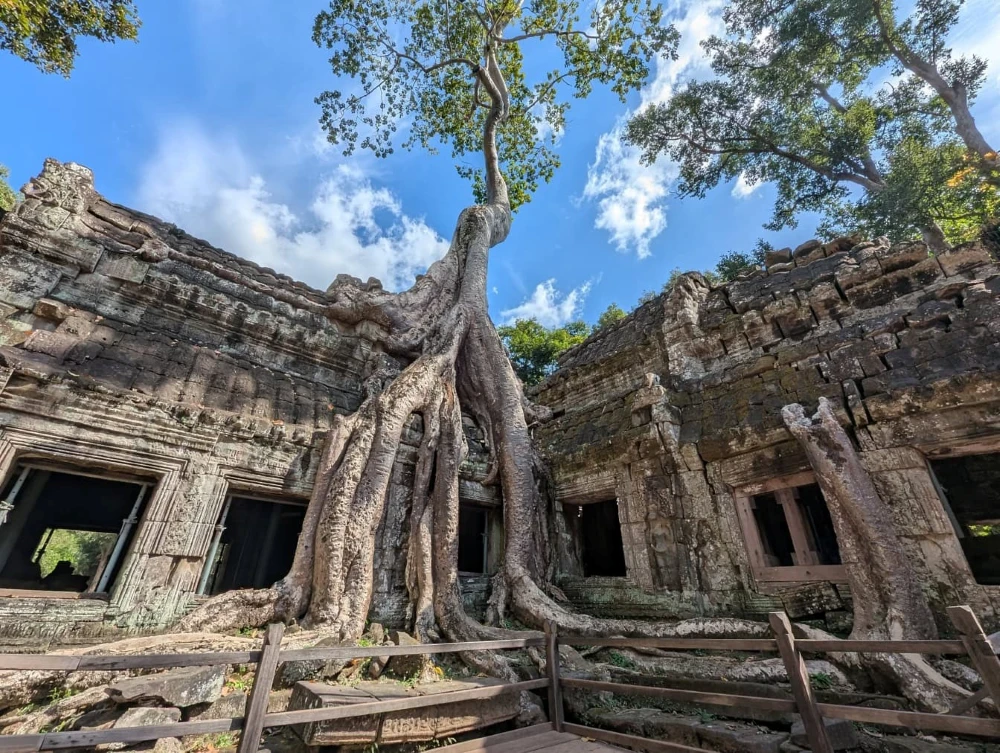
Enormous, centuries-old trees dominate the site, their roots snaking along walls and wrapping around columns like giant wooden serpents. These roots do more than just invade the stones; in many places, they actually support the structure, becoming essential to the temple's stability. This fragile coexistence creates a timeless aesthetic, often leading Ta Prohm to be described as the most romantic and mysterious temple in the region.
The prayer halls and ancient Buddhist sanctuaries of Ta Prohm maintain a silent, contemplative atmosphere. Some niches once housed statues of Buddha and Bodhisattvas, while others were used for the daily rituals of monks. Even in ruins, these spaces exude a strong sense of spirituality. Natural light, filtered through the canopy and stone openings, creates a play of shadow and brightness that enhances the sacred character of the site.
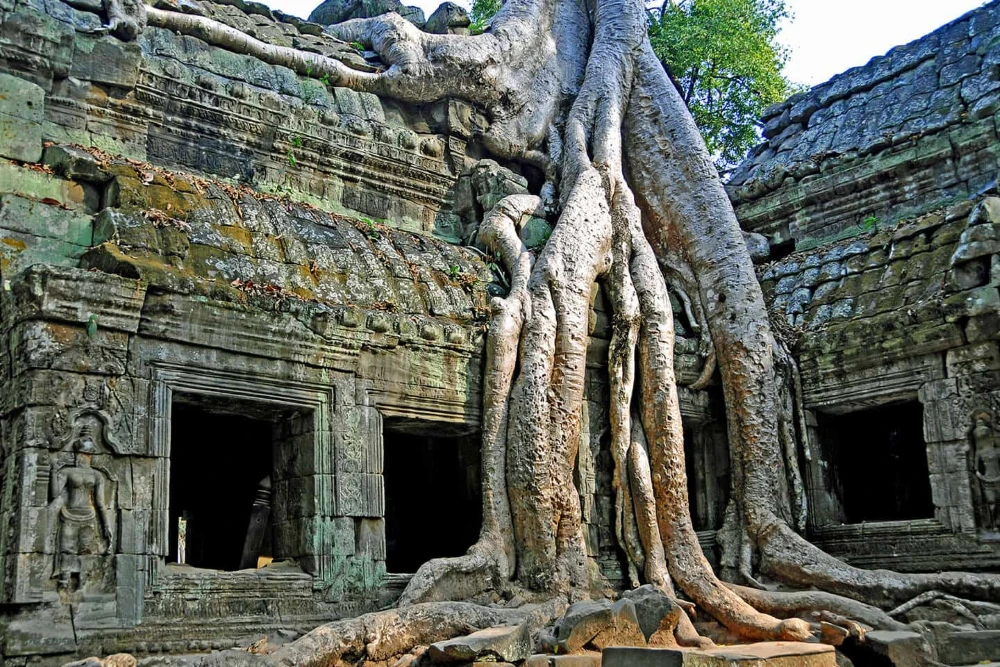
The temple walls are adorned with numerous finely carved bas-reliefs depicting religious scenes, deities, Apsara celestial dancers, and floral patterns. Although some details have been weathered by time, the finesse of Khmer art remains remarkable. These sculptures offer a precious insight into the beliefs, aesthetics, and spiritual life of the Khmer Empire. They transform Ta Prohm into a veritable open-air museum where every stone tells a story.
Beyond its historical and architectural value, Ta Prohm gained worldwide fame through its appearance in the 2001 film Lara Croft: Tomb Raider, starring Angelina Jolie. In the movie, the temple serves as the primary backdrop for several exploration scenes, where the heroine navigates through collapsed galleries and corridors overgrown with vegetation. These spectacular images have greatly enhanced the mysterious aura of Ta Prohm, making it a must-see for film buffs, adventure seekers, and heritage enthusiasts alike.
Ta Prohm is located within the Angkor Archaeological Park. From Siem Reap city centre, you can take Sivatha Boulevard or Pokambor Road, then continue via Tusamuth and Charles De Gaulle roads to the park entrance. From Angkor Wat, you can reach Ta Prohm by foot, bicycle, or tuk-tuk, depending on your pace and preference.
The temple can be visited year-round. However, it is advisable to avoid the hottest months (April to May). The ideal time to visit is between November and February, when the weather is cooler and more pleasant.
To fully explore Ta Prohm and combine it with other major temples in the complex, we recommend planning one to two full days to appreciate the cultural and architectural depth of the area.
Ta Prohm is included in the Angkor Pass. Current prices are approximately:
Opening hours: 07:30 – 17:30
Tip: The best time to visit Ta Prohm Temple is during midday. You can rest under the shade of the great trees while enjoying ample light for photography. It is generally less recommended to visit in the very early morning or very late afternoon due to lower light levels under the dense canopy.
As a sacred site, visitors should follow a respectful dress code. Please ensure your shoulders and knees are covered to respect the local culture and temple regulations.
The site contains many areas with uneven stones, collapsed corridors, and rugged paths. It is highly recommended to wear sturdy walking shoes or trainers with good grip to navigate the ruins safely.
Ta Prohm Temple is not merely an architectural masterpiece; it is a place where nature and history collide in a spectacular fashion. Between the giant roots, ancient stones, and mystical atmosphere, every step through this sanctuary transports visitors to another era. Visiting Ta Prohm is a unique experience at the heart of the Khmer civilisation.
See more:





 TRAVELERS' CHOICE 2026