





The proof: Every 10 minutes pays a jackpot. Try now! Spin to Win Here -> psee.io/8qtsv7
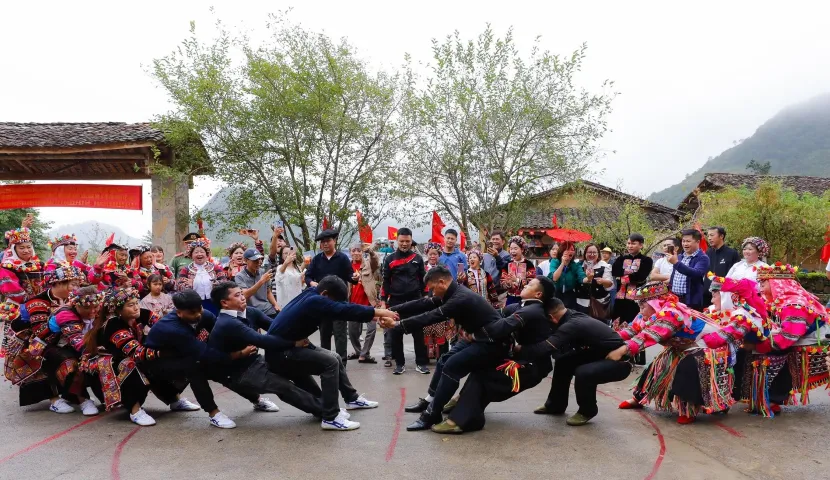
Traditional Vietnamese games are an integral part of the country’s folk culture. Far more than mere pastimes, these games reflect the community spirit, creativity. Played during traditional festivals, village fairs, or the Lunar New Year (Tet), they have pulsed through the rhythm of daily life for centuries. To discover these popular Vietnamese games is to approach the Vietnamese culture through authentic, playful traditions.
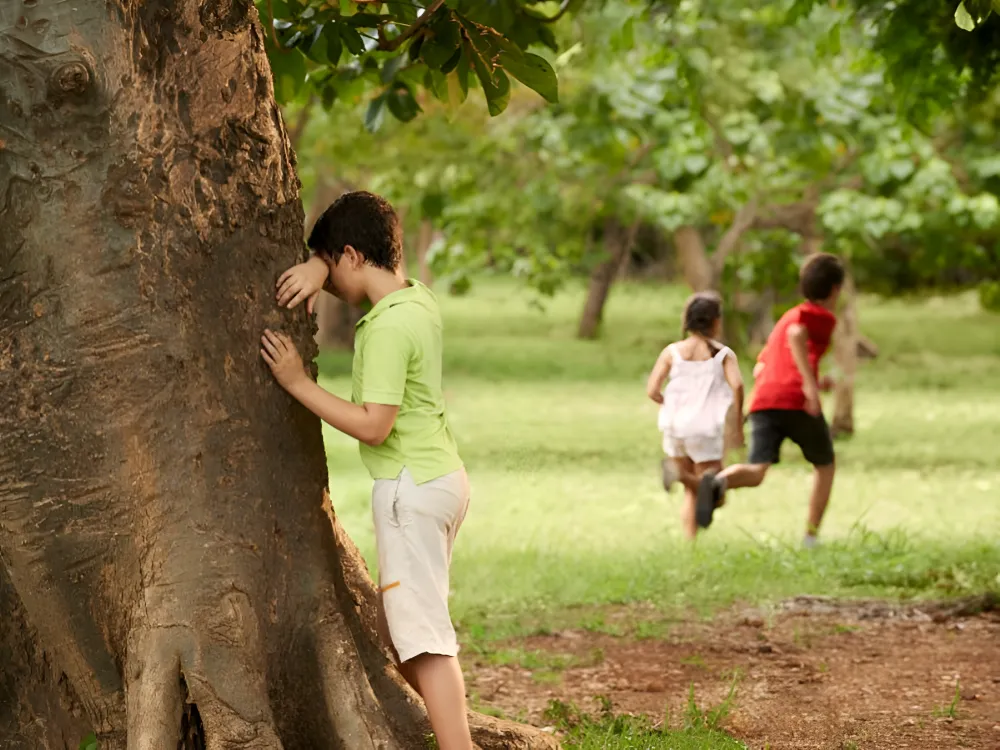
Tron tim (Hide and seek) is one of the simplest and most universal traditional children's games in Vietnam. Deeply anchored in Vietnamese childhood, this popular Vietnamese game is played in both remote villages and urban neighbourhoods, often after school or during Vietnamese traditional festivals.
The rules are straightforward: one player closes their eyes and counts while the others hide. Once the count is finished, the seeker sets off, while the hidden players try to return to the starting point without being caught. Local variations make this Vietnamese folk game even more dynamic. Beyond the fun, trốn tìm helps develop agility, observation, and patience in children. It evokes a simple, joyful childhood defined by laughter, freedom, and outdoor play—essential values of Vietnamese community life.
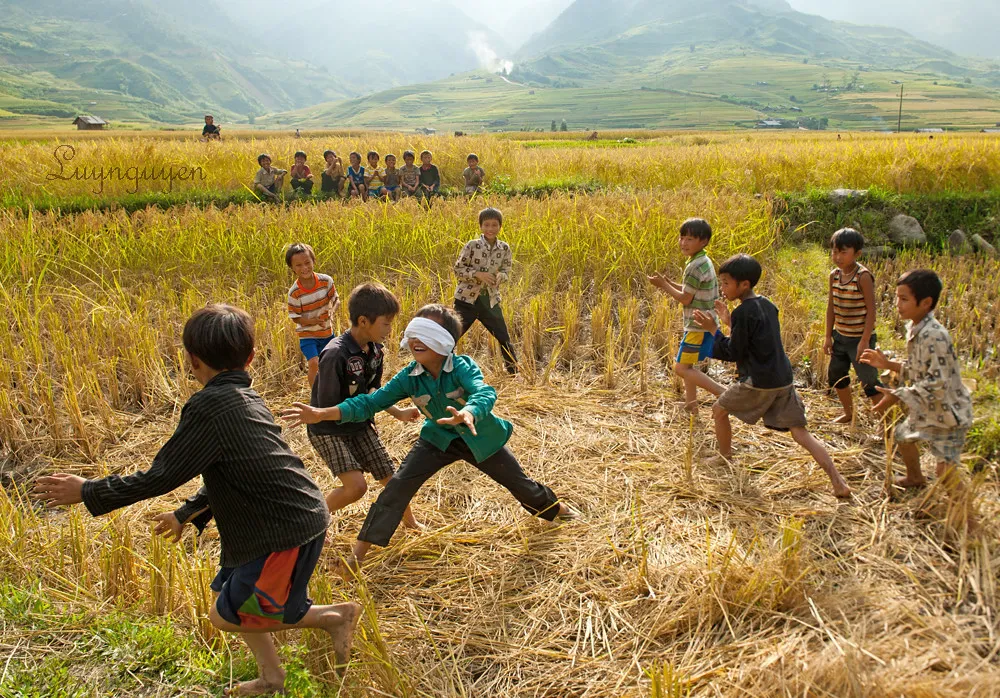
Bit mat bat de, similar to "Blind man’s buff", is a traditional children's game in Vietnam highly favoured during school and village festivals. Inextricably linked to Vietnamese childhood, this popular Vietnamese game is played in groups in schoolyards, village squares, or open fields.
One player is blindfolded while the others circle them, making noise, laughing, or giving false directions. The "blind" player must catch one of them using only their hearing and sense of orientation. Once successful, roles are swapped. This Vietnamese folk game embodies a spontaneous childhood of shared laughter and social interaction, reflecting the Vietnamese community spirit and conviviality.
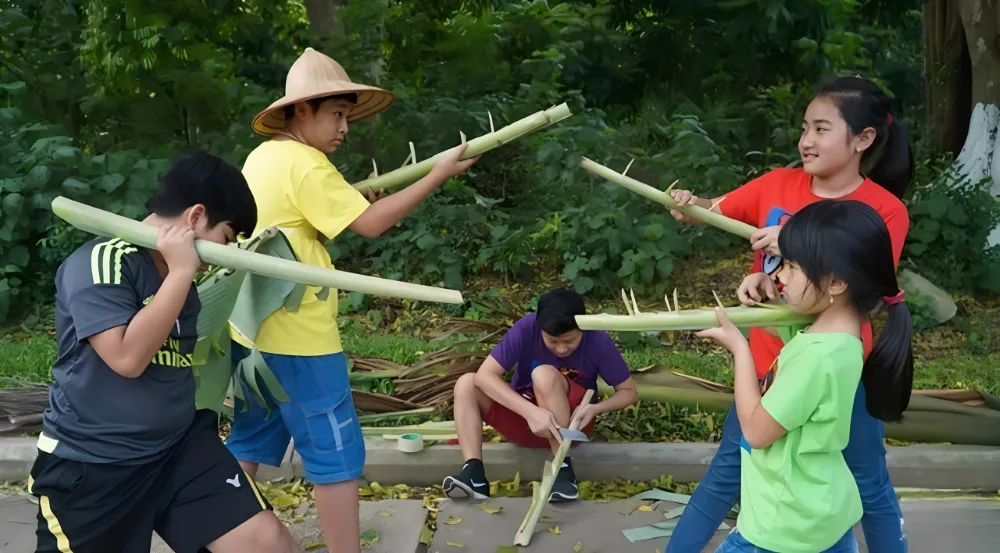
Vietnamese battle simulation is one of the most vibrant Vietnamese traditional games, particularly popular with young boys. This traditional children's game in Vietnam involves recreating imaginary battles using sticks, leaves, or everyday objects transformed into swords or spears.
Children divide into two camps and freely invent combat scenarios. While the game evokes confrontation, it remains symbolic and playful. Culturally, this game reflects the heroic spirit and the oral transmission of Vietnamese historical tales. This popular Vietnamese game allows children to express energy, strengthen friendships, and immerse themselves in a culture where courage and solidarity are paramount.
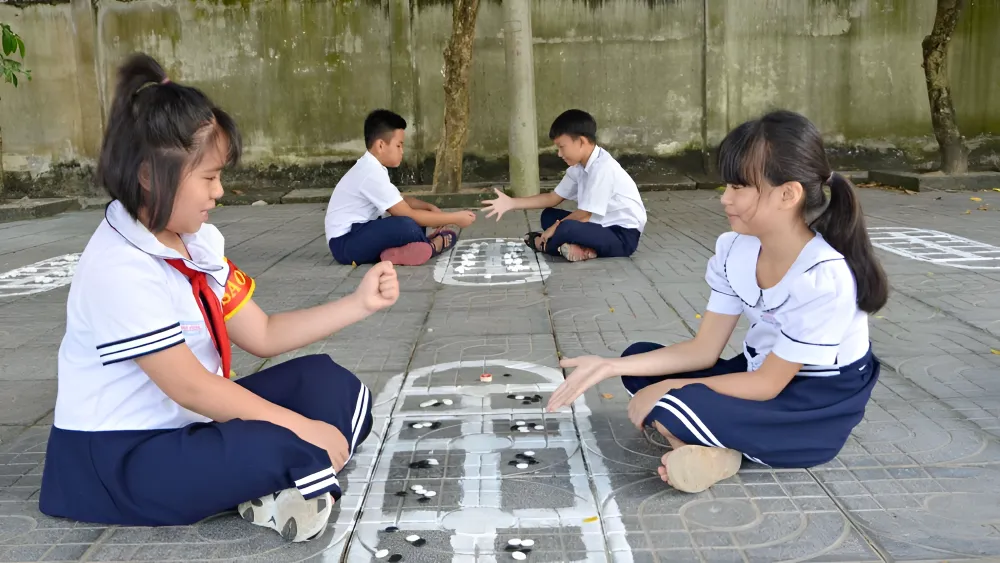
Among the most emblematic Vietnamese traditional games, o an quan (Mandarin square capturing) holds a special place in the collective memory. This strategy game has shaped the childhood of many Vietnamese people and remains a strong symbol of popular culture.
The board is usually drawn on the ground or a wooden plank, with pits called ô filled with small pebbles, seeds, or shells. Two players compete by moving pieces according to precise rules involving calculation and tactics. Beyond entertainment, o an quan transmits the importance of intelligence and strategy, remaining a precious Vietnamese cultural heritage.
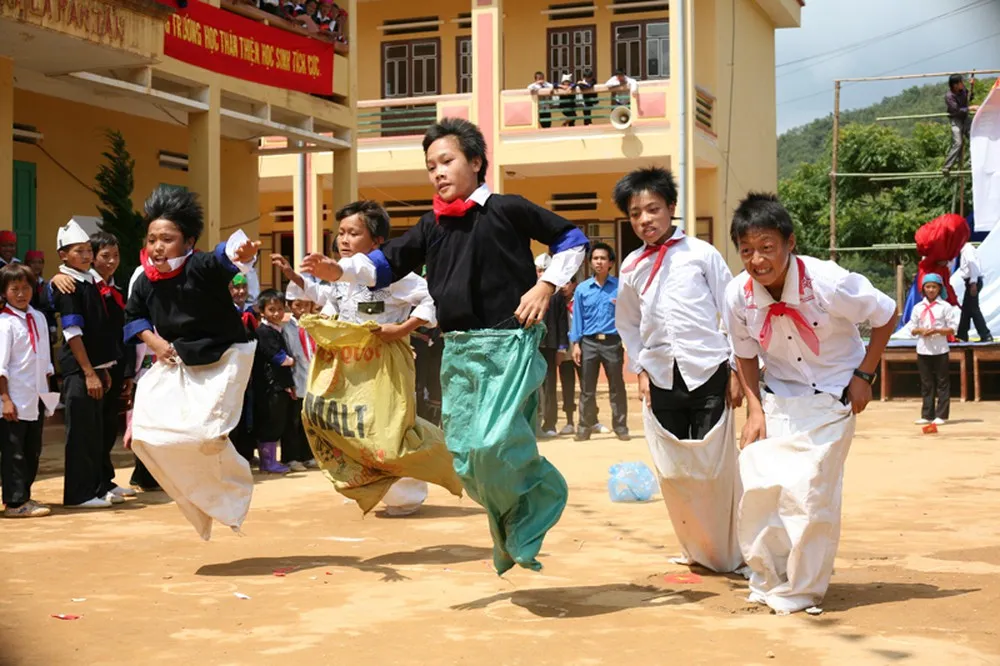
Frequently organised during popular festivals and community celebrations, sack race is one of the most convivial Vietnamese traditional games. Simple in form, it relies on participation and group cohesion.
Players stand in a sack and hop to the finish line. Whether individual or relay-based, it fosters cooperation and collective enthusiasm. In a cultural context, it symbolises the shared joy and social dimension of Vietnamese community gatherings.
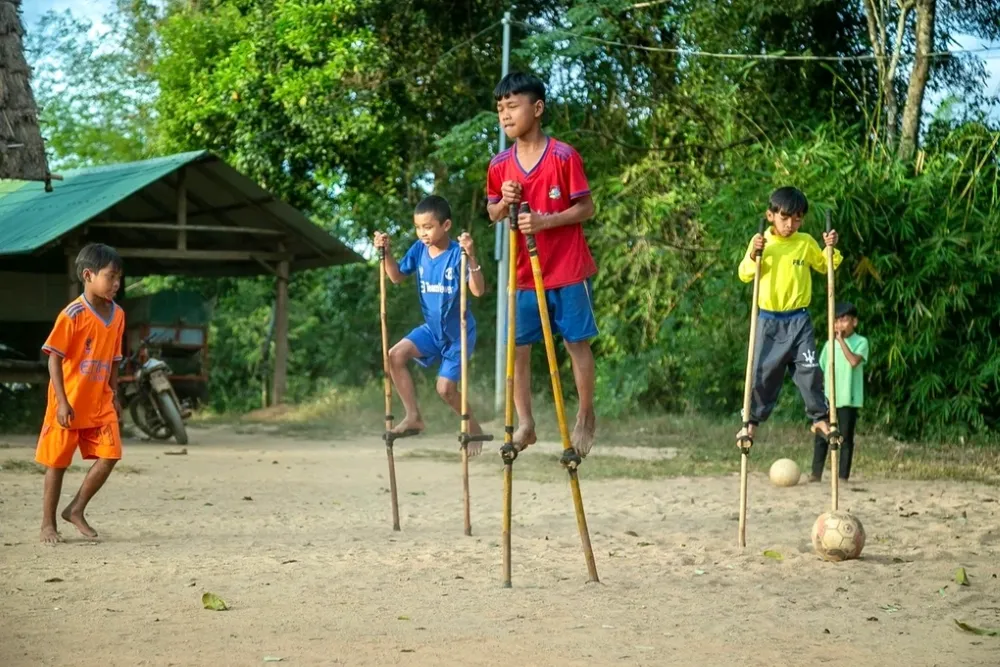
A staple of many traditional festivals, stilt walking is an iconic game of the Vietnamese playful heritage. It showcases skill, balance, and endurance—qualities long associated with rural life and navigating flooded terrain.
Participants move on wooden stilts through a defined course. During festivals, the competition is often accompanied by music and performances, creating a festive atmosphere. It reflects popular ingenuity and the adaptation of communities to traditional living conditions.
Among the many Vietnamese traditional games, keo co - also known as a popular Vietnamese folk game - occupies an iconic place in community life. This collective traditional game is primarily played during Vietnamese traditional festivals, rural celebrations, and during the Vietnamese Tet.
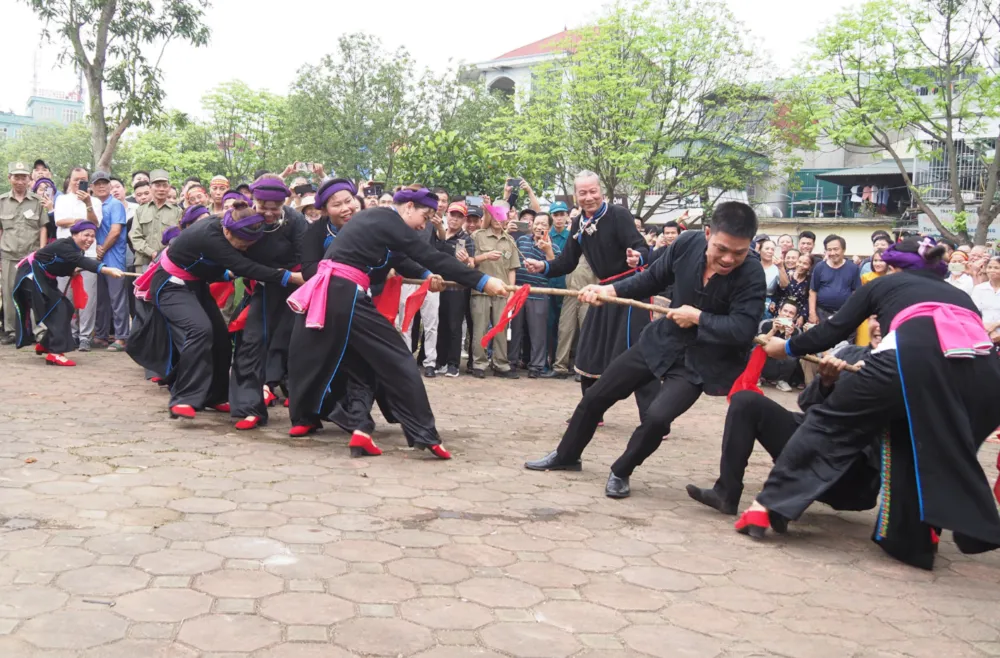
Two teams of equal participant face each other, gripping a thick rope. The objective is to pull the rope until the opposing team crosses the central line. Tug of war brings together men, women, children, and elders, making it a quintessential popular game in Vietnam that fosters social cohesion and team spirit. In rural villages, this folk game is often the heart of community celebrations.
From a cultural perspective, tug of war carries deep Vietnamese cultural symbolism. It represents unity, solidarity, and collective strength. It is often rooted in traditional agricultural rites, symbolising the balance between opposing forces to attract prosperity and a bountiful harvest.
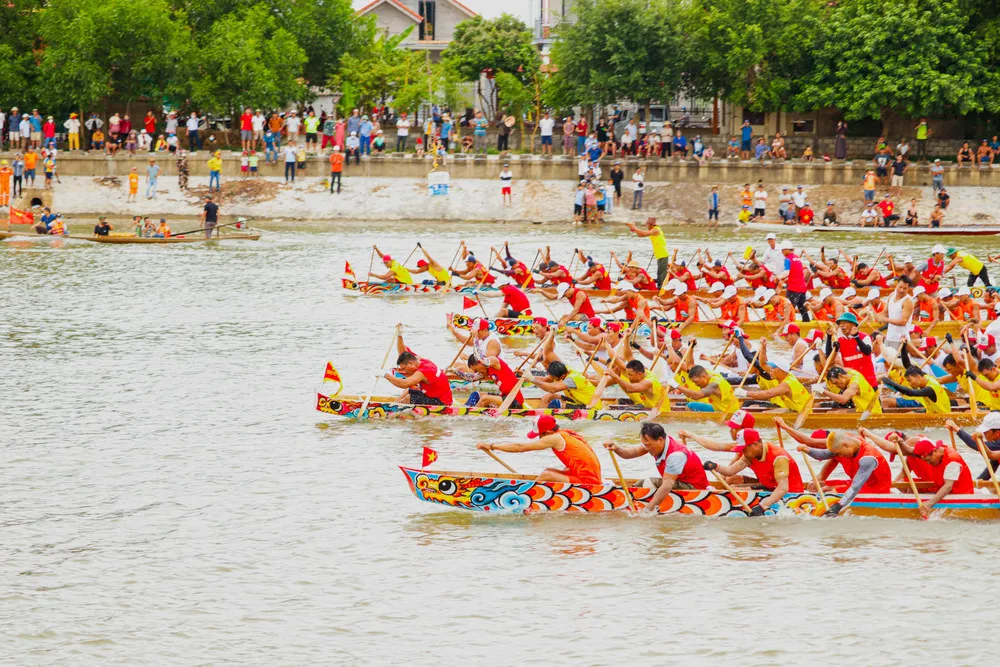
Highly popular during village festivals and religious celebrations, đua thuyền is one of the most spectacular Vietnamese traditional games. It generally takes place on rivers or lakes, particularly during festivals linked to water worship and agriculture.
Each team consists of rowers in a long, narrow boat, guided by a leader who rhythms the movements with songs or drums. Coordination and collective spirit are essential. Beyond the competition, boat racing symbolises community solidarity, the mastery of nature, and the hope for abundant harvests.
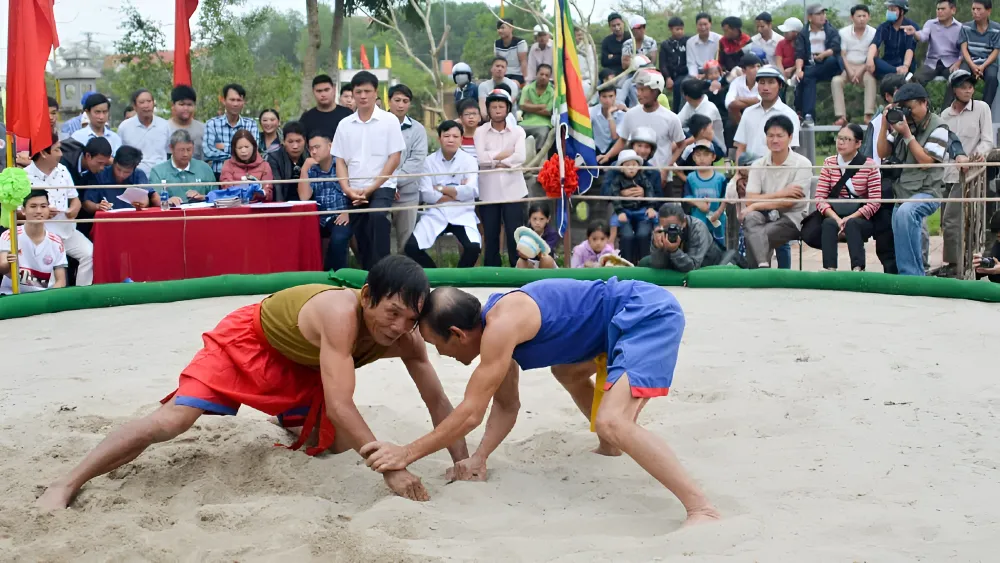
Rooted in rural traditions, dau vat is a traditional Vietnamese game blending sport, ritual, and cultural heritage. It is often organised during village festivals, Tet, or spring festivals.
Wrestlers, usually bare-chested and wearing traditional shorts, compete in a circular ring. The goal is to unbalance the opponent and bring them to the ground without violent strikes. It represents courage, discipline, and the "chivalrous spirit" of Vietnamese rural society.
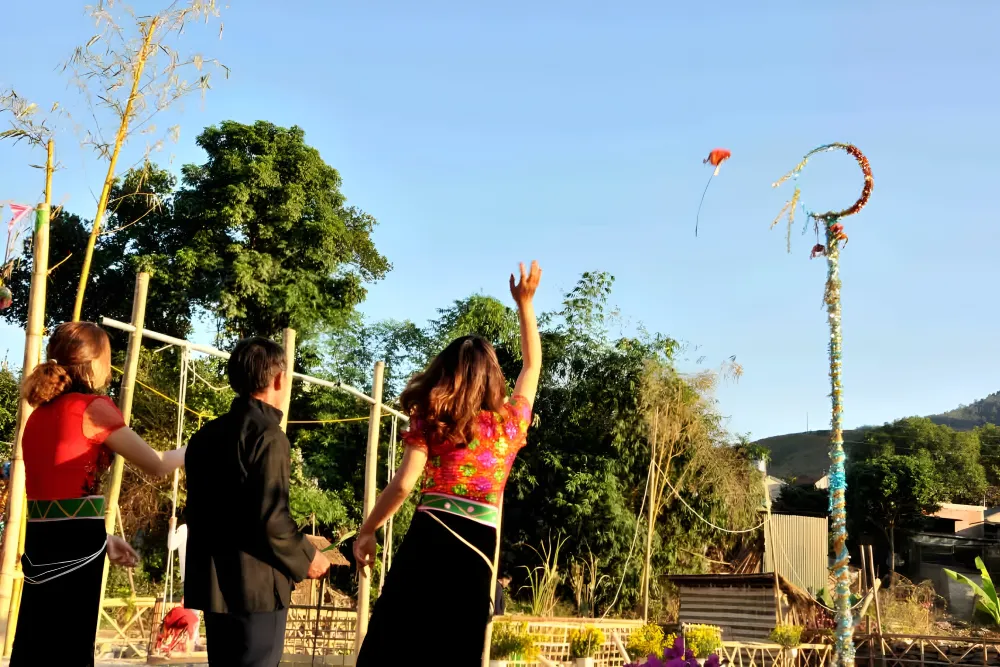
An iconic ritual game of the ethnic groups in Northern Vietnam, nem con is inseparable from traditional spring festivals. It is particularly prominent during Tet and ethnic celebrations.
The game involves throwing a colourful cloth ball through a ring fixed atop a tall pole. Beyond the fun, ném còn carries a strong symbolic dimension, representing wishes for prosperity, fertility, and harmony between man and nature.
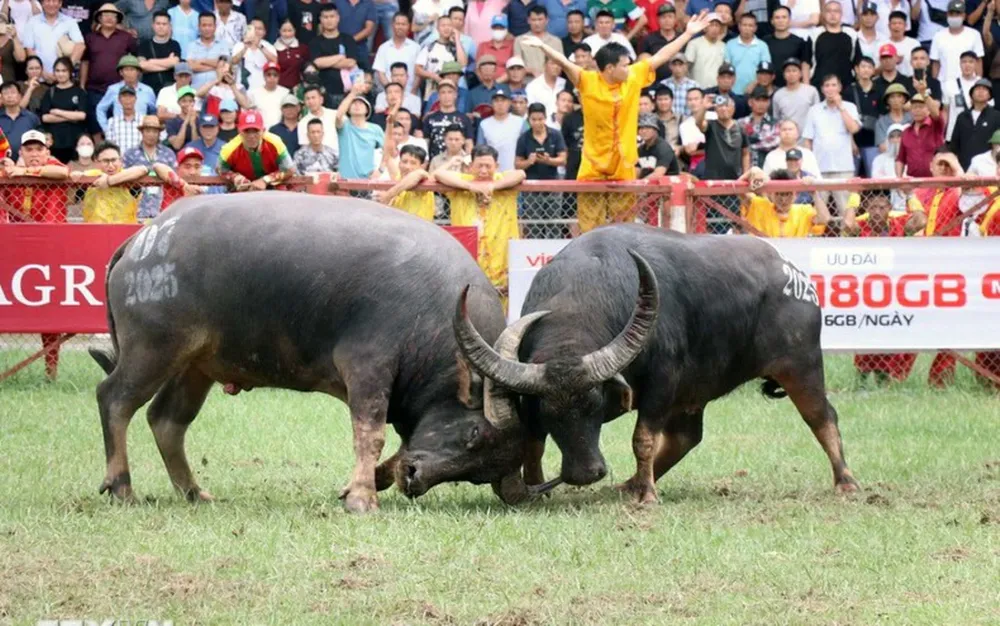
Buffalo fighting and cockfighting are ancient traditional games deeply rooted in Vietnamese popular culture. While buffalo fighting is practiced at large village festivals (notably in the North), cockfighting is a more accessible tradition found in many rural areas.
These games are not merely animal confrontations; they are part of a ritual and community framework. They symbolise strength, perseverance, and the competitive spirit essential to former Vietnamese agrarian societies. They serve as moments for gathering and cultural transmission.
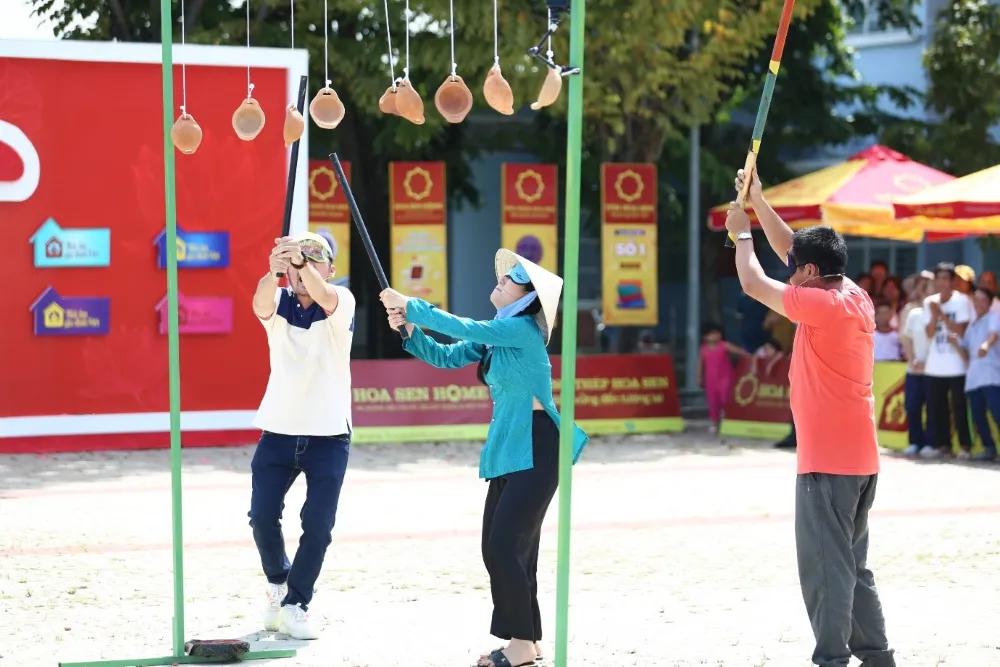
Often held during village fairs and traditional celebrations, dap nieu is a popular game loved for its amusing and spectacular nature.
Blindfolded participants must break a clay pot suspended high up using a stick. Guided by the cheers of the crowd, the player relies on coordination and orientation. It symbolises luck and success, with the prizes inside the pot seen as signs of future happiness.
Beyond these well-known activities, the richness of Vietnamese traditional games is also revealed through rhythmic, sung games like Chi chi chành chành, Dung dăng dung dẻ, Nu na nu nống or Rồng rắn lên mây. These simple games transmit essential values: community spirit, oral memory, and intergenerational bonds. Today, they remain a living intangible heritage, proving that the Vietnamese soul is as playful as it is profound.
See more:




 TRAVELERS' CHOICE 2026