
Le 11 et le 12 novembre soit de nuit merci de me faire des propositions
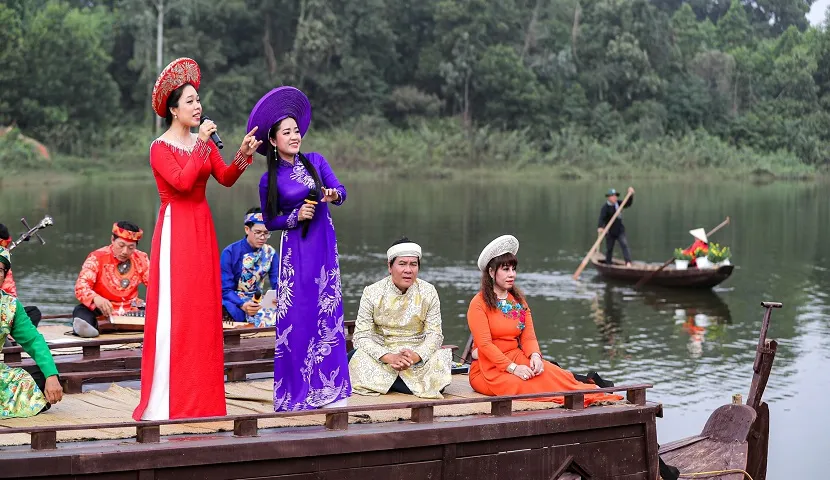
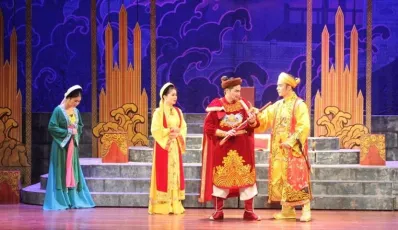
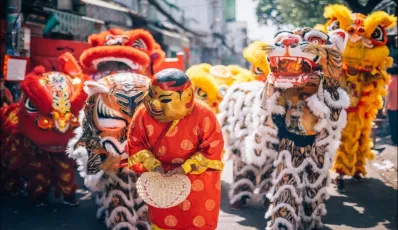
Compared to music festivals, fashion, cultural and art shows are more serious somehow. However, trust me, traditional Vietnamese performance is a great way to immerse yourself in a totally interesting environment, which is a convergence of traditional music and dance. Within your valuable time, knowing which region of Vietnam is famous for what performances can help you not miss any interesting experience. Continue reading to get the idea about the best cultural and artistic performances in Vietnam.
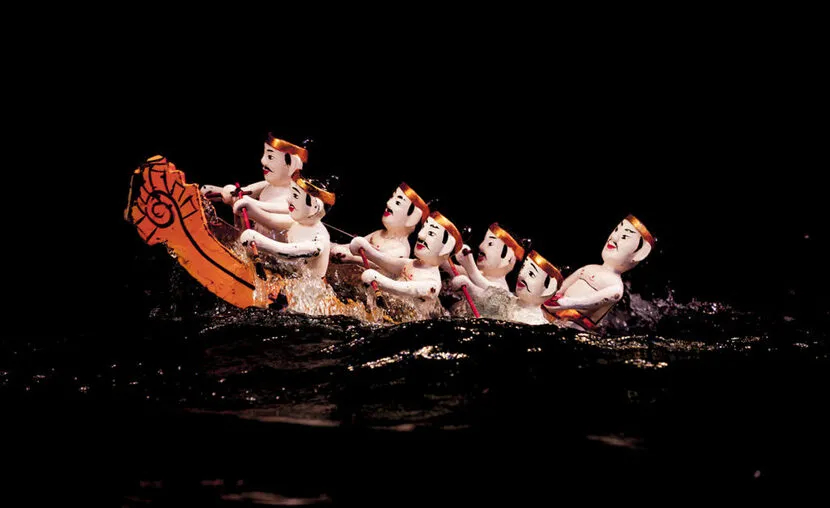
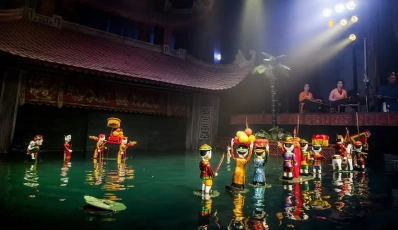
Water puppetry originated in the Red River Delta of northern Vietnam and dates back to the 11th century, growing especially popular during the Ly Dynasty. The stage is a pool fronted by a "thuy dinh" - a communal house on the water, decorated in the style of northern villages with flags and betel palms. The wooden puppets float on the water's surface, controlled from behind a bamboo screen by performers standing waist-deep in the pool, who use long bamboo rods and string mechanisms to bring the figures to life. Live musicians and singers accompany the show with folk genres such as Cheo and Quan Ho.
The repertoire draws on scenes from everyday rural life and legend: a boy riding buffalo, dancing fairies, a cat hunting mice, the four sacred creatures (dragon, unicorn/lion, turtle, phoenix), and the legend of the Lake of the Returned Sword. Nearly all of the stories reflect the hopes of Vietnamese farmers for good harvests and a harmonious climate.
Some places you can enjoy water puppetry:
In Hanoi
In Hoi An
Hoi An Theater: 548 Hai Ba Trung, Hoi An, Quang Nam
In Hue
Hue Puppet Theater: 8 Le Loi, Vinh Ninh, Thua Thien Hue
In Ho Chi Minh City
Water Puppet Theater - Golden Dragon: 55B Nguyen Thi Minh Khai, Ben Thanh Ward, HCMC
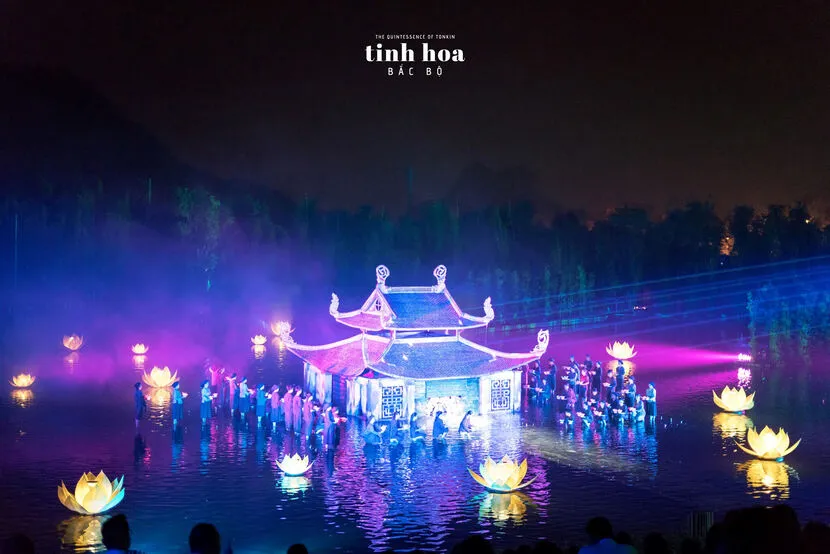
Quintessence of Tonkin or "Tinh Hoa Bắc Bộ" is Vietnam's first large-scale outdoor water stage show, staged in Quoc Oai, on the outskirts of Hanoi near the historic Thay Pagoda. The production covers a 4,300m² water stage and brings together roughly 250 performers, mixing local villagers from Sai Son commune with professional dancers.
The show moves through several emotional chapters, telling a story of nature and recreating the spiritual life of the Red River Delta, once the cultural heart of northern Vietnam, through poetry, music, and folk belief, all staged with modern lighting and production values.
Good to know:
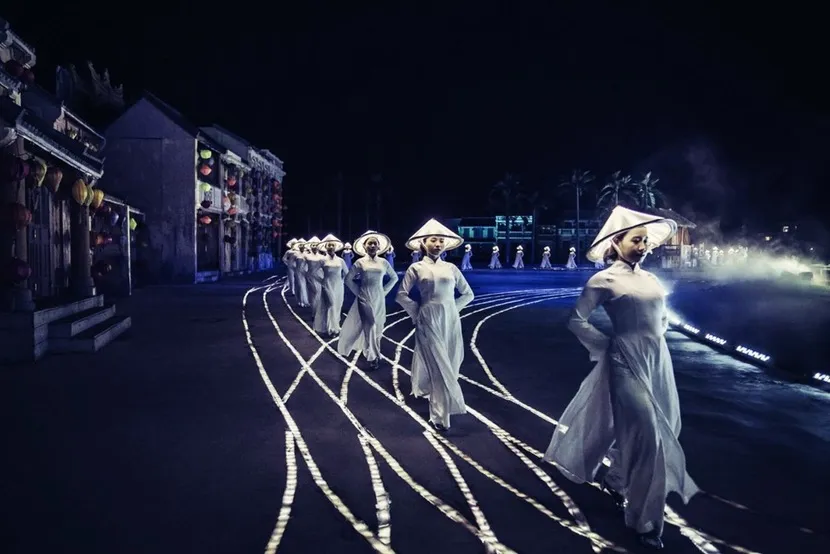
First staged in 2018, Hoi An Memories Show is a large-scale production performed on a 25,000m² island stage with around 500 performers taking part. It tells the story of Hoi An's more than 400-year-old port town, once one of the busiest trading hubs in Southeast Asia during the 16th and 17th centuries.
Expect a full sensory show, lighting design, custom sound systems, and live music — with hundreds of performers in traditional ao dai recreating daily life and trade in old Hội An.
Tickets:kyuchoian.com
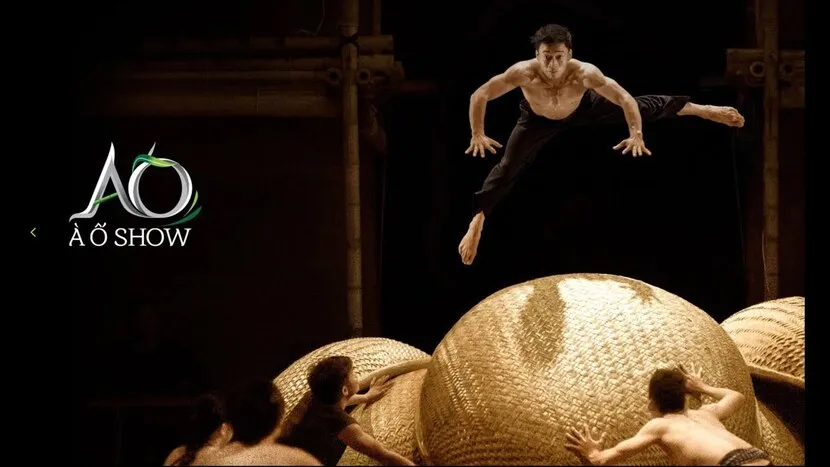
Created by Lune Production - a Vietnamese entertainment company founded in 2012 with a mission to bring Vietnamese culture to international audiences — À Ố Show blends contemporary circus, acrobatics and dance with rustic props from Vietnamese village life: hoop boats, bamboo baskets, and conical hats. The result is a visually striking contrast between the idyllic countryside and the energy of modern urban Vietnam.
Where to watch: Regularly staged in Ho Chi Minh City (Saigon Opera House), depending on the touring schedule, check current dates before booking, as venues rotate.
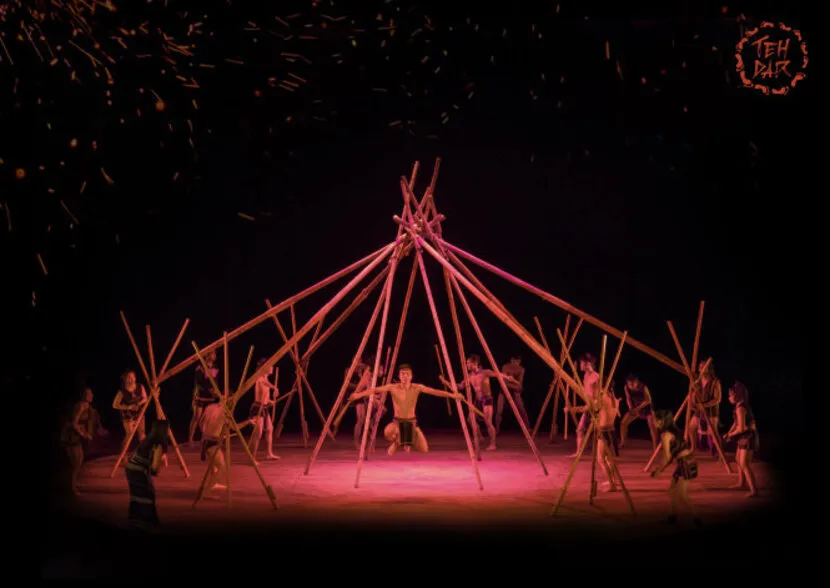
Also produced by Lune Production, Teh Dar brings the gong culture of Vietnam's Central Highlands to the stage, combining contemporary circus language with the sound of traditional gongs and bamboo instruments. It's a strong companion piece to a visit to the Central Highlands itself, or a good introduction if your itinerary doesn't include that region.
Where to watch: Staged periodically in Ho Chi Minh City — check the current tour schedule, as this show does not run on a fixed nightly basis like some others on this list.
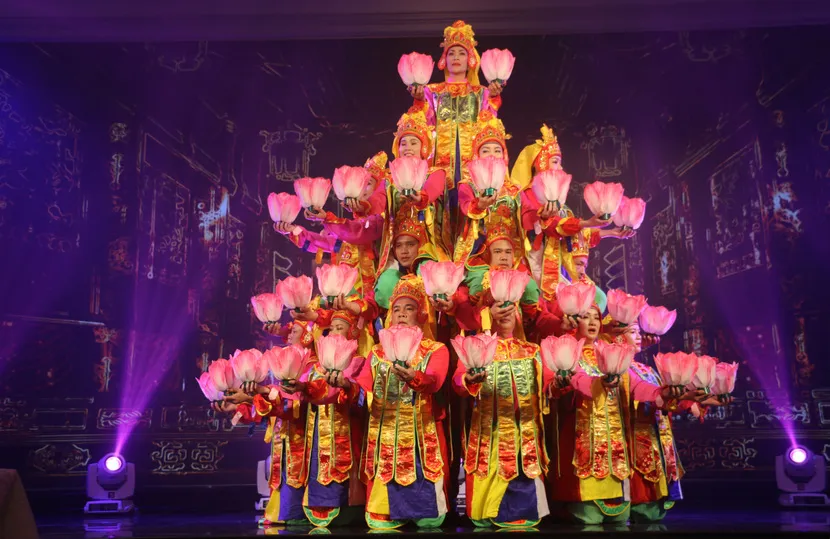
Royal Court Music is a musical genre dating back to the feudal period. The music has elegant lyrics and courtly rhythms, contributing to the solemnity of monkish ceremonies. Carrying the meaning of longevity and prosperity of the dynasty, Hue royal court music was highly valued by Vietnamese feudal dynasties. According to research, Nha Nhac Cung Dinh Hue has existed for a long time, since the 11th century but peaked in the 19th century under the Nguyen dynasty. UNESCO proclaimed Nha Nhac Hue as an intangible cultural heritage of humanity in 2003.
Artists performing Hue music must wear ancient-style costumes, which are extremely rich with many beautiful designs. Nha Nhac music is also a courtly orchestra of the most precious and typical musical instruments in Vietnam, it can be a symphony of even 42 instruments.
Where to watch:
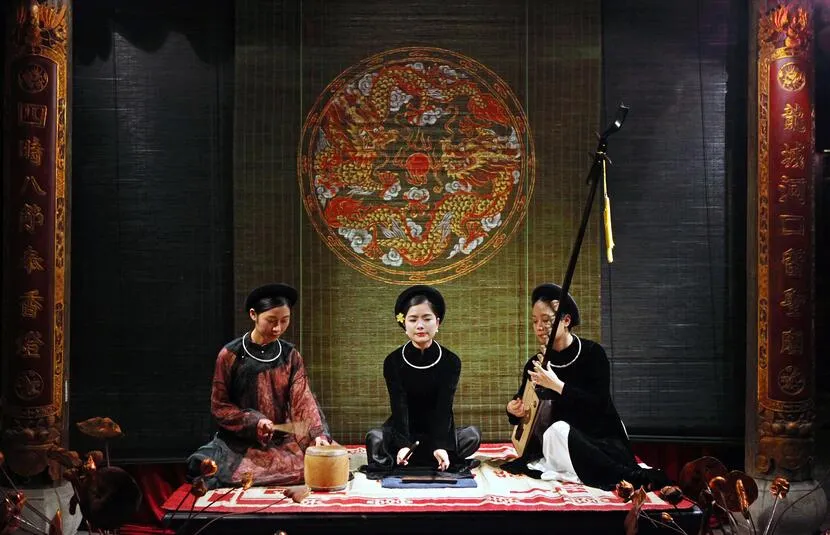
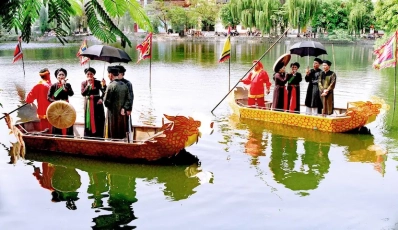
Ca Tru is often described as "difficult to access" even for Vietnamese listeners, yet it holds a special place among traditional music lovers. UNESCO listed Ca Tru as an Intangible Cultural Heritage in Need of Urgent Safeguarding, prizing it for its rare fusion of poetry and refined vocal technique — singers use controlled vibrato and breath control to follow strict classical Vietnamese poetic forms.
A typical performance features a trio: a singer (who also keeps rhythm with wooden clappers), a đàn đáy (a three-string lute) player, and a drummer. Depending on the setting, Ca Tru historically served different purposes — as devotional music, entertainment for scholars, royal court music, or competition pieces.
Popular since the 15th century, Ca Tru nearly disappeared over the 20th century, partly because it was traditionally taught only within performing families rather than in public schools. Today, dedicated groups of enthusiasts are working to preserve and revive it.
Where to watch in Hanoi:
Hanoi Ancient House — 87 Ma May Street
Kim Ngan Temple — 42 Hang Bac Street
Bai Choi is a folk art unique to central Vietnam, combining singing, storytelling, card-game elements, and a touch of theater. Traditionally played at spring festivals, the "game" side works like a card-calling contest: performers sing out cards from small thatched huts arranged around the square, and the audience — holding matching cards — wins by chance and by cheering along with the wit of the singer's verses. The songs themselves often carry moral lessons and reflect daily rural life, work, and community values.
Bài Chòi was recognized as a national intangible cultural heritage in 2014–2016, and UNESCO inscribed it on the Representative List of the Intangible Cultural Heritage of Humanity on December 7, 2017.
Where to watch: Central Vietnam is the heartland of Bài Chòi — look for regular performances at the An Hội roundabout in Hội An, along with seasonal festivals in Đà Nẵng, Huế, Quảng Nam, and Bình Định.
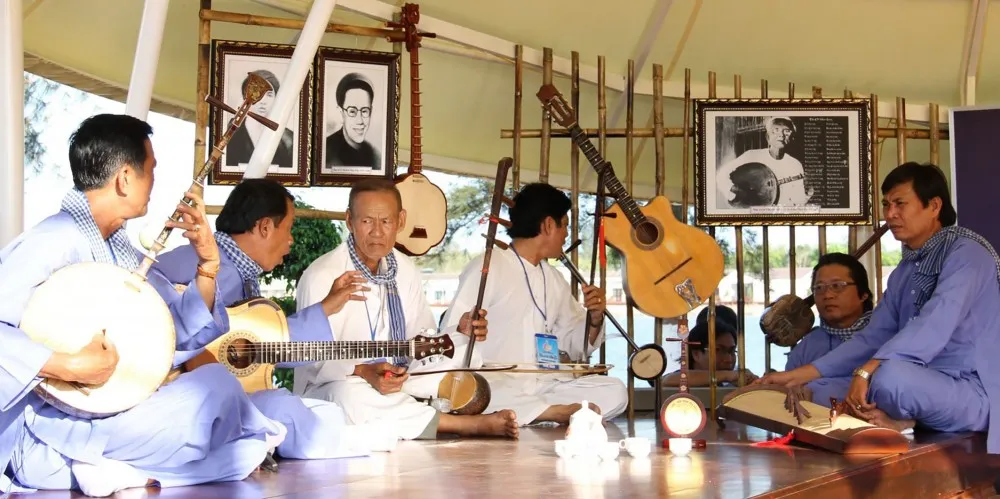
Don Ca Tai Tu is a distinctive folk music tradition from southern Vietnam, formed in the 19th century as a blend of Hue's royal court music (Nha Nhac) and southern folk culture. UNESCO added it to the Representative List of the Intangible Cultural Heritage of Humanity in 2013. Despite its refined roots, it remains an informal, sociable art — often played among friends after a day's work rather than only on a formal stage.
Performances are usually done in small ensembles, built around instruments such as the đàn tranh (16-string zither), đàn tỳ bà (pear-shaped lute), đàn kìm (moon-shaped lute), đàn cò (two-string fiddle) plus a seven-hole bamboo flute. Either men or women can take the lead vocal.
Don Ca Tai Tu needs no elaborate staging or costume - it can be performed under a tree, on a boat, or, more formally, in a communal house or pagoda, with performers in áo dài for special occasions.
Where to experience it: Travel to southern Vietnam, especially the Mekong Delta, where locals are usually happy to share an evening of Don Ca Tai Tu with visitors.
Gongs hold sacred status among the ethnic communities of Vietnam's Central Highlands, spanning the provinces of Kon Tum, Gia Lai, Dak Lak, Dak Nong and Lam Dong. Played at weddings, funerals, harvest rites, and new-house ceremonies, gongs are believed to carry a spirit that grows more powerful with age — some older instruments are said to be worth as much as a herd of buffalo.
The "Space of Gong Culture in the Central Highlands" was recognized by UNESCO as a Masterpiece of the Oral and Intangible Heritage of Humanity on November 25, 2005, and later folded into UNESCO's Representative List. Gong ensembles vary from village to village in tuning, rhythm, and ritual role, reflecting the region's ethnic diversity (Ba Na, Xo Dang, M'Nong, Co Ho, E De, Gia Rai, and others).
Where to watch: Community-based tourism villages around Dak Lak and Gia Lai offer regular gong performances alongside xoang dancing; larger festivals, such as the Central Highlands Gong Festival, are held periodically in Gia Lai.
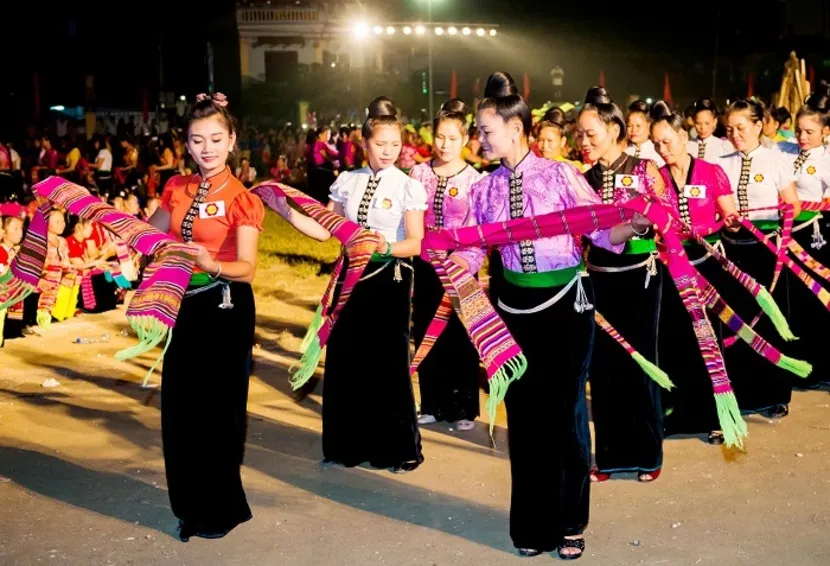
The Northwest of Vietnam is home to the Thai ethnic community, whose "Xoe Thai" dance was recognized by UNESCO as an Intangible Cultural Heritage of Humanity in 2021.
"Xoe" means dancing in a way that mirrors everyday activities, rituals and community life. It's performed at ceremonies, weddings, festivals, and to welcome guests — expressing a wish for blessing and a happy life. You'll find it performed in villages such as Mai Chau, often alongside a taste of "ruou can" - a fermented rice wine drunk communally from a jar through long straws. Joining the dance and sharing rượu cần together is one of the most direct ways to experience Thai culture firsthand.
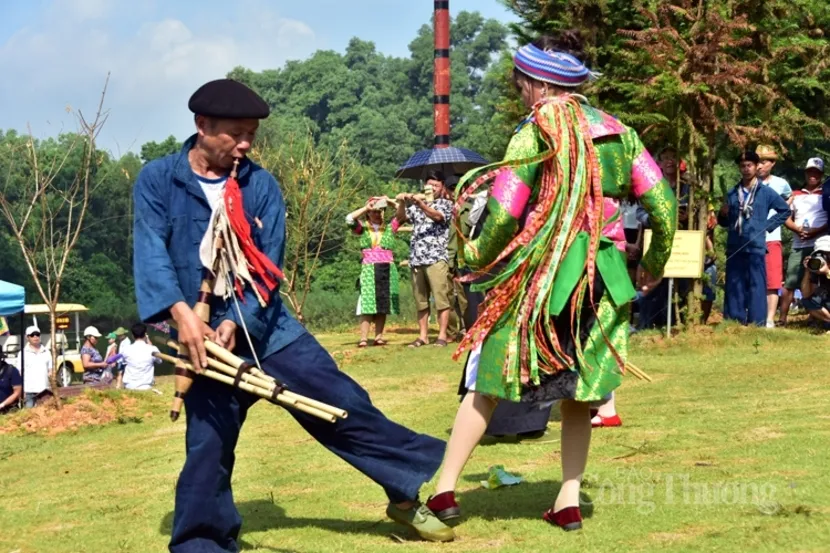
Every ethnic group in Vietnam has its own dance tradition, and among the most distinctive is the Khèn dance of the Hmông people — recognized as part of Vietnam's intangible cultural heritage. The khèn (a bamboo reed pipe instrument) is both a musical instrument and the centerpiece of the dance itself, woven deeply into everyday Hmông life.
Traditionally, Hmông girls are expected to learn weaving, while boys learn to play and dance with the khèn - a skill that carries real social weight in the community. The dance itself is lively and playful, often likened to the movement of forest birds, and it is performed not only at festivals, weddings and communal feasts, but also at funerals, where it functions as a ritual invitation for ancestors to receive the spirit of the newly deceased.
Where to watch: Because the Hmông community is concentrated in Vietnam's northern highlands, Sa Pa and Ha Giang are the easiest places to catch a live performance.
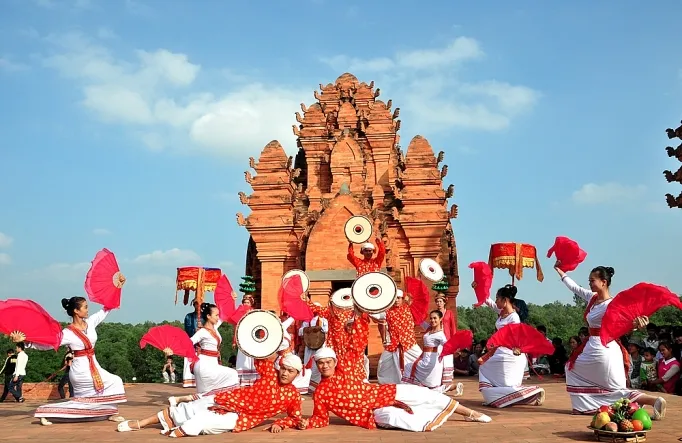
Cham dance belongs to the Cham people, once rulers of a powerful kingdom in what is now south-central Vietnam. It remains a core part of Cham religious and cultural life, used to express reverence toward gods, kings, or ancestral figures who contributed to the community.
Among the most recognized forms are the Apsara dance, the fan dance, and the water-pot dance (performed with a pot balanced on the head), all set to traditional instruments such as the Ginang drum, Baranung and Ceng.
Where to watch: My Son Sanctuary, with shows typically at 09:15, 10:45, 14:00 and 15:30 (confirm current showtimes on-site, as schedules can shift seasonally).
Hoping to bring you the most current experiences of Vietnam, this list of the most beautiful cultural and traditional Vietnamese performances will be a great reference for your trip to Vietnam. To make the most of your time and arrange a travel itinerary that accommodates these special cultural experiences, please feel free to contact us by email at [email protected].
See more:




 TRAVELERS' CHOICE 2026