


Earlier I thought differently, many thanks for the information.
__________
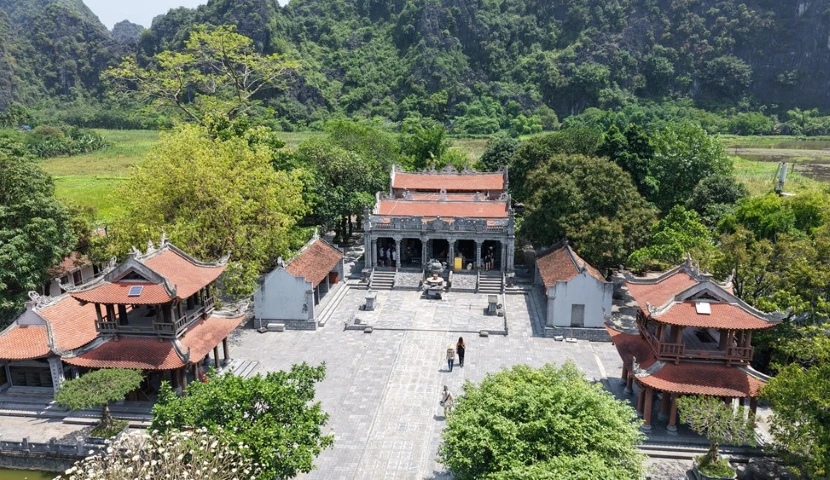
In the heart of Tam Coc Valley, Thai Vi Temple is more than an ancient sanctuary dedicated to the Tran Dynasty. It is also a place where history continues to live through the people who have safeguarded its memory for generations. Among them is a former temple guardian, described by some visitors as a true “living treasure”, who welcomes travellers with stories and memories connected to this sacred place.
Built in 1280 during the Tran Dynasty, Thai Vi Temple is one of the important historic sanctuaries in the Tam Coc area of Ninh Binh. It was built to honour Emperors Tran Thai Tong and Tran Thanh Tong, as well as other prominent figures from this dynasty, which left a profound mark on Vietnamese history.
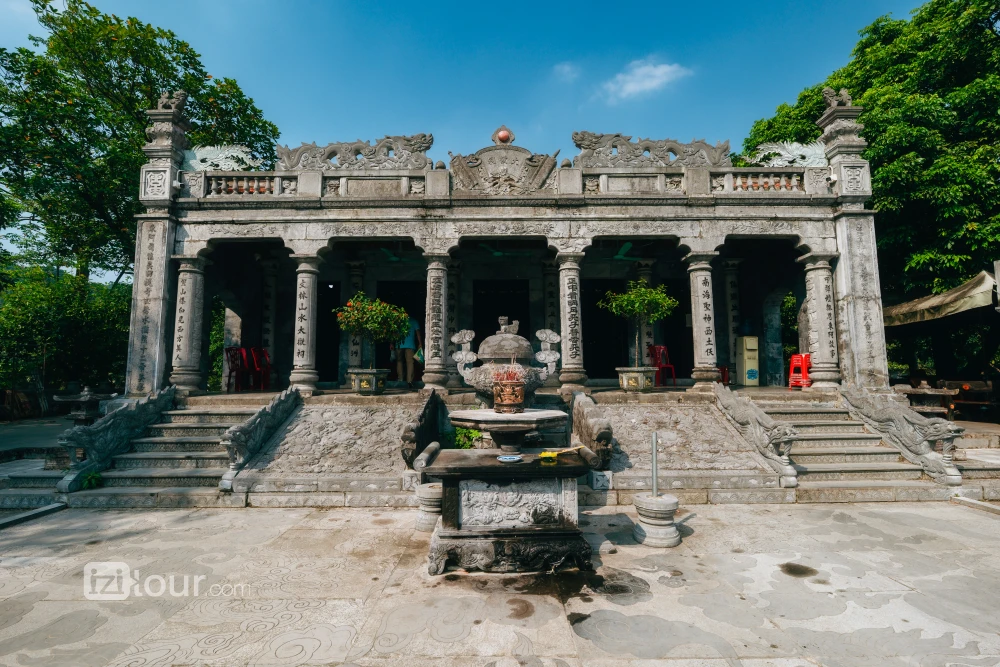
In the 13th century, the Vu Lam area, surrounded by limestone mountains and peaceful natural landscapes, was a place of both strategic and spiritual importance to the Tran royal family. The emperors came here in particular to retreat, meditate and prepare the country's defence against external threats.
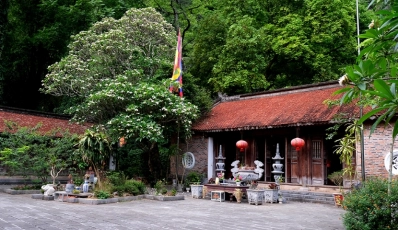
Over the centuries, Thai Vi Temple underwent several periods of restoration to preserve its architecture and cultural value. In 1926, the sanctuary was completely rebuilt in stone, giving it the appearance visitors can still admire today. Architectural features such as finely carved stone columns, traditional decorative motifs and the solemn worship space reflect the craftsmanship of Vietnamese artisans.
Today, Thai Vi Temple remains a place rich in memories, where architectural heritage meets local spiritual traditions. Unlike some of the better-known sites in Ninh Binh, it offers a more intimate atmosphere, ideal for an authentic exploration of Vietnamese history.
One of the most remarkable features of Thai Vi Temple is its exceptional use of monolithic blue limestone. The temple's columns are carved from large blocks of stone and sculpted with great finesse. Their flowing, elegant patterns sometimes evoke the delicacy of traditional woodcarving.
This distinctive feature is not limited to the building's structure. The altars, worship objects and incense burners are also made from blocks of blue stone. Together, they give the temple an appearance that is majestic, solid and imposing, while retaining remarkable refinement in the carved details.
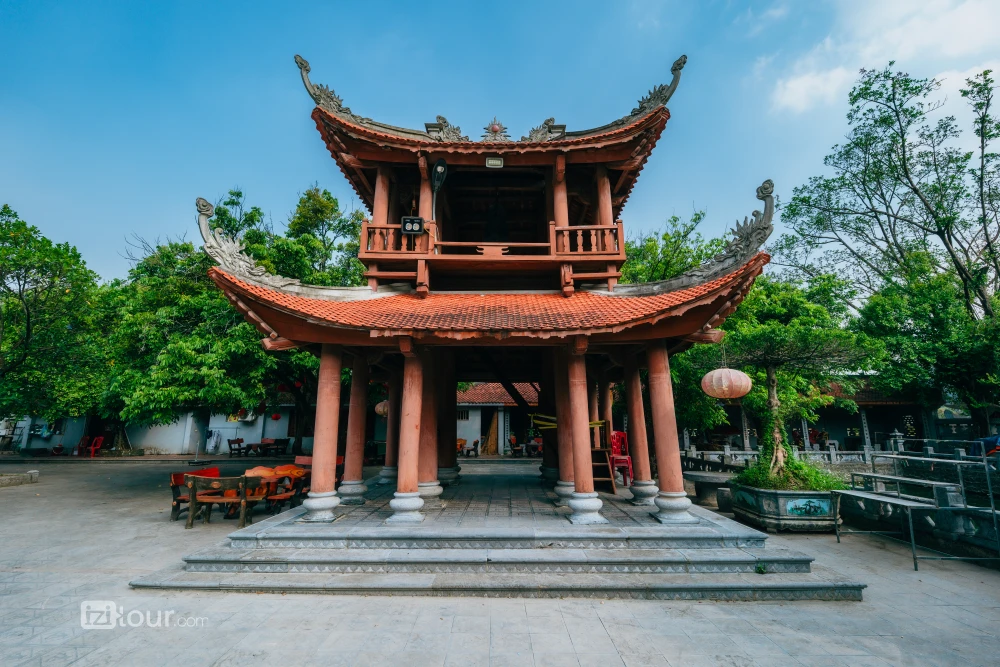
Visitors enter through Nghi Mon Gate, symbolically guarded by two stone horses positioned on either side of the entrance. These statues add a distinctive touch to the temple's architecture and evoke the role of horses in the military and royal history of the Tran Dynasty.
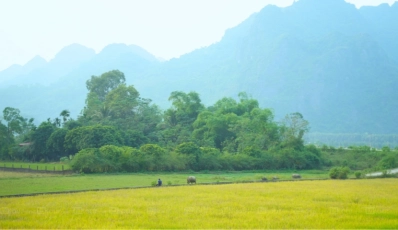
The gate then opens onto a peaceful setting surrounded by limestone mountains and rice fields. The temple also features a remarkable two-storey bell tower, with eight roofs whose edges curve gently upwards towards the sky, making it one of the site's most recognisable architectural features.
Unlike some of the large modern religious complexes in Ninh Binh, Thai Vi Temple retains a more intimate atmosphere. Stone, wood and traditional carvings blend harmoniously with the surrounding landscape of limestone mountains and rice fields.
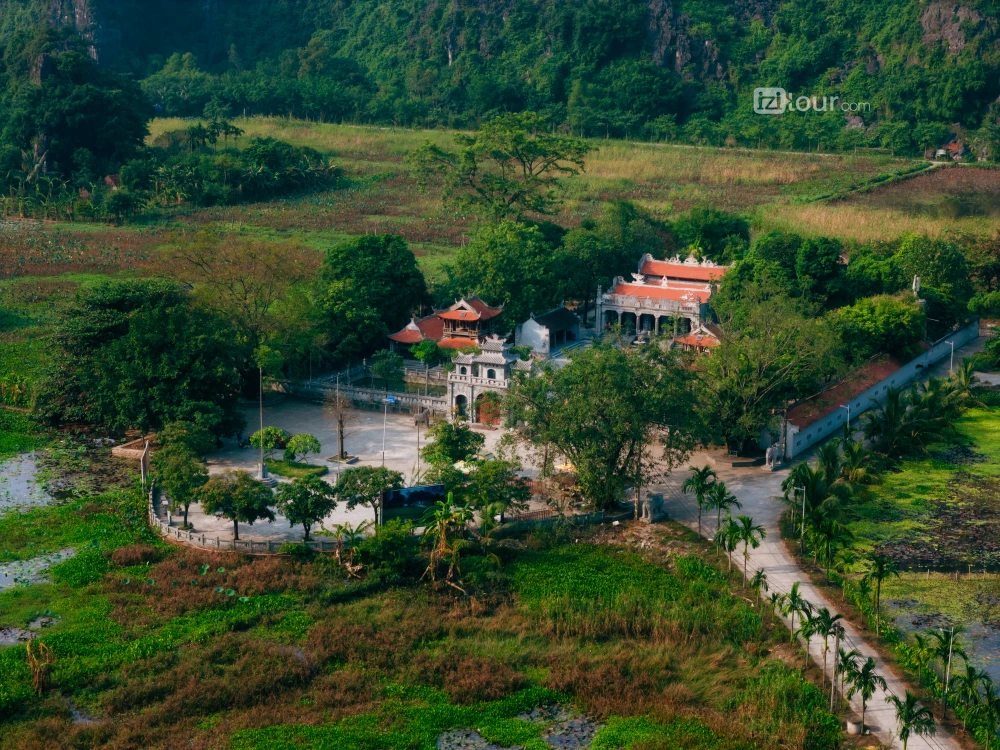
Beyond its stone architecture and its history connected with the Tran Dynasty, Thai Vi Temple has another form of heritage, one that is very much alive: Mr Chu Van Thim, who has served as its guardian for more than twenty years. Now over 80 years old, he continues to open the temple every morning, care for it and welcome visitors who come to discover this historic place.
His role, however, goes far beyond looking after the temple. When a group arrives, he explains the different worship spaces, tells the story of the monument and shares anecdotes connected with the kings of the Tran Dynasty. To deepen his knowledge and answer visitors' questions, including those from history enthusiasts, he has made a habit of reading books and collecting popular stories related to Ninh Binh's heritage.
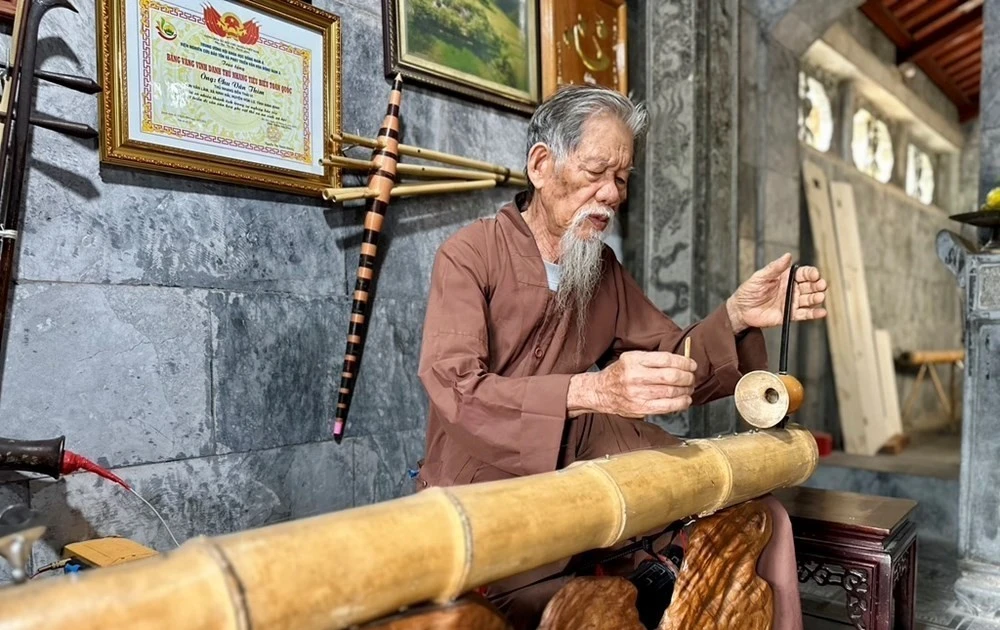
What makes an encounter with Mr Thim particularly memorable, however, is his connection with traditional Vietnamese music. Self-taught, he learned to play the đàn bầu, a traditional Vietnamese single-string instrument, before beginning to make his own instruments from bamboo tubes. He also plays several other instruments, including the flute and drum.
As increasing numbers of international visitors have come to Ninh Binh, Mr Thim has also learned some English and French to communicate with them more easily. This desire to share Vietnamese history and culture beyond the country's borders is part of what makes his role so distinctive.
His commitment to heritage preservation has also received official recognition. He has received distinctions from the Ninh Binh Department of Culture and Sports and from the UNESCO representative in Vietnam, recognising his contributions to preserving the heritage of Thai Vi Temple and to practising and passing on traditional music.
For many visitors, meeting him adds another dimension to a visit to the temple. It is no longer simply about discovering a historic monument; it becomes an opportunity to meet someone who has devoted a large part of his life to the site and who, in his own way, helps keep local traditions alive. Perhaps this is the true “living treasure” of Thai Vi Temple.
Thai Vi Temple can be visited all year round, but the periods from March to May and September to November are particularly pleasant for exploring Ninh Binh. The weather is generally milder, making it easy to combine a visit to the temple with a cycling trip through the surrounding countryside. For a quieter atmosphere and pleasant light, visit in the morning or late afternoon.
If you would like to experience the temple from a different perspective, try to time your trip with the Thai Vi Temple Festival, held every year from the 14th to the 17th day of the third lunar month. This traditional festival is an opportunity for local people in Ninh Binh and visitors to pay tribute to the kings of the Tran Dynasty, who played a major role in Vietnam's history. The ceremonies are also an occasion to pray for peace, national prosperity and good harvests.
Read more: When to Visit Ninh Binh, Vietnam?
Entry to Thai Vi Temple is currently free. There is no specific admission ticket required to visit the temple. However, visitors may need to pay a parking fee if they arrive by bicycle or motorbike. Fees may vary depending on the parking area.
Thai Vi Temple is located in the Van Lam area of Tam Coc, and there are several ways to reach it.
By Bicycle
This is undoubtedly one of the most enjoyable ways to reach the temple from Tam Coc. The route passes through the countryside, rice fields and small villages, offering an immersive experience of Ninh Binh's rural landscapes. The journey from central Tam Coc is relatively short and can easily be combined with a visit to Bich Dong Pagoda.
On Foot or by Car
It is also possible to reach the temple by road, passing Van Lam Wharf and then following the route alongside the Ngo Dong River to the temple.
By Boat
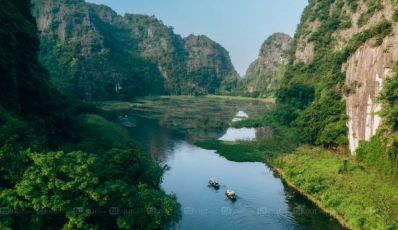
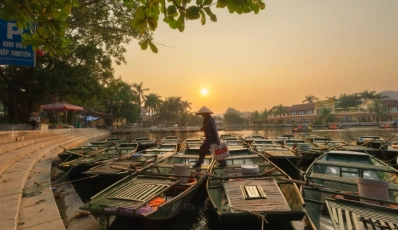
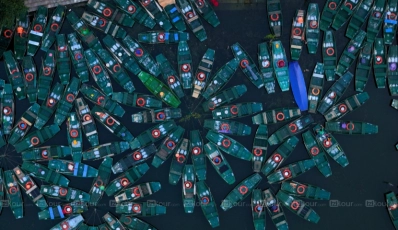
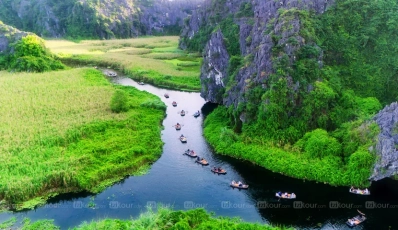
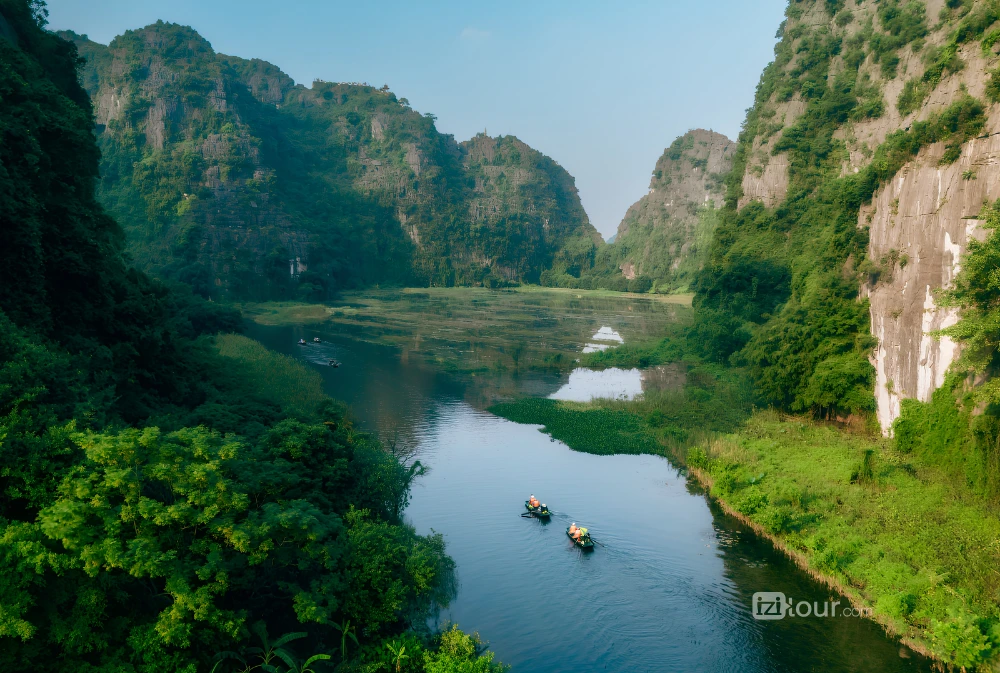
Travelling by water offers an even more distinctive experience. From Dinh Cac Wharf, the departure point for boat trips in Tam Coc, you can set off to discover the famous valley from the water. As you travel along the river, limestone mountains rise on either side of the boat while rice fields stretch out around you. It can feel as though you are a tiny point in the vast landscape of Tam Coc. Depending on the itinerary and visiting conditions, this boat journey can then be continued on foot or by road to Thai Vi Temple.
For travellers who simply want to visit the temple from central Tam Coc, cycling or taking a taxi remain the easiest options. However, combining the visit with a boat journey through Tam Coc offers a much more immersive experience.
Wear respectful clothing: the temple is a place of worship, so it is preferable to cover your shoulders and knees.
Wear comfortable shoes: the visit can easily be combined with cycling or walking through the surrounding countryside.
Visit early in the morning or late in the afternoon: the light is pleasant and the atmosphere is generally more peaceful.
Check the festival dates if you would like to attend the temple's traditional ceremonies. The dates vary each year according to the lunar calendar.
Ask before photographing ceremonies or people: particularly during prayers or religious rituals.
Respect the peaceful atmosphere: avoid speaking loudly and put your phone on silent inside worship areas.
Choose a bicycle if you are staying in Tam Coc: it is an enjoyable way to reach the temple while discovering the surrounding villages and rice fields.
Bring water and sun protection: the sun can be particularly strong during cycling trips or outdoor visits.
Thai Vi Temple lies at the heart of one of Ninh Binh's most beautiful landscapes. A visit can easily be combined with several of the must-see attractions in Tam Coc and the surrounding area.
Tam Coc
Just a few minutes from the temple, Tam Coc is famous for its boat trips along the Ngo Dong River. The route passes through rice fields and three natural caves surrounded by limestone cliffs. It is an ideal excursion for discovering the iconic landscapes of Ninh Binh from the water.
Located just a few kilometres from the temple, Bich Dong Pagoda is another major cultural site in the area. Built into the mountainside, it consists of several small sanctuaries connected by stone stairways. A visit can easily be combined with Thai Vi Temple as part of a cycling trip.
Hang Mua (Mua Cave)
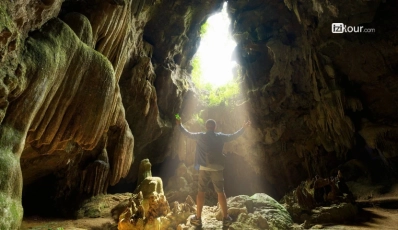
For spectacular panoramic views over the karst landscapes of Ninh Binh, head to Hang Mua. After climbing the steps to the summit, travellers are rewarded with open views over the rice fields, mountains and Tam Coc Valley. Make sure you wear suitable footwear, especially in hot weather.
The Ancient Imperial Capital of Hoa Lu
Around fifteen kilometres from Tam Coc, the ancient imperial capital of Hoa Lu offers an opportunity to continue exploring the region's history. The temples dedicated to the Dinh and Le dynasties provide an interesting complement to a visit to Thai Vi Temple and help visitors gain a better understanding of the history of northern Vietnam.
For travellers who would like to venture away from the more frequently visited sites, Thung Nham offers a greener setting. Its gardens, caves and birdwatching area make it a good option for rounding out a day dedicated to nature.
Visiting Thai Vi Temple offers a glimpse into a more intimate side of Ninh Binh's heritage, away from the busiest sites in Tam Coc. Its history connected with the Tran Dynasty, its architecture entirely reconstructed in blue stone and its peaceful setting amid limestone mountains make it a particularly interesting place for travellers curious about Vietnamese history and culture.
If Thai Vi Temple is the kind of place you would love to discover, consider including it in a customised tour designed around your interests and travel style. Feel free to email us at [email protected], and we’ll be happy to help you create a more personal journey through Ninh Binh.
You may also like:





 TRAVELERS' CHOICE 2026