

The proof: Every 10 minutes pays a jackpot. Try now! Spin to Win Here -> psee.io/8qtsv7
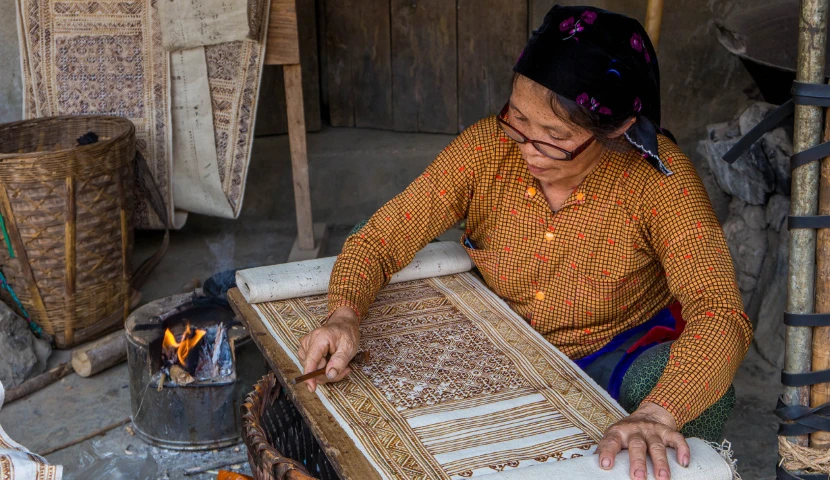
Hidden among the rolling rocky mountain ranges of the Dong Van limestone plateau, the Lung Tam linen weaving village is not merely a tourist destination: it is a living cultural experience. It is home to the Hmong community, where this peaceful rural village stands as a living testament to the resilient art of linen weaving and the preservation of ancient customs passed down through generations.
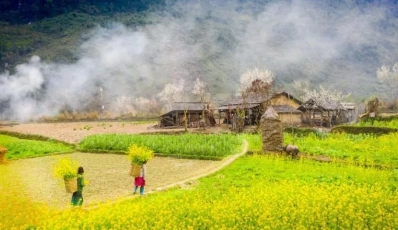
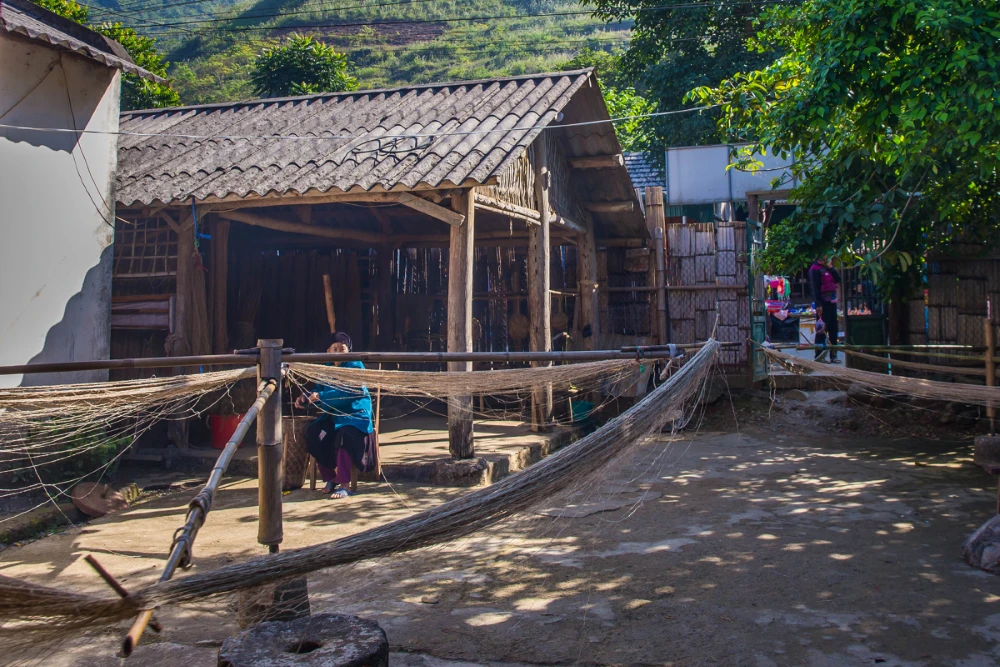
Located about 50 km from Ha Giang centre, at the foot of rocky mountains by the Mien River, lies Lung Tam commune—home to the famous Lung Tam linen weaving village. Here, the sound of weaving shuttles echoes every morning as Hmong women manually strip flax bark, spin thread, and draw beeswax patterns just as their ancestors did. The village is renowned as a traditional Hmong village known for its exquisite brocade weaving techniques. This village is not just a centre of craftsmanship, but is compared to a living museum..
A finished piece of fabric requires 41 handcrafted steps and several months of work. Rather than random decorations, these patterns serve as a unique language of the Hmong community, telling stories of mountains, rivers, and clans. Although hidden deep within the Dong Van limestone plateau, Lung Tam's fabrics have reached fashion collections in Paris and Tokyo. This is the perfect stop to understand Ha Giang deeper than just its mountain passes.
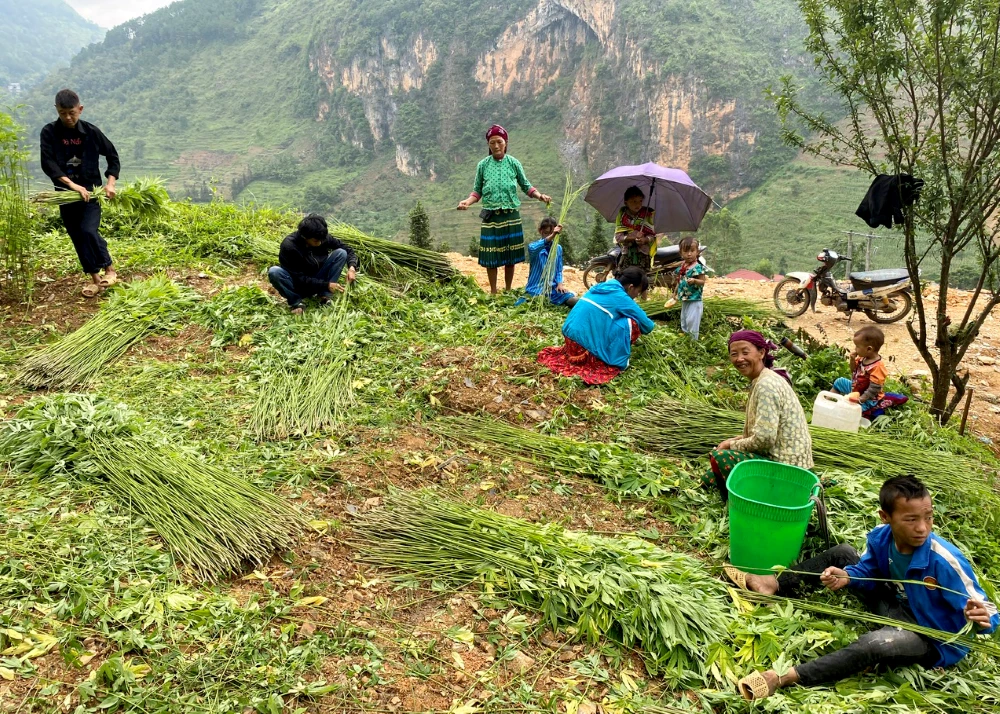
At the Lung Tam linen weaving village, linen is not just a product, but the result of a tireless working process, heavily dependent on weather conditions and patience.
The main raw material for weaving the fabric is flax fibre. For this reason, all Hmong women here own their own flax fields to cultivate it. After harvesting, the flax plants are soaked in water to separate their fibres.
Once separated, the fibres are rolled and steamed to soften them. This process requires great care to ensure that the fibres acquire the necessary flexibility and softness before being brought to the loom.
One of the most unique aspects of the Lung Tam linen weaving village is precisely the natural colour dyeing technique. Local people use leaves and wood gathered from the forest to create vibrant colours for the fibres. The process of indigo dyeing is an extremely long task. Each piece of fabric is repeatedly immersed in an indigo solution and then set out to dry. These steps are repeated 5 to 6 times. The completion time depends heavily on the weather: if it is sunny, the process can take only 3 to 4 days, but in the rainy season, it can last several months. It is precisely this meticulous care that allows the Hmong fabrics to keep their colours permanently vibrant and resist the passage of time.
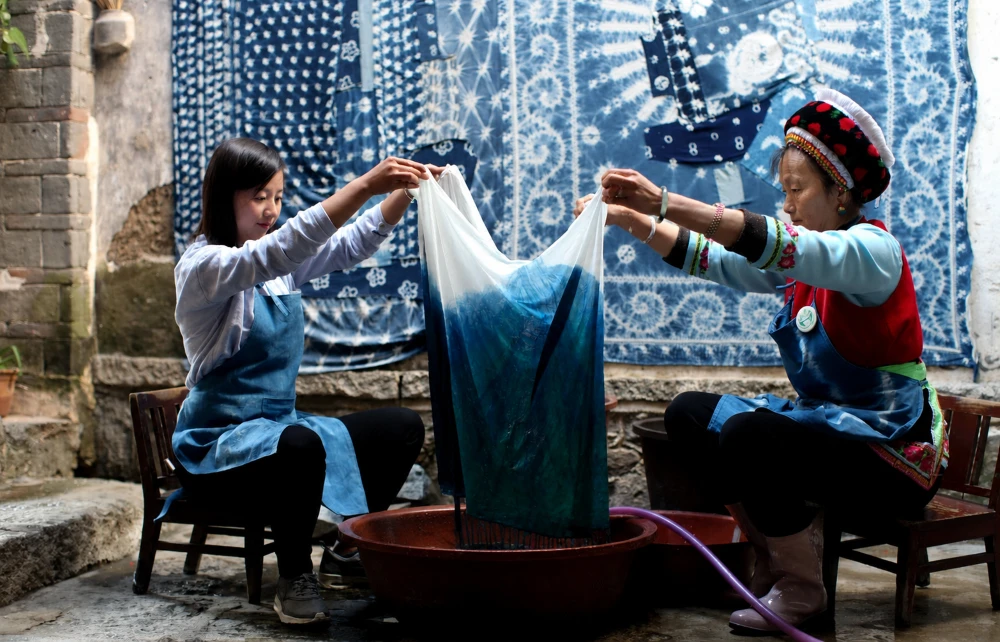
After weaving, the Hmong women wash the linen fabric and rub it with beeswax to make the surface smoother and shinier. This is a characteristic technique that gives the products of the craft village a refined and elegant appearance.
In addition to weaving, the Lung Tam linen weaving village also excels in the art of pattern creation and embroidery.
Hand embroidery and beeswax drawing
All patterns on the brocade are hand-embroidered or drawn with beeswax. Artisans use beeswax to trace patterns on the fabric before dyeing, creating unique decorative lines with a strong cultural character.
Cultural symbols
Each pattern on the fabric is not only decorative but also rich in symbolic meaning, telling stories or representing different aspects of the life and culture of the Hmong people.
Diversified products
Today, the village's products are highly varied, from skirts to bags, wallets to home textile items. Each object bears the imprint of skilled hands and clearly reflects the culture of the population living on the Dong Van plateau.
At the Lung Tam linen weaving village, embroidery and weaving safeguard historical and cultural values fundamental to the Hmong tribe.
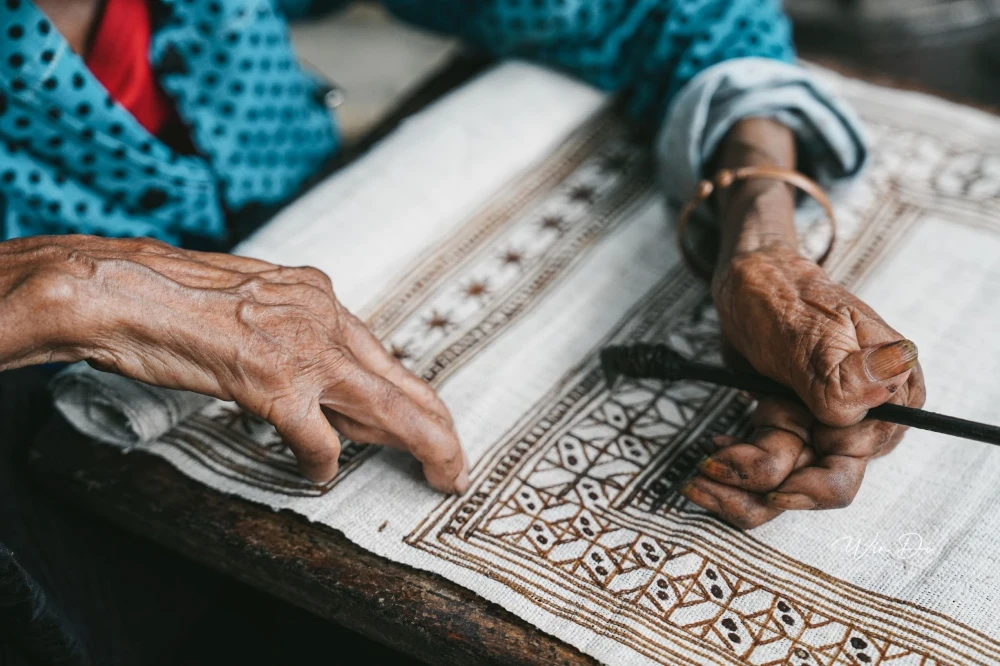
This craft is usually transmitted from previous generations to younger girls as part of a rite of passage into adulthood. Historically, skills in embroidery and weaving were considered an important heritage ahead of marriage, as a woman had to personally sew elaborate clothes for her future family. These handmade garments also served as a dowry and, ultimately, as funeral attire at the time of death.
Succeeding in weaving a beautiful piece of brocade is not just a job, but also a source of pride for the Hmong women here.
The products of the Lung Tam linen weaving village, with their unique materials and colourful patterns, are not only loved by domestic tourists but have achieved worldwide fame. Currently, the linen and brocade items from the village are exported to over 20 countries, including demanding markets such as the United States, Japan, and Switzerland.
The preference of international customers for the products of the Lung Tam linen weaving village is proof of the superior quality and boundless artistic value of this traditional craft.
Location and how to get there:
The Lung Tam linen weaving village is located in the Quan Ba district, Ha Giang province, about 60 km from Ha Giang city.
From Hanoi to Ha Giang: It is possible to take a sleeper bus at night or a limousine during the day. The journey usually takes 6 to 7 hours.
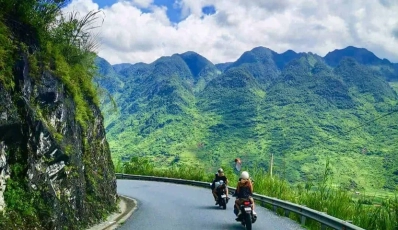
From Ha Giang city to Lung Tam: It requires about 2-3 hours of driving to reach the village. Many travellers combine a visit to the village as part of the 3-5 day Ha Giang Loop itinerary (the Happiness Road) to discover other attractions in the province as well. It is possible to rent a motorbike yourself, participate in a tour with a driver (easy rider), or rent a car with a driver.
Activities in the village and surrounding areas:
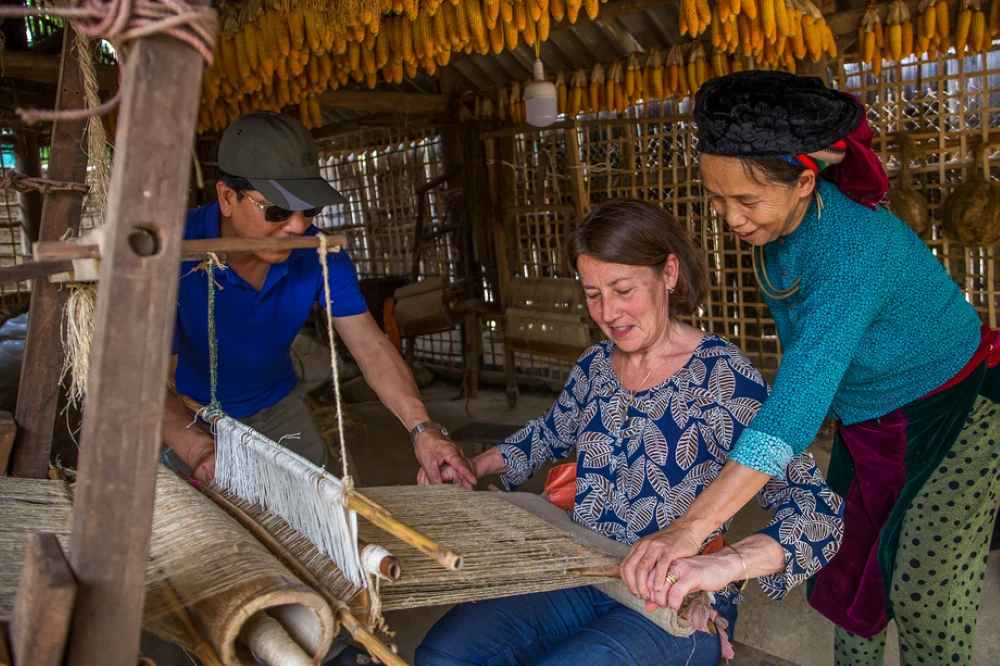
Observing the linen production process: Witnessing with your own eyes all the phases of weaving, performed entirely by hand by local women.
Strolling through the village: Walking calmly to immerse yourself in the local culture and better understand the Hmong lifestyle.
Driving along the riverbanks: The village is crossed by a river, which creates the extremely poetic landscape of the Lung Tam valley. It is a wonderful opportunity to explore neighbouring villages and admire the majestic landscapes from above.
Quan Ba Heaven Gate and Twin Mountains: Located about 15 km from Lung Tam village, this is the place that offers a magnificent and unique panoramic view of the Fairy Twin Mountains.
Travel tips for visiting Lung Tam linen weaving village:
To enjoy a complete experience at the Lung Tam linen weaving village, visitors should keep a few aspects in mind:
Rely on a local guide: To understand the intricate details of linen weaving and the village's history more deeply, it is advisable to be accompanied by a local guide. They will help explain the process and communicate with the Hmong community.
Support the community: Do not miss the opportunity to buy exquisite hand-embroidered items as souvenirs. This will not only allow you to take home unique gifts but will also help support the economy of the local community.
Prepare adequately (limited services): At the Lung Tam linen weaving village, there are very few facilities such as restaurants or homestays, and there is no ATM. Therefore, bring cash and essential items with you. If you need services like ATMs, fuel, or restaurants, the nearest town, Tam Son, will be the most suitable choice.
Respect the local culture: Always ask for permission before taking photographs, particularly portraits of people or their belongings. Observe local customs and dress appropriately to show respect towards the locals' lifestyle.
Timing of the visit: If possible, try to go when people are working at the looms to have the best interactive experience.
Language: English is rarely used here. Learning a few basic phrases in the local language will help you build a better rapport with the community.
Bring snacks and water: Since service facilities are still limited, it is good to prepare with water and snacks for a day trip.
The Lung Tam linen weaving village is truly a precious gem in the heart of Ha Giang. The combination of the majestic natural landscapes of the Lung Tam valley and the resilient skill of its people creates an irresistible appeal for anyone who loves traditional culture and art. Going to Lung Tam means going back to the origins of flax fibres, the colours of nature, and the warm hearts that proudly safeguard the heritage of their ancestors.
Read more:




 TRAVELERS' CHOICE 2026