



Earlier I thought differently, many thanks for the information.
__________
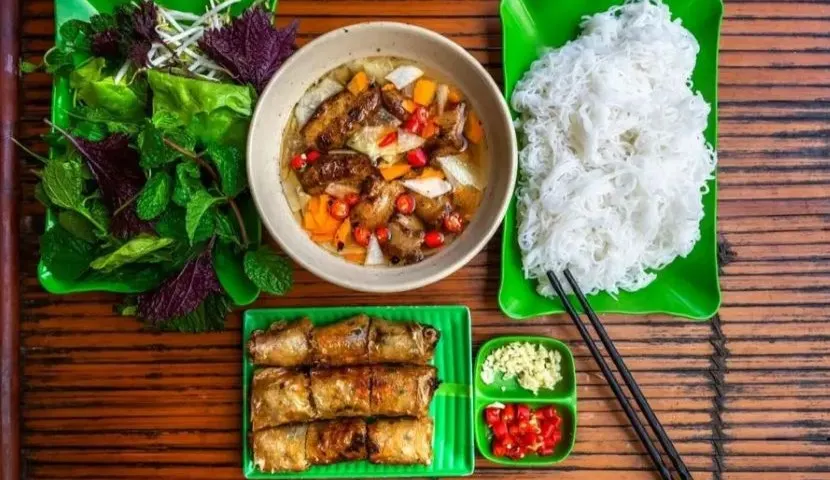
In Hanoi, sometimes all you need to do is follow the smell of a barbecue drifting from a street corner to discover one of the capital’s most iconic dishes. Over glowing charcoal, small pork patties and pieces of caramelised pork sizzle before being added to a bowl of fragrant dipping sauce, alongside rice vermicelli and a handful of fresh herbs. This is bun cha, a simple and generous speciality deeply rooted in local everyday life.
Bun cha is one of the most representative dishes of Hanoi cuisine. It combines charcoal-grilled pork, rice vermicelli, a sweet-and-sour fish sauce-based dipping sauce, and a generous serving of fresh herbs. Served separately, these elements are brought together in the bowl as you eat.
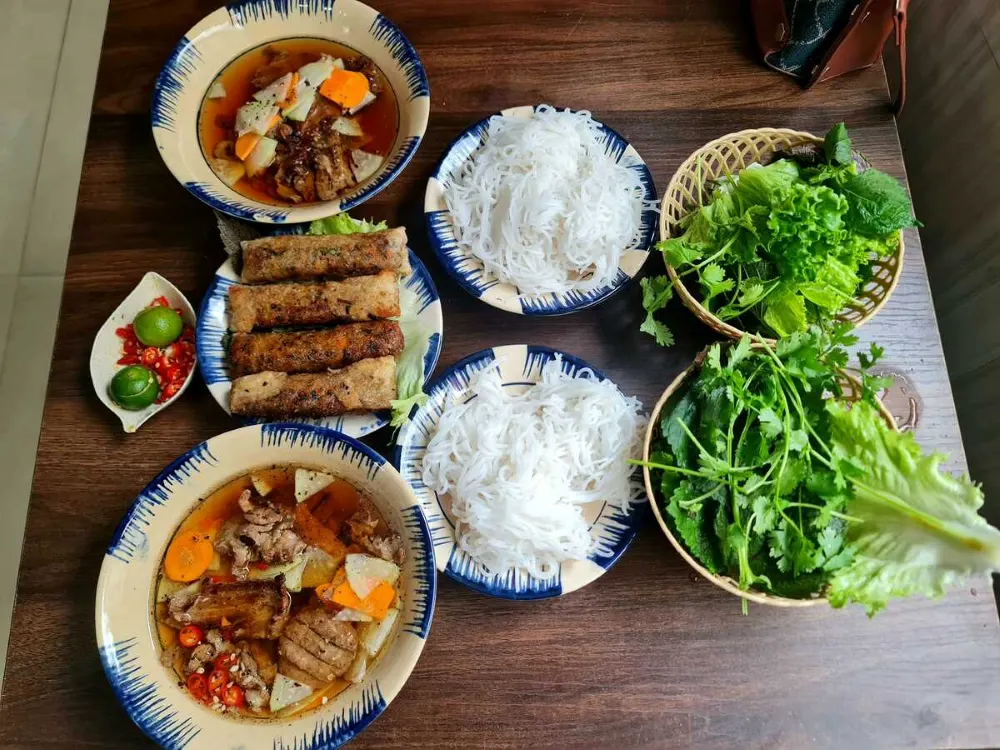
What particularly distinguishes bun cha is the way the pork is cooked. Pieces of pork belly or shoulder are marinated and then grilled over hot charcoal, while minced pork is shaped into small patties before also being grilled. Charcoal cooking gives the meat a light caramelisation and smoky aroma that give the dish its distinctive character.
Far more than simply a meal, bun cha is part of everyday life in Hanoi. It is eaten in small street-side eateries as well as family-run restaurants, often while sitting on small stools beside a busy street. For travellers, trying bun cha in Hanoi is therefore a way to discover a very local side of the capital through simple, aromatic food that is deeply connected to Hanoi life.
Charcoal-grilled pork
Pork is the central ingredient in bun cha and is traditionally prepared in two different forms. The first consists of thin slices or pieces of pork, generally taken from the belly or shoulder, which are marinated and then grilled directly over hot charcoal. The second consists of seasoned minced pork shaped into small patties before being grilled.
Both types of meat are cooked over charcoal, giving them a lightly caramelised surface, smoky aroma and tender texture. Serving both together creates a variety of textures while retaining the characteristic flavours of Hanoi-style bun cha.
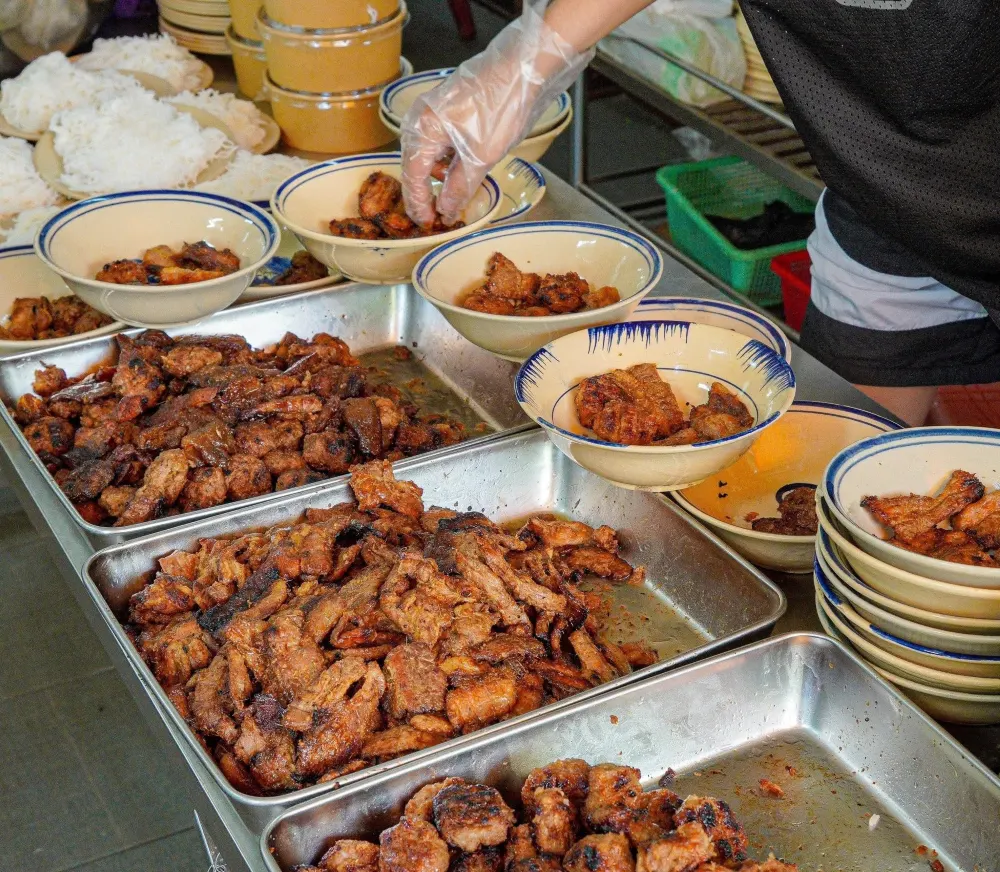
Rice vermicelli
The word bun refers to rice vermicelli, which is widely used in Vietnamese cuisine. In bun cha, the pork and dipping sauce are served separately. The relatively neutral flavour of the rice vermicelli helps balance the more intense flavours of the grilled meat and sauce.
Sweet-and-sour dipping sauce and pickled vegetables
The grilled pork is accompanied by a bowl of fish sauce-based dipping sauce, usually balanced with water, sugar and vinegar. It combines salty, sweet and slightly tangy flavours. The sauce often contains pieces of pickled carrot and green papaya, which add a crunchy texture and a fresh note to the dish.
The sauce plays an essential role in balancing the flavours of bun cha. Preparing it therefore requires genuine know-how: vendors need to use precise proportions of fish sauce, sugar, water and acidic ingredients to create a harmonious and flavourful dipping sauce.
Fresh herbs
Bun cha is generally served with a generous plate of fresh herbs and vegetables. Mint, coriander, lettuce and other aromatic herbs add freshness and allow each mouthful to taste slightly different. This combination of grilled pork, rice vermicelli, dipping sauce and herbs creates the characteristic balance of the dish.
Nem, an accompaniment often served with bun cha
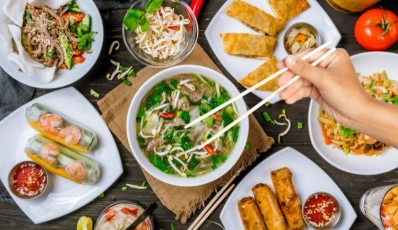
In Hanoi, bun cha is often accompanied by Vietnamese fried spring rolls. Crispy on the outside and generally filled with minced meat, glass noodles and vegetables, they add a different texture that complements the rice vermicelli and grilled pork. Depending on the restaurant, you may also find crab-filled versions known as nem cua bể.
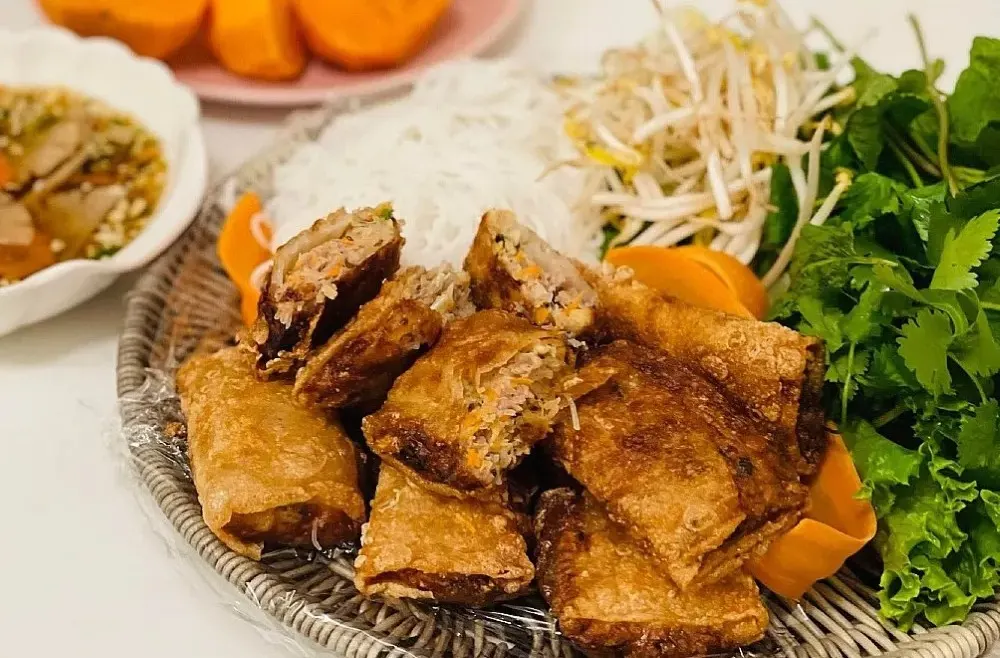
Nem is not part of the traditional composition of bun cha itself, but it is often ordered as a side dish to complete the meal. Dipped into the same sweet-and-sour sauce as the bun cha, it adds a crispy and indulgent touch to the overall dish.
Preparing bun cha involves several steps that require time and precision. The pork preparation begins with a marinade made from chopped shallots and garlic, sugar, ground pepper, fish sauce, oyster sauce, honey and liquid caramel. The meat is then left to marinate for around 30 minutes before being grilled over charcoal until the surface becomes lightly caramelised. Meanwhile, the rice vermicelli is prepared, while the vegetables and fresh herbs are washed and arranged separately.
Preparing the dipping sauce is also an essential step, as it largely determines the final balance of the dish. Fish sauce is mixed with water, sugar and vinegar in precise proportions, then served with pickled carrots and green papaya. Once all the elements are ready, the grilled pork is served in this bowl of dipping sauce, while the rice vermicelli and herbs are presented separately.
Bun cha is therefore prepared just before serving in order to preserve the contrast between the meat still carrying the aroma of the charcoal fire, the warm and flavourful dipping sauce, the soft rice vermicelli and the freshness of the herbs.
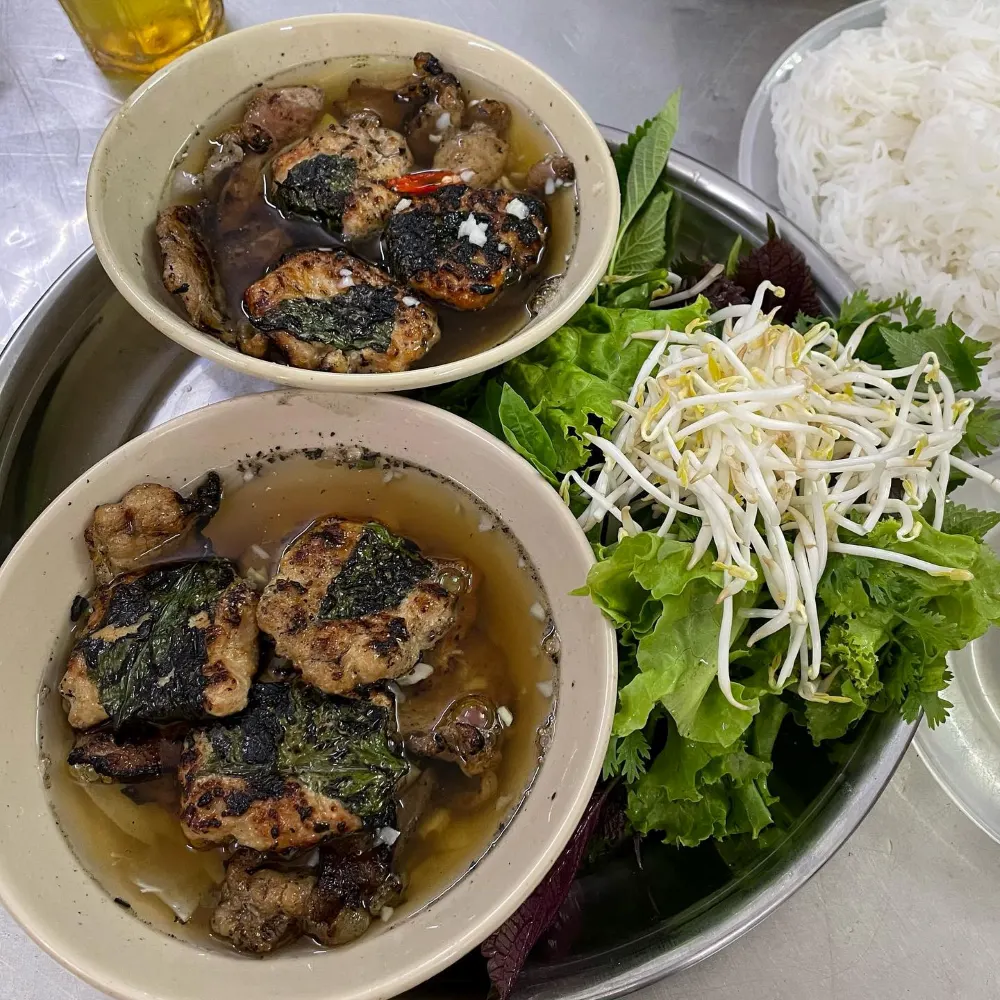
Unlike some Vietnamese noodle dishes, bun cha is not usually served as one large bowl of rice vermicelli mixed with all the ingredients. The grilled pork and dipping sauce are served in a separate bowl, while the rice vermicelli and herbs are presented separately.
To eat it, take some rice vermicelli, add a piece of grilled pork and a few fresh herbs, then dip everything into the sauce. You can also gradually add the vermicelli and herbs to the bowl of dipping sauce according to your preference. Part of the appeal is being able to create each mouthful to your own taste, combining the smoky flavour of the pork, the sweet and tangy sauce and the freshness of the herbs.
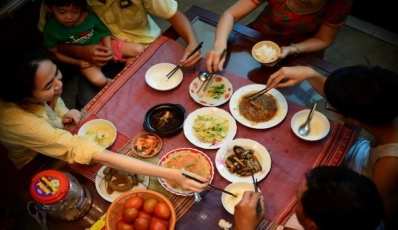
In Hanoi, the setting is also part of the experience. Bun cha is often enjoyed at small eateries or simple restaurants, sitting on small stools amid the bustle of the streets. For travellers, taking the time to eat bun cha in this setting offers a chance to discover not only a local Hanoi speciality, but also a small part of everyday life in the capital.
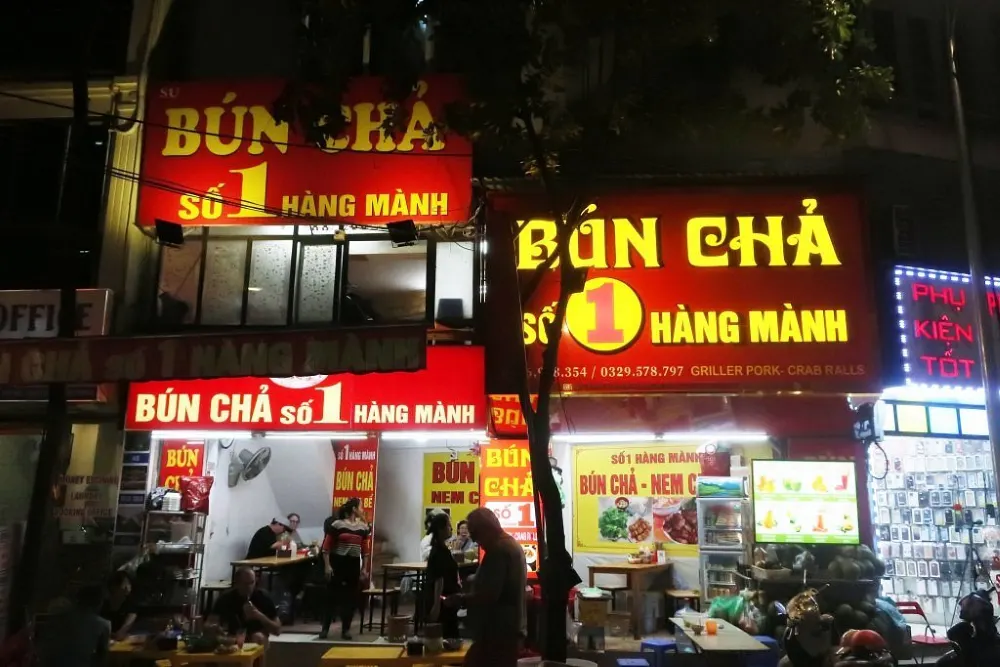
To enjoy good bun cha in Hanoi, look for small local eateries where the pork is grilled over charcoal shortly before serving. Here are a few restaurants and eateries where you can discover this speciality in a typically Hanoi setting:
Bun cha Tuyet
Address: 34 Hang Than Street, Ba Dinh, Hanoi
Opening hours: 8:30 am–5:30 pm
Bun cha Huong Lien
Address: 24 Le Van Huu, Hai Ba Trung, Hanoi
Opening hours: 8:00 am–10:00 pm
Bun cha 74
Address: 74 Hang Quat Street, Hoan Kiem, Hanoi
Opening hours: 9:30 am–9:00 pm
Bun cha Dac Kim
Address: 1 Hang Manh, Hang Bong Street, Hoan Kiem, Hanoi
Opening hours: 9:00 am–9:00 pm
Bun cha Mai Hac De
Address: 114 Mai Hac De, Hai Ba Trung, Hanoi
Opening hours: 11:00 am–4:00 pm
In terms of budget, bun cha generally costs between 50,000 and 100,000 VND per person, depending on the restaurant and the side dishes you choose.
Choose a local eatery: small eateries and restaurants popular with local residents often provide the opportunity to experience bun cha in a simple, typically Hanoi setting.
Add the rice vermicelli and herbs gradually: this allows you to adjust each mouthful to your taste and better appreciate the different textures.
Try a fried spring rolls on the side: crispy and satisfying, it pairs very well with bun cha.
Eat it as soon as it is served: the meat is still hot, the grilled aromas are more pronounced and the herbs retain all their freshness.
In Hanoi, some dishes tell the story of the city just as vividly as its monuments. Bun cha is one of them: you will find it down a side street, around a few small stools, with the aroma of grilled meat mingling with the bustle of the neighbourhood. To discover another side of the capital, simply take the time to sit down, taste it and let this Hanoi speciality introduce you to another facet of local life.
>> See also:





 TRAVELERS' CHOICE 2026