




Earlier I thought differently, many thanks for the information.
__________
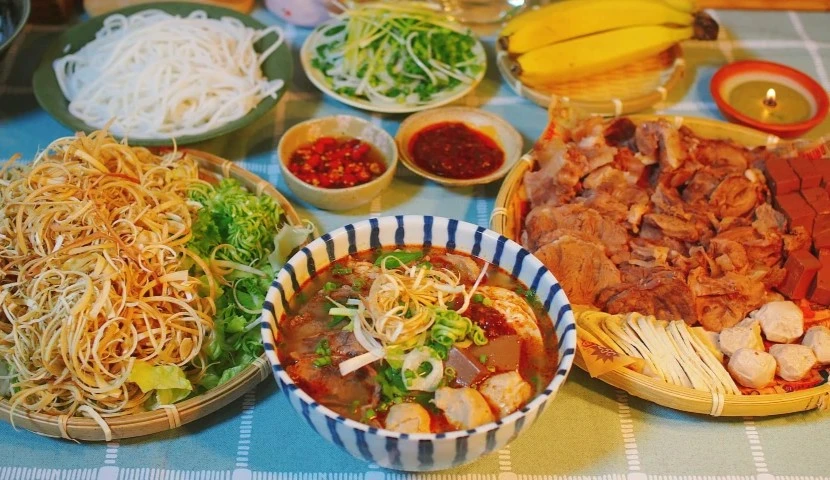
Among the most famous specialties of Vietnamese cuisine, Bun bo Hue holds an essential place. Originating from the imperial city of Hue, this beef noodle soup captivates with its fragrant broth, spicy flavours, and authentic character. A true symbol of Central Vietnamese gastronomy, it is now one of the iconic dishes to discover during a trip to Vietnam.
Bun bo Hue is a traditional specialty originating from Hue, the ancient imperial city located in Central Vietnam. This iconic soup mainly consists of thick rice noodles, beef, pork shank, crab paste, congealed pork blood, and fresh herbs, all served in a broth flavoured with lemongrass.
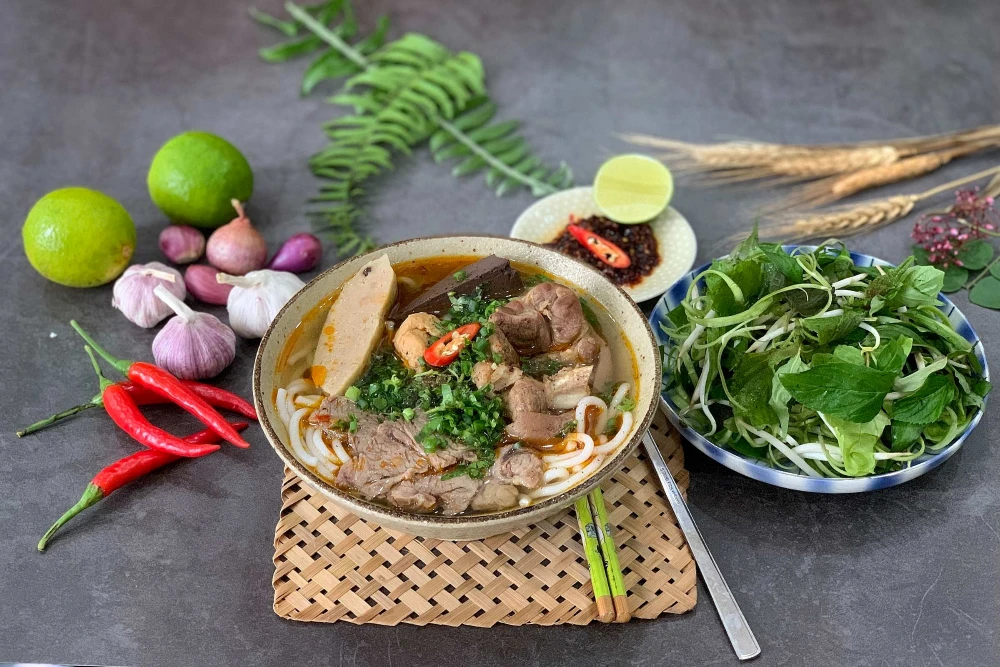
According to local tales, Bun bo Hue dates back to the era of Lord Nguyen Hoang, around the 16th century, a period marking the early development of the Hue region. The dish also finds its roots in the spiritual traditions of Vietnamese villages. Following religious ceremonies, the offered meats were cooked in a stew served with glutinous rice. With the popularisation of rice noodles, locals gradually replaced glutinous rice with bún, giving birth to a new specialty that has been enriched over time with numerous ingredients and toppings.
The fame of Bun bo Hue is also linked to Van Cu village, considered the cradle of the traditional craft of rice noodle making for over 400 years. The noodles produced in this village are renowned for their soft yet resilient texture, ideal for absorbing the broth without breaking.
An authentic Bun bo Hue generally consists of thick rice noodles, beef, pork shank, congealed pork blood, crab paste, and a fragrant broth. This traditional Vietnamese soup is renowned for its rich flavours and the subtle balance between spices, fresh herbs, and stewed meat. The noodles are made from a precise blend of rice flour and tapioca flour to achieve a texture that is both soft and slightly chewy.
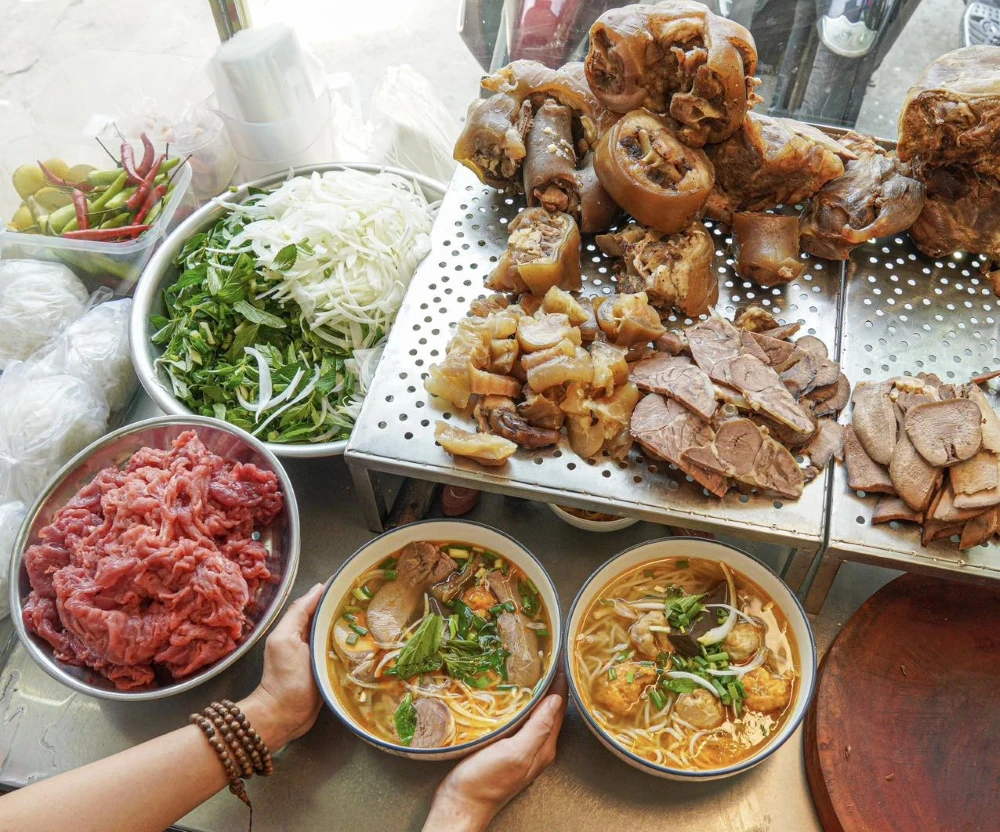
The choice of ingredients also plays a vital role in this iconic specialty of Hue gastronomy. The meat used often comes from beef shank or brisket, selected for their tenderness and rich flavour. The crab paste, recognisable by its orange colour, brings a naturally rich and savoury flavour that balances the entire dish.
Yet, the soul of this traditional Central Vietnam recipe lies above all in its broth. Beef bones are carefully cleaned, blanched, and then simmered for long hours over low heat to obtain a clear and naturally sweet broth. Two iconic ingredients give the dish its unique identity: lemongrass and fermented shrimp paste (mắm ruốc). The lemongrass delicately fragrances the broth, whilst the mắm ruốc brings an intense depth of flavour without overpowering the other tastes.
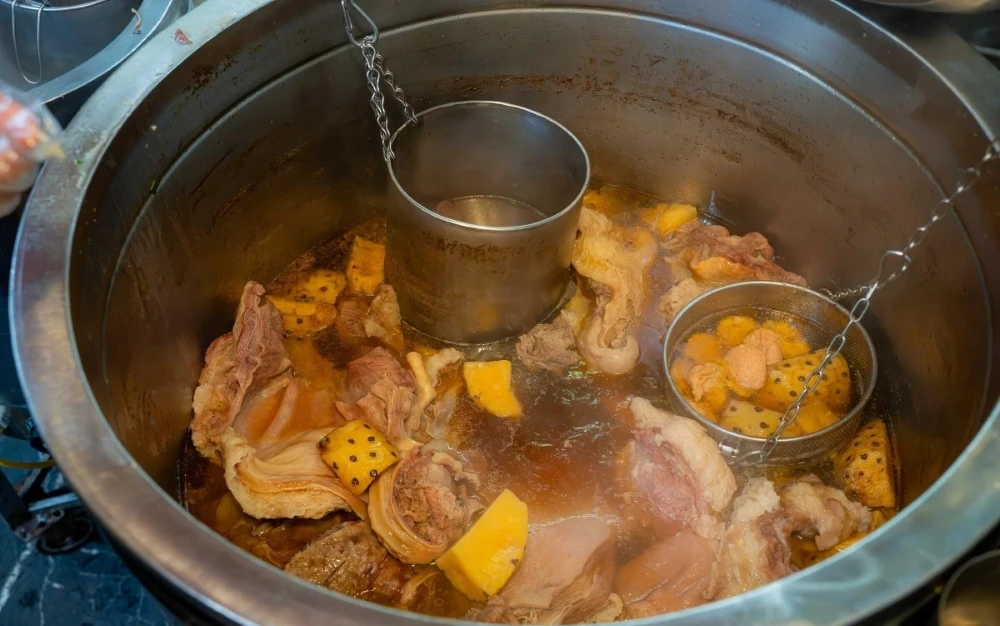
In Huế, some locals even believe that the secret to a good bún bò also depends on the cooking vessel. According to several local culinary traditions, rounded-bottom aluminium pots with narrow openings help retain heat better and concentrate the aromas of the broth.
A bowl of Bun bo Hue finally appeals through its visual harmony: the orange tint of annatto oil, the brown of the beef, the green of fresh herbs and onions, not forgetting the bean sprouts which bring a touch of freshness. Balancing spicy flavours, a lemony fragrance, and a generous broth, this essential specialty of Vietnamese cuisine charms as much by its taste as by its appearance.
Much more than just a popular dish, Bun bo Hue occupies an important place in Vietnamese culinary heritage. This Central Vietnam specialty reflects the refinement of Huế gastronomy, the former imperial capital known for its cuisine rich in flavours, colours, and traditions. Today, Bun bo Hue is ranked among the iconic dishes of Vietnamese cuisine alongside phở or bánh mì.
For the inhabitants of Hue, this dish represents a true source of local pride. Each family often has its own recipe, passed down from generation to generation, with variations in spices, the amount of mắm ruốc, or the choice of toppings. Bun bo Hue is deeply connected to the daily life of the locals: it is eaten for breakfast as well as during family gatherings or local festivals.
Over time, this traditional Vietnamese soup has become a symbol of conviviality and cultural identity. Today, its popularity extends beyond the borders of Vietnam, contributing to the international recognition of Vietnamese gastronomy among travellers from all over the world.
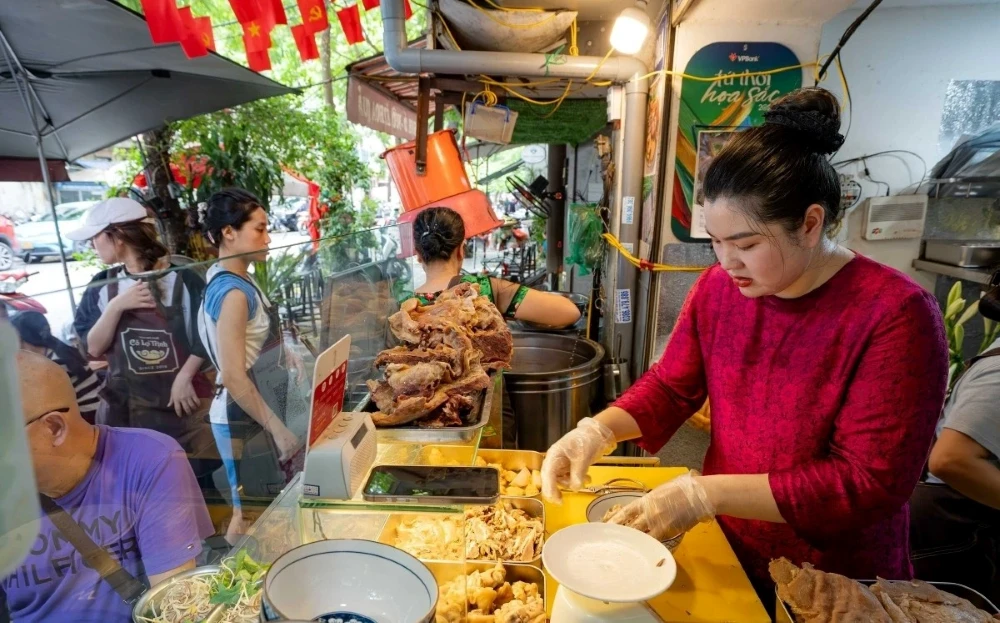
Bun bo Hue is highly popular throughout Vietnam today. This traditional Vietnamese specialty can be found everywhere: in small family restaurants, local markets, or street food stalls along the roads. However, for a true Vietnamese culinary experience, it is highly recommended to taste Bun bo Hue at local spots frequented by residents in Hue. The bustling atmosphere, steaming pots, and aromas of fresh herbs are fully part of the charm of this iconic dish.
A few addresses to try in Hue:
With its fragrant broth, spicy flavours, and a history deeply tied to Hue culture, Bun bo Hue perfectly reflects the richness of Vietnamese gastronomy. Far more than a simple noodle soup, this iconic specialty offers a true immersion into the culinary traditions of Central Vietnam. During a trip to Vietnam, tasting an authentic Bun bo Hue remains an unmissable culinary experience.
>> See more:





 TRAVELERS' CHOICE 2026