




Earlier I thought differently, many thanks for the information.
__________
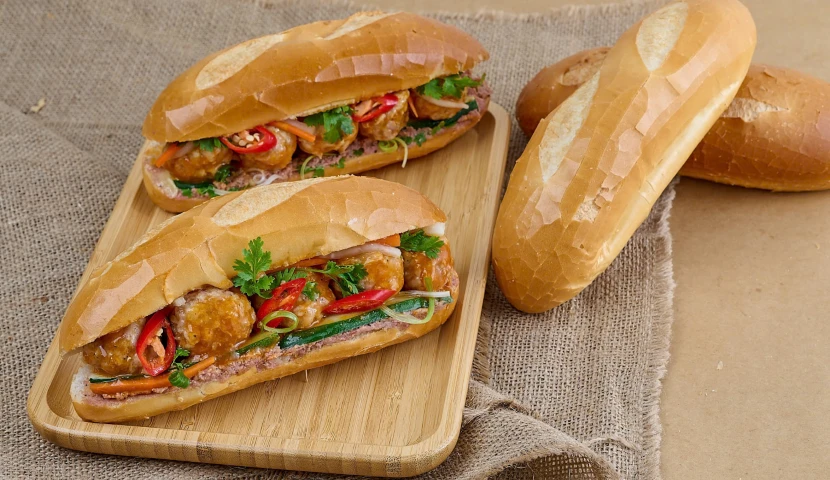
A true icon of Vietnamese street food, Banh mi captivates travellers with its crispy bread, varied fillings, and perfectly balanced flavours. Born from a unique blend of French and Vietnamese culinary cultures, this sandwich is today one of the most popular specialties. Simple, quick, and tasty, it reflects the full richness and creativity of Vietnamese gastronomy.
The Vietnamese Banh mi is no longer confined to the streets of Vietnam: it is now recognised as one of the major symbols of global gastronomy. This unique sandwich has been widely highlighted by prestigious international media such as The Guardian and the BBC, as well as by numerous culinary experts. The famous chef Anthony Bourdain also contributed to its global fame by calling it the perfect balance of simplicity, flavours, and creativity.
In 2011, the term "Banh mi" was officially integrated into the Oxford English Dictionary, marking a major linguistic and cultural recognition on an international scale. This entry confirms not only the global popularity of the Vietnamese sandwich, but also the growing place of Vietnamese street food on the world gastronomic scene.
At the beginning of the 19th century, the French introduced the baguette to the Gia Dinh region (now Saigon) in order to reproduce their eating habits. To meet the needs of the colonial population, the first brick bread ovens were built in Vietnam, allowing the production of fresh, crispy baguettes. This type of bread was quickly adopted and progressively became popular among Vietnamese people. However, it was gradually adapted to local tastes. The Vietnamese baguette thus became shorter, lighter, and easier to consume on a daily basis.
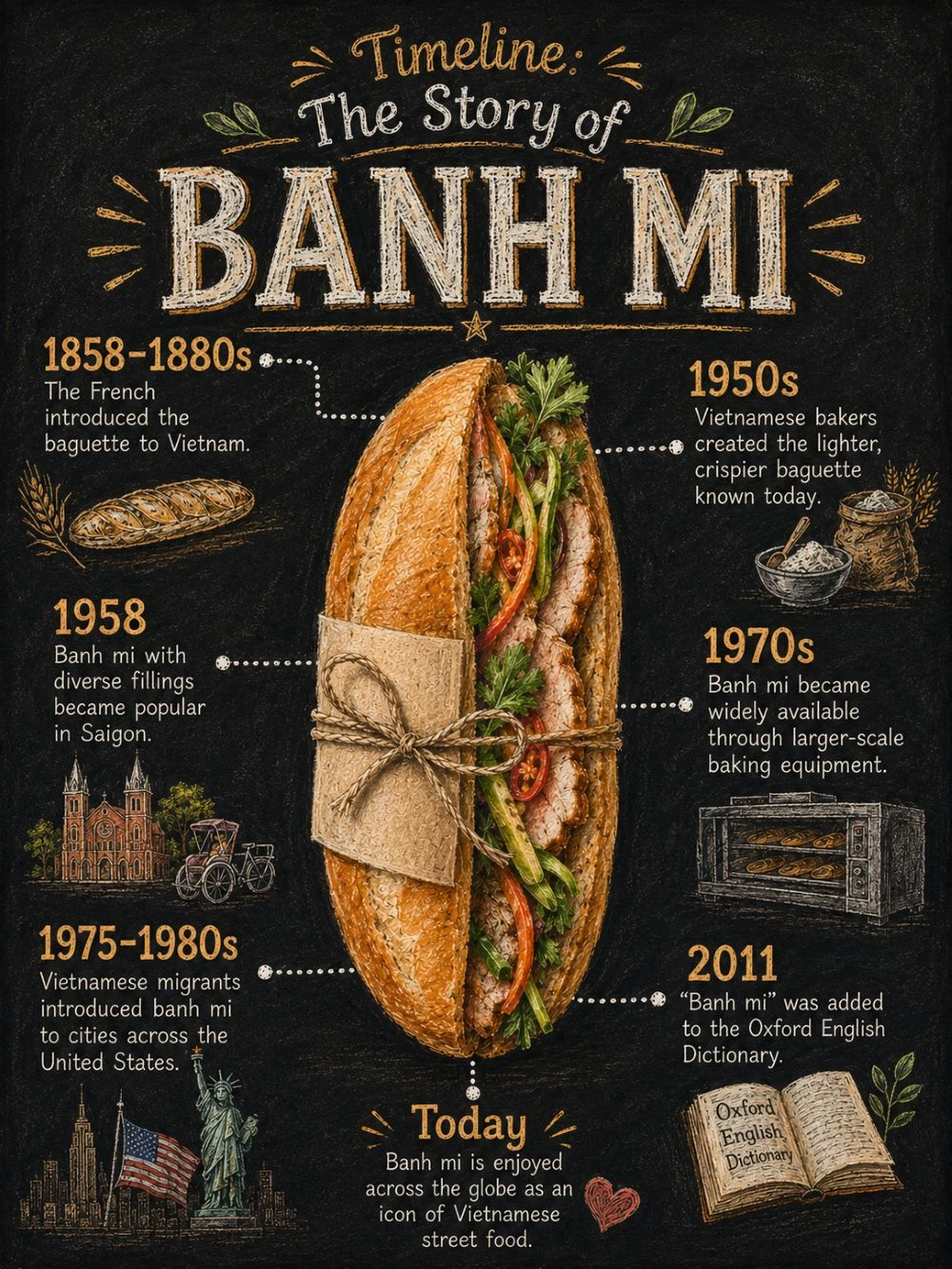
The true birth of Banh mi as a sandwich came later, in 1958, with the famous Hoa Ma shop in Saigon, founded by Mr Hoa and Mrs Tinh. Thanks to Mrs Tinh's experience in preparing charcuterie for French restaurants in Hanoi, the couple opened an establishment initially offering Western-style dishes served with bread and charcuterie, accompanied by cutlery. However, faced with the faster pace of life of the inhabitants, they innovated by placing the fillings—pâté, ham, and Vietnamese charcuterie—directly inside the baguette. This simple idea profoundly transformed the way bread was consumed and gave birth to the Banh mi we know today.
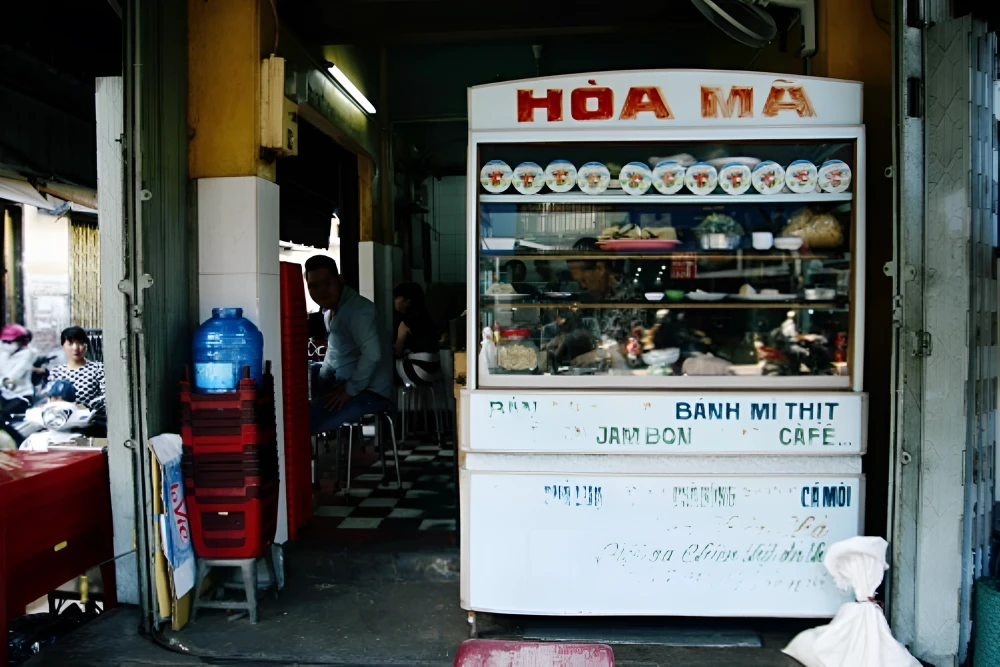
Very quickly, this sandwich became popular among students and workers, thanks to its convenience, affordable price, and diversity of flavours. It then spread throughout Saigon and progressively established itself as an essential symbol of Vietnamese street food.
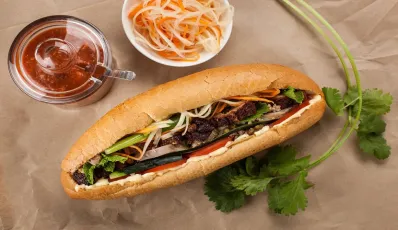
The Vietnamese Banh mi appeals above all through the richness and diversity of its fillings, which perfectly reflect the creativity of Vietnamese gastronomy. Inside a light and crispy baguette, there is a subtle balance of textures, flavours, and aromas. The most classic base includes liver pâté, Vietnamese charcuterie (ham, roasted pork, grilled meat), and sometimes eggs or shredded chicken. To this are added pickled vegetables—carrots and white radishes—which bring a tangy and refreshing touch. Aromatic herbs also play an essential role in balancing the taste. Fresh coriander, crunchy cucumber, and sometimes fresh chilli bring a sensation of freshness and lightness characteristic of Vietnamese street food.
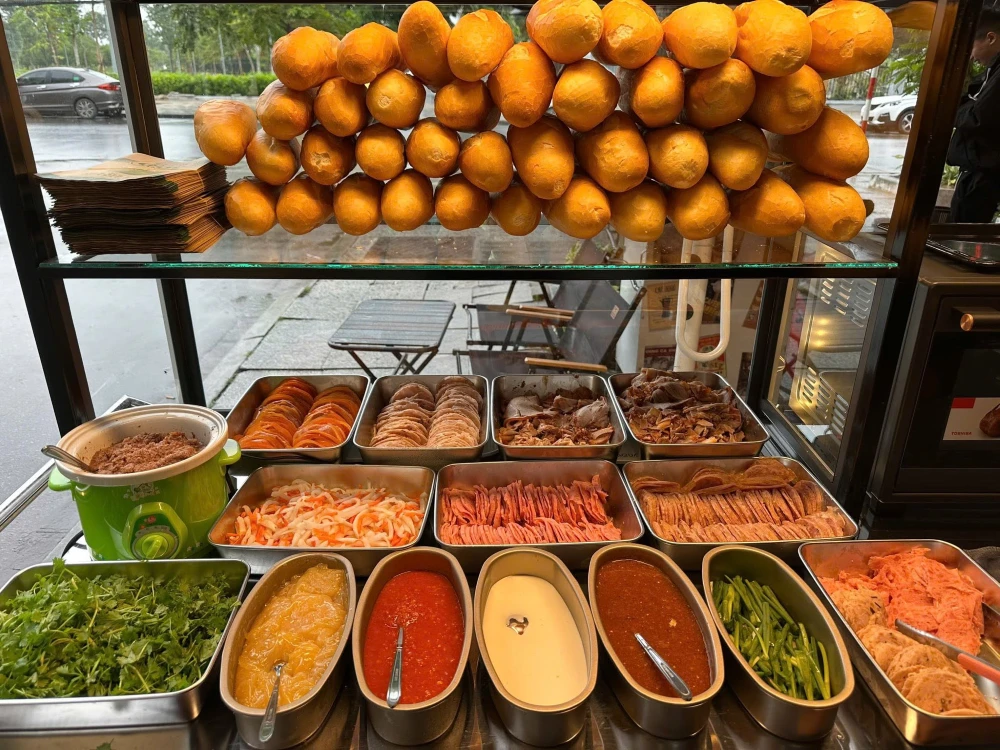
In Vietnam, the Vietnamese Banh mi is omnipresent. It can be found in every city, on every street corner, from working-class neighbourhoods to modern urban centres, from street stalls to more refined restaurants. Yet, what makes this sandwich so fascinating is its capacity to transform according to the regions, reflecting the diversity of Vietnamese gastronomy.
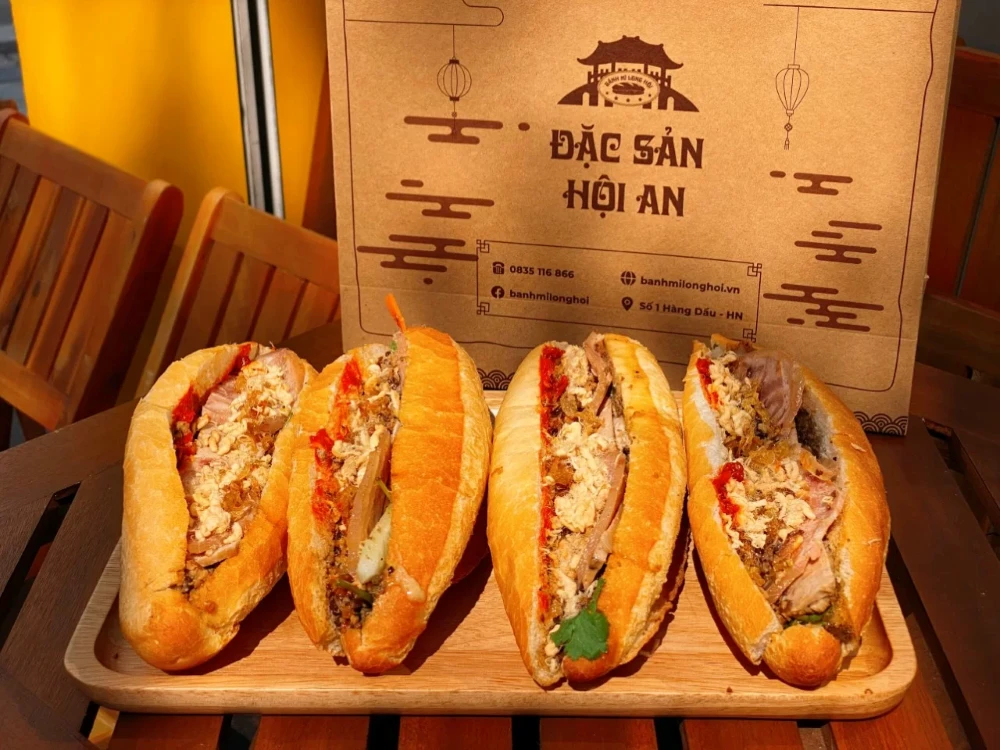
In Hanoi, Banh mi adopts a simpler, more traditional version. Here, the fillings remain modest but tasty: a little pâté, ham, Vietnamese charcuterie such as chả or xá xíu, accompanied by a few fresh herbs, like coriander, and thin slices of cucumber. The whole thing is enhanced by a typical chilli sauce, sometimes recalling the flavours of other Northern dishes. The combination remains balanced, without excess, faithful to a sober and authentic cuisine.
>> See also: 10 Must-Try Dishes in Hanoi
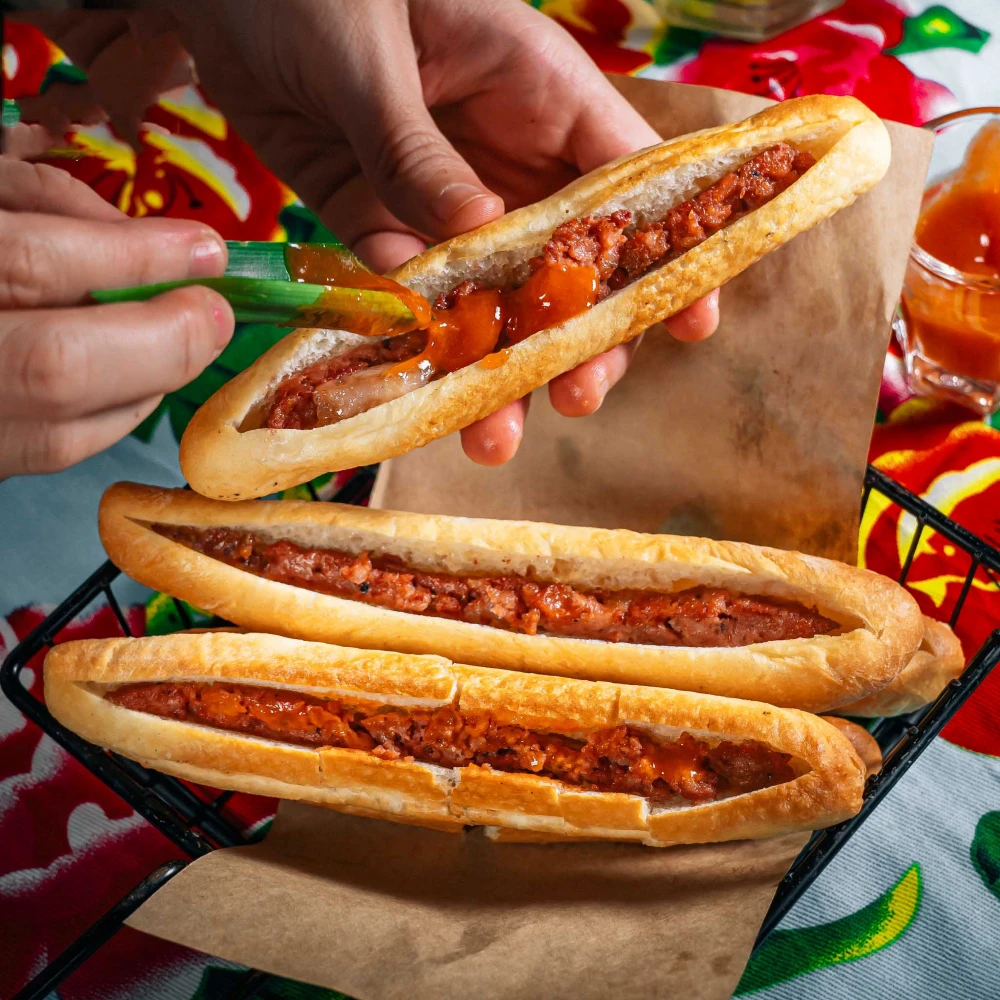
Heading up towards the coastal northeast, in Hai Phong, Banh mi takes a totally different form with the famous Banh mi que (spicy breadsticks). Much thinner than a classic baguette, it is often filled with a generous layer of pâté and enhanced by chí chương, a local chilli sauce. Warmed before serving, it offers an irresistible contrast between the crispiness of the bread and the melting sweetness of the filling, to the point that it is common to eat several at a time.
In the centre of the country, in Hoi An, Banh mi reaches an impressive level of culinary richness. Often smaller but extremely well-filled, it can contain a wide variety of ingredients: roasted pork, ham, grilled meat, chicken, egg, cheese, and many other options. Homemade sauces and fresh herbs, particularly those from Tra Que village, bring a unique aromatic signature. This version is today considered one of the most iconic in Vietnam.
In the South, notably in Ho Chi Minh City, Banh mi becomes even more generous and varied. Thanks to the agricultural richness of the region, it is often accompanied by numerous fresh vegetables: cucumber, pickled carrot and white radish, coriander, onion, and chilli. The fillings are also highly diversified, ranging from Banh mi xiu mai (Banh mi with stewed meatballs) to Banh mi heo quay (Banh mi with crispy roasted pork) or Banh mi cha ca (Banh mi with grilled fish cake). This abundance perfectly reflects the dynamism and creativity of Vietnamese street food.
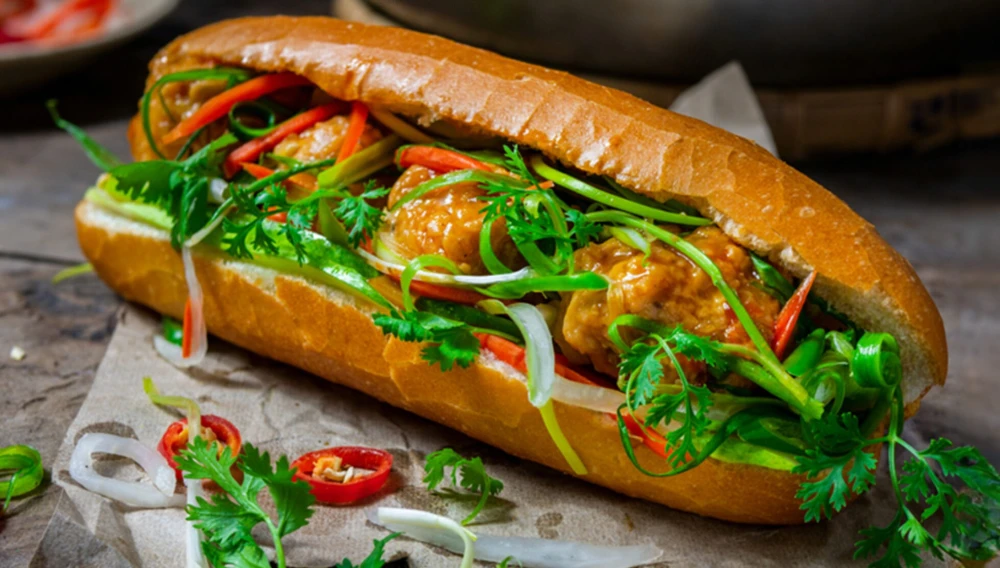
Thus, far from being a simple sandwich, Banh mi is a true regional expression of Vietnamese culinary culture, capable of adapting to the tastes, resources, and traditions of each territory.
As a resident of Vietnam, I often have the opportunity to taste Banh mi in small street stalls, but also in large restaurants. Banh mi is prepared to order, in a lively atmosphere filled with cooking smells and the daily hustle and bustle of the cities. For me, it represents a true moment of everyday life, perfectly reflecting the richness of Vietnamese street food and the pace of local life.
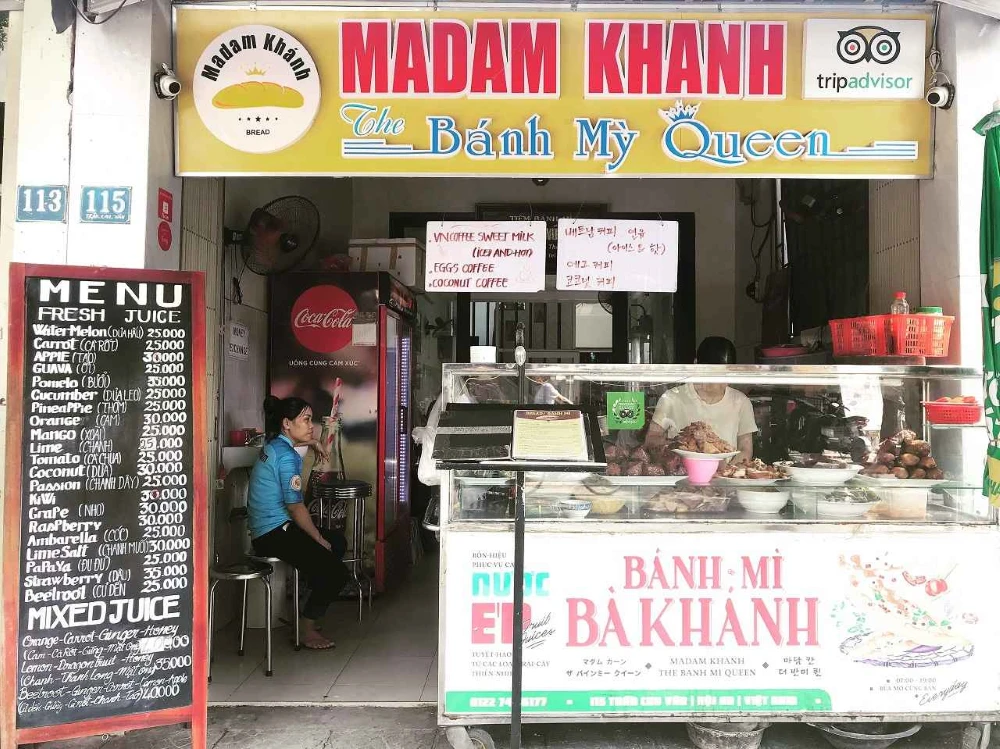
For those who wish to live this culinary experience in an authentic way, here are some iconic addresses to savour an excellent Banh mi in Vietnam:
In Hanoi:
In Hoi An:
In Ho Chi Minh City:
Much more than a simple sandwich, the Vietnamese Banh mi embodies the richness and creativity of Vietnamese street food. Heirloom of the French baguette but deeply rooted in the culinary culture of Vietnam, it appeals through its simplicity, its diversity, and its unique flavours. Each bite tells a story, that of a country where tradition and innovation meet every day. Discovering Vietnam also means setting out to discover its Banh mi, enjoyed at the corner of a bustling street or a small local stall.
See more:





 TRAVELERS' CHOICE 2026