


Hmtvroxv PXQRizitour.comPXQR iualror ukgewycfk qkfd www.yahoo.com/tr1
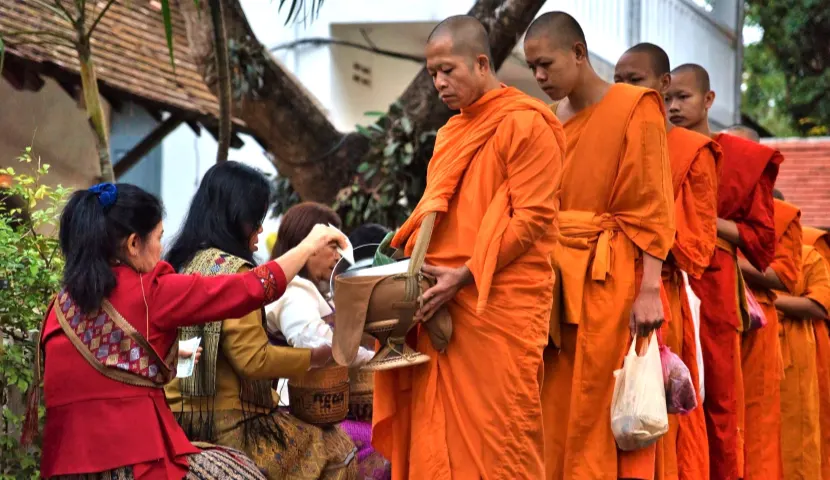
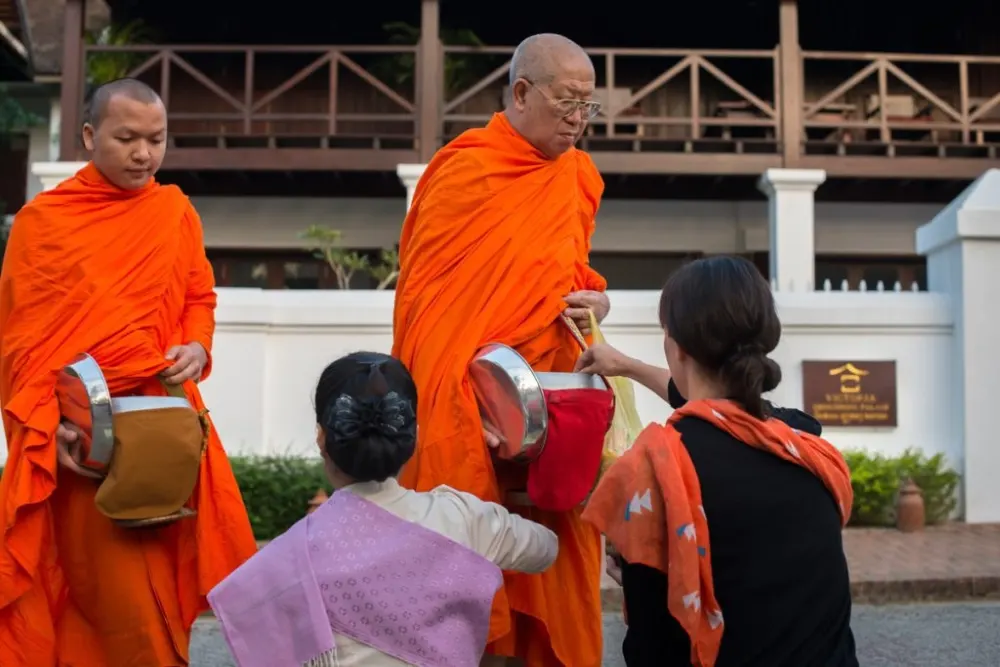
At dawn, while Luang Prabang is still slowly waking, the streets of the old town take on a distinctive atmosphere. Dressed in their saffron robes, monks leave the temples and walk silently through the streets, while local residents wait by the roadside to offer them sticky rice and other food. This morning tradition, known as Tak Bat, is an integral part of the spiritual life of Luang Prabang. Here is what you need to know to understand this tradition and experience this special moment without disturbing the ritual.
Among the most emblematic traditions of the former royal capital of Laos, Tak Bat, also known as the alms-giving ceremony for monks, holds a special place. This practice has its roots in the teachings and traditions of Theravāda Buddhism, a tradition dating back more than 2,500 years. It later became gradually established in Laos and deeply integrated into the cultural and spiritual life of Luang Prabang from the 14th century onwards.
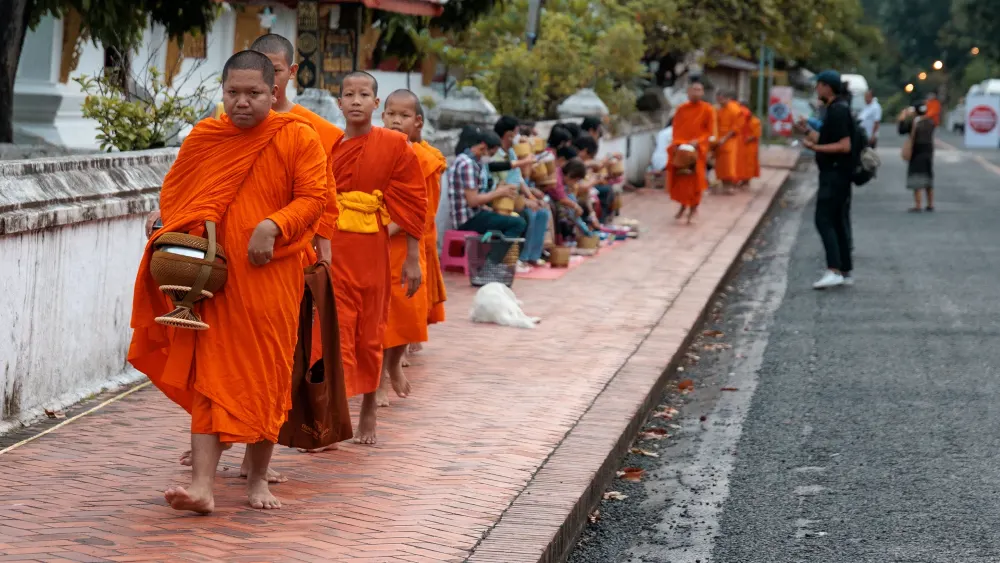
Every morning, before the city comes to life, monks walk silently through the old town while local residents wait to offer them sticky rice and other food. Depending on the family and the occasion, offerings may also include fruit, vegetables or packaged food.
Far from being an activity created for visitors, this is a religious ritual that remains part of the local community’s daily life.
The alms-giving ceremony takes place every day at dawn, with times varying according to the season. It generally begins at around 5:30 am in summer and 6:30 am in winter. Monks gradually emerge from the different temples and walk barefoot through the streets of the old town, carrying their alms bowls.
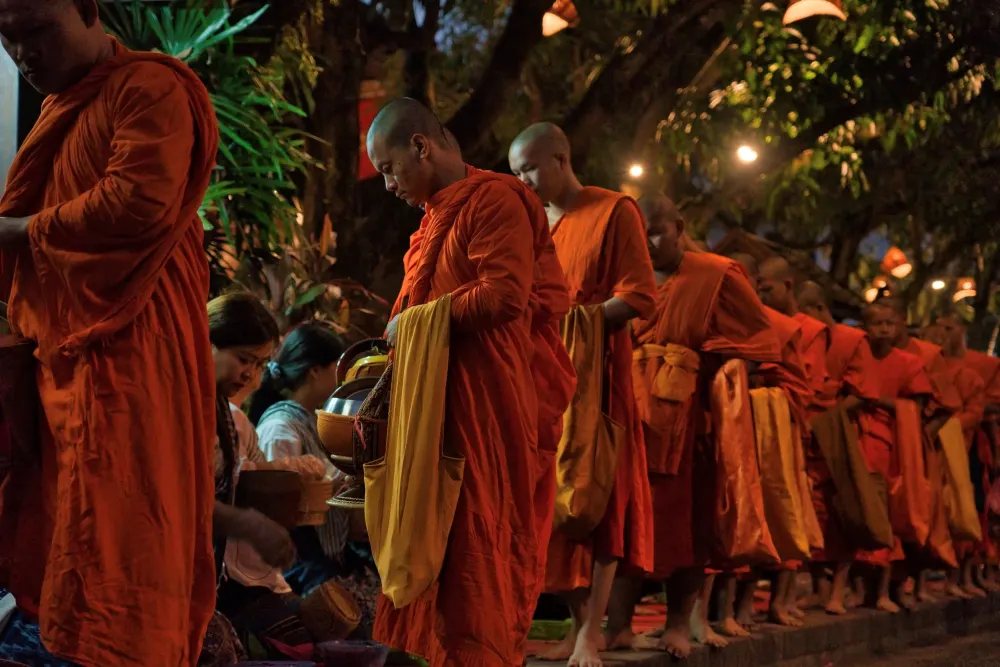
The offerings collected during the procession are intended for their daily meals. According to the monastic rules of Theravāda Buddhism, monks eat their meals before midday and generally do not eat after the sun has passed its zenith. The collection of offerings and the return to the monasteries therefore take place during the morning and are completed before midday.
To observe the ceremony in good conditions, it is advisable to arrive a few minutes before the first monks pass by. At this early hour, Luang Prabang is still quiet, and the atmosphere around the temples contrasts with the activity that gradually begins to fill the city.
The ceremony takes place mainly in the old town of Luang Prabang, where many temples are concentrated along the historic streets. Monks from different monasteries follow routes that pass particularly through the streets around Sisavangvong, Sakkaline and the nearby smaller streets.
There is no need to go to a specific temple, as monks pass through several streets in the old town and local residents make their offerings at different locations. For a more respectful and less touristy experience, it is preferable to move away from groups of visitors and keep your distance from the procession.
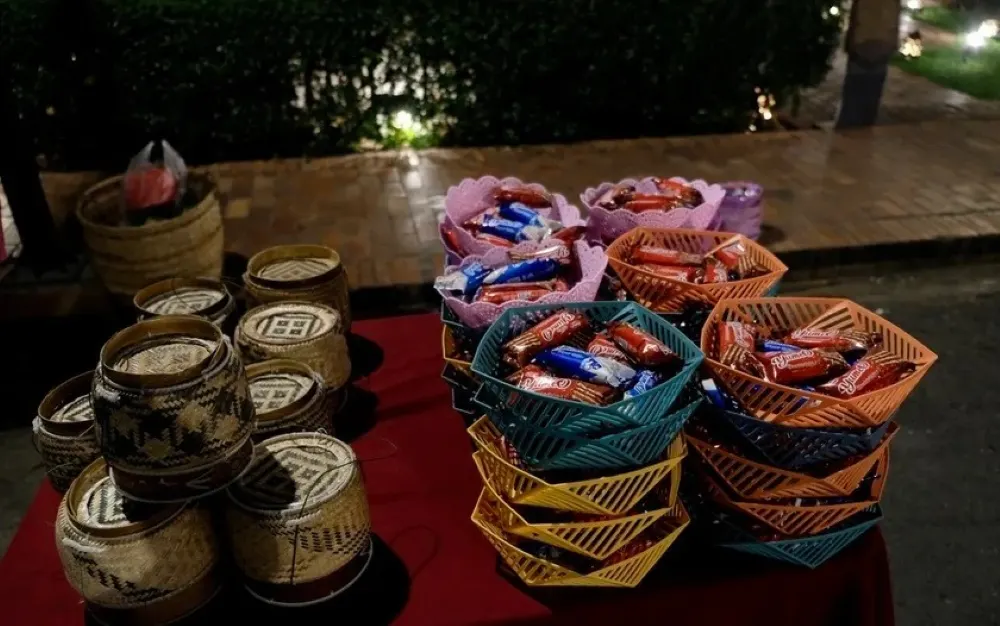
As this is a religious ritual practised by the local community, visitors should behave discreetly and respectfully, whether making an offering or simply watching the procession.
It is entirely possible to attend Tak Bat without making an offering. For travellers, this may even be preferable if you are not sufficiently familiar with the rules of the ritual.
Keep a reasonable distance from the monks and local residents taking part. Avoid standing directly in front of them or blocking their path, and remain silent during the procession.
Photography is generally possible, but it should remain discreet. Keep your distance, avoid using flash and do not ask the monks to pose for a photograph. Longer focal lengths can be useful for photographing the scene without getting excessively close.
Finally, avoid behaviour that could turn the ceremony into a tourist spectacle: do not run after the monks, call out to them or position yourself among worshippers simply to get a better photograph. Often, the best memory is of a moment observed quietly, allowing the ceremony to follow its natural course.
A gesture of generosity and merit
For Buddhist devotees, offering food to monks is first and foremost an act of generosity, known as dāna. The practice involves giving without expecting anything in return and holds an important place in Buddhist practice.
The sticky rice and other foods offered also contribute to the monks’ daily meals. For devotees, participating in the alms-giving ceremony is associated with the accumulation of merit and the practice of generosity in everyday life.
A daily connection between the monks and the community
The ceremony also illustrates the close relationship between the monasteries and the people of Luang Prabang. Each morning, monks receive part of their food from the community, while devotees continue a religious practice passed down over time. It is a reminder that the city’s temples are not merely places of worship or historical monuments but remain part of local everyday life.
A tradition deeply rooted in Luang Prabang culture
Theravāda Buddhism holds an important place in the cultural identity of Luang Prabang. Its many temples, religious ceremonies and the daily habits of local residents reflect this presence, with the morning alms-giving ceremony being one of its most visible expressions.
For travellers, understanding this cultural and religious context makes it possible to observe the ceremony with greater respect and gain a deeper understanding of the culture and spirituality of Luang Prabang.
Tak Bat reflects both the importance of Theravāda Buddhism in Luang Prabang and the enduring relationship between monks and the local community. For travellers, witnessing the ceremony offers an opportunity to discover a deeply cultural and spiritual aspect of Laos. Whether you choose to make an offering or simply watch the monks pass through the quiet streets of the old town, the most important thing is to experience the moment discreetly and respectfully.
See more:




 TRAVELERS' CHOICE 2026