




The proof: Every 10 minutes pays a jackpot. Try now! Spin to Win Here -> psee.io/8qtsv7
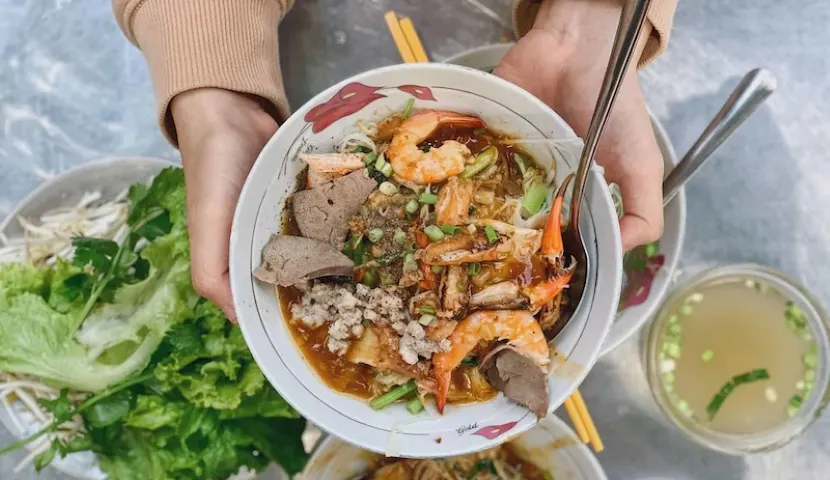
In Vietnam, a bowl of noodles can reveal a great deal about a region, its people and its history. While phở has become one of the best-known symbols of Vietnamese cuisine abroad, southern Vietnam has its own speciality, deeply rooted in local life: hu tieu. Behind this name lies a whole range of recipes shaped by cultural exchanges and regional traditions. It is a dish worth discovering for anyone looking to experience the flavours of Southern Vietnam in a different way.
Just like phở in the north or bún bò Huế in central Vietnam, hu tieu (also spelt hủ tíu) is one of the most iconic dishes of Southern Vietnamese cuisine. Widely enjoyed as an everyday meal, it is an integral part of local eating habits, whether for breakfast or a quick meal at a street food stall.
From the 1950s onwards, hu tieu grew significantly in popularity across southern Vietnam, particularly in Saigon, now known as Ho Chi Minh City. Even today, it is easy to find dedicated hu tieu stalls along the streets or mobile vendors pushing their food carts through neighbourhood alleyways.
The origins of hu tieu are generally associated with Chinese and Khmer culinary influences. Through migration and trade, the dish developed across the Mekong Delta and Saigon, giving rise to different regional variations. Each has its own distinctive characteristics, reflecting the rich culinary heritage of southern Vietnam.
Originally, hu tieu was a noodle soup prepared with a broth made from bones or meat. In southern Vietnam, the abundance of local ingredients gradually enriched the dish, resulting in several variations with distinct toppings and flavours. Among the best-known varieties, three specialities deserve particular attention.
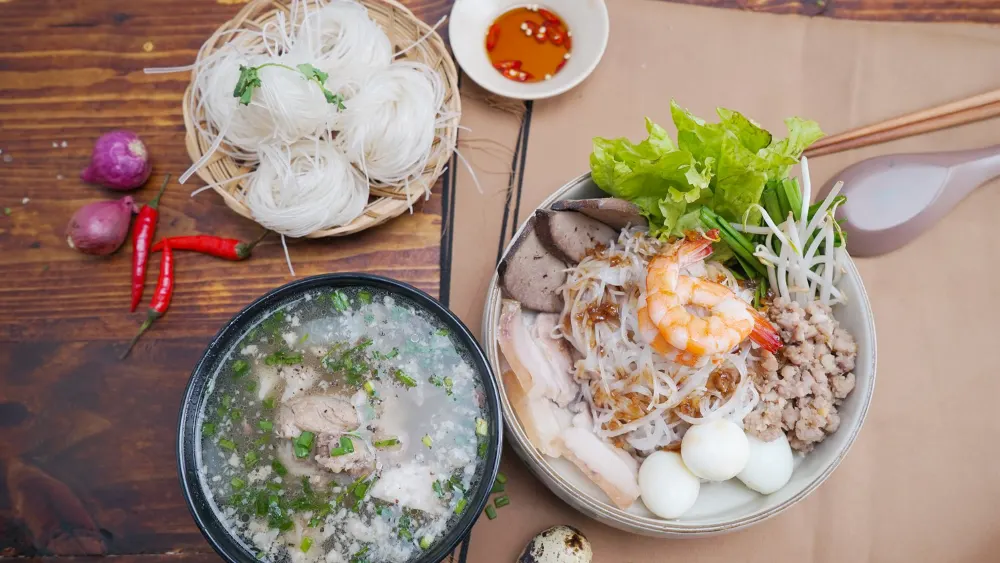
Originating from Phnom Penh in Cambodia, hu tieu Nam Vang reflects the culinary exchanges between Khmer, Chinese and Vietnamese communities. Introduced to southern Vietnam, it became firmly established in the region and was adapted to local tastes.
This version stands out for its generous selection of toppings, which may include pork, prawns, quail eggs and sometimes offal, depending on the recipe. These are served with rice noodles and an aromatic broth. Hu tieu Nam Vang can also be served without broth in the bowl: the noodles are tossed in a sauce, while the broth is served separately.
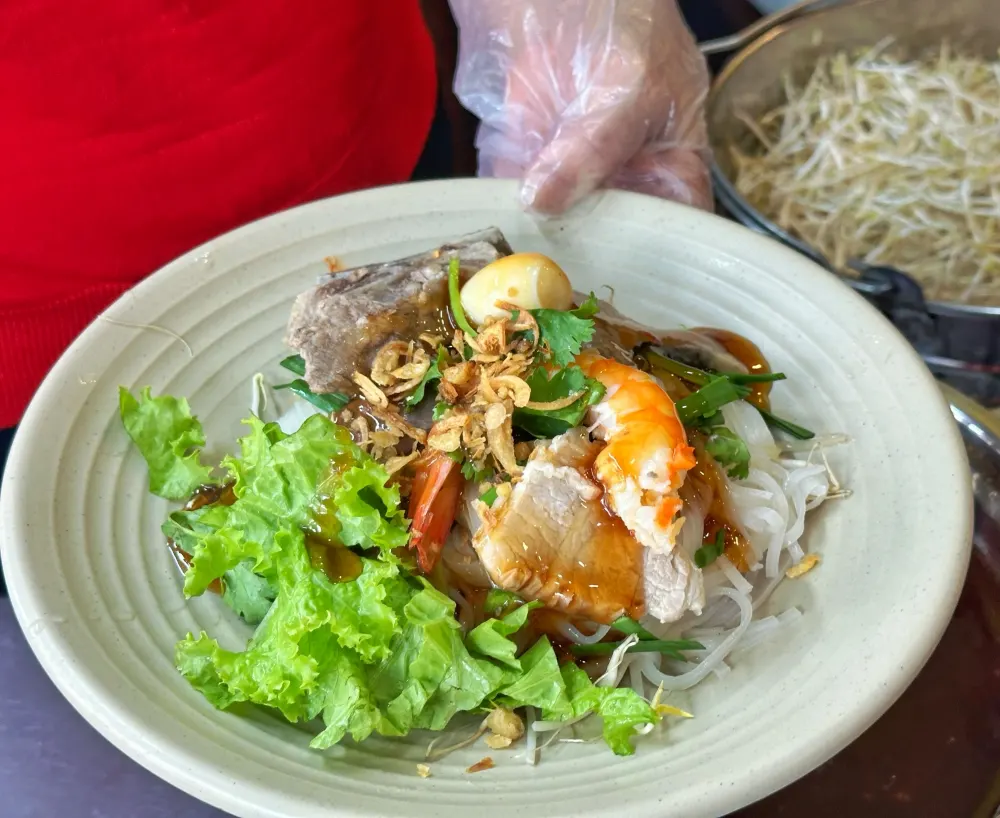
Originating from Sa Dec in Dong Thap Province, hu tieu Sa Dec is particularly distinctive for its noodles. Unlike the thin, white noodles used in many other versions, these are wider, slightly opaque white in colour and made from finely ground local rice.
When eaten, they offer a texture that is tender, supple and slightly crisp, with a subtle sweetness that lingers on the palate. Combined with a flavourful broth and toppings that vary from one recipe to another, these noodles give this Mekong Delta speciality its unique character.
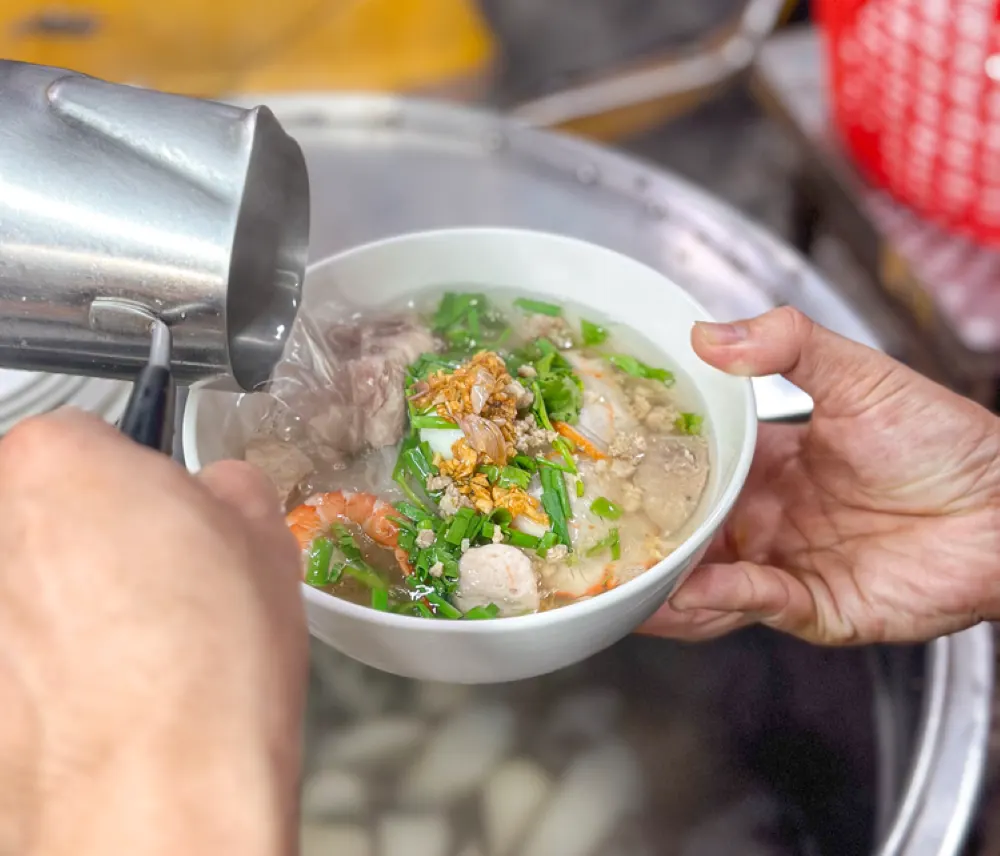
Originating from My Tho in the Mekong Delta, this speciality is best known for its noodles, traditionally made from Go Cat rice, a variety renowned in the Tien Giang region. Thicker and translucent, the noodles have a firm, slightly springy texture. Once immersed in boiling water, they become tender without losing their shape. This is why hu tieu My Tho is sometimes called hu tieu dai, meaning hu tieu with springy noodles.
The broth also plays an essential role. Simmered for hours with pork bones, it is appreciated for its clarity and delicate sweetness, with a less oily texture than some versions of hu tieu Nam Vang.
To taste this speciality in its place of origin, there is nothing quite like stopping in My Tho. Local noodle shops offer the opportunity to discover the distinctive characteristics of this Mekong Delta noodle dish, whose flavour naturally varies from one establishment to another.
Unlike hu tieu Nam Vang, Sa Dec or My Tho, hu tieu go does not refer to a particular regional recipe, but rather to a street vending tradition deeply rooted in everyday life in Saigon.
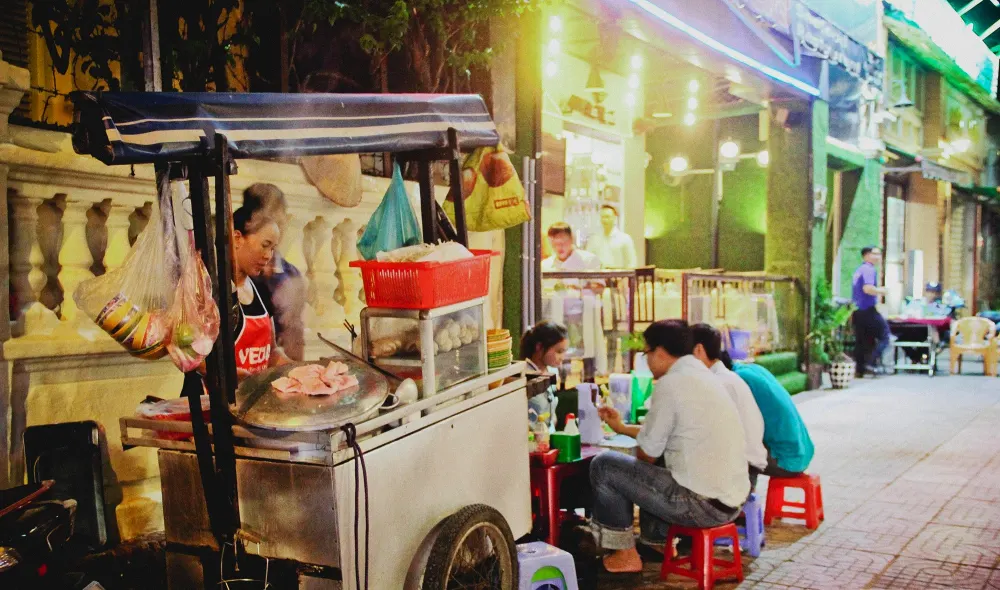
As night falls, vendors make their way through the alleyways with their small food carts. The distinctive sound of tapping a utensil a few times announces their presence to local residents, which is where the name hu tieu go comes from. They serve simple, steaming bowls of noodles to enjoy on the pavement or take home.
Beyond the dish itself, hu tieu go tells another story of Vietnamese street food: one of spontaneous meals, lively alleyways after dark and the small daily rituals that shape local life. For travellers, it offers a way to discover Saigon through an ordinary yet charming scene.
In Vietnam, hu tieu is generally enjoyed piping hot, whether for breakfast or at any other time of day. At small street food stalls, locals sit at low tables, pick up their chopsticks and enjoy their noodles at their own pace, surrounded by the bustle of the streets.
Depending on the recipe and the restaurant's usual practices, your bowl may be accompanied by bean sprouts, spring onions, fresh herbs or a wedge of lime. A few drops of chilli sauce will add some heat, while a little fish sauce can help adjust the seasoning. However, it is best to taste the broth before adding anything, as its flavours may already be perfectly balanced.
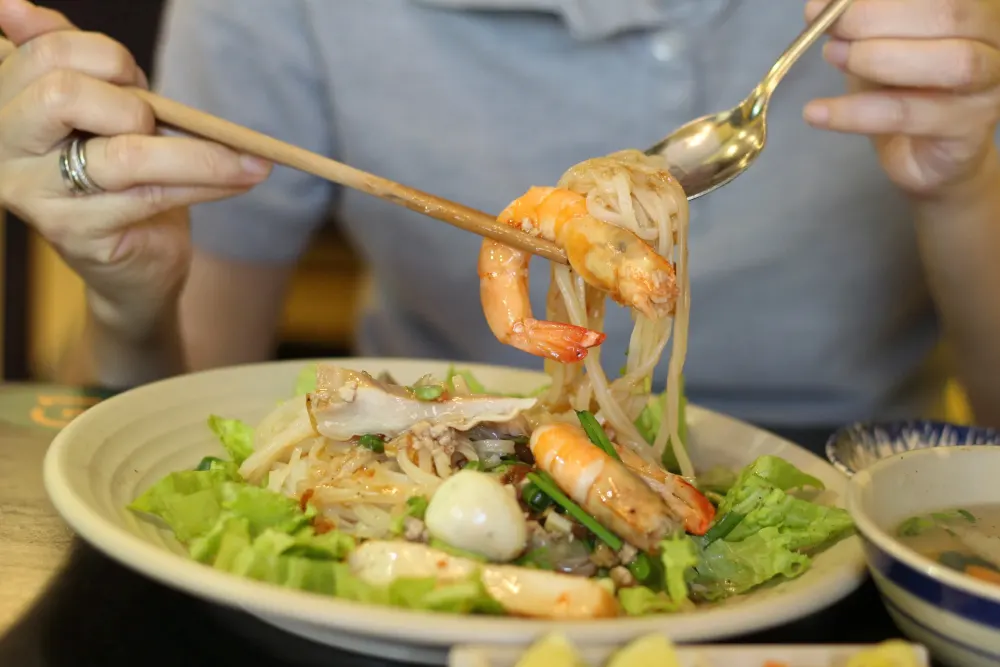
If you order hu tieu kho (no broth in the bowl), mix the noodles with the sauce until they are evenly coated, then alternate between bites of noodles and sips of the broth served separately. For hu tieu nuoc (noodles served in broth), enjoy the noodles and broth together to appreciate all their flavours.
Finally, you do not necessarily need to seek out a large restaurant to discover hu tieu. A small neighbourhood eatery frequented by locals is often a great place to experience everyday Vietnamese cuisine.
If you want to try hu tieu in Ho Chi Minh City, several restaurants offer the opportunity to discover Southern Vietnamese specialities, from the famous hu tieu Nam Vang to recipes inspired by the Mekong Delta.
Di Nam Sa Dec – For Authentic Mekong Delta Flavours
Address: 166 Bui Thi Xuan, Ben Thanh Ward, Ho Chi Minh City
Opening hours: 6.00 am – 10.00 pm
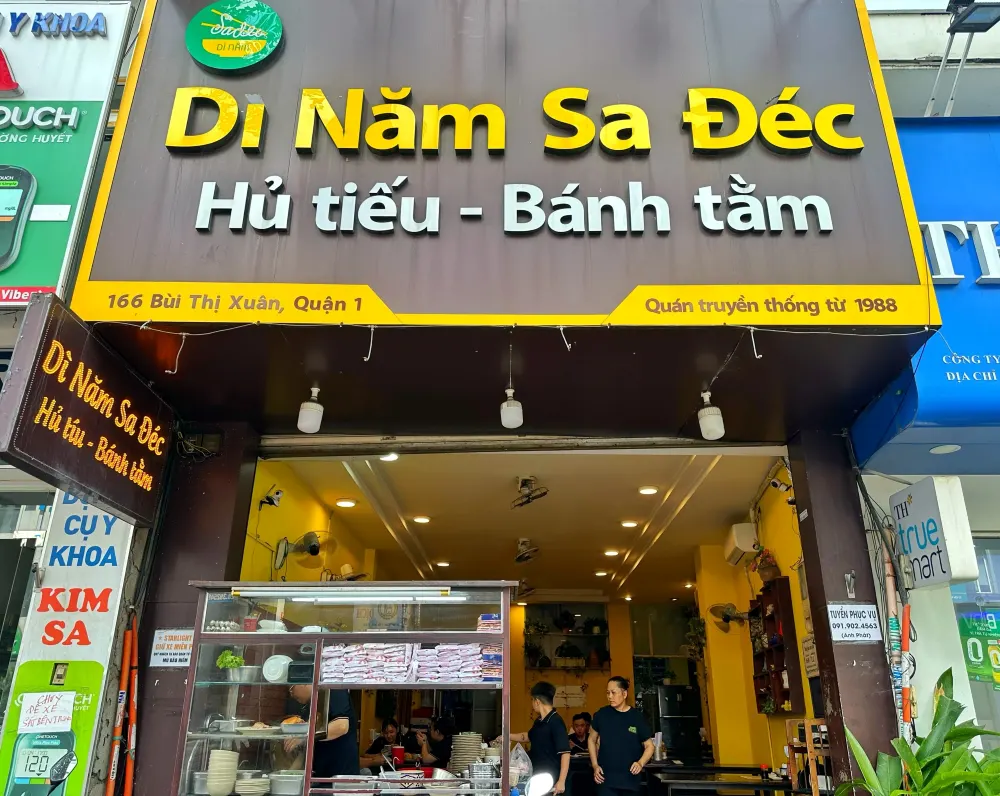
Since late 1988, Di Nam (Mrs Le Thi Nga) has been preparing hu tieu Sa Dec, a speciality she spent many years introducing to residents of her hometown. In 2017, she left Sa Dec to join her daughter in Ho Chi Minh City and continue her business, hoping to keep the flavours of her home region alive in the bustling metropolis.
Today, her restaurant on Bui Thi Xuan Street welcomes both regular customers and visitors curious to discover this Mekong Delta speciality. Some of her former customers have even made the journey to rediscover the familiar flavours of their hometown.
More than just a place to eat, Di Nam Sa Dec represents a small piece of Southern Vietnamese life, kept alive through a family recipe and shared memories.
Hu Tieu Hong Phat – For Hu Tieu Nam Vang
Address: 389–391 Vo Van Tan, Ban Co Ward, Ho Chi Minh City
Opening hours: 6.30 am – 10.30 pm
Established in 1975, Hu tieu Hong Phat is a long-standing culinary institution in Ho Chi Minh City. The restaurant is renowned for its hu tieu Nam Vang, as well as its bánh bao (steamed buns) and Chinese-influenced Vietnamese specialities.
The restaurant has been awarded the MICHELIN Guide Bib Gourmand, a distinction recognising restaurants that serve good food at excellent value for money. It is an address worth remembering if you want to discover hu tieu Nam Vang at an establishment deeply rooted in Saigon's culinary traditions.
Hu Tieu Thien Phuc – For My Tho-Style Hu Tieu
Address: 146 Street 51, An Khanh, Ho Chi Minh City
Opening hours: 6.00 am – 11.30 pm
Located in the An Khanh area of Ho Chi Minh City, Hu tieu Thien Phuc celebrates a speciality from the Mekong Delta. Associated with Cô Tươi since 1989, this eatery serves My Tho-style hu tieu, featuring noodles known for their firm, slightly springy texture.
You can choose between the soup version (hu tieu nuoc) and the dry version (hu tieu kho), depending on your preferences. It is an interesting place to discover another side of Southern Vietnamese cuisine, beyond the region's best-known dishes.
If you are trying Vietnamese hu tieu for the first time, here are a few simple tips:
Choose between hu tieu nước and hu tieu khô. The first is served in a hot broth, while the second consists of seasoned noodles with the broth served separately.
Taste the broth before adding seasoning. You can then add lime, fresh herbs or a little chilli to suit your taste.
Customise your order to your preferences. Toppings vary depending on the recipe and may include pork, prawns, quail eggs or offal. Do not hesitate to ask about the ingredients if you have any dietary restrictions.
Observe how locals eat. At a small street food stall, watching how other diners enjoy their noodles can be a pleasant way to discover local food customs.
In Vietnam, some dishes tell a story that goes far beyond their ingredients. Hu tieu is a wonderful example: its different variations reflect the cultural encounters and culinary traditions that have shaped southern Vietnam.
So, on your next visit to Ho Chi Minh City or the Mekong Delta, why not treat yourself to a bowl of hu tieu at a small local eatery? It might just become one of your favourite food memories from Vietnam.
>> Read more:





 TRAVELERS' CHOICE 2026