


The proof: Every 10 minutes pays a jackpot. Try now! Spin to Win Here -> psee.io/8qtsv7
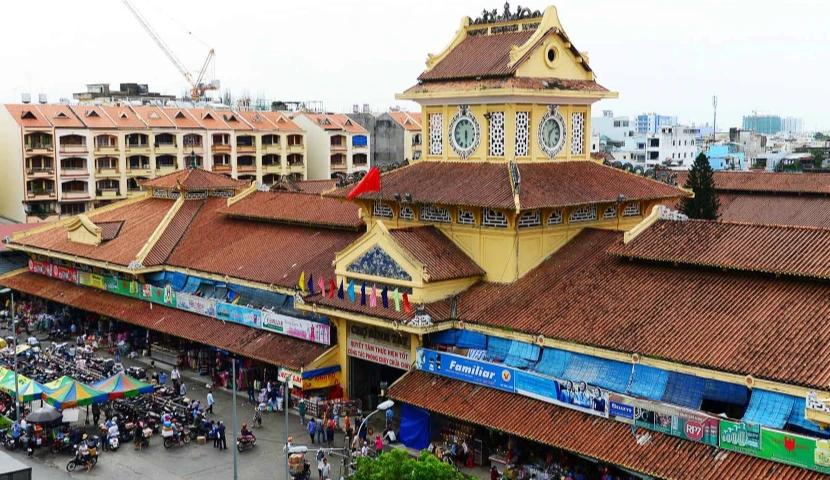
Binh Tay Market stands as one of the oldest and largest wholesale markets in the heart of the Cho Lon district, modern-day Saigon. If you have ever come across the striking image of a grand clock tower rising above deep yellow walls, you are looking at this very landmark. Amidst the endless variety of products and delicious dishes within this nearly century-old market, you are guaranteed to have truly unforgettable
Binh Tay Market is the place that most faithfully preserves the genuine soul, frenetic rhythm, and extraordinary cultural fusion of the Cho Lon area.
Whenever I stand before its entrance, situated at 57A Thap Muoi Street, in the Binh Tay ward, I feel as though I am facing a true witness to history: a living entity that has survived nearly a century of Saigon's transformations.
The market is typically open every day from the early hours of the morning (around 07:00) until the evening (around 18:00). However, some grocery shops and stalls in the surrounding areas may remain open late, creating a lively atmosphere even after sunset.
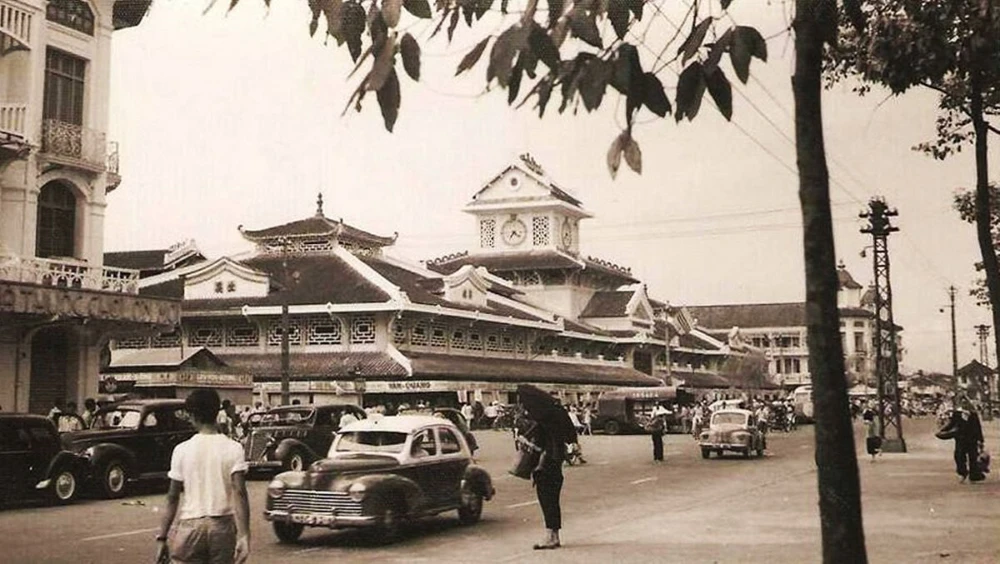
Binh Tay Market is one of the oldest markets in Saigon, with a history spanning nearly a century. Its origins are closely linked to the development of the ancient Cho Lon district. In the past, commercial activities were concentrated in the "New Market" area, but over time, the space became insufficient to sustain the growing demand.
It was then that a merchant of Chinese origin, Quach Dam (also known as Thong Hiep), decided to personally finance the construction of a new, larger, and more modern market. Work began in 1928, and the market was completed and inaugurated in 1930. After construction, Quach Dam donated the entire structure to the city authorities, expressing only one wish: to be allowed to build a series of buildings around the market and to have a statue of himself placed in the centre after his death.
Over time, the market has undergone significant transformations to adapt to changes. It was first restored in 1992, and in 2006, two new wings were added along Le Tan Ke and Tran Binh streets. Thanks to its architectural and historical value, in 2015 the market—also known as the Cho Lon New Market—was officially recognised as an architectural and artistic monument by the Ho Chi Minh City Department of Culture and Sports.
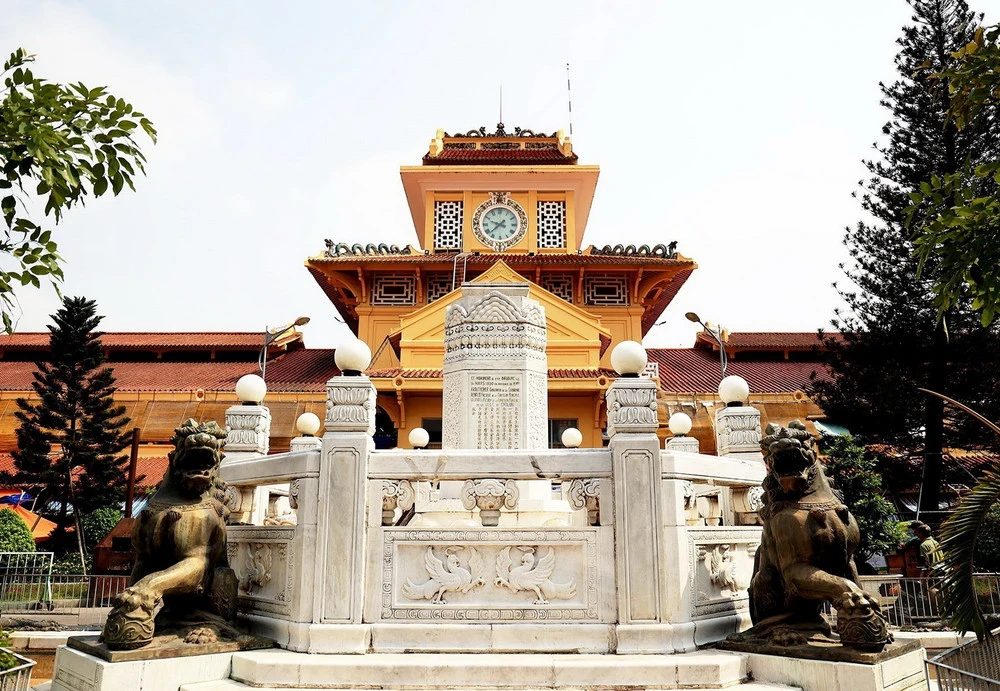
One of the elements that makes Binh Tay Market one of the most beautiful in Saigon is its distinctive architectural style. The structure represents a harmonious fusion of traditional Far East architecture and Western construction techniques of the era.
The market covers an area of about 25,000 square metres, within a rectangular perimeter bordered by four vibrant streets: Le Tan Ke, Thap Muoi, Tran Binh, and Phan Van Khoe. The architecture follows the Bagua (Eight Trigrams) model, creating an airy, orderly, and clean space. There are twelve entrances, designed not only according to Feng Shui principles but also to facilitate the continuous flow of people and goods.
The focal point is the tall, imposing central tower facing the Cholon bus station. Each side of the tower features a large clock, essential for the daily life of the citizens. The roof is characterised by typical overlapping tiles, while the yellow-painted walls are decorated with elegant openings that promote natural ventilation. Particularly striking is the ceramic relief depicting two dragons flanking a pearl, a spiritual symbol of Oriental culture.
Inside the market, a large open courtyard houses the bust of Quach Dam, erected through donations from merchants in his memory. The surrounding space resembles a small garden, with a lotus pond filled with fish and numerous benches—ideal for a relaxing break. Decorative statues such as Qilin and water-spraying dragons add extra charm to the complex.
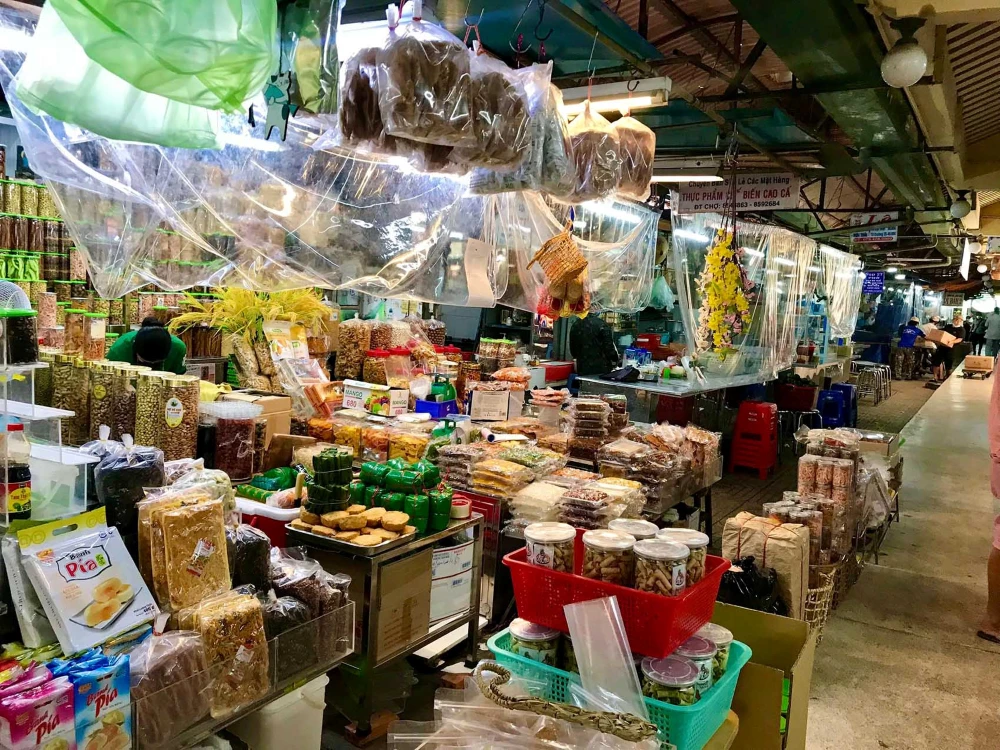
Entering Binh Tay Market, you are immediately immersed in a true labyrinth full of life, where every aisle tells a story of trade, transactions, and traditions passed down through time.
With nearly 2,300 stalls and over 30 categories of products, the market functions like a small city within a city, perfectly organised into five main areas:
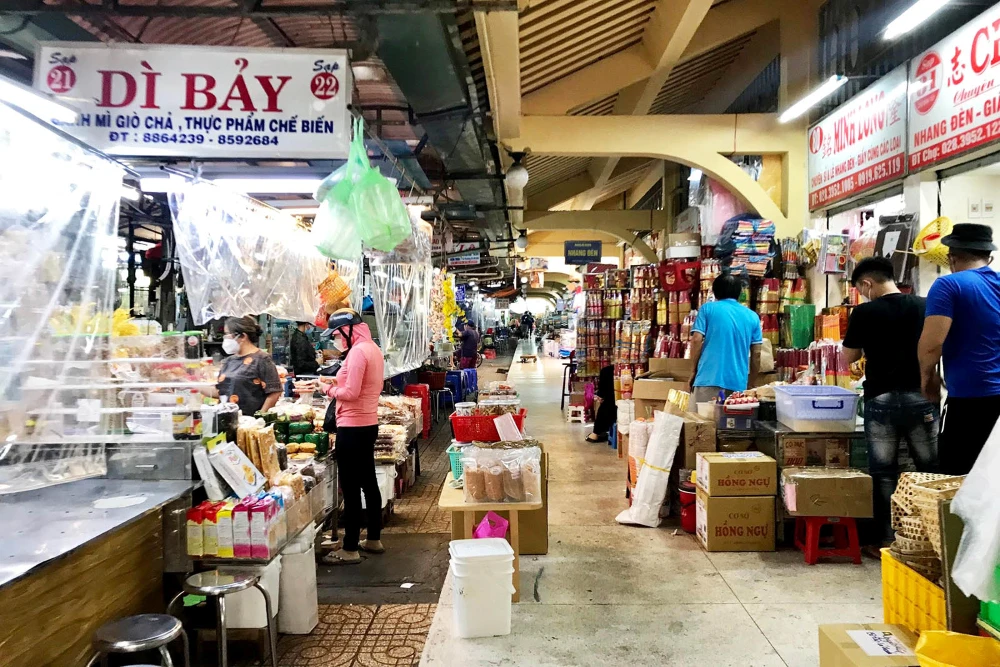
As one of the city's main distribution hubs, Binh Tay Market plays a fundamental role in both local and regional trade. The products sold here supply numerous smaller markets and are even exported to neighbouring countries, creating a dynamic commercial network. Because it is a wholesale market, prices are extremely competitive—often cheaper than in other parts of the city. Furthermore, haggling is an integral part of the experience; negotiating with vendors is not only possible but almost a ritual, adding another layer of authenticity to your visit.
One of the highlights you cannot miss at Binh Tay Market is its incredible food offering. Open almost all day, the market transforms into a vibrant culinary paradise.
Here, you can sample traditional Vietnamese dishes such as bun mang, bun rieu, banh uot, and hot soups. However, the most distinctive specialities are those with Chinese influence, such as pha lau, roasted duck with herbs, and steamed dumplings.
Around the market, numerous eateries offer dishes like stir-fried hu tieu, Hong Kong-style cuisine, banh mi with fish, and hu tieu Nam Vang, as well as refreshing drinks like sweet desserts and lemon tea. The lively atmosphere, the calls of the vendors, and the intense aromas of spices create an unforgettable sensory experience.
Reaching this famous market is easy thanks to various transport options:
To make the most of your experience at Binh Tay Market, keep these practical tips in mind:
After exploring every corner, observing the architectural details, and tasting the savoury dishes, you realise that Binh Tay Market is much more than a tourist attraction. Every stall, every vendor's smile, and every chime of the central clock tower represents the very breath of Saigon. This place is a symbol of past generosity, a testament to present industriousness, and the pride of a rich, vibrant culture. If you want to recapture the authentic soul of an old yet energetic Saigon, visit Binh Tay Market at least once.
See more:





 TRAVELERS' CHOICE 2026