



Earlier I thought differently, many thanks for the information.
__________
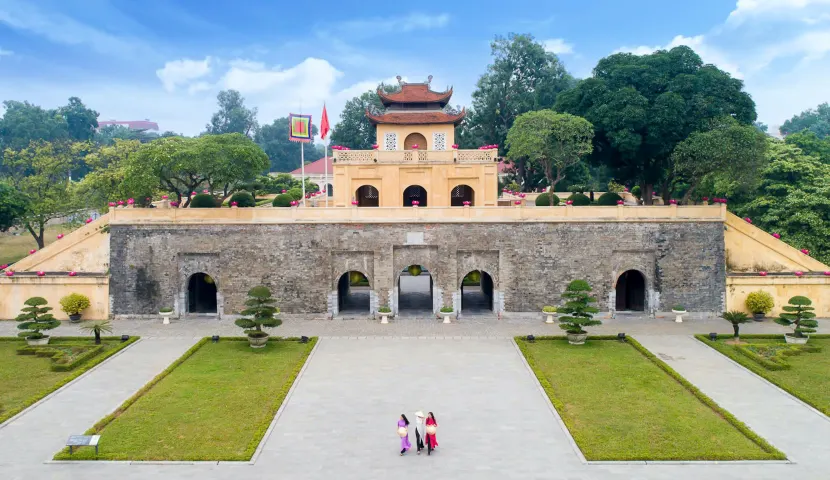
In the heart of Hanoi, the Imperial Citadel of Thang Long bears witness to more than a thousand years of Vietnamese history. Once the country’s political and cultural centre, this historic site reveals traces left by successive dynasties, from archaeological remains and ancient gates to imperial monuments. It is an essential place to visit for anyone looking to better understand the history and heritage of Vietnam’s capital.
Located in Ba Dinh District, in central Hanoi, the Imperial Citadel of Thang Long is one of the capital’s major historic sites. Founded in the 11th century under the Ly Dynasty, it was built on the remains of an earlier citadel and served as an important political centre of Vietnam for nearly 13 centuries.
Over the centuries, Thang Long witnessed the rule of several dynasties, including the Ly, Tran, Le and Nguyen. The remains visible today reflect these different periods. Ancient gates, palace foundations, fortifications and archaeological structures offer valuable insight into the development of the former capital and Vietnamese society through the centuries.
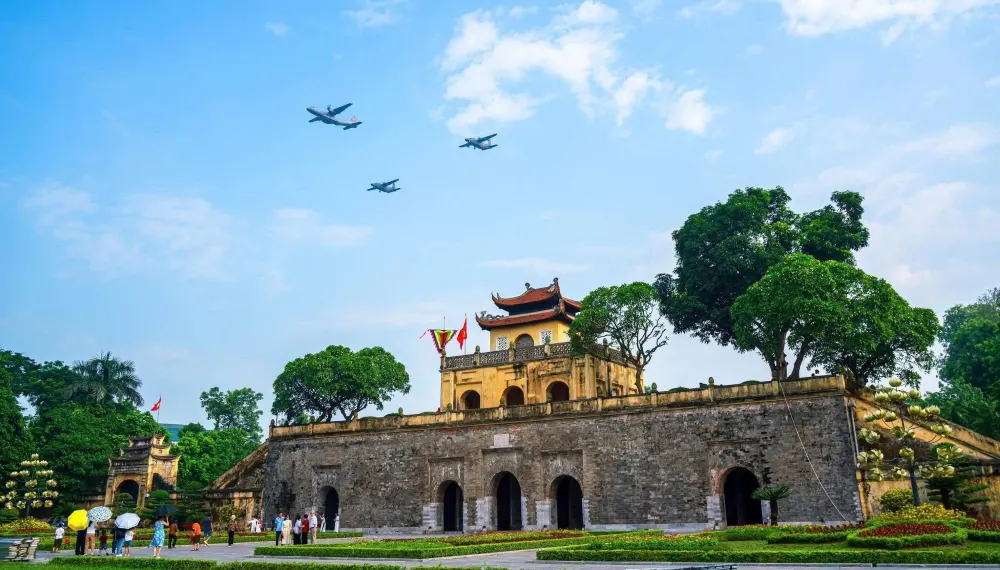
The Central Sector of the Imperial Citadel of Thang Long was inscribed on the UNESCO World Heritage List in 2010 in recognition of its historical, cultural and archaeological significance. The site includes the archaeological area at 18 Hoang Dieu, where excavations have uncovered remains from different periods in Thang Long’s history.
A visit to the Imperial Citadel is therefore about much more than seeing a collection of ancient monuments. It offers a deeper understanding of Hanoi’s history and the major stages in the development of Vietnamese civilisation.
The history of the Imperial Citadel of Thang Long spans nearly 13 centuries. The site witnessed the rise and fall of several dynasties and underwent numerous transformations, from the establishment of the capital under the Ly Dynasty to the colonial and modern periods.
11th–12th centuries – Ly Dynasty: After moving the capital from Hoa Lu to Thang Long, King Ly Thai To developed the new capital around three main enclosures: Dai La, the outer enclosure; Hoang Thanh, which housed the royal court and spaces for imperial affairs; and Tu Cam Thanh, reserved for the emperor and his family.
13th–14th centuries– Tran Dynasty: The Tran rulers expanded and restored several buildings within the Imperial Citadel and royal palace.
15th century – Early Le Dynasty: The Imperial Citadel underwent major expansion, significantly increasing its overall area.
16th century – Mac Dynasty: Several fortifications and gates were reinforced, while new earthworks were constructed around the former Dai La enclosure.
17th–18th centuries – Later Le Dynasty: New fortifications were built along the remains of the former Dai La enclosure, creating a new citadel known as Dai Do.
18th century – Tay Son Dynasty: After choosing Phu Xuan, present-day Hue, as the capital, the Tay Son rulers continued to maintain and restore certain parts of the Thang Long Citadel.
19th–early 20th centuries – Nguyen Dynasty: After the capital was moved to Hue, Thang Long lost its status as the imperial capital and became the administrative and military centre of Bac Thanh.
French colonial period: After taking control of Hanoi, the French transformed part of the former citadel and constructed several military buildings on the site.
1954: Following the end of the colonial period, the former citadel became, among other functions, the headquarters of Vietnam’s Ministry of National Defence.
2002: Large-scale archaeological excavations began at 18 Hoang Dieu, uncovering numerous structures, cultural layers and traces from different historical periods.
2010: The Central Sector of the Imperial Citadel of Thang Long – Hanoi was inscribed on the UNESCO World Heritage List in recognition of its outstanding historical, cultural and archaeological value.
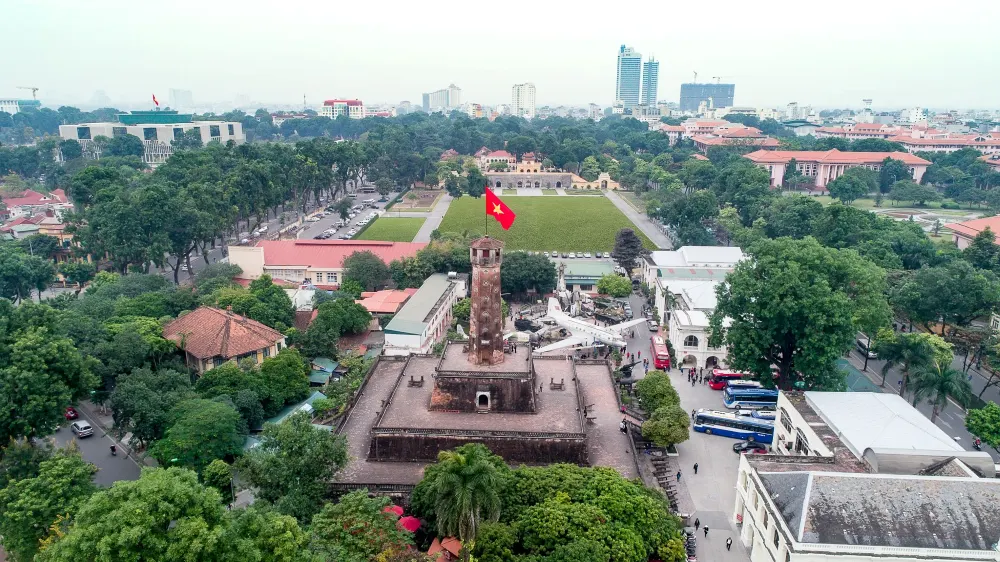
Built in 1812 during the reign of Emperor Gia Long, the Hanoi Flag Tower consists of three truncated-pyramid tiers topped by a tall tower, with a brick staircase leading to the observation platform. It is one of the few structures of the former Hanoi Citadel to have survived almost intact, as it was spared when the French demolished much of the old citadel between 1894 and 1897.
For decades, Vietnam’s red flag with a yellow star has flown from the top of the tower. Today, the Hanoi Flag Tower is an iconic symbol of Hanoi and its rich historical heritage, as well as a symbol of Vietnam’s independence and freedom.
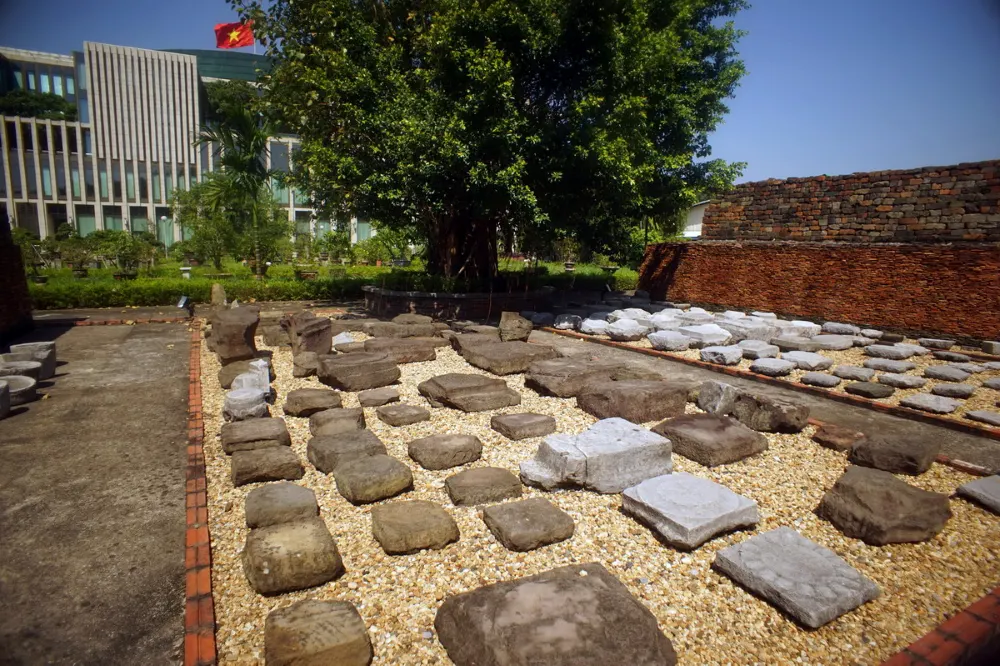
Located next to the Imperial Citadel of Thang Long, the 18 Hoang Dieu Archaeological Site is considered one of Vietnam’s most significant archaeological discoveries. Excavations began in 2002 across a large area, uncovering remains spanning more than 1,300 years of history. Architectural layers dating from the Dai La Citadel through the Ly, Tran, Le and Nguyen dynasties reveal the remarkable continuity of the ancient capital. Palace foundations, ancient wells, drainage systems, and thousands of ceramics, roof tiles and everyday objects provide valuable insight into the scale and development of Thang Long over the centuries.
Today, the 18 Hoang Dieu Archaeological Site is particularly rewarding for travellers interested in history and culture. Walking among the remains of ancient palaces and viewing artefacts unearthed at the site helps visitors better imagine daily life and the organisation of the former capital. More than just a tourist attraction, the site preserves valuable evidence of the formation, development and continuity of the Imperial Citadel of Thang Long, a UNESCO World Heritage Site.
Doan Mon, also known as the South Gate, was one of the main gateways to the Imperial Citadel of Thang Long. Located on the central axis of the ancient citadel, it opened onto the ceremonial route leading to Kinh Thien Palace, the political heart of the imperial complex. Its name can be translated as “Gate of Righteousness”.
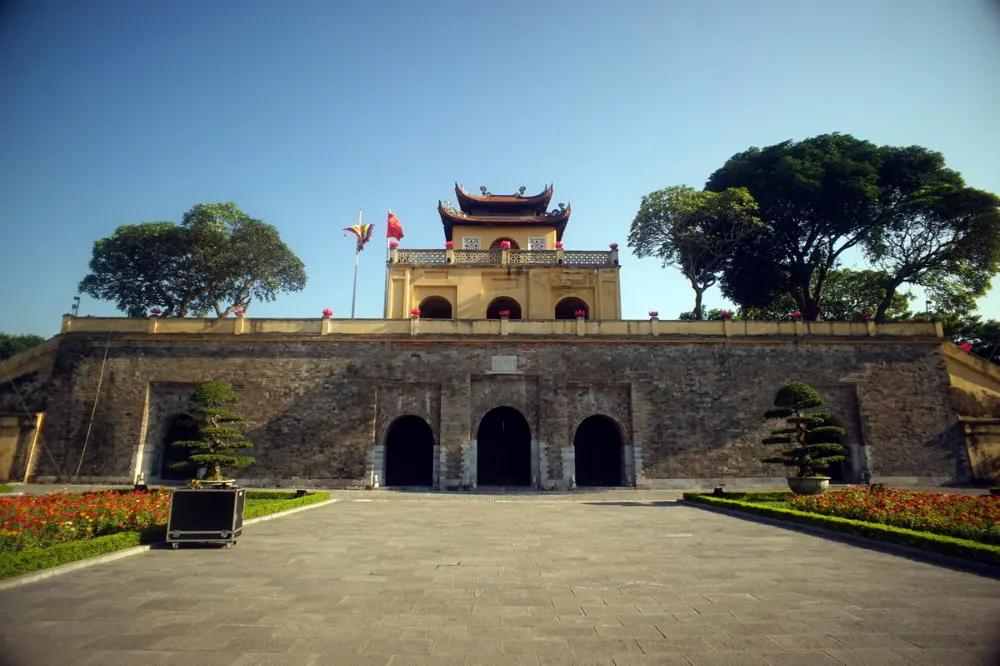
Built during the Le Dynasty and later modified under the Nguyen Dynasty, Doan Mon has five entrances of different sizes. The central entrance was once reserved for the emperor, reflecting the hierarchy and solemn character of Vietnamese imperial architecture.
Today, Doan Mon is one of the best-preserved monuments within the Imperial Citadel of Thang Long. Visitors can admire its historic architecture, understand the layout of the former ceremonial axis and better imagine the formal atmosphere that once surrounded the political centre of the capital.
Kinh Thien Palace once stood at the heart of the Imperial Citadel of Thang Long. It was where the emperor and royal court held major ceremonies and imperial audiences and received foreign envoys. Built during the Early Le Dynasty on the foundations of earlier palaces from the Ly and Tran periods, it occupied a prominent position on the citadel’s central axis and served as one of the country’s main centres of power for several centuries.
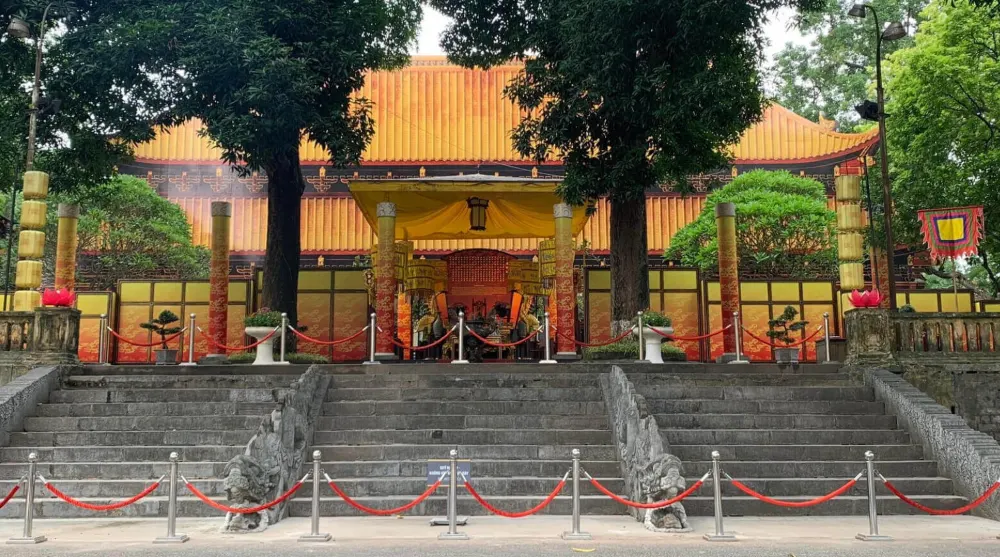
Although the palace itself has disappeared over the course of history, its blue-stone foundations and several archaeological remains have been preserved. Visitors can still see the stone dragons of the Le Dynasty, masterpieces of Vietnamese sculpture dating from 1467, as well as the surviving steps and traces of former structures. Located at the heart of the UNESCO World Heritage Site, Kinh Thien Palace offers valuable insight into the layout of the imperial palaces and the spaces associated with royal power in the ancient capital of Thang Long.
Recent Excavations Reveal New Insights
Recent archaeological research at Kinh Thien Palace has provided a clearer understanding of its architecture and development over the centuries. The fourth excavation campaign, carried out in 2026 across an area of 910 m², helped researchers determine the palace’s dimensions and better understand the structure of its foundations and column bases.
Archaeologists also uncovered approximately six metres of archaeological layers spanning nearly 1,300 years, from the Dai La period through the Ly, Tran, Le and Nguyen dynasties. These findings provide further scientific evidence for the study and future restoration of Kinh Thien Palace, while offering new insights into the layout and organisation of the ancient Imperial Citadel.
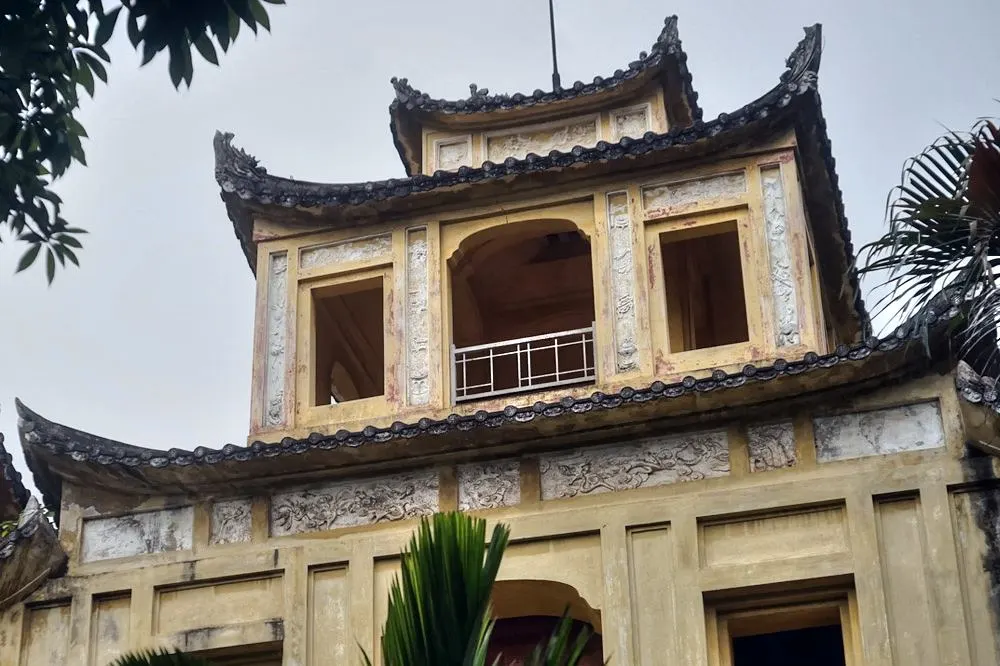
Hau Lau, also known as the Princess’s Pavilion, is mentioned in historical records as one of the buildings associated with the imperial palace area of Thang Long. According to historical accounts and traditions, the building may have been used by princesses and women of the royal court, reflecting the separation of different functions within the palace complex.
The building has not retained its original architecture due to the many transformations the site has undergone over the centuries. However, its remains, together with related historical records and accounts, provide insight into the organisation of the imperial court and daily life within the palace. For visitors, Hau Lau offers a more intimate perspective on the history of the Imperial Citadel, beyond the spaces associated with political power.
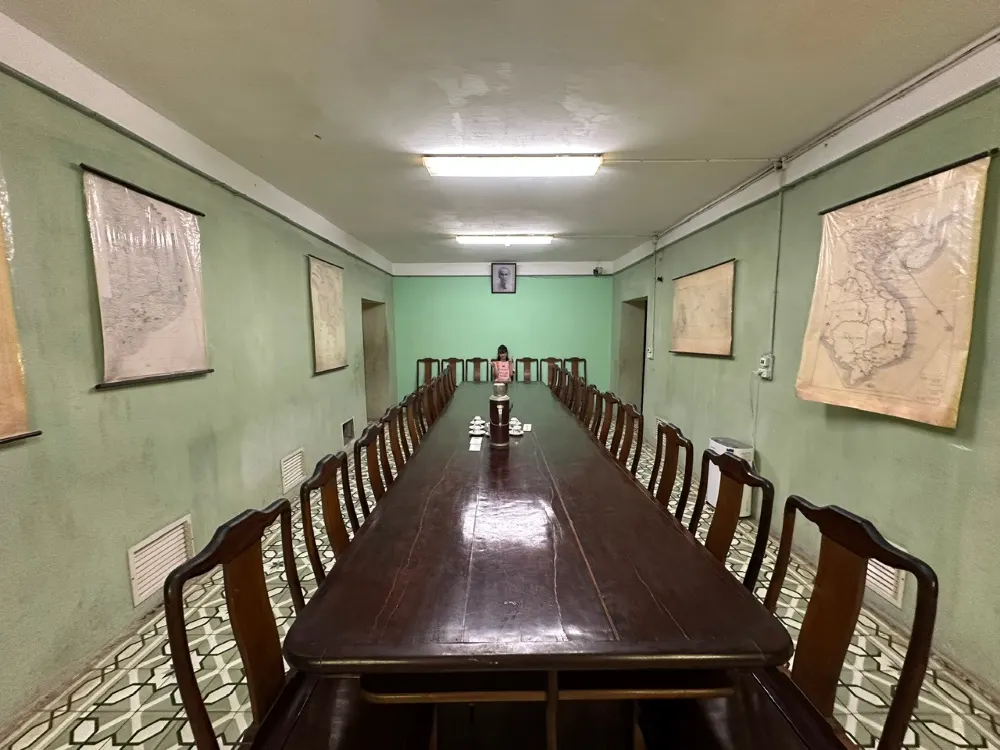
Built in 1967, the D67 Bunker stands at the heart of the former Hanoi Citadel. It served as a command centre for the high command of the People’s Army of Vietnam during the war in Vietnam. Protected by thick concrete walls and designed to withstand bombing, the building contained meeting rooms and workspaces for senior military officials.
Today, the D67 complex and its underground tunnel are open to visitors, with part of the original interior still preserved. Its offices, maps and military equipment offer visitors a glimpse into a much more recent chapter of Hanoi’s history. The site complements a visit to the Imperial Citadel by connecting its dynastic past with Vietnam’s modern history.
The North Gate, known as Bac Mon, is one of the major gates of the Hanoi Citadel built under the Nguyen Dynasty. It formed part of the fortification system constructed in the early 19th century and played a role in defending the citadel and controlling access to it.
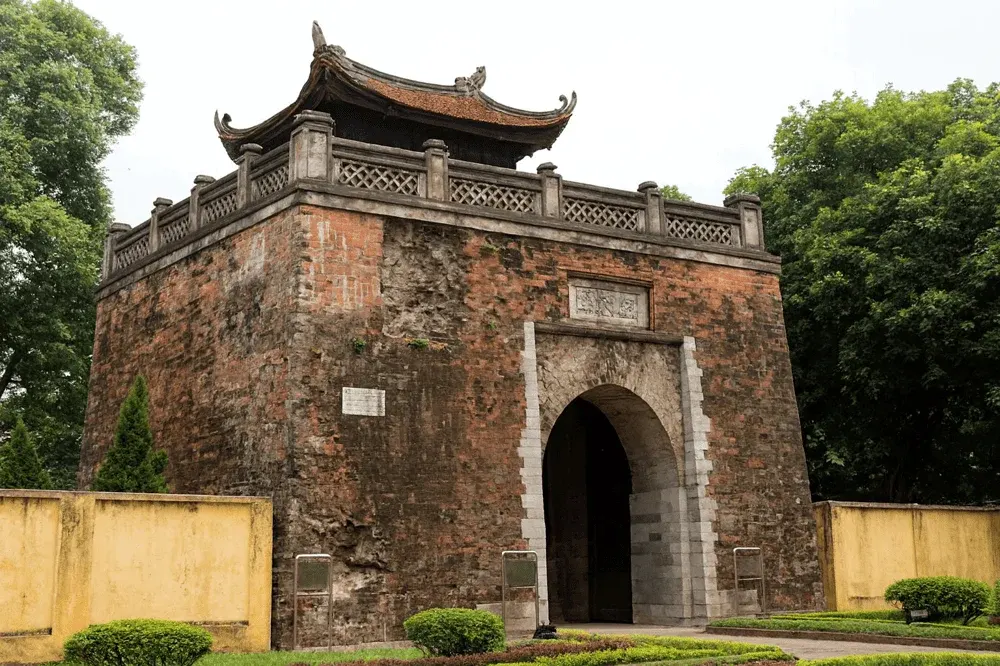
During periods of historical upheaval, Bac Mon witnessed several major conflicts, particularly during the French invasion. It subsequently became associated with resistance and Hanoi’s historical memory.
Today, the North Gate helps visitors visualise the layout of the former citadel and understand how Vietnam’s capital evolved over the centuries. It also serves as a reminder of the different stages in the urban and military history of Thang Long - Hanoi.
After dark, the Imperial Citadel of Thang Long reveals a different side of its history. Lasting around 90 minutes, the night tour offers an immersive journey into the former imperial citadel through historical reenactments, archaeological artefacts and interactive activities.
The tour begins at Doan Mon, one of the main gates of the former imperial citadel. Visitors follow the ancient ceremonial axis before watching a reenactment of an imperial audience ceremony and a traditional court dance performance. The experience continues at the exhibition “Thang Long – Hanoi: A Thousand Years of History Revealed Underground”, where archaeological artefacts trace nearly 1,300 years of history and reveal the legacy of successive Vietnamese dynasties.
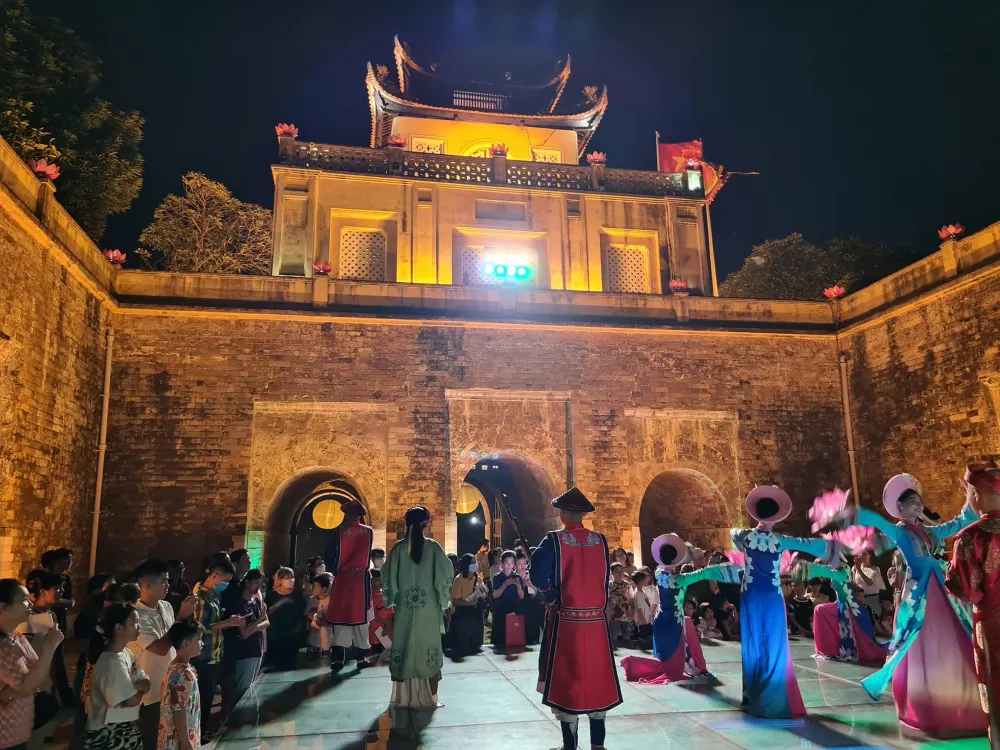
The route then leads to Kinh Thien Palace, where visitors can take part in a commemorative ceremony before continuing to the archaeological site behind the National Assembly. One of the highlights is Gieng Vua (the King’s Well), an ancient well dating from the Tran period between the 13th and 14th centuries. Visitors can even take part in an activity involving water from the well after it has been treated.
The final part of the tour features an interactive activity using laser projections to decode archaeological remains, offering a more engaging and immersive way to explore the site’s history. The experience ends with tea and traditional treats, including candied lotus seeds.
Practical Information:
To make the most of your visit while respecting this historic site, keep the following tips in mind:
Allow around 2 to 3 hours to explore the main monuments of the Imperial Citadel at a relaxed pace. Travellers with a particular interest in history and archaeology may wish to spend longer.
Located in Ba Dinh District in central Hanoi, the Imperial Citadel is easily accessible from the capital’s main neighbourhoods. You can get there by taxi, private car or motorbike. If it is your first time exploring Hanoi, you can also combine your visit with other nearby historical and cultural attractions.
For more comfortable conditions, visit in the morning or late afternoon, particularly between September and April, when the weather is generally cooler and more pleasant for exploring on foot. As much of the site is outdoors, comfortable clothing, a hat and drinking water are recommended. Visiting early in the day can also help you avoid the hottest hours.
Yes. The Imperial Citadel can be an interesting place for families, particularly with its archaeological areas and variety of historic monuments. For children, visiting with a guide can be especially helpful in making the many periods and events in the site’s history easier to understand.
The Imperial Citadel of Thang Long offers much more than a collection of historic monuments. It takes visitors through nearly 1,300 years of Vietnamese history, from ancient dynasties to more recent events. With its archaeological remains, palaces, imperial gates and cultural experiences, this UNESCO World Heritage Site is an excellent place to gain a deeper understanding of Hanoi’s past and discover another side of Vietnam’s capital.
Read more:





 TRAVELERS' CHOICE 2026